Artwork
Copil
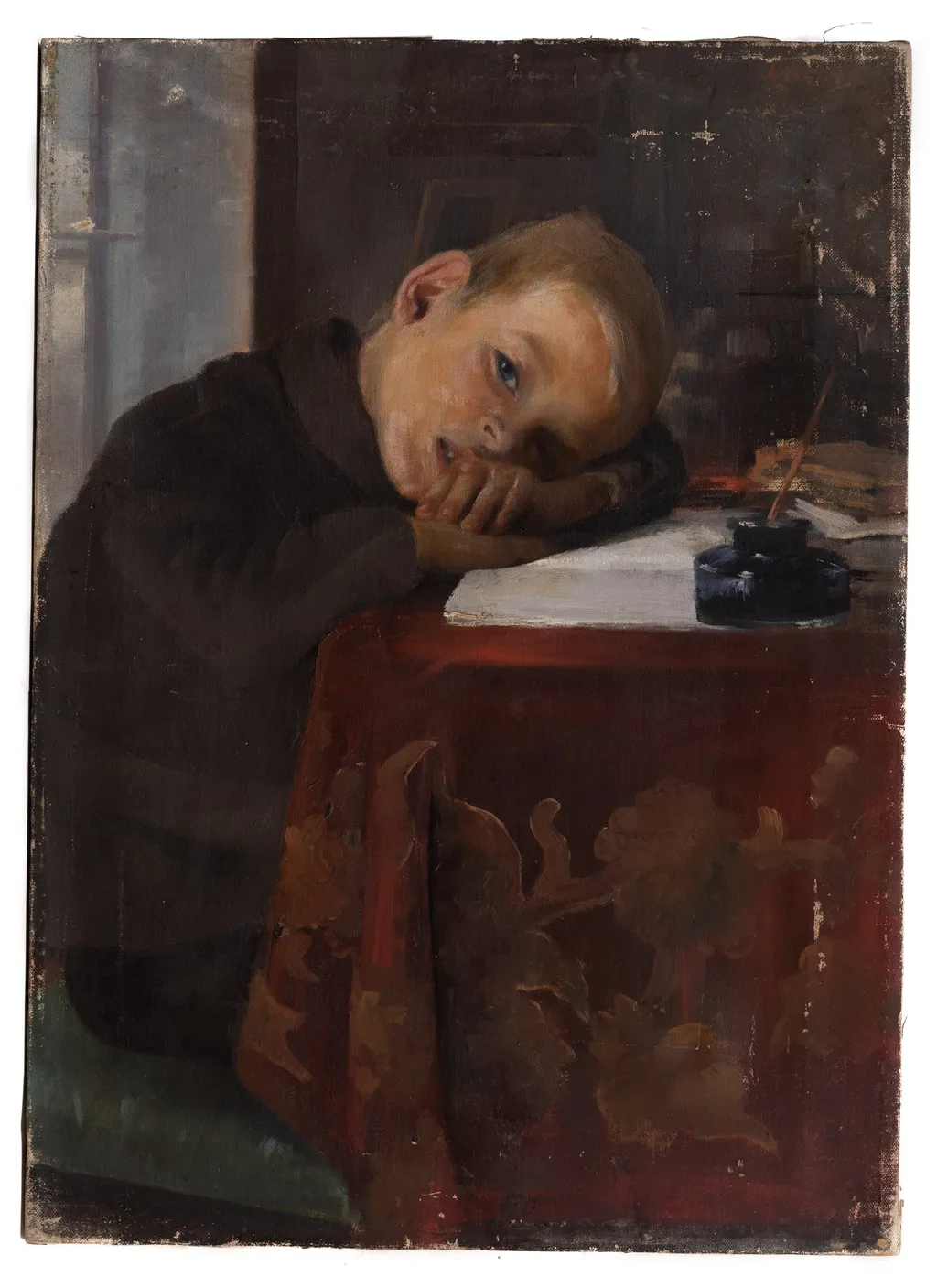
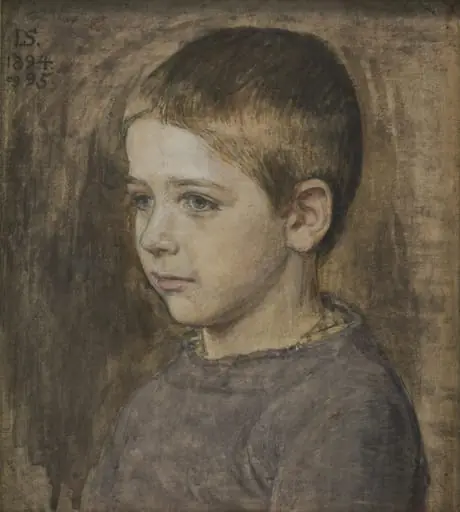
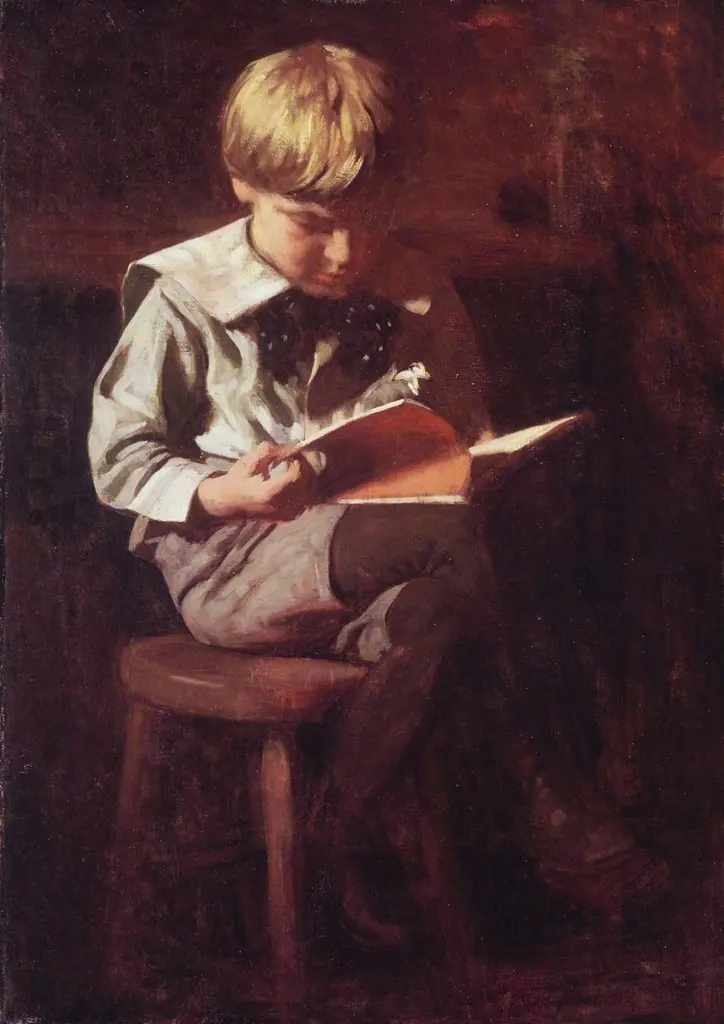
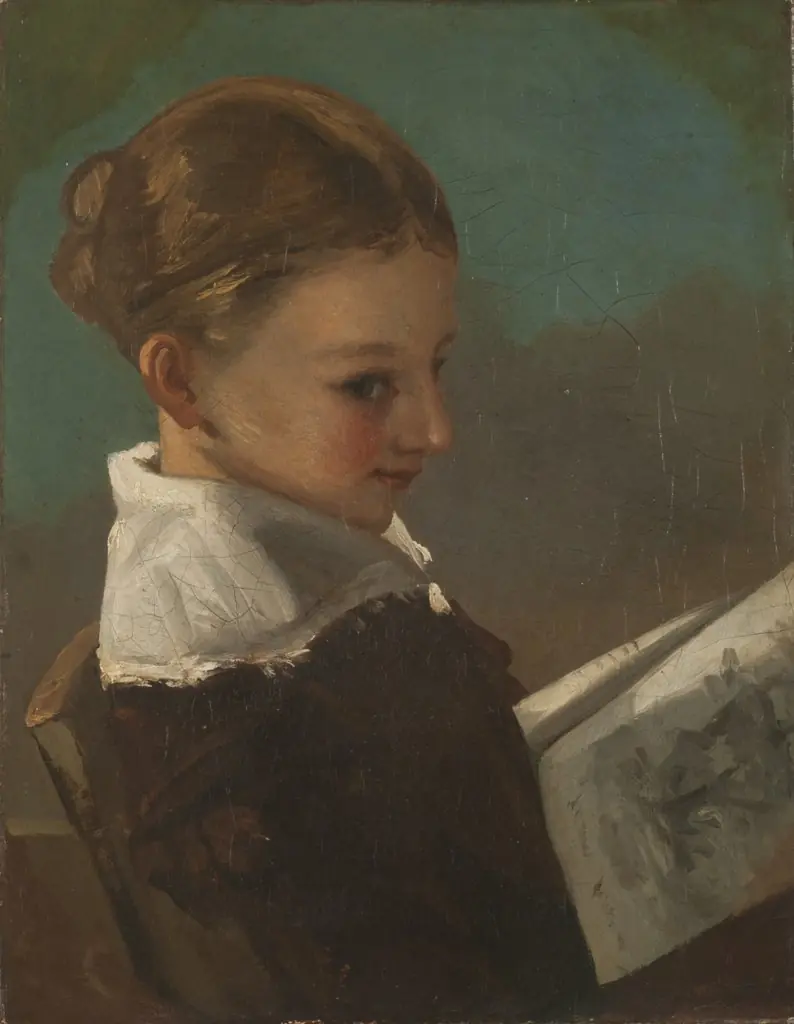
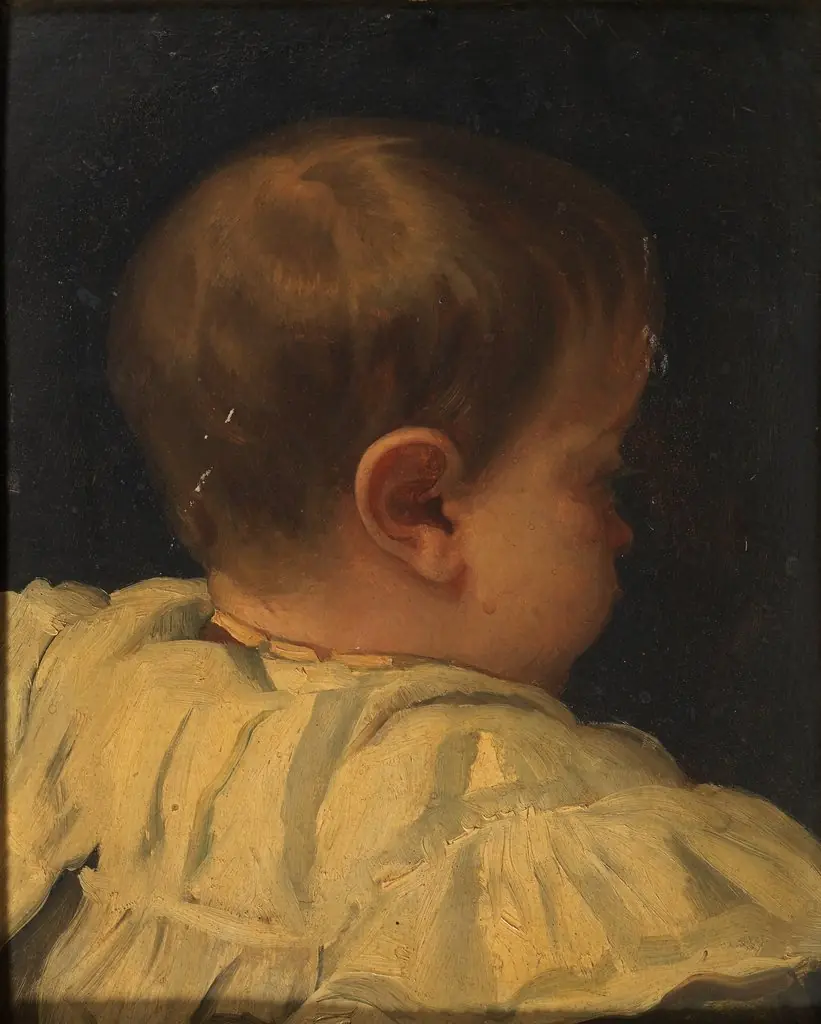
Copil is an unspecified painting by the Byzantine icon painting artist Crudu Dimitrie. It dates from 1910 and is held in the collection of the Moldova National Museum Complex.
About this work
Overview
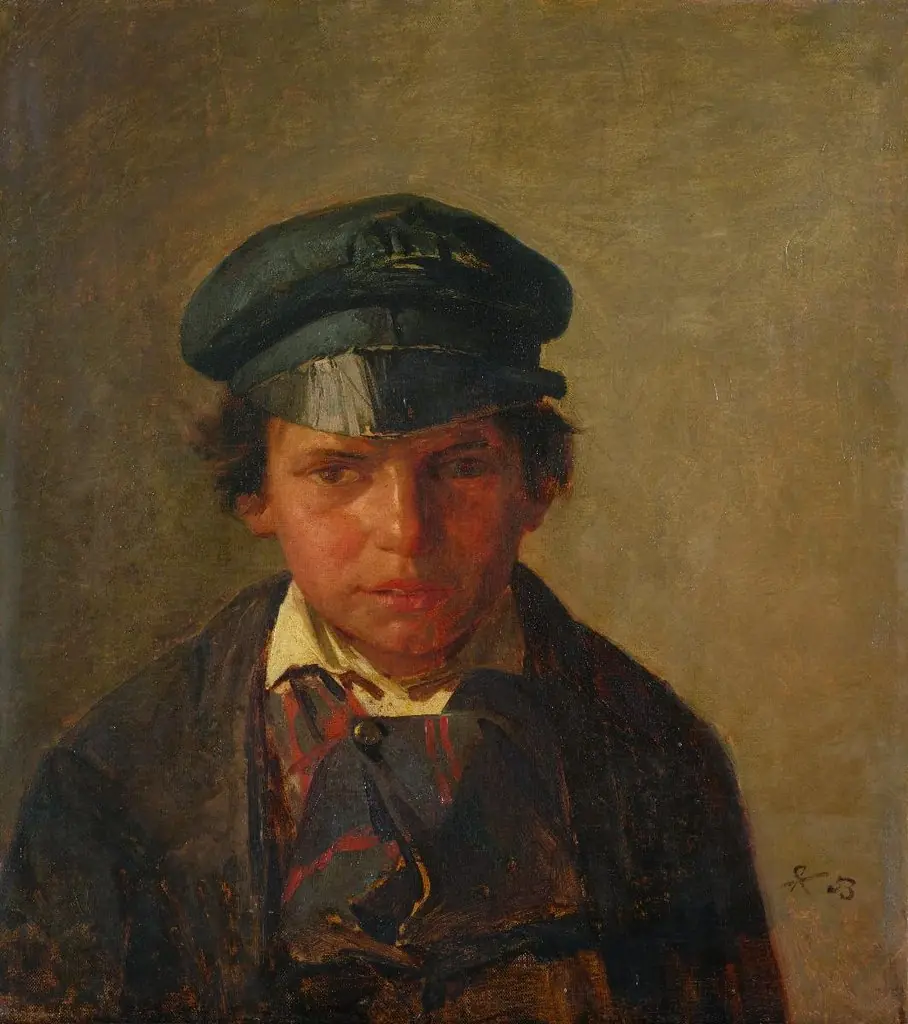
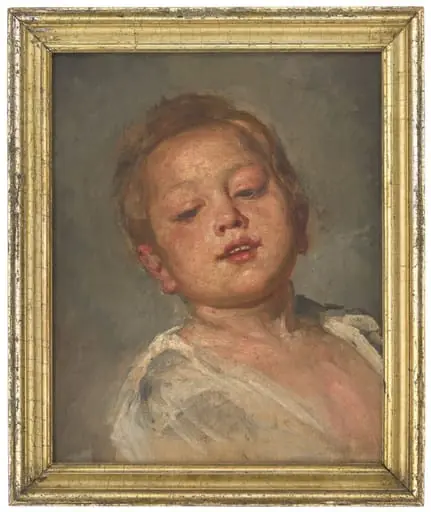
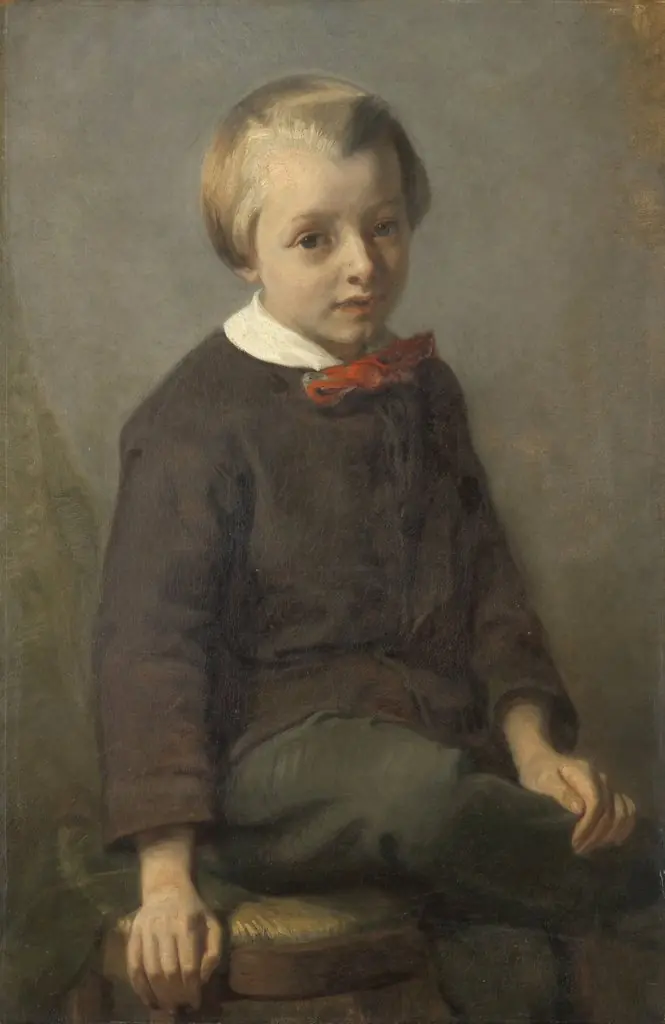
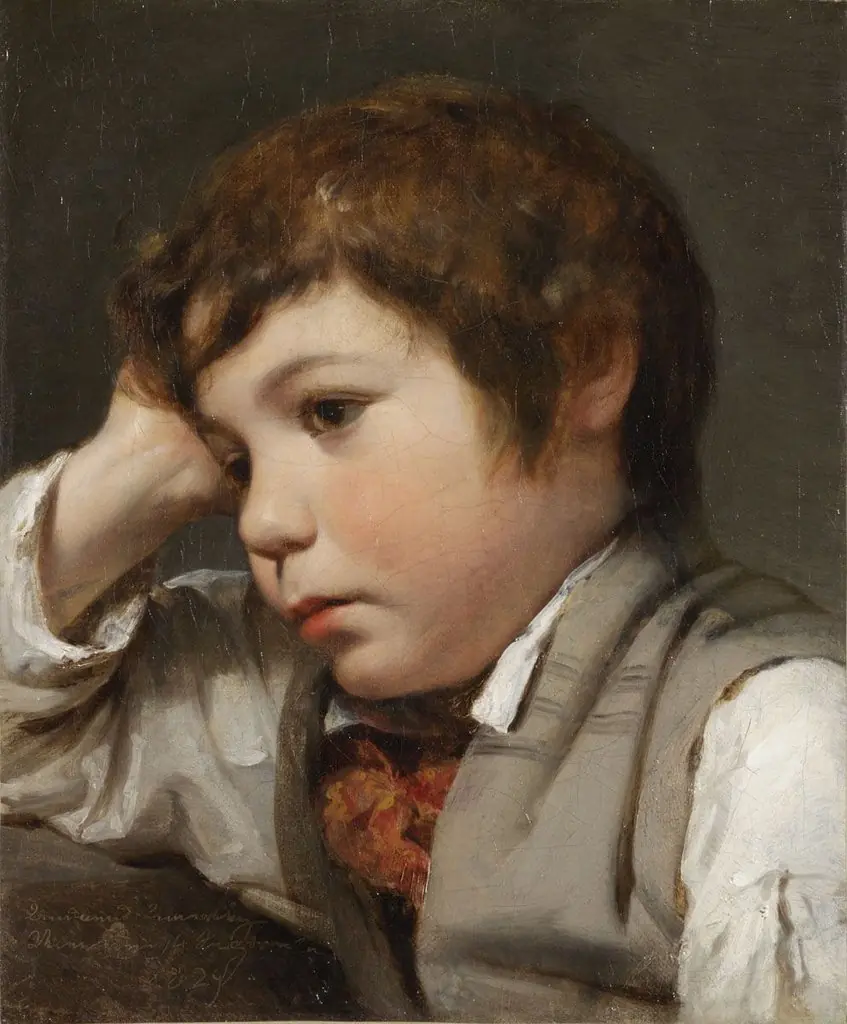
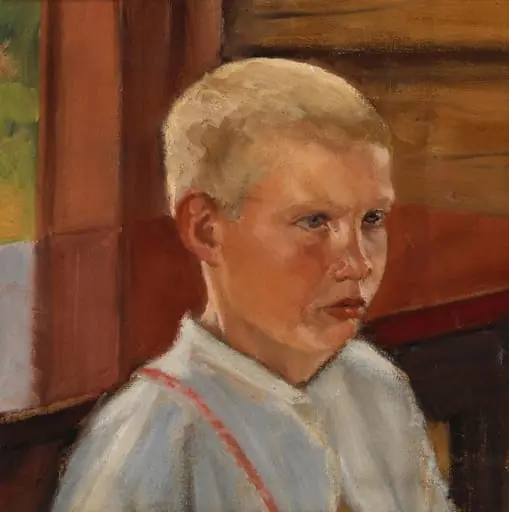
“Copil,” painted by Romanian artist Crudu Dimitrie in 1910, portrays a solitary young boy seated at a desk. The composition is intimate, focusing on the figure’s contemplative posture as he rests his chin on his hand, surrounded by modest writing implements. The setting is a dimly lit interior, rendered with a restrained palette that emphasizes mood over narrative detail.
Subject & Meaning
The work captures a moment of quiet introspection, suggesting themes of study, fatigue, or youthful contemplation. The boy’s light, almost golden hair and weary expression convey a sense of lingering thought, while the empty sheet of paper and quill hint at unfinished work or unvoiced ideas, inviting viewers to consider the inner life of the adolescent subject.
Technique & Style
Dimitrie employs a pronounced impasto technique, applying thick layers of paint especially to the boy’s hair and the red cloth covering the desk. This tactile approach creates texture that catches the soft, focused light, allowing the figure’s face to emerge from surrounding shadows. The brushwork balances vigor with subtle modeling, lending the scene both physical presence and atmospheric depth.
History & Provenance
Created in the early twentieth century, “Copil” reflects Dimitrie’s interest in genre scenes that document everyday life. The painting entered private collections shortly after its completion and has been documented in Romanian exhibition catalogues from the 1920s onward. Its provenance remains largely within regional holdings, contributing to the artist’s modest but consistent exhibition record.
Context
The early 1910s in Romania saw a shift toward realism and the depiction of ordinary subjects, moving away from grand historical themes. Dimitrie’s focus on a solitary child at work aligns with this trend, emphasizing personal experience and the quiet dignity of ordinary labor. The work also mirrors broader European interests in psychological portraiture during the period.
Artist & collection
Artist
Dimitrie Crudu kept a studio so small his easel doubled as his dining table, mixing paints between bites of polenta.