Artwork
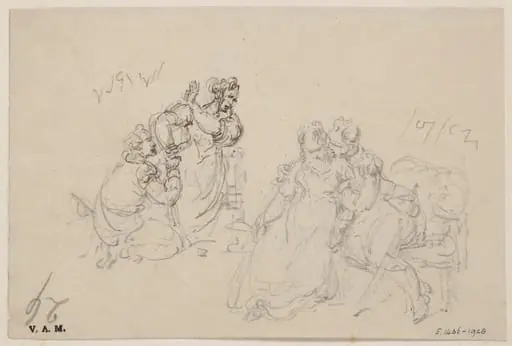
The Bloomsbury Christening
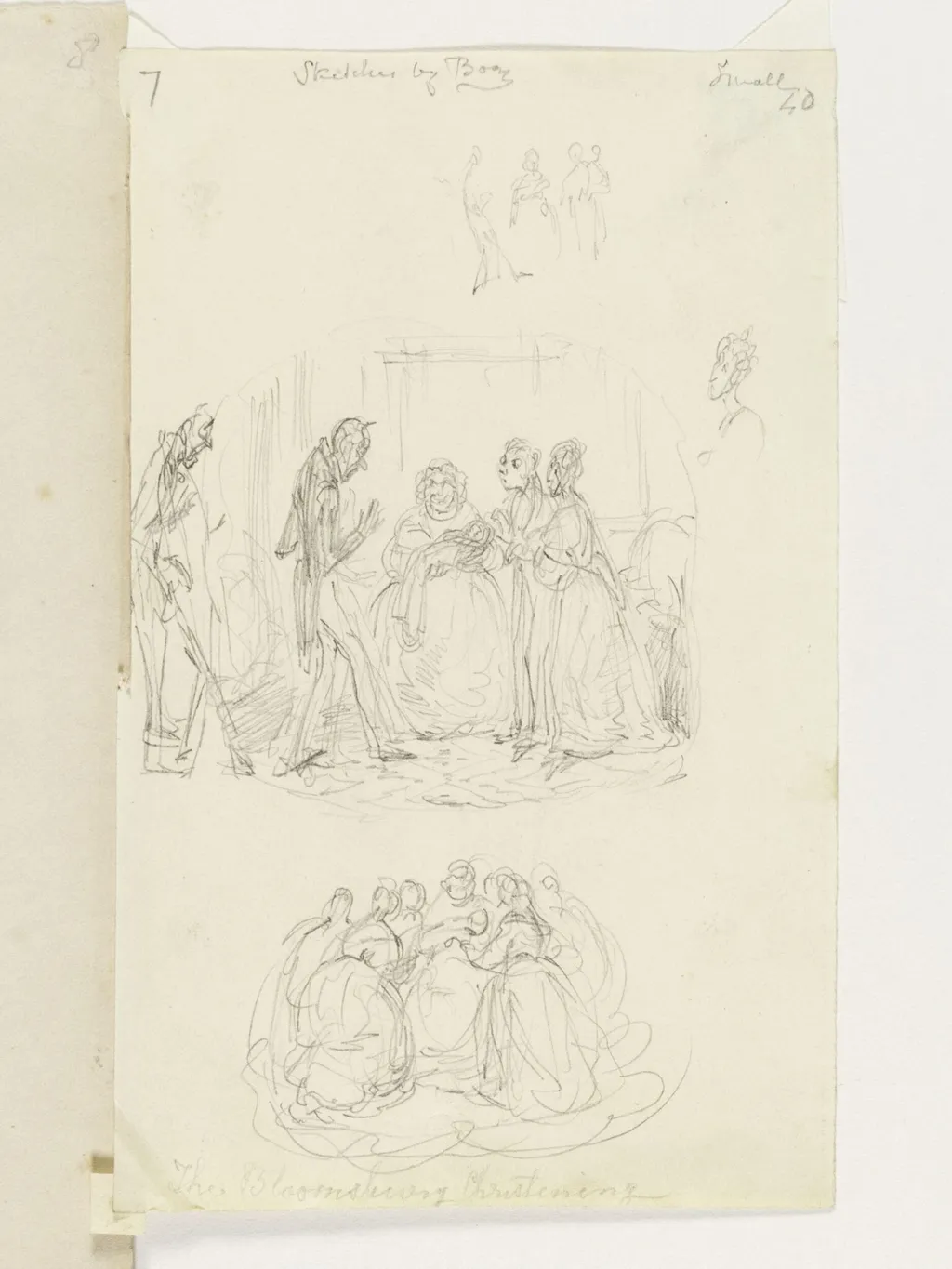
The Bloomsbury Christening is a drawing by the Romanticist artist George Cruikshank. It dates from 1834 and is held in the collection of the Victoria and Albert Museum.
About this work
Overview
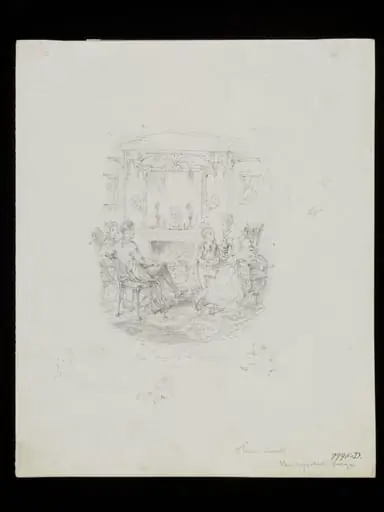
A pencil drawing from 1834 by George Cruikshank, titled The Bloomsbury Christening, captures a domestic moment with quiet immediacy.
A pencil drawing from 1834 by George Cruikshank, titled The Bloomsbury Christening, captures a domestic moment with quiet immediacy. Executed in loose, expressive lines, the work is a preparatory study that conveys a sense of spontaneous observation. The sheet bears the artist’s own inscription of the title, confirming its intended subject. Its informal quality reflects Cruikshank’s habit of sketching from life rather than composing formal scenes.
Subject & Meaning
The scene depicts a small gathering around a seated woman holding an infant, likely at a christening in a modest London home. Figures stand in attentive poses, their gazes directed toward the child, suggesting ritual and familial connection. Background figures are lightly sketched, implying a crowded but unobtrusive environment. The focus on an ordinary domestic event, rather than a grand narrative, aligns with a growing interest in everyday life during the early 19th century.
Technique & Style
Cruikshank employed pencil with fluid, economical strokes to suggest form and movement. Subtle shading defines the folds of clothing and the contours of faces, while the absence of heavy detail preserves a sense of immediacy. The sketchy quality is deliberate, emphasizing gesture over finish. This approach reflects his background in illustration and his sensitivity to transient human interactions, prioritizing emotional resonance over polished execution.
History & Provenance
The drawing was created in 1834 during a period when Cruikshank was actively producing social commentary and genre scenes. It remained in the artist’s possession until his death, later entering a private collection before being acquired by a public institution. Its survival as a standalone study, rather than a published illustration, offers rare insight into his working process and personal interests beyond commercial commissions.
Context
While often associated with caricature, Cruikshank’s later work increasingly turned to intimate, observational subjects. The Bloomsbury Christening reflects broader cultural shifts in the 1830s, where middle-class life and domestic rituals became legitimate subjects for art. Though not formally aligned with Romanticism, the drawing shares its sensitivity to human emotion and unidealized settings, distinguishing it from the grand historical themes of the era.
Legacy
The drawing stands as a testament to Cruikshank’s versatility beyond satire. Its preservation highlights the value placed on informal studies in 19th-century British art, offering scholars a window into the artist’s method and the social textures of urban life. Though not widely exhibited, it remains a quiet but significant example of how observational drawing contributed to the documentation of everyday experience in Victorian Britain.
Artist & collection
Artist
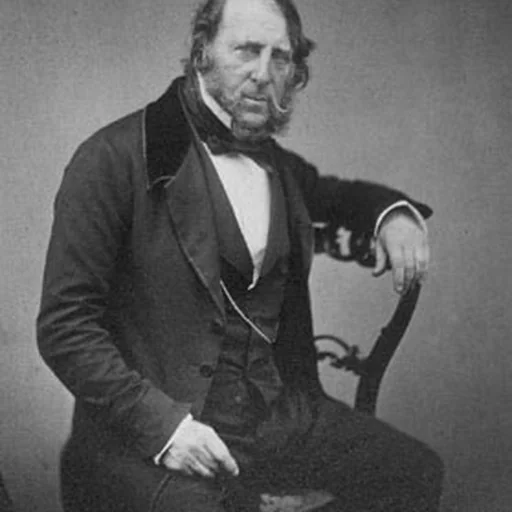
George Cruikshank or Cruickshank ( KRUUK-shank; 27 September 1792 – 1 February 1878) was a British caricaturist and book illustrator, praised as the "modern Hogarth" during his life.

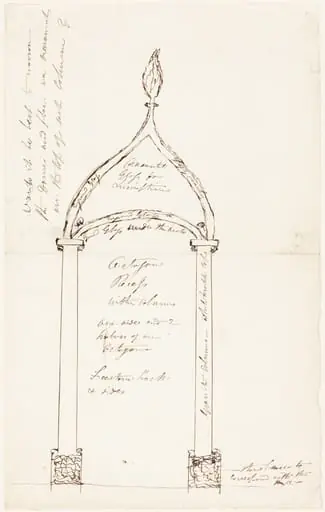 Sketch of Octagon Recess with Columns
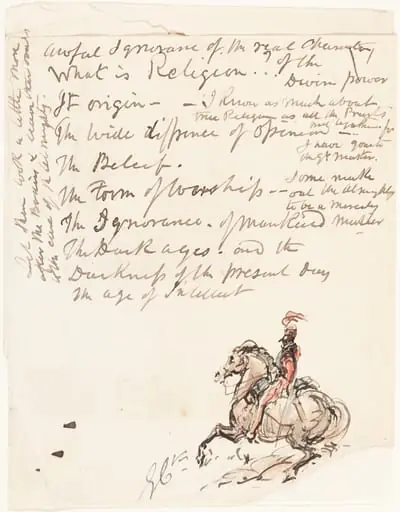 Sketch of Mounted Hussar
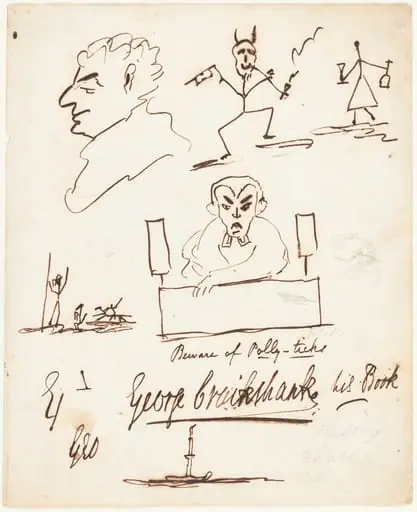 Satirical Sketches
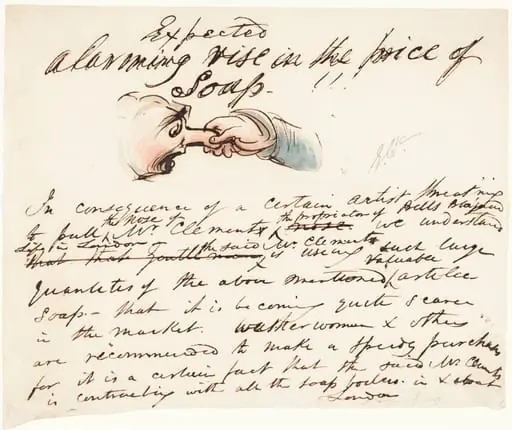 "Expected--alarming rise in the price of soap!"
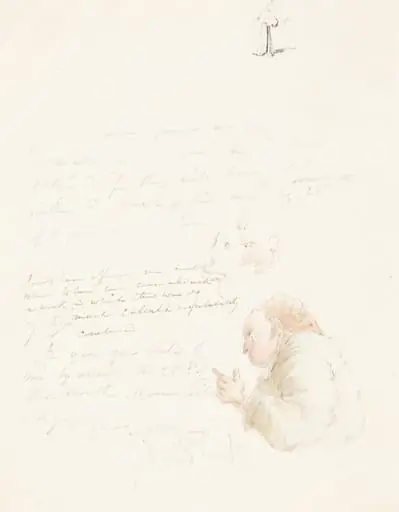 Half-Length of a Lawyer and Other Sketches
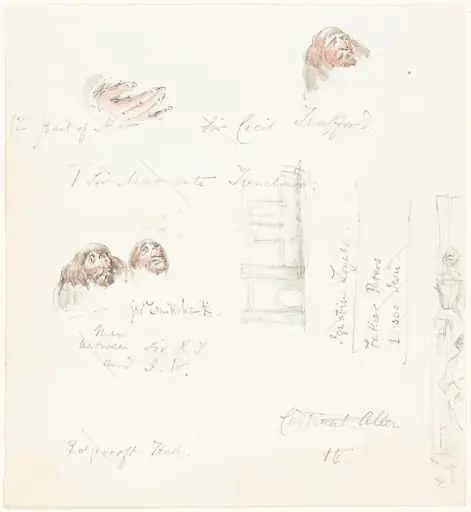 Sketches of Grotesque Faces
 Sketches of Head, Arm, and Kneeling Figure
 Fairy Connoisseurs Inspecting Mr. Frederick Locker's Collection of Drawings
 A Western woman with her children in Macau
 Election for Beadle
 Rose Maylie and Oliver
 Sketches of Figures
 Lovers under a Tree
 Three studies for a portrait of a Western woman and child
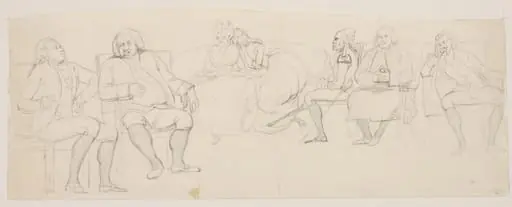 Interior of a drawing room
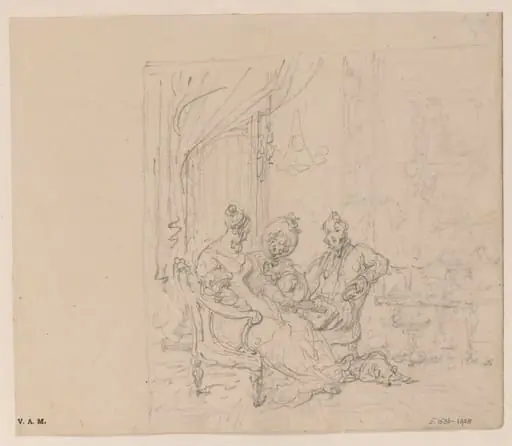 A sketch of three Western figures in a drawing room
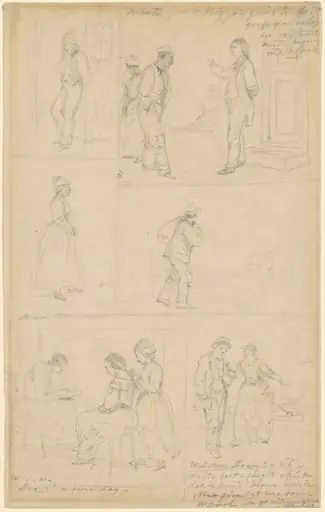 Studies of Figural Groups
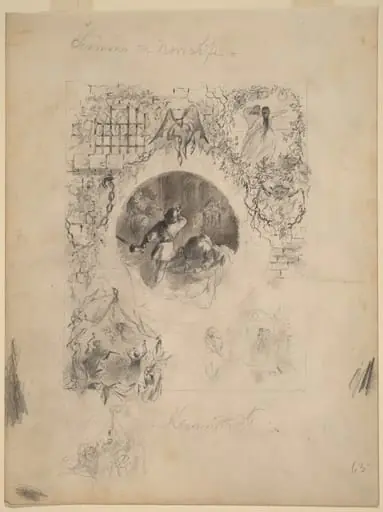 Title Page for Kensworth
 'Rejection' and 'consent'
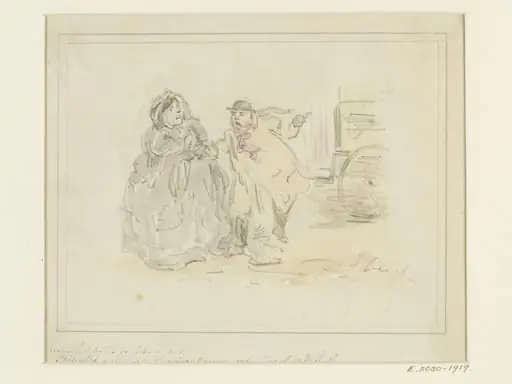 Drawing for book illustration: an old lady and a cabman