Artwork
H Beard Print Collection
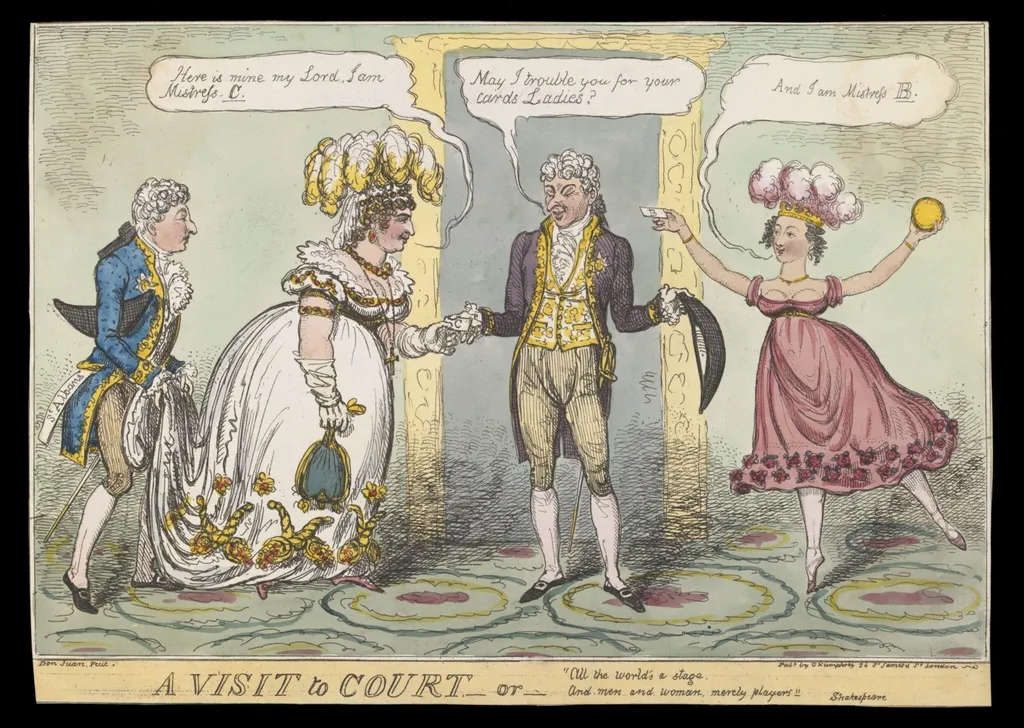
H Beard Print Collection is a print by the Romanticist artist Isaac Robert Cruikshank. It is held in the collection of the Victoria and Albert Museum.
About this work
Overview
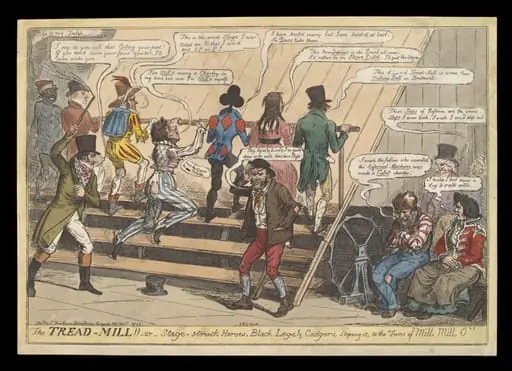
It references Shakespeare’s 'All the world’s a stage' to imply that social advancement was being performed rather than earned.
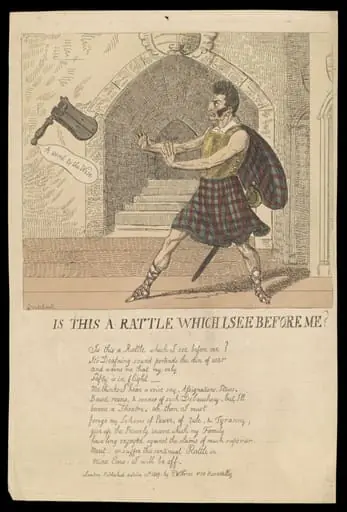
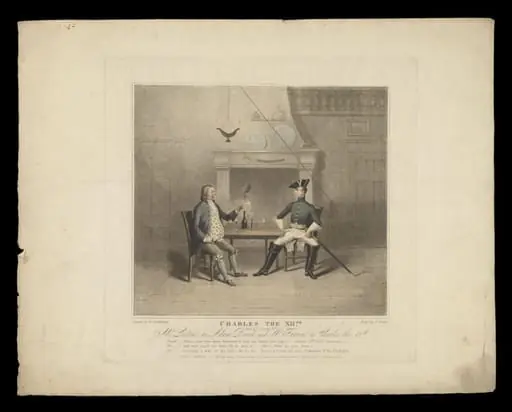
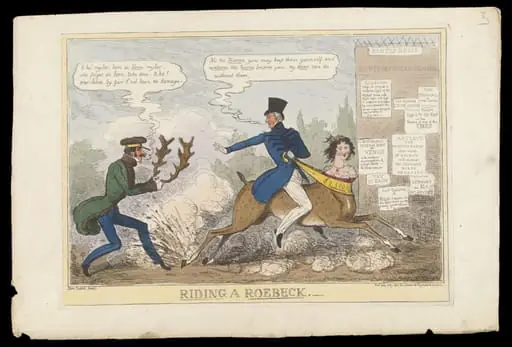
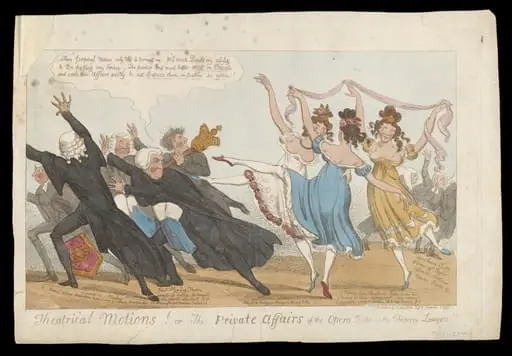
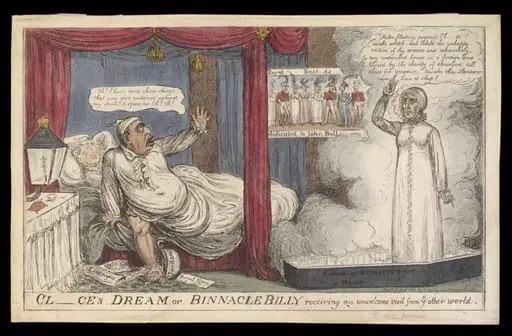
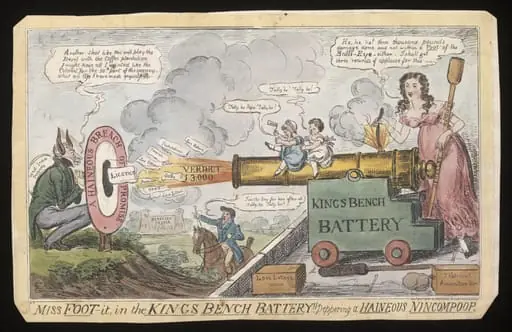
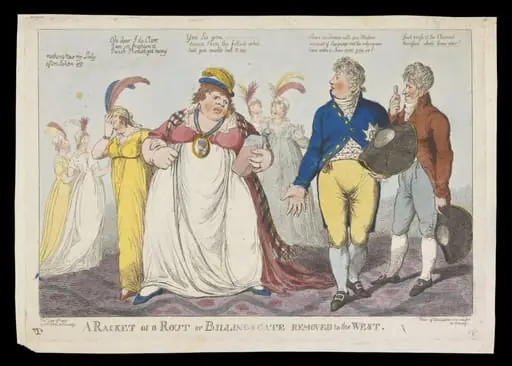
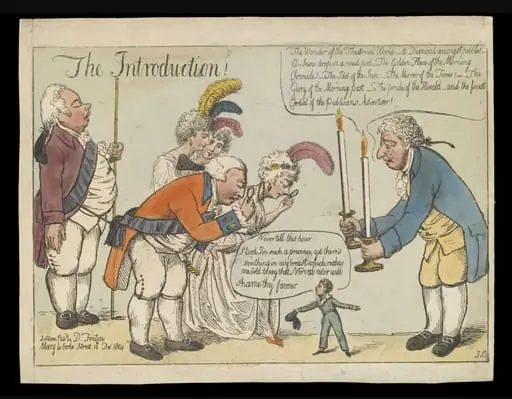
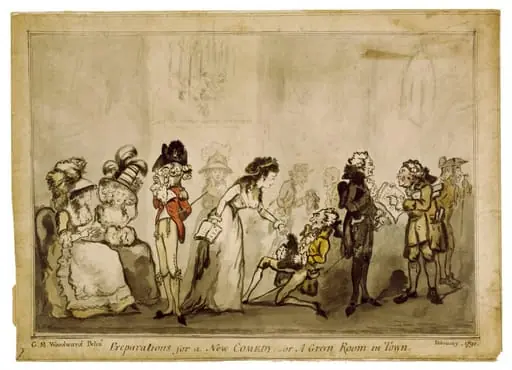
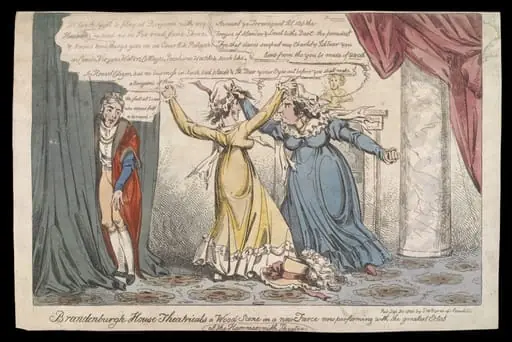
This satirical print, created by Isaac Robert Cruikshank and published by G. Humphrey, depicts a theatrical scene mocking two women of the 1820s. It references Shakespeare’s 'All the world’s a stage' to imply that social advancement was being performed rather than earned. The work functions as visual gossip, using humor to critique the manipulation of identity for status. Its format as a mass-produced print ensured wide circulation among urban audiences.
Subject & Meaning
The print targets Harriot Mellon and Maria Mercandotti, both women who married into higher social circles. By invoking Shakespeare’s line, it suggests their marriages were strategic performances rather than genuine unions. Their new surnames are portrayed as entry passes to elite society, exposing the performative nature of class mobility. The satire implies that social legitimacy was being bought through marriage, not inherited or earned through merit.
Technique & Style
Cruikshank employs detailed caricature and theatrical staging to convey his critique. Figures are exaggerated in posture and expression, echoing stage archetypes. The composition mimics a proscenium arch, reinforcing the theme of performance. Line work is crisp and lively, typical of early 19th-century British printmaking, designed for clarity and immediate impact. The visual rhythm guides the viewer’s eye toward the central irony: social ascent as a staged act.
History & Provenance
Produced in the 1820s, the print emerged during a period of shifting social hierarchies in Britain, when wealth and marriage increasingly influenced class standing. Published by G. Humphrey, a known publisher of satirical prints, it was distributed widely in London. The Victoria and Albert Museum holds a copy, indicating its preservation as a cultural artifact of social commentary rather than mere ephemera.
Context
In early 19th-century England, women’s social mobility often depended on marriage, especially when they came from modest or theatrical backgrounds. Public scrutiny of women like Mellon and Mercandotti reflected anxieties about class boundaries blurring. Satirical prints like this one served as popular media, reinforcing societal norms while simultaneously exposing their hypocrisy through humor and visual wit.
Legacy
The print remains a documented example of how visual satire engaged with gender and class in Regency Britain. It reflects the era’s preoccupation with authenticity in social identity and the role of media in shaping public opinion. While no longer widely known, its preservation in institutional collections underscores its value as a historical record of social critique through popular art.
Artist & collection
Artist
Isaac Cruikshank (5 October 1764 – 1811) was a Scottish painter and caricaturist, known for his social and political satire.