Artwork
The Lost Child
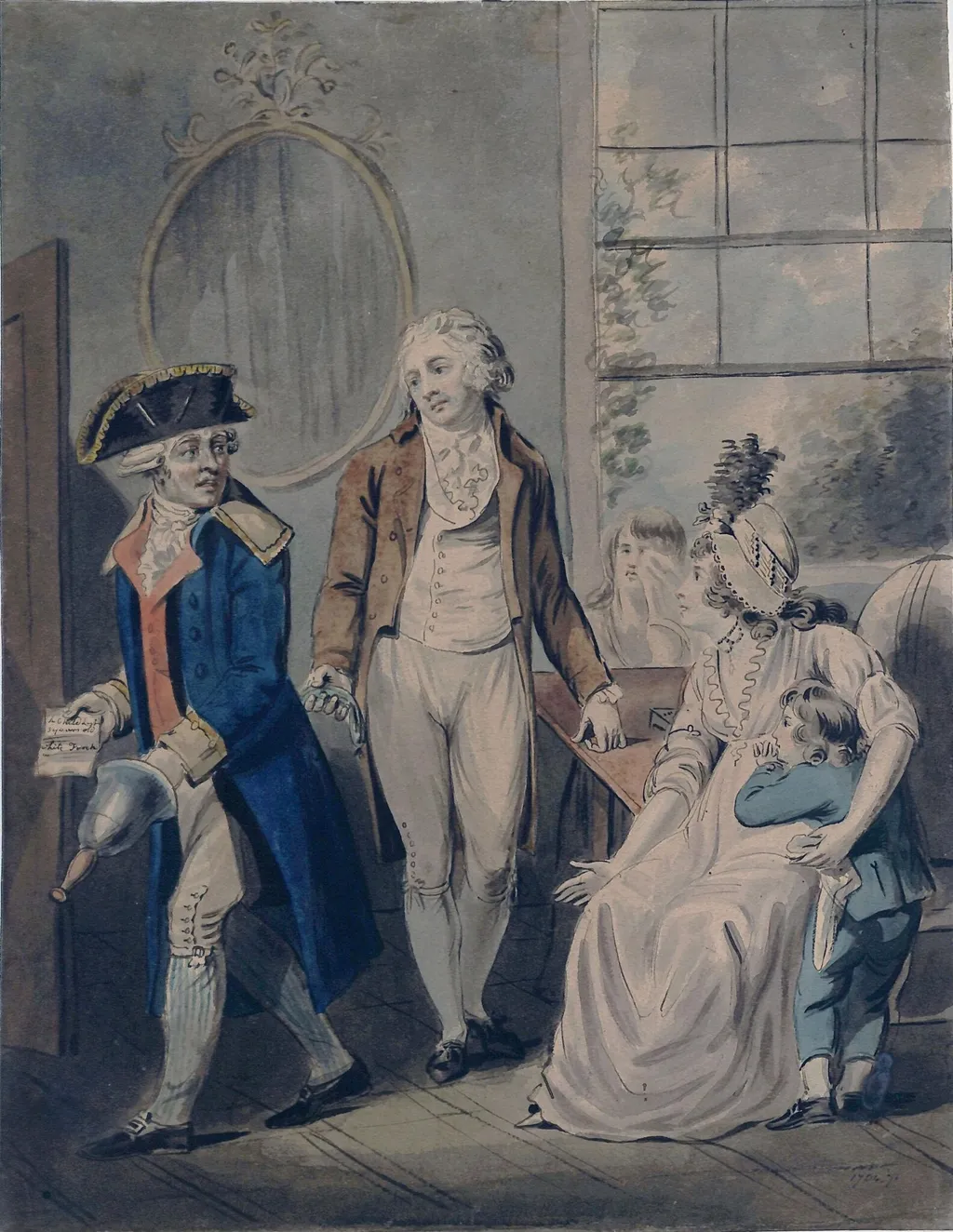
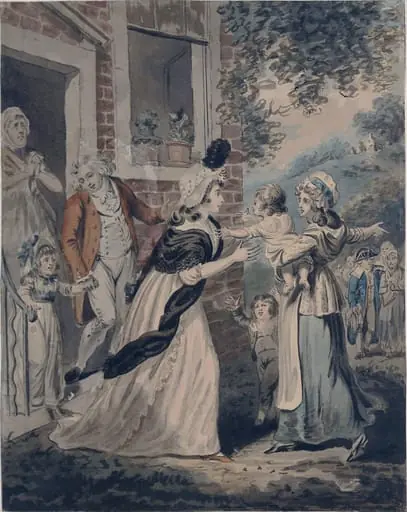
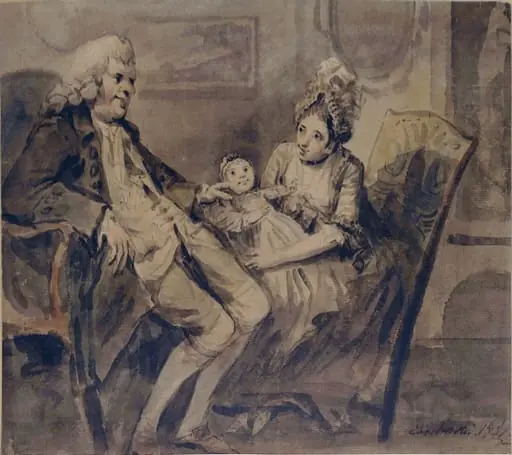
The Lost Child is a watercolor work on paper by the Rococo painting artist Isaac Cruikshank. It dates from 1780 and is held in the collection of the Victoria and Albert Museum.
About this work
Overview
The piece is part of the Victoria and Albert Museum’s collection, where it is preserved as an example of late 18th-century British watercolor practice.
Created in 1780, The Lost Child is a watercolor work by Isaac Cruikshank, a British artist known for his satirical and genre scenes. The piece is part of the Victoria and Albert Museum’s collection, where it is preserved as an example of late 18th-century British watercolor practice. Its intimate scale and quiet tension reflect the era’s growing interest in domestic narratives rendered with sensitivity.
Subject & Meaning
The scene depicts a moment of anxiety within a modest interior: a woman clutches a child while another child peeks from behind her. Two men, one holding a document, stand nearby, suggesting an inquiry or official intervention. The composition conveys unease without overt drama, implying the child may be separated from its family, possibly due to poverty or legal proceedings common in the period.
Technique & Style
Cruikshank employed translucent watercolor washes with loose, rapid brushwork to suggest form and atmosphere. The palette is restrained, favoring muted tones that enhance the somber mood. Light is subtly modeled to define figures against plain walls, and the mirror above them reflects ambient light without revealing detail, adding depth without distraction.
History & Provenance
The painting entered the Victoria and Albert Museum’s collection through its longstanding acquisition of British graphic and decorative arts. While its early ownership is undocumented, its preservation suggests it was valued as a representative work of Cruikshank’s genre scenes. It has remained in public hands since the 19th century, with no record of private sale or significant restoration.
Context
In late 18th-century Britain, watercolor was increasingly used for domestic and social subjects beyond landscape. Cruikshank’s work aligns with a trend of depicting everyday emotional moments, often tinged with moral or social commentary. The presence of a document and formal attire hints at rising state involvement in family welfare, reflecting broader societal shifts in child protection and poverty relief.
Legacy
Though not widely exhibited, The Lost Child exemplifies Cruikshank’s ability to convey psychological nuance in small-scale works. It contributes to the understanding of British watercolor’s evolution from topographical sketching to narrative expression. The painting remains a quiet testament to the private anxieties of ordinary life during a time of social transformation.
Artist & collection