Artwork
The Dame School
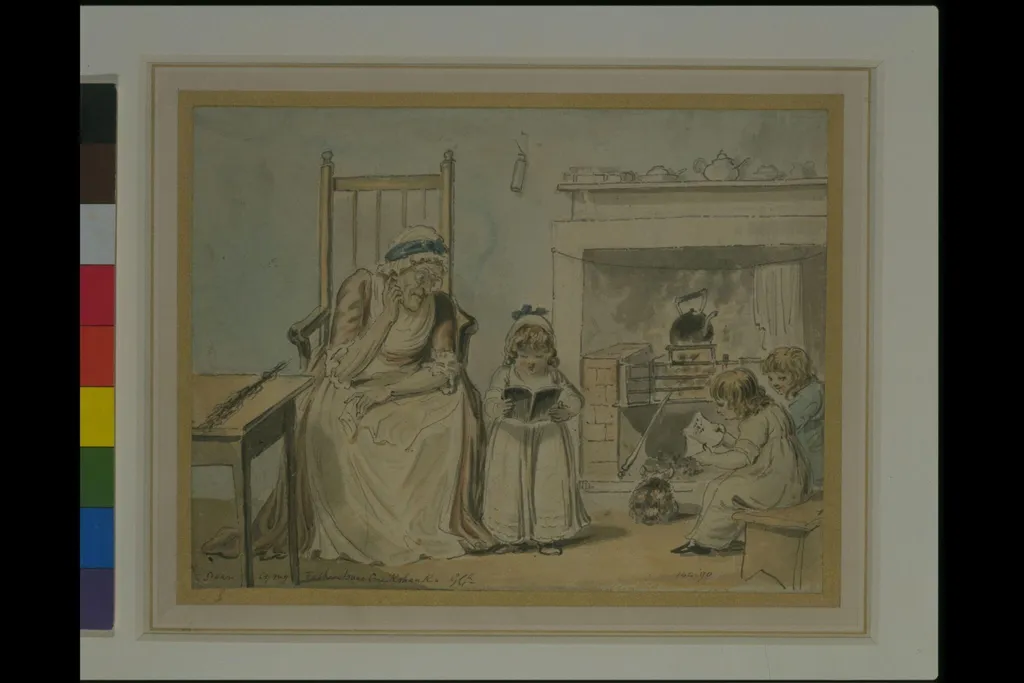
The Dame School is a watercolor work on paper by the British Romanticist artist Isaac Cruikshank. It dates from 1800 and is held in the collection of the Victoria and Albert Museum.
About this work
Overview
Isaac Cruikshank’s watercolour presents a modest interior that appears to be a domestic classroom, commonly known as a Dame school.
Isaac Cruikshank’s watercolour presents a modest interior that appears to be a domestic classroom, commonly known as a Dame school. An older woman, seated in a simple wooden chair, oversees a small group of children gathered around a hearth. The scene captures a quiet moment of instruction, with a girl holding a book and younger children playing nearby, conveying the everyday atmosphere of early informal education.
Subject & Meaning
The composition suggests a basic literacy lesson, as a pupil reads aloud while the teacher listens attentively. The presence of birch twigs on the table hints at the use of corporal discipline, a typical practice in such schools. By depicting both learning and the disciplinary tools, the work reflects the dual nature of these institutions, which combined rudimentary education with strict behavioral control.
Technique & Style
Cruikshank employs soft, muted watercolours and loose, sketchy lines to render the interior with a sense of immediacy. Warm earth tones dominate, emphasizing the homely setting, while the minimal detailing of walls and furnishings keeps focus on the figures. The artist’s restrained palette and informal brushwork convey a realistic, unembellished view of domestic life rather than an idealised or dramatic tableau.
Context
Dame schools were typically operated by single or widowed women before the establishment of state‑run education, offering elementary reading and writing to local children. Contemporary critics often dismissed them as mere childcare, yet the scene illustrates that structured learning did occur within these modest environments. Cruikshank’s depiction thus provides visual evidence of early nineteenth‑century grassroots education practices.
Artist & collection


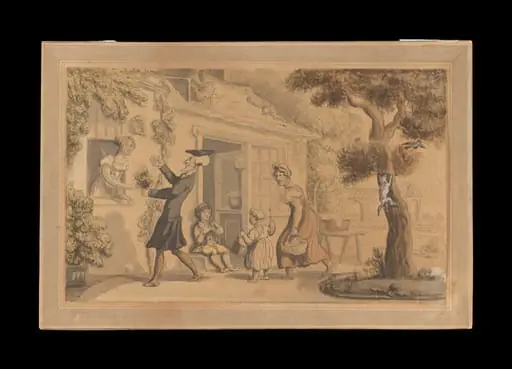 Dr Syntax Presenting a Floral Offering
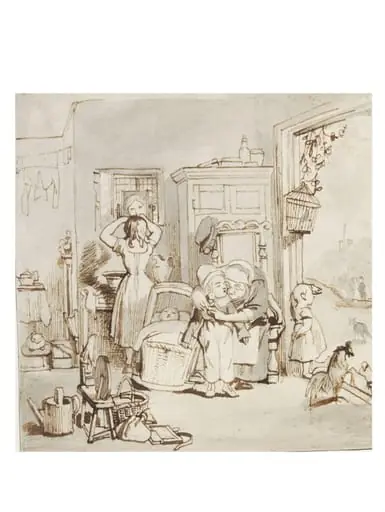 Elderly Lady and Children
 H Beard Print Collection
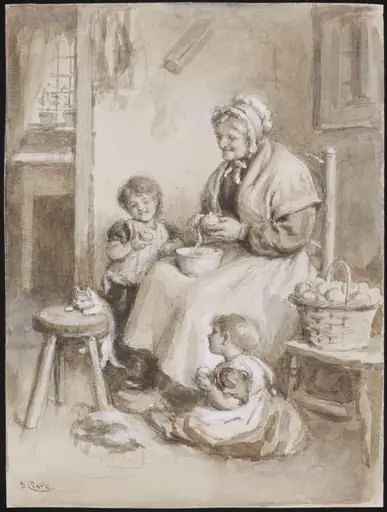 Sketch for the oil painting 'Vaulting Ambitions'
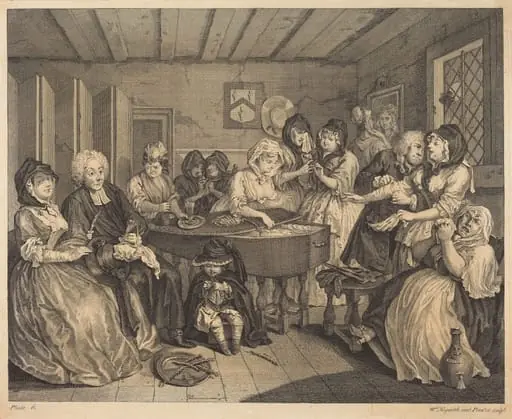 A Harlot's Progress: pl.6
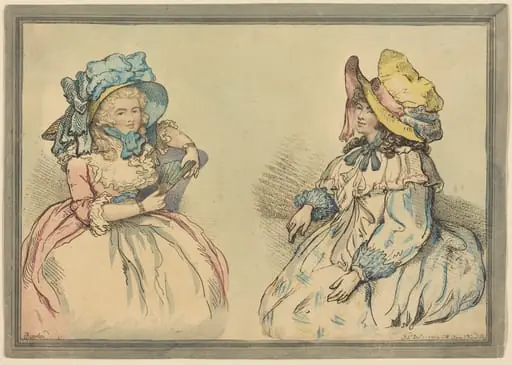 Beauties
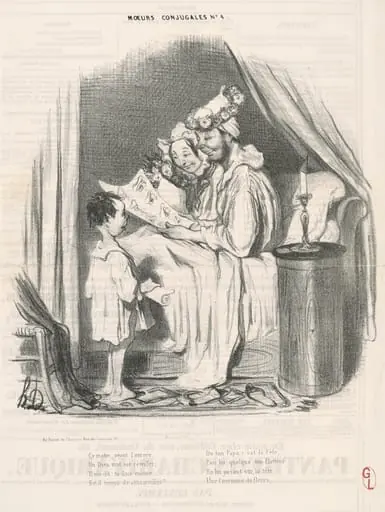 Ce matin avant l'aurore...
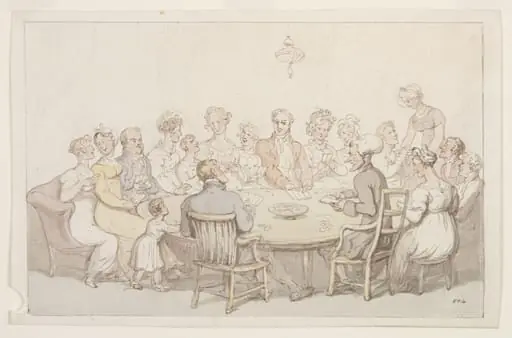 The Tour of Dr. Syntax in Search of the Picturesque
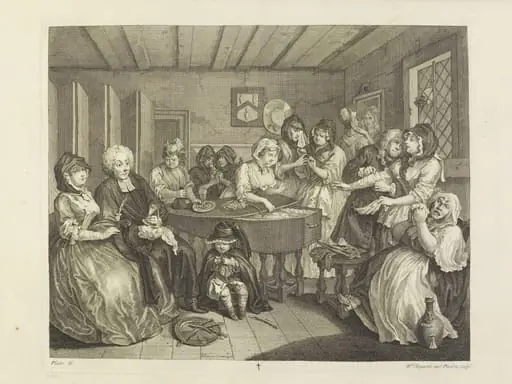 The Harlot's Progress
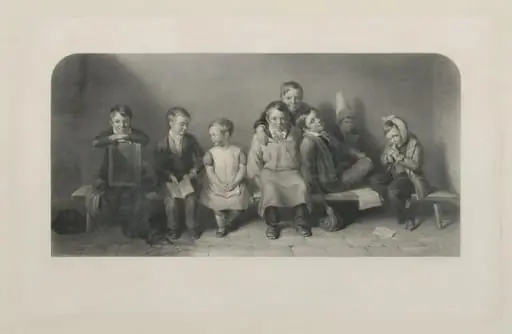 The Smile
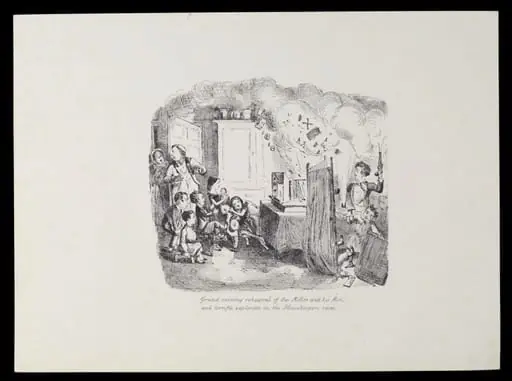 H Beard Print Collection
 The Boat Trip: Heritage of the Cart (The Children with the Cart)