Artwork
Balcic
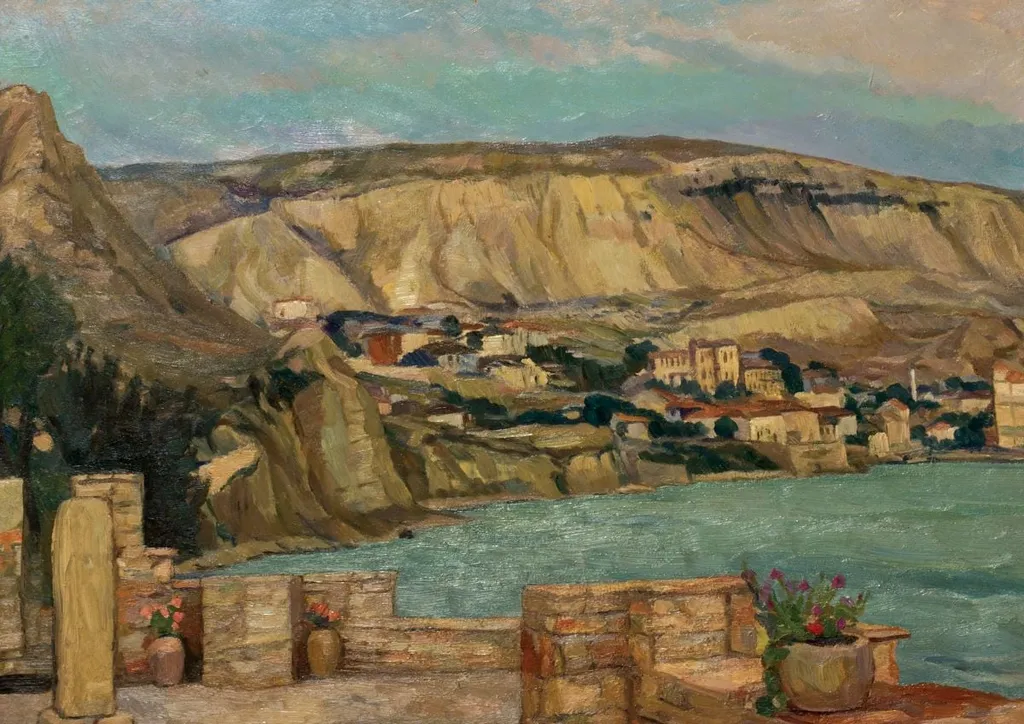
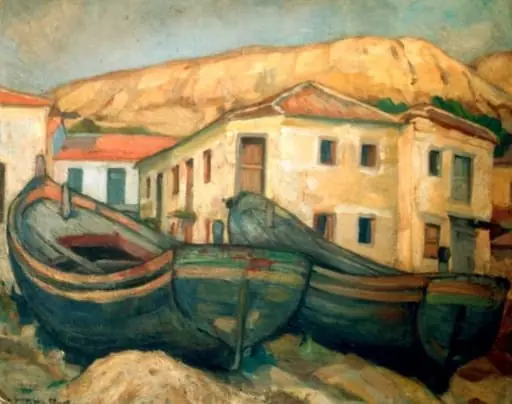
Balcic is an unspecified painting by the Romanesque artist Cecilia Cuțescu-Storck. It dates from 1930 and is held in the collection of the Bucharest Municipality Museum.
About this work
Overview
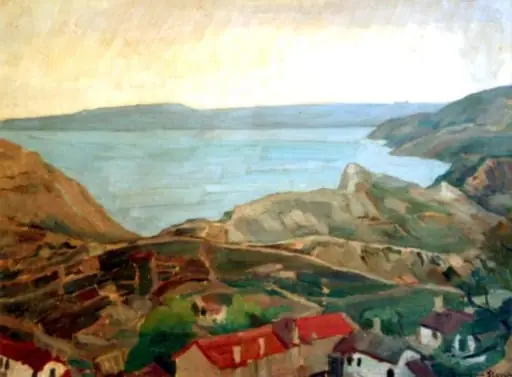
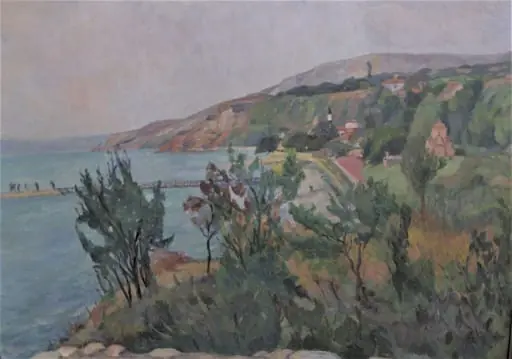
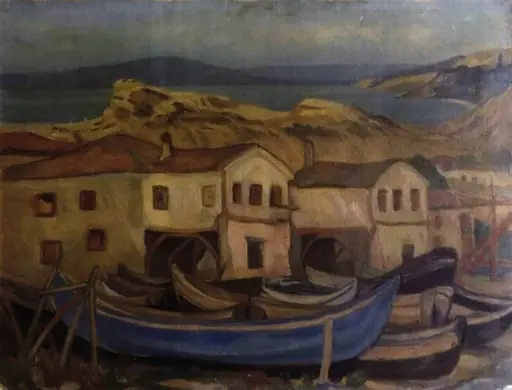
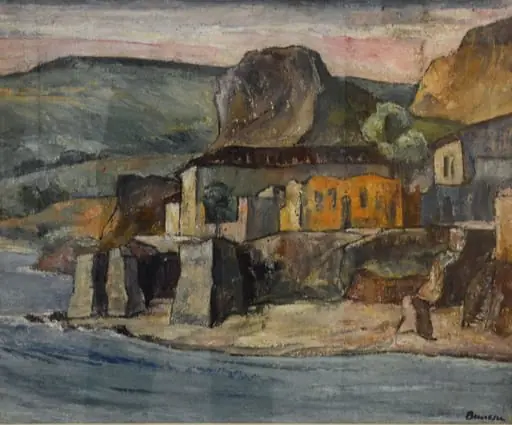
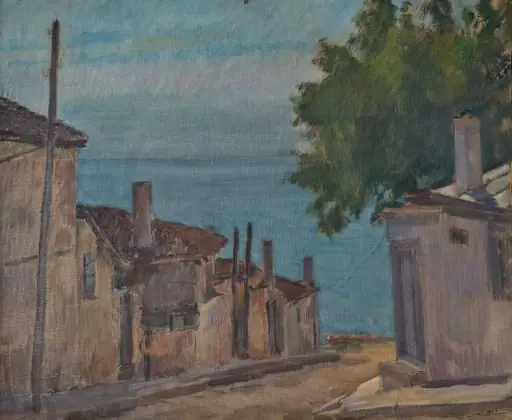
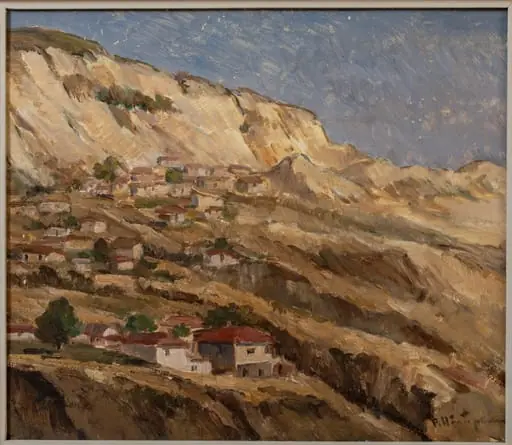
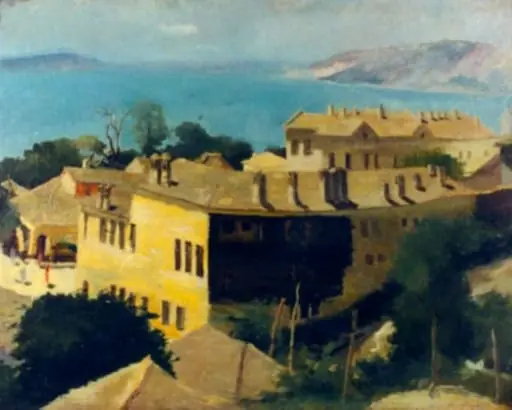
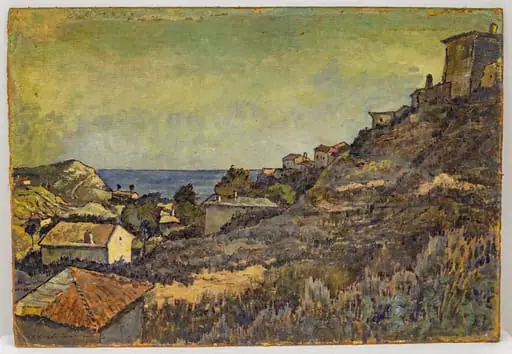
Cecilia Cuțescu‑Storck’s 1930 landscape titled “Balcic” depicts a compact settlement perched on a steep slope. The composition is anchored by a low stone wall with two flowerpots—one bearing vivid pink blossoms—and a slender vertical column. In front of the town a tranquil body of water reflects the soft sky, rendered with gentle brushwork.
Subject & Meaning
The painting captures the town of Balcic, illustrating how architecture adapts to a rugged hillside, with houses arranged like steps. The inclusion of domestic details such as flowerpots and the solitary column suggests a quiet, everyday life, while the calm water and muted sky convey a sense of repose amid the steep terrain.
Technique & Style
Cuțescu‑Storck employs a pronounced impasto, especially on the hillside and atmospheric sky, allowing the paint to stand out in thick, tactile strokes. Warm, earthy tones dominate the land and structures, contrasted by cooler blues in the water. The visible brushwork adds texture and depth, emphasizing the physicality of the landscape.
History & Provenance
Created in 1930, “Balcic” entered the collection of the Museum of Ethnography, where it remains on display. The work reflects the artist’s interest in regional scenes during the interwar period, aligning with the museum’s focus on cultural and geographical documentation.
Context
During the early twentieth century, Romanian artists often turned to local scenery to explore national identity. Cuțescu‑Storck’s depiction of Balcic fits within this trend, presenting a specific coastal town while employing modernist textural techniques that bridge traditional landscape painting and contemporary expression.
Artist & collection

Artist
Cecilia Cuțescu-Storck was a Romanian painter with a strong influence on cultural life in the interwar period.