Artwork
The Great East River Suspension Bridge: Connecting the Cities of New York and Brooklyn
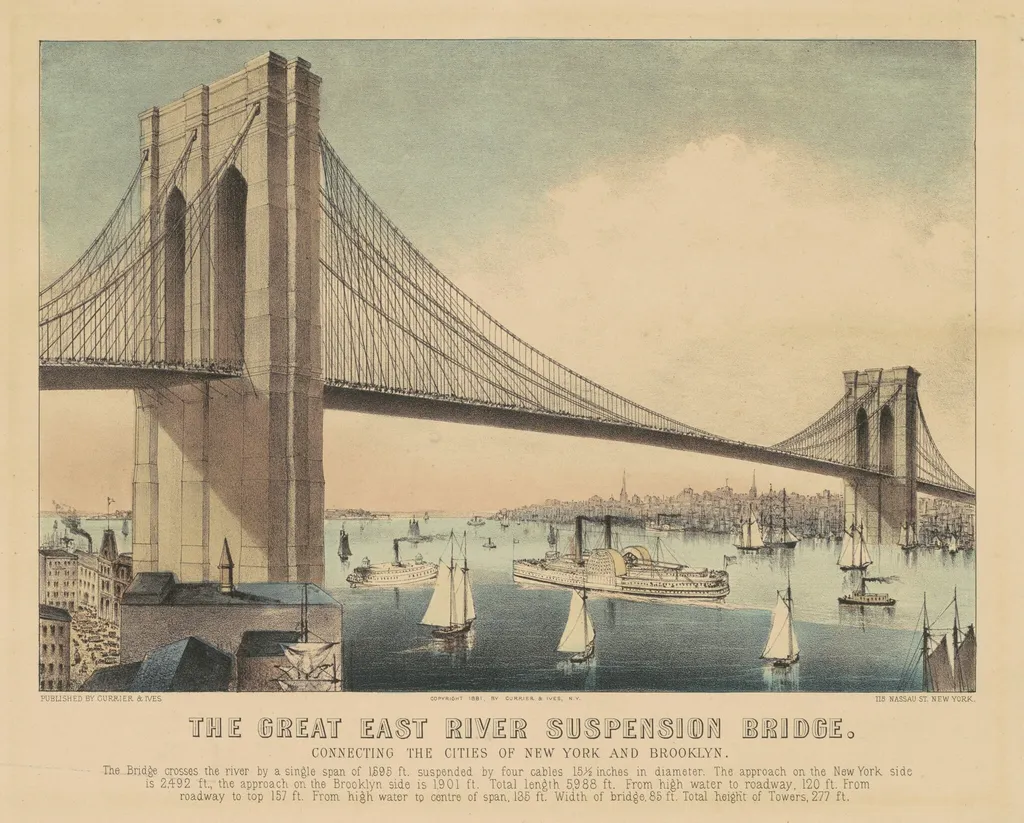
The Great East River Suspension Bridge: Connecting the Cities of New York and Brooklyn is an ink print by the Impressionist artist Currier and Ives. It dates from 1881 and is held in the collection of the National Gallery of Art.
About this work
Overview
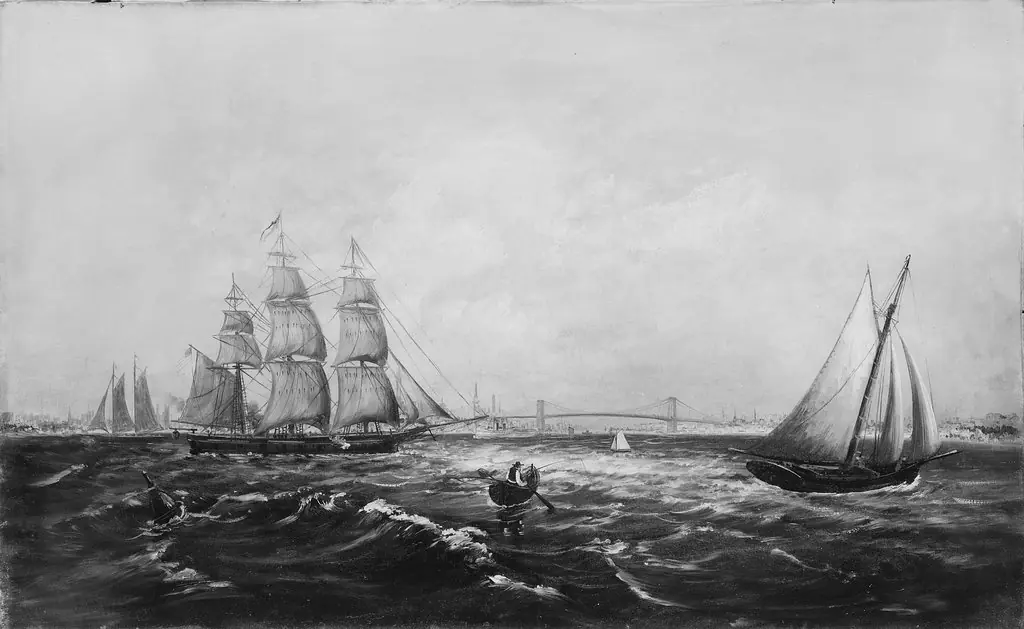
This 1881 hand-colored lithograph by Currier and Ives depicts the East River Suspension Bridge as it linked Manhattan and Brooklyn. The print captures the bridge in full view, framed by the urban landscapes of both cities. Rendered with precision and subtle color, it presents a panoramic moment of urban transition, emphasizing the bridge as both infrastructure and symbol of connection.
Subject & Meaning
The bridge is portrayed not merely as engineering but as a vital artery of daily life. Figures on foot and in carriages cross its span, while vessels navigate the river below, suggesting commerce and movement. The composition implies progress and unity between two growing municipalities, reflecting the era’s faith in infrastructure to reshape social and economic life.
Technique & Style
Executed in lithography, the image was hand-colored after printing to enhance realism and visual appeal. Fine lines define architectural details, while atmospheric perspective softens the distant skyline. The balance between meticulous foreground elements and hazy backgrounds follows popular 19th-century print conventions, prioritizing clarity and narrative over artistic abstraction.
History & Provenance
Produced by Currier and Ives, the firm known for mass-distributed American scenes, this print was part of a series documenting modern achievements. It was likely sold as a decorative item for middle-class homes, offering viewers a tangible connection to a landmark that had opened just over a decade earlier. Its popularity reflects public fascination with technological advancement.
Context
Completed in 1883, the bridge was among the first major suspension structures in the U.S. and the longest of its kind at the time. This print, made shortly before its opening, capitalized on anticipation and civic pride. It coincided with Brooklyn’s incorporation into New York City in 1898, making the image a prescient record of impending urban consolidation.
Legacy
The lithograph endures as a documentary record of late 19th-century urban life and infrastructure. Though the original bridge has been replaced, this image preserves its early appearance and the rhythms of daily use. It remains a reference for historians studying how visual media shaped public perception of engineering feats during America’s industrial expansion.
Artist & collection