Artwork
View of a Port
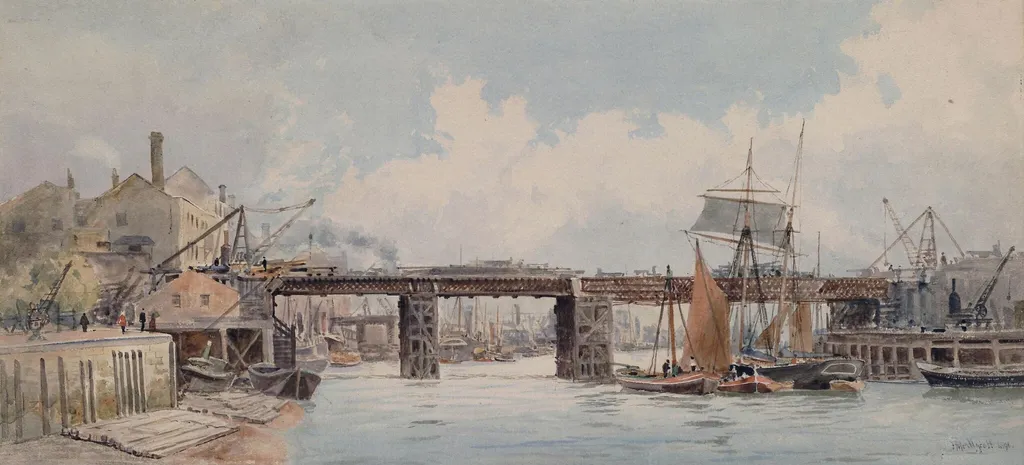
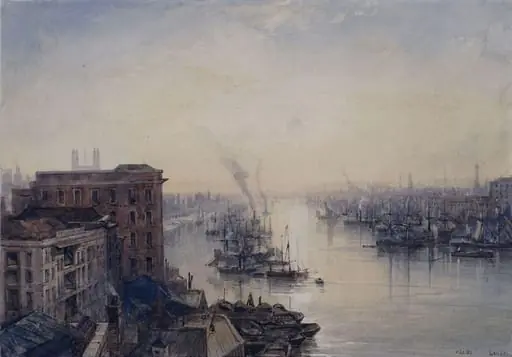
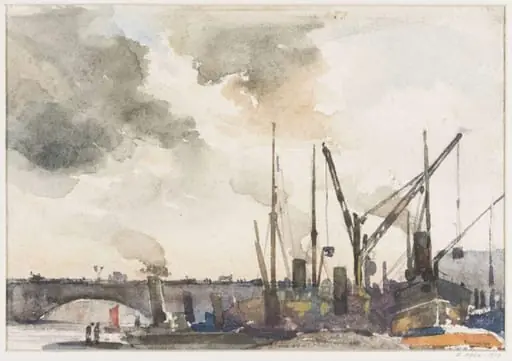
View of a Port is a watercolor work on paper by the Impressionist artist Reverend Sir Hubert James Medlycott. It dates from 1891 and is held in the collection of the Victoria and Albert Museum.
About this work
Overview
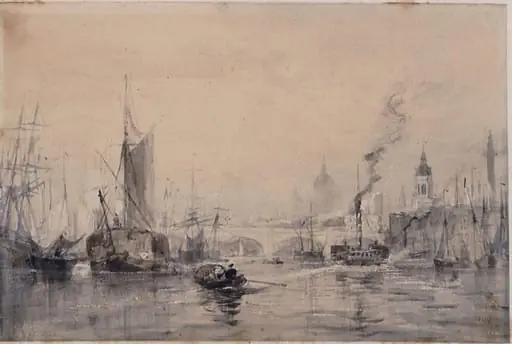
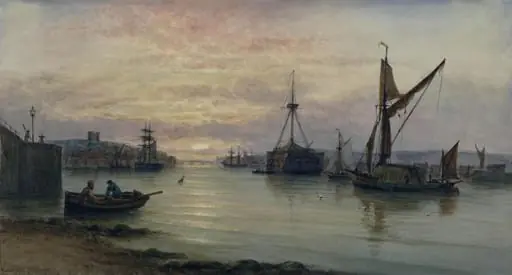
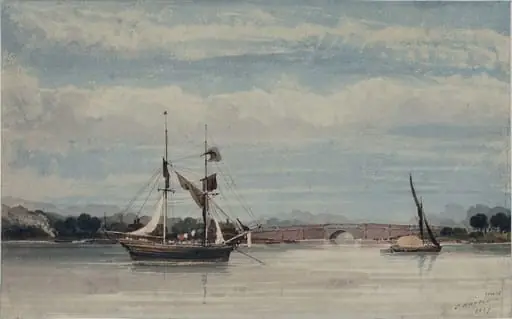
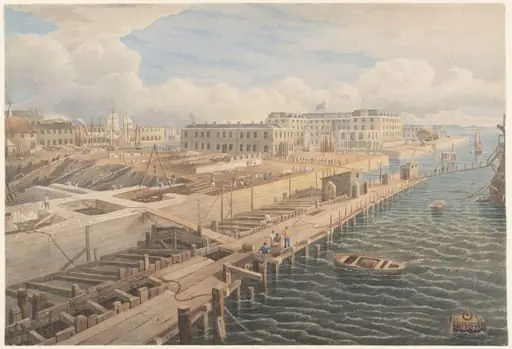
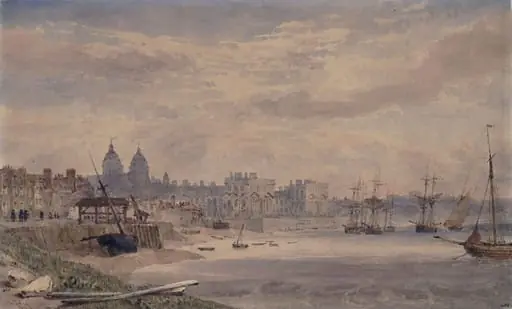
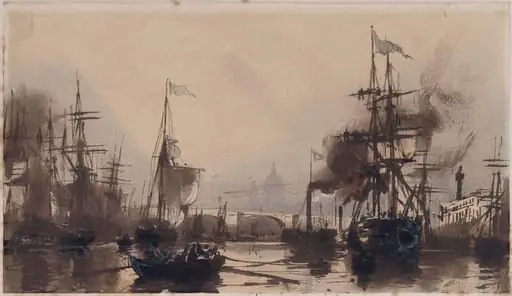
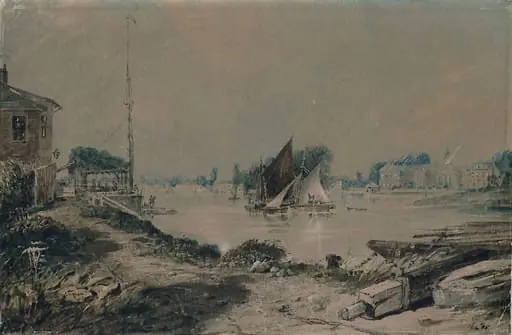
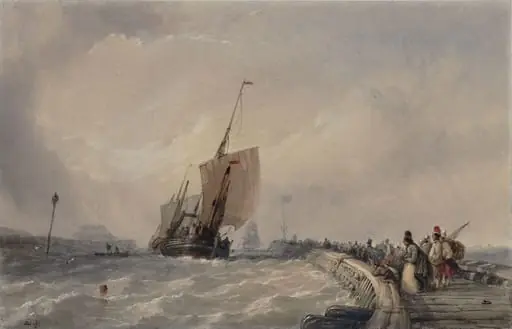
Painted in 1891 by Reverend Sir Hubert James Medlycott, this watercolour depicts a coastal port scene. The work is signed and dated by the artist, confirming its origin and timing. Executed in transparent washes, it captures a quiet moment within an active maritime setting, balancing movement and stillness through delicate tonal shifts and restrained color.
Subject & Meaning
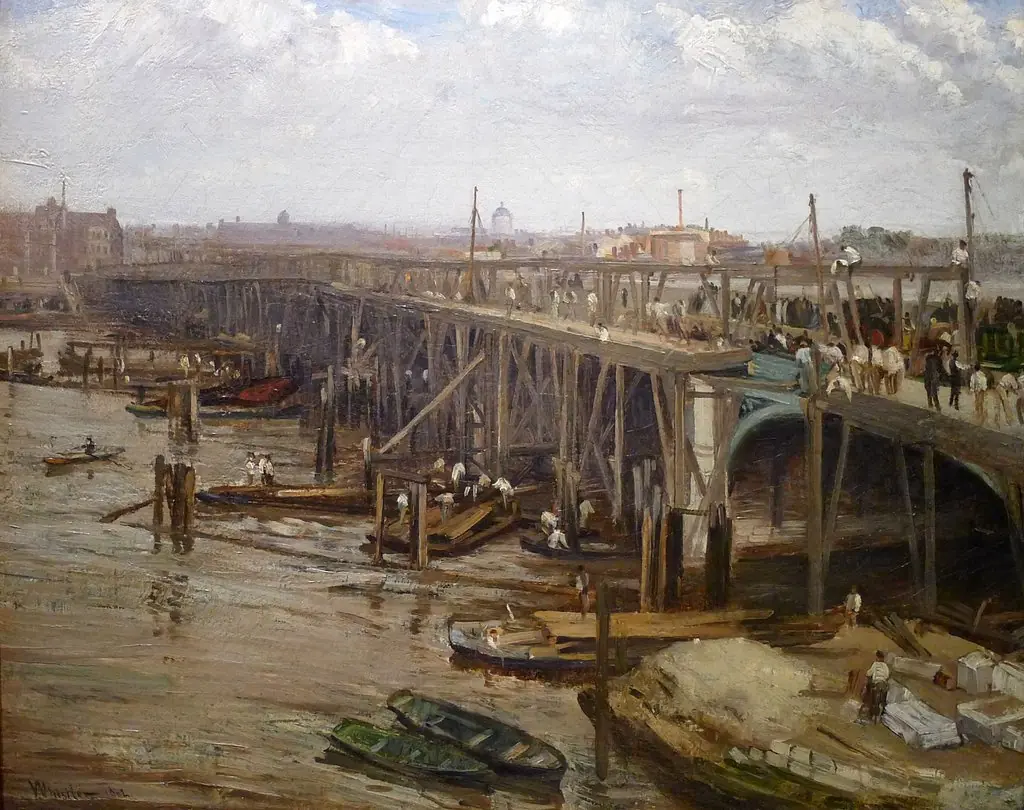
The scene centers on a metallic bridge spanning the water, with figures standing along its length. Behind it, industrial structures—including cranes and warehouses—suggest commercial activity. Yet the composition avoids chaos; the calm水面 and subdued palette imply reflection over urgency, transforming a working harbor into a contemplative space.
Technique & Style
Medlycott employed soft, layered watercolor washes to render light on water and the weathered surfaces of buildings and metalwork. Brushwork is loose but deliberate, suggesting texture without detail. The muted palette—soft grays, blues, and ochres—enhances atmospheric cohesion, aligning with observational traditions rather than overt Impressionist boldness.
History & Provenance
The painting remains in private hands since its creation, with no documented public exhibition history. Its survival as a personal work by a clergyman-artist reflects the 19th-century practice of amateur watercolorists documenting everyday landscapes. No significant alterations or restorations are known.
Context
In late Victorian Britain, watercolor was widely practiced by educated amateurs, especially clergy and gentlemen artists. Medlycott’s scene echoes the era’s fascination with industrial progress, yet his treatment avoids glorification, favoring quiet observation over spectacle—a common approach among regional watercolorists outside major urban centers.
Legacy
Though not widely exhibited or reproduced, the work stands as a modest example of late 19th-century British watercolor practice. It preserves a specific moment in port infrastructure and daily life, offering insight into how non-professional artists engaged with modernizing landscapes through intimate, personal technique.
Artist & collection
Artist
Reverend Sir Hubert James Medlycott
Hubert James Medlycott painted quiet watercolours of ports and harbours in the late 1800s.