Artwork
Christ at Emmaus
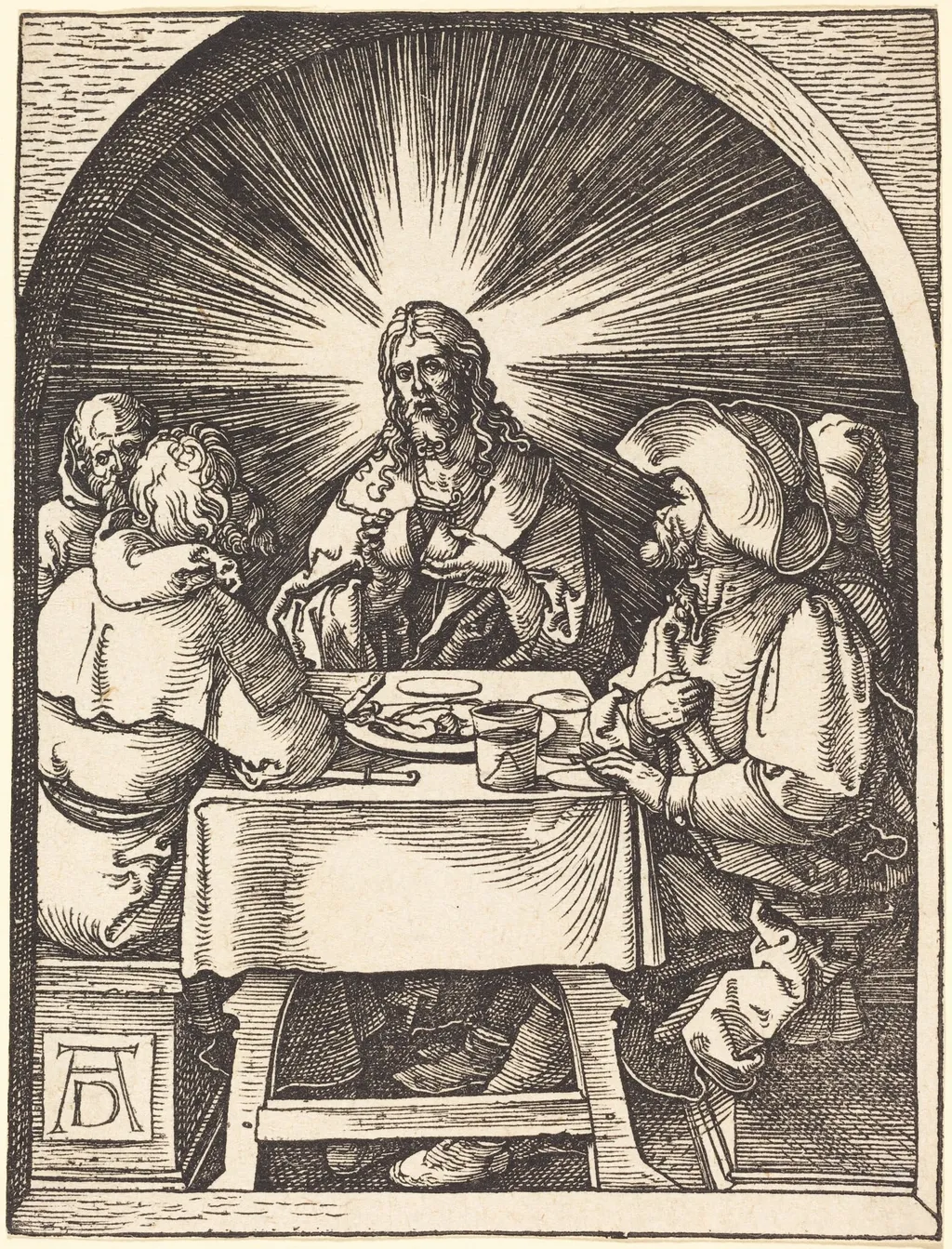
Christ at Emmaus is an ink print by the Northern Renaissance artist Albrecht Dürer. It dates from 1510 and is held in the collection of the National Gallery of Art.
About this work
Overview
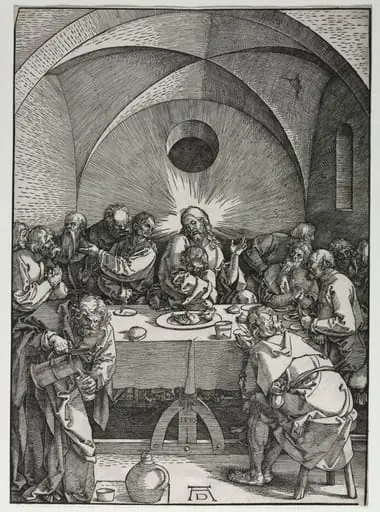
A distinct beam of sunlight descends from the upper left, illuminating the central figure and emphasizing the divine nature of the revelation.
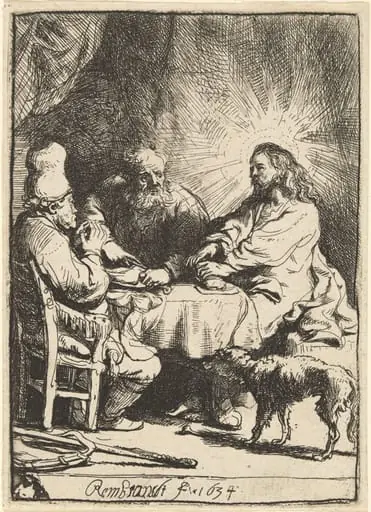
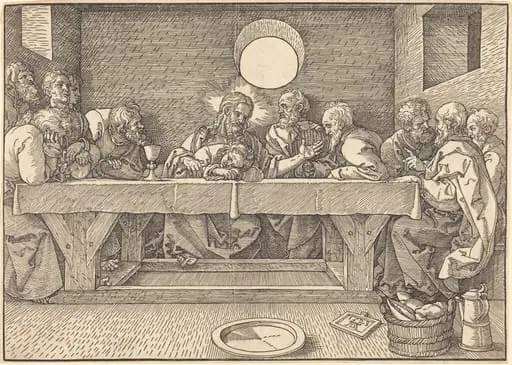
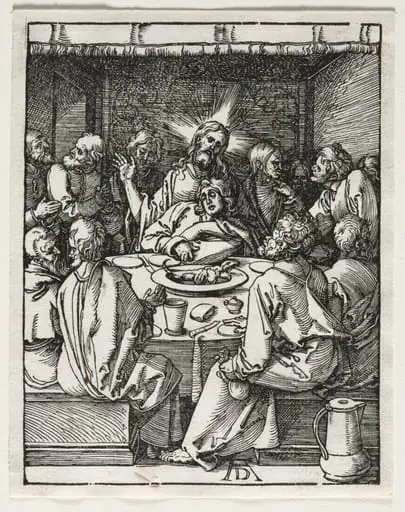
Created in 1510, Albrecht Dürer's woodcut 'Christ at Emmaus' depicts the biblical moment from the Gospel of Luke where the resurrected Christ reveals his identity to two disciples during a meal. The composition centers on three figures seated at a table laden with bread, a cup, and a plate of food. Christ, distinguished by a long beard, occupies the middle ground, raising his right hand in a gesture of blessing over the bread. The two disciples sit on either side with hands folded in reverence and shock. Dürer employs his signature sharp, precise lines to render the scene, utilizing cross-hatching to create depth, volume, and varied textures in the drapery and the wooden table. A distinct beam of sunlight descends from the upper left, illuminating the central figure and emphasizing the divine nature of the revelation. Executed on laid paper, this work exemplifies Dürer's mastery of the woodcut medium during the German Renaissance, demonstrating his ability to translate complex theological narratives into a graphic format with remarkable clarity and emotional intensity. The piece stands as a significant example of his religious output from the early 16th century, reflecting the period's heightened focus on scriptural literalism and devotional imagery.
Subject & Meaning
The composition shows three figures gathered around a modest table. The central figure, identified as Christ, lifts his hands in a benediction over a loaf of bread, a cup, and a plate of food, while the two companions sit with their palms pressed together, suggesting reverence and contemplation. The illumination from an unseen light source underscores the spiritual revelation of the encounter.
Technique & Style
Dürer employed the woodcut medium, carving fine lines into a wooden block to produce a range of textures. The print is distinguished by sharply defined contours that model the folds of the tablecloth and the drapery of the robes, creating a sense of depth without tonal shading. Such linear precision was characteristic of Dürer’s printmaking practice before the advent of photographic reproduction.
History & Provenance
Created in the early years of Dürer’s mature period, the work reflects his ongoing interest in biblical subjects and the technical possibilities of printmaking. While specific ownership records are scarce, the piece has been catalogued among Dürer’s religious prints and is preserved in several major museum collections, illustrating the continued scholarly and curatorial interest in his graphic oeuvre.
Artist & collection
Artist
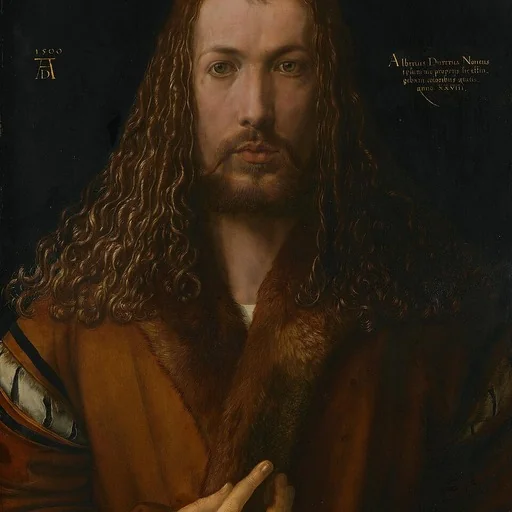
Albrecht Dürer spent his life in Nuremberg, a busy German city where artists traded prints like currency.

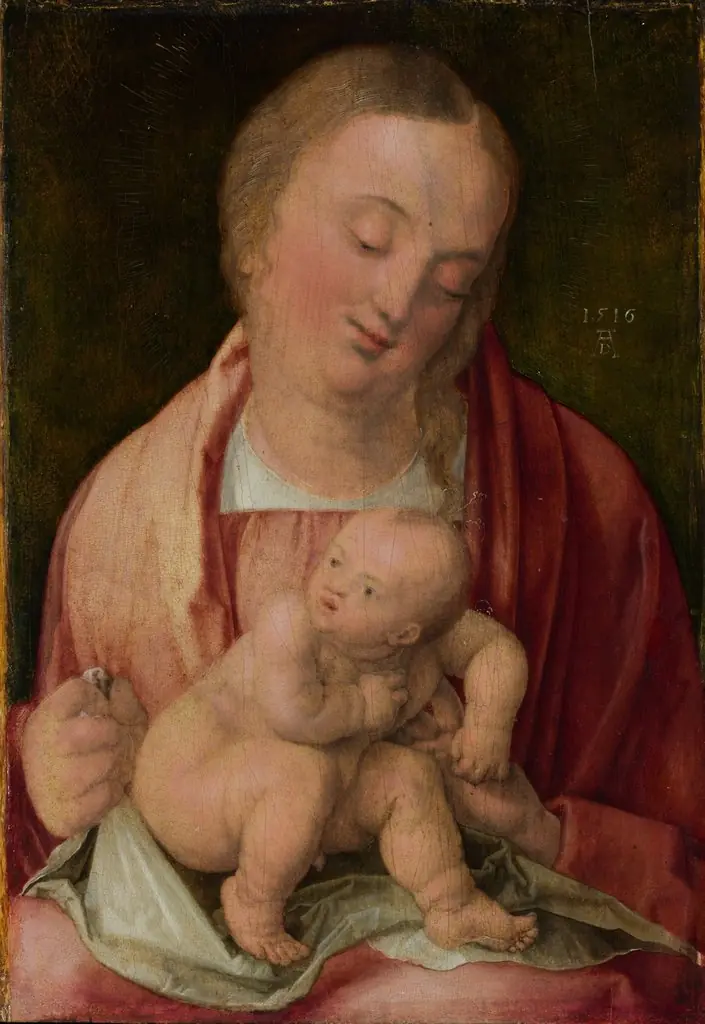
![Madonna and Child [obverse], by Albrecht Dürer](https://artifactworldgallery.com/img/albrecht-durer--madonna-and-child-obverse--d7b8ebf05d22ebe5-w320.webp)
![Lot and His Daughters [reverse], by Albrecht Dürer](https://artifactworldgallery.com/img/albrecht-durer--lot-and-his-daughters-reverse--b4ebf9b282faa17a-w320.webp)