Artwork
The Last Supper
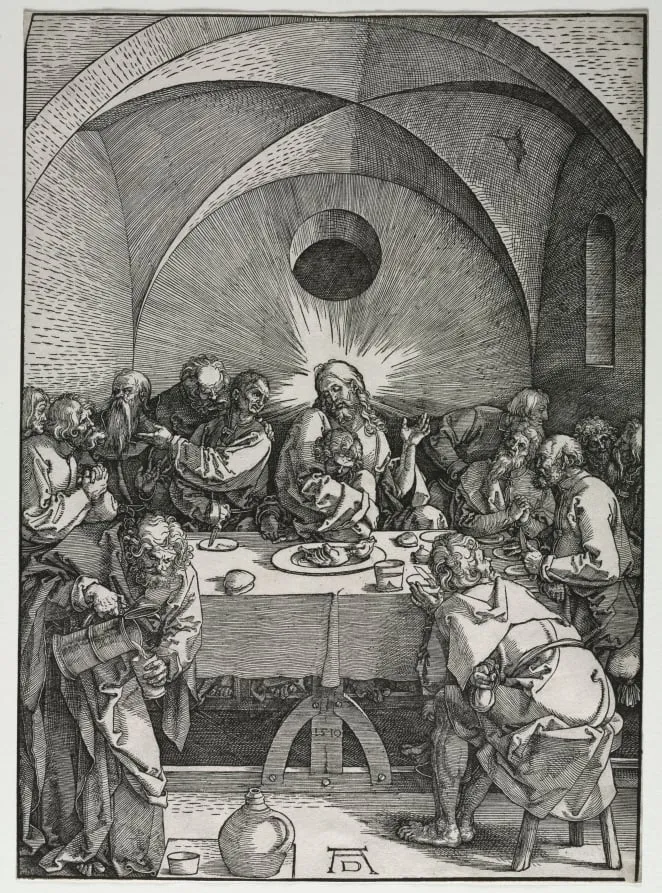
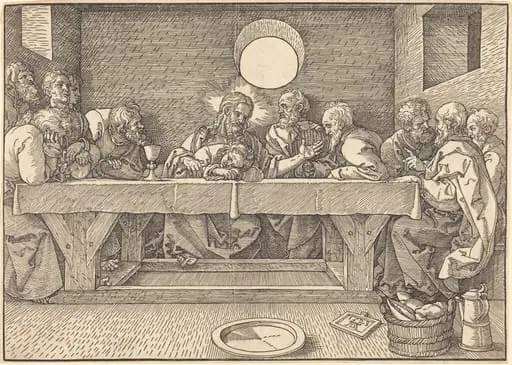
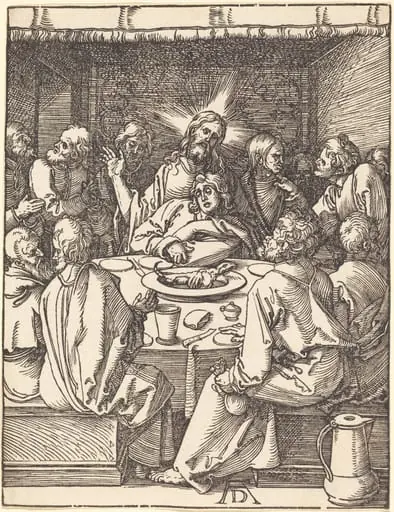
The Last Supper is a print by the Renaissance artist Albrecht Dürer. It dates from 1510 and is held in the collection of the Cleveland Museum of Art.
About this work
Overview
Albrecht Dürer’s woodcut of the Last Supper presents a tightly packed, vertical scene in which thirteen figures gather around a long table. Central to the composition is Christ, whose raised hands and halo draw the eye, while the surrounding disciples appear in close proximity, sharing the ritual of broken bread and spilling wine.
Subject & Meaning
The image captures the moment of the Christian Eucharist’s origin, when Jesus announces that the wine represents his blood. Dürer emphasizes the immediacy of the declaration, portraying the disciples’ reactions and the communal act of sharing bread and wine as a narrative of impending sacrifice.
Technique & Style
Executed as a woodcut, the work relies on fine parallel lines to render both the luminous halo surrounding Christ and the shadows that suggest a vaulted interior. These linear textures create a sense of depth on a flat surface, distinguishing the piece from later painted treatments that employ softer modeling.
History & Provenance
Created in the early 16th century, Dürer’s print reflects the Northern Renaissance’s interest in detailed engraving and religious subjects. The woodcut was circulated widely through printed copies, extending the artist’s influence beyond his painted oeuvre and reaching a broad audience of devotional viewers.
Context
During Dürer’s lifetime, the Last Supper was a favored theme for its theological significance and narrative richness. The print aligns with contemporary devotional practices, offering a visual aid for contemplation of the sacrament while showcasing the technical possibilities of printmaking in the period.
Artist & collection
Artist
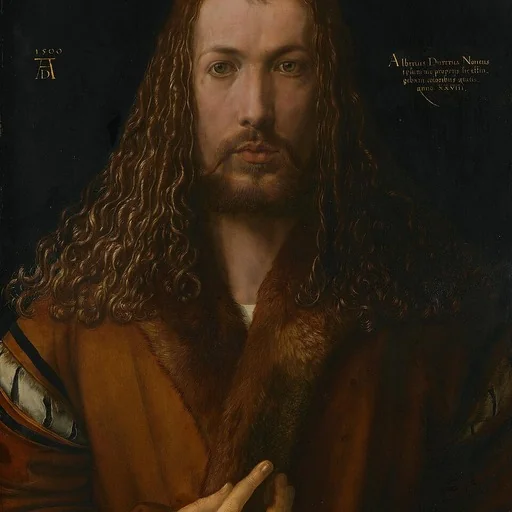
Albrecht Dürer spent his life in Nuremberg, a busy German city where artists traded prints like currency.

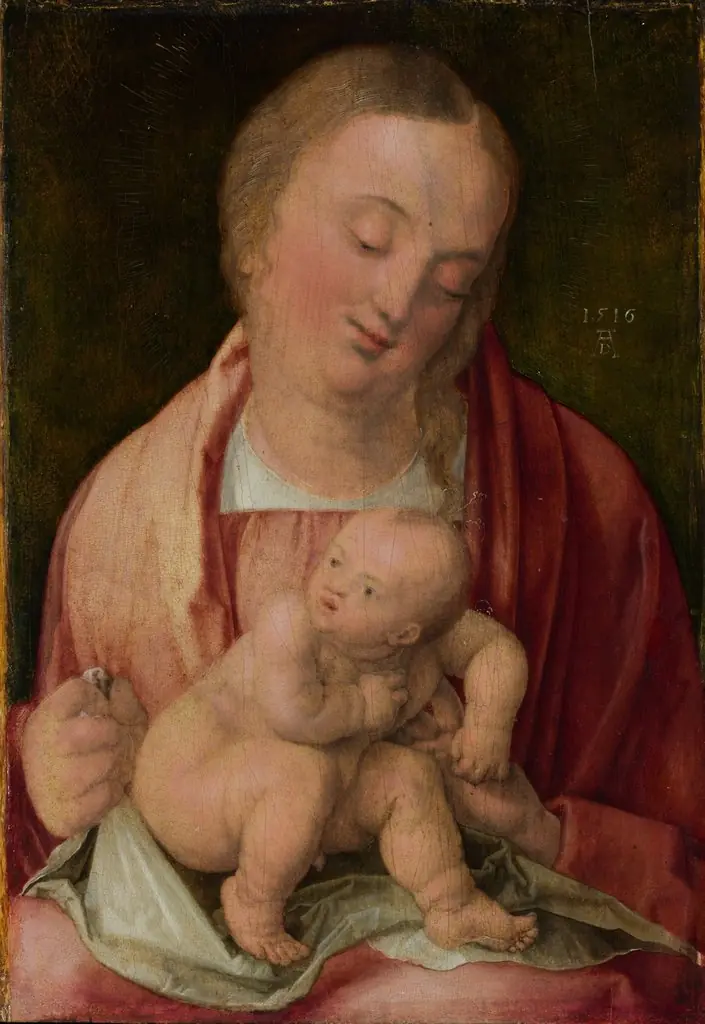
![Madonna and Child [obverse], by Albrecht Dürer](https://artifactworldgallery.com/img/albrecht-durer--madonna-and-child-obverse--d7b8ebf05d22ebe5-w320.webp)
![Lot and His Daughters [reverse], by Albrecht Dürer](https://artifactworldgallery.com/img/albrecht-durer--lot-and-his-daughters-reverse--b4ebf9b282faa17a-w320.webp)