Artwork
Christ at Emmaus: the Smaller Plate
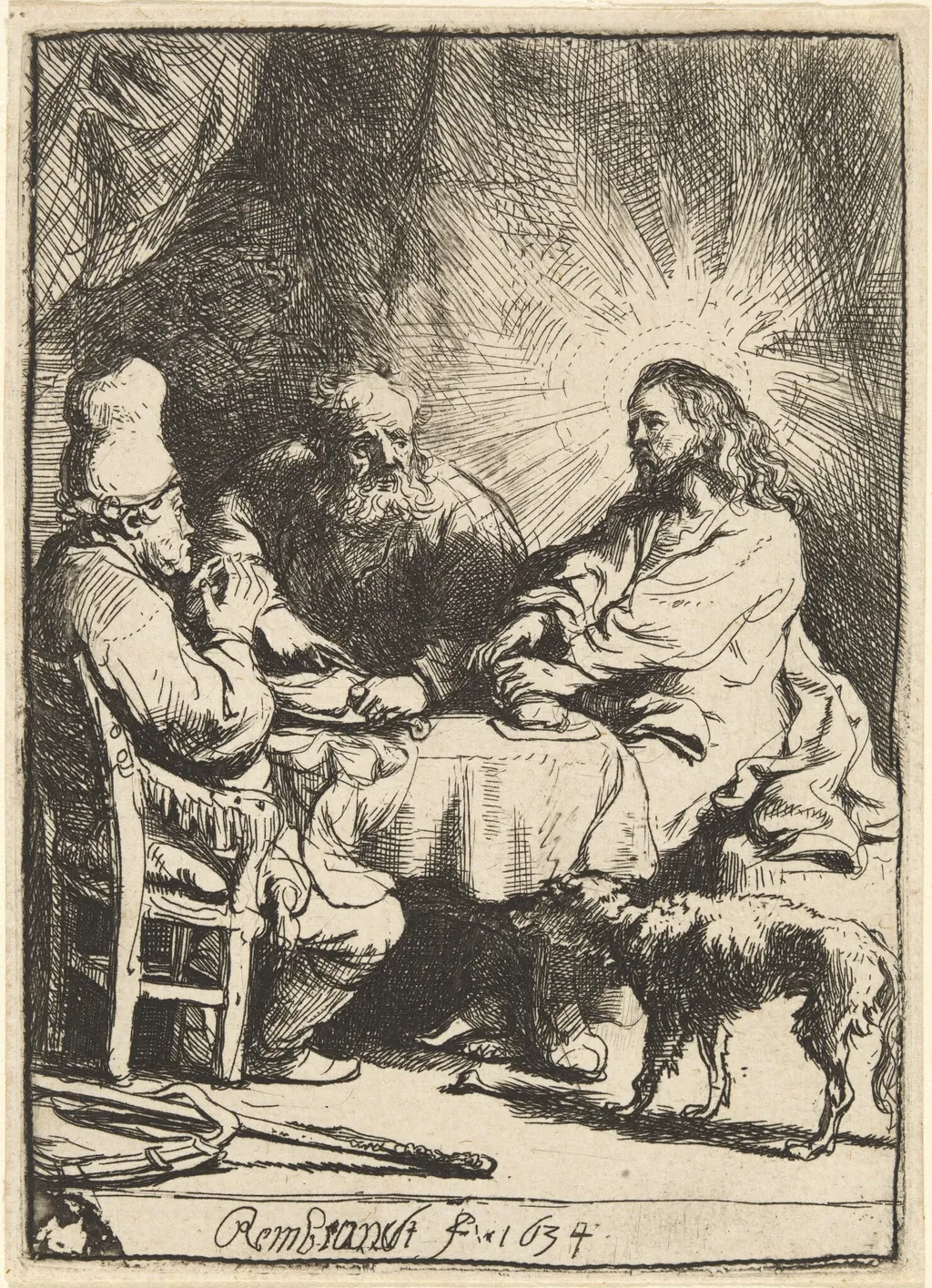
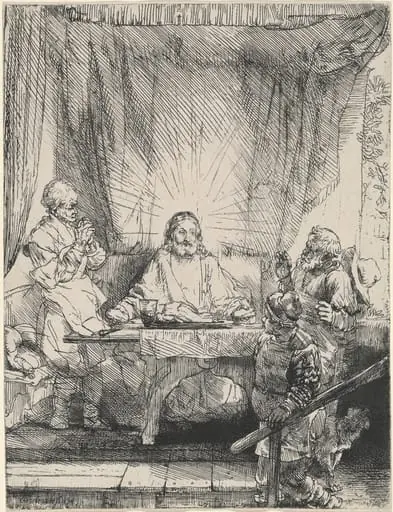
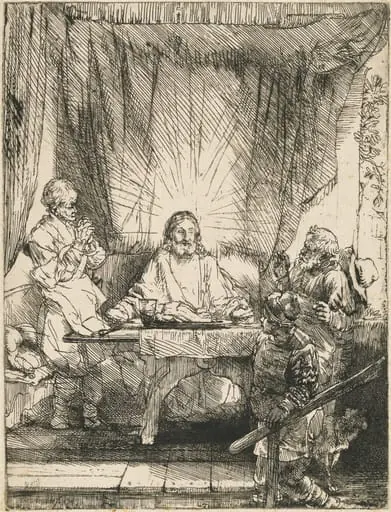
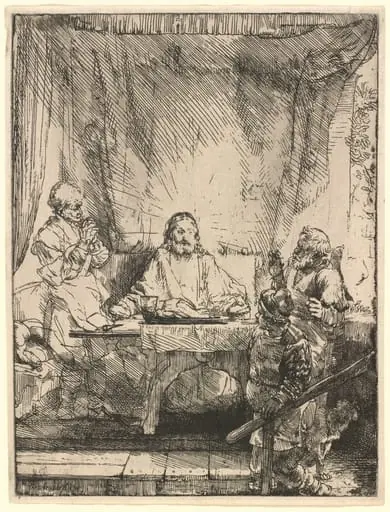
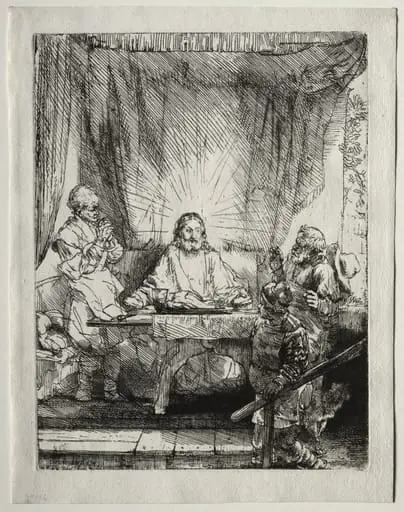
Christ at Emmaus: the Smaller Plate is an ink print by the Baroque artist Rembrandt. It dates from 1634 and is held in the collection of the National Gallery of Art.
About this work
Notice how the artist uses light and shadow to create depth, especially on the faces and hands.
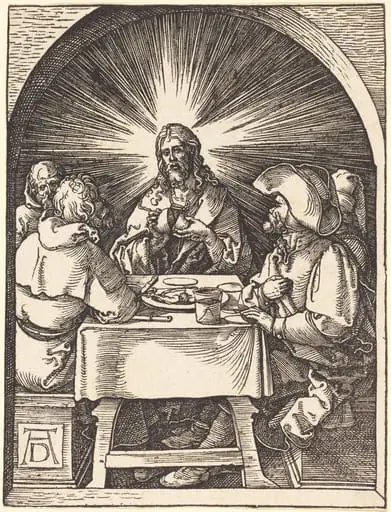
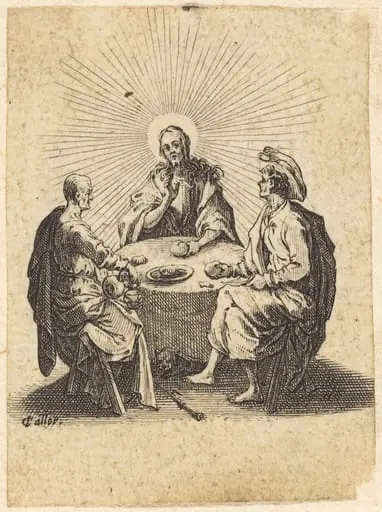
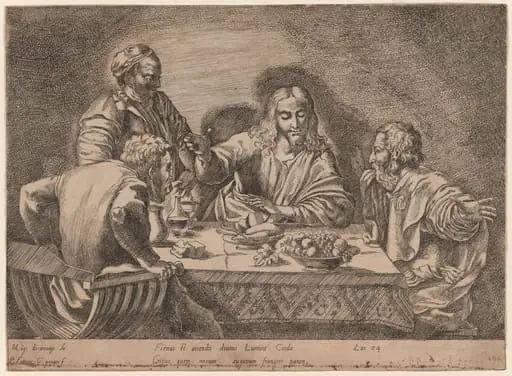
This etching shows three men sitting at a table. One man leans forward, gesturing with his hands, while the other two listen closely. A dog lies at the feet of the man on the right, and the scene feels quiet and intimate. The lines are loose and expressive, with some areas filled in with cross-hatching.
Notice how the artist uses light and shadow to create depth, especially on the faces and hands. The signature in the corner reads "Rembrandt f. 1634," marking this as an early work.
Look up etching to see how artists like Rembrandt used this technique to make detailed prints.
Overview
Christ at Emmaus: the Smaller Plate is an early print by Rembrandt van Rijn, dated 1634. Executed as an etching with supplementary dry‑point work, the image measures a modest size and bears the artist’s monogram and date in the lower corner. It belongs to the period when Rembrandt was establishing his reputation for narrative depth and technical experimentation.
Subject & Meaning
The composition depicts the biblical moment when the resurrected Christ reveals himself to two disciples at the Emmaus table. Three figures occupy the foreground: a central man leaning forward, animated by his hands, while the other two watch attentively. A small dog rests at the feet of the rightmost figure, adding domestic intimacy to the sacred encounter.
Technique & Style
Rembrandt combines traditional etching with dry‑point accents, allowing for both fine line work and richer, velvety strokes. The image relies on expressive, loosely drawn contours and areas of dense cross‑hatching that model faces and hands in light and shadow. This interplay of line and tone creates a sense of depth and immediacy, characteristic of Rembrandt’s early printmaking.
History & Provenance
Created in 1634, the print reflects Rembrandt’s formative years in Amsterdam, when he was experimenting with narrative subjects drawn from the New Testament. The work has circulated among collectors of Dutch prints and appears in several catalogues of Rembrandt’s oeuvre, confirming its authenticity through the artist’s signature and date stamp.
Context
During the 1630s Rembrandt produced a series of religious prints that explored intimate biblical scenes, aligning with contemporary Protestant interest in personal devotion. The Emmaus episode, a favored theme for its emotional revelation, allowed the artist to demonstrate his skill in rendering human interaction and spiritual revelation within a compact visual field.
Artist & collection
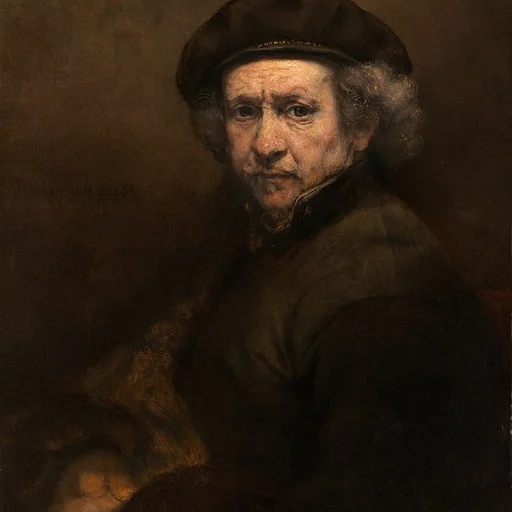
Artist
Rembrandt Harmenszoon van Rijn (15 July 1606 – 4 October 1669), known mononymously as Rembrandt, was a Dutch Golden Age painter, printmaker, and draughtsman.