Artwork
Christ on the Mount of Olives
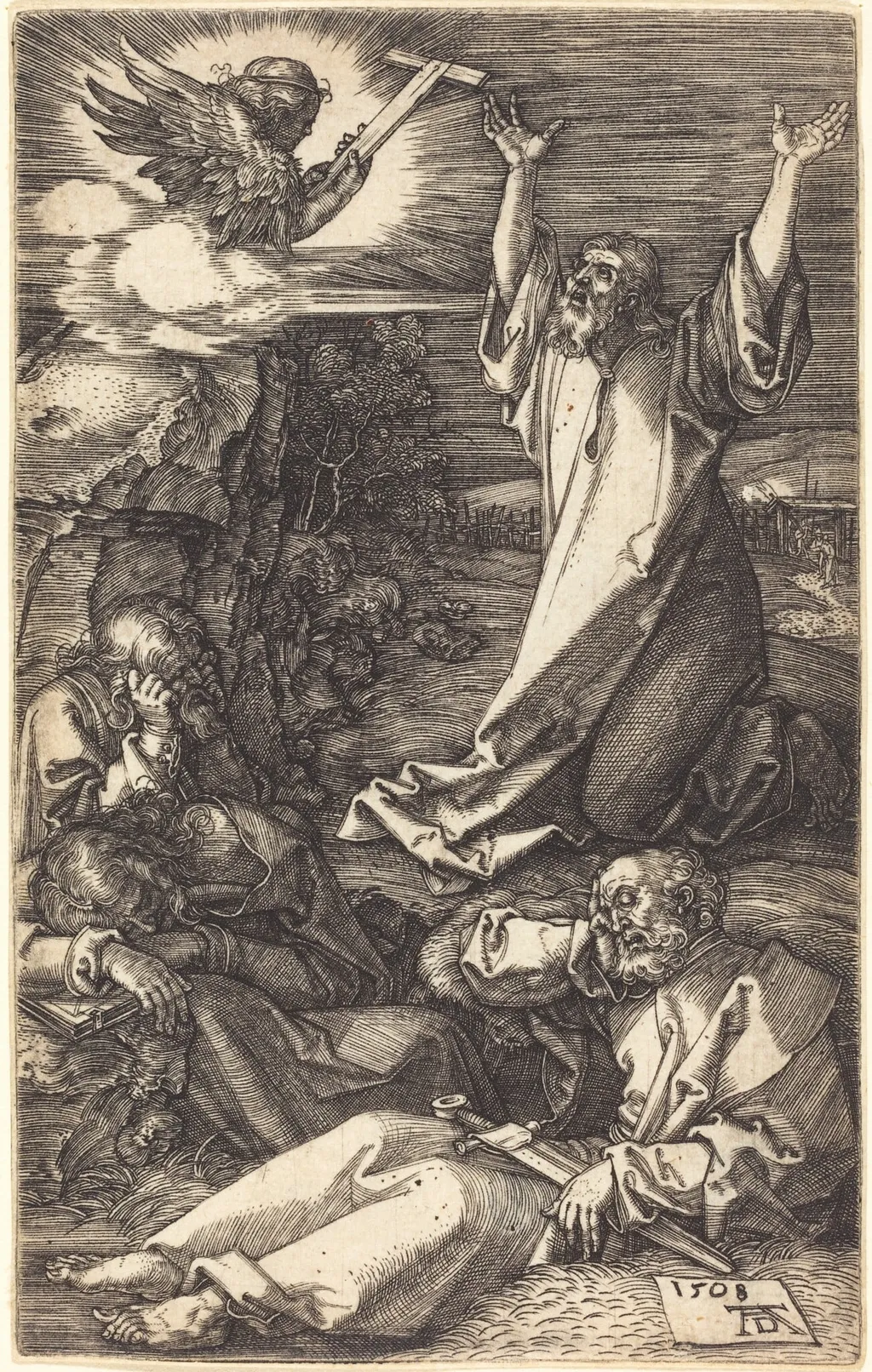
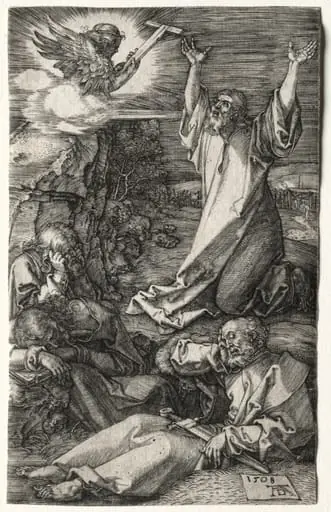
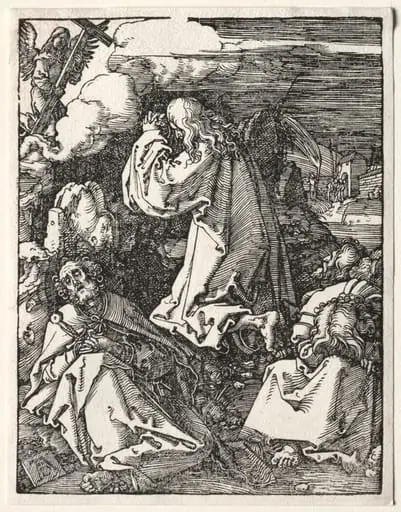
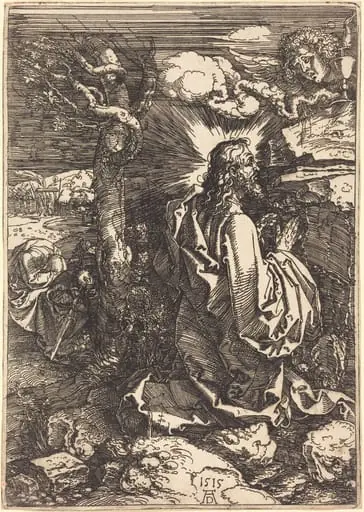
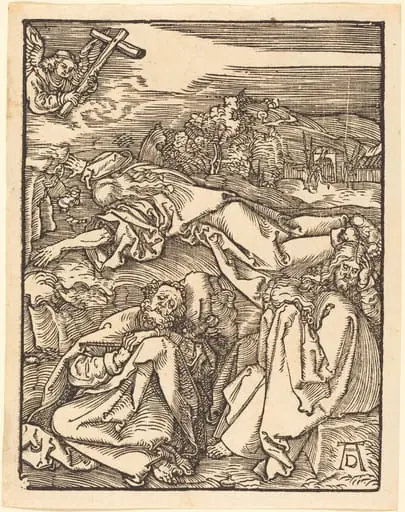
Christ on the Mount of Olives is an ink print by the Northern Renaissance artist Albrecht Dürer. It dates from 1508 and is held in the collection of the National Gallery of Art.
About this work
Overview
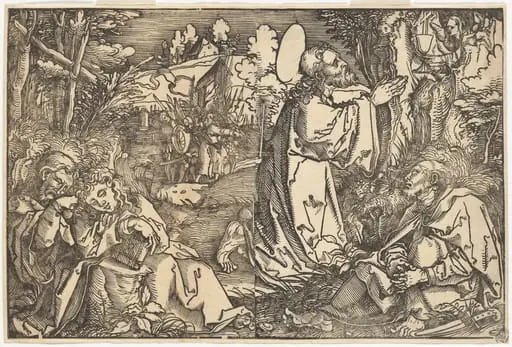
Created in 1508, this engraving by Albrecht Dürer depicts a moment from the Gospel of Luke in which Christ prays in anguish on the Mount of Olives.
Created in 1508, this engraving by Albrecht Dürer depicts a moment from the Gospel of Luke in which Christ prays in anguish on the Mount of Olives. Rendered in fine lines on laid paper, the work is part of the National Gallery of Art’s collection in Washington, D.C. Its compact composition conveys intense spiritual tension through minimal figures and a turbulent atmosphere, characteristic of Dürer’s early 16th-century printmaking.
Subject & Meaning
The scene captures Christ in prayer, arms outstretched, as he confronts his impending suffering. At his feet, a figure lies prone, clutching an object—possibly a garment or relic—suggesting human vulnerability. Above, an angel descends, holding a symbolic instrument, perhaps a chalice or cross, offering divine reassurance. The contrast between Christ’s resolve and the earthly despair around him underscores themes of sacrifice and celestial intervention.
Technique & Style
Dürer employed fine engraving tools to carve precise lines into a copper plate, then inked and pressed the image onto paper. He used dense cross-hatching to model shadow and texture, creating depth and movement in the stormy sky and drapery. The sharp, controlled strokes heighten the emotional intensity, transforming the night scene into a dynamic interplay of light and darkness without relying on color.
History & Provenance
The print was produced during Dürer’s mature period, shortly after his return from Italy, when his engagement with classical form and religious narrative deepened. It entered the National Gallery of Art’s collection in the 20th century, having passed through several European private holdings. Its survival in good condition reflects its early recognition as a significant example of Northern Renaissance printmaking.
Context
In early 16th-century Germany, religious imagery was widely disseminated through prints, serving both devotional and educational roles. Dürer’s engravings, including this one, responded to growing lay interest in personal piety and biblical drama. His fusion of Italian compositional clarity with Northern attention to detail helped redefine sacred imagery for a broader audience beyond the clergy.
Legacy
This engraving exemplifies Dürer’s influence on the evolution of printmaking as a serious artistic medium. His technical precision and emotional depth set a standard for later generations of engravers. Though not among his most famous works, it remains a key reference in studies of how religious themes were visually articulated in the Reformation era.
Artist & collection
Artist
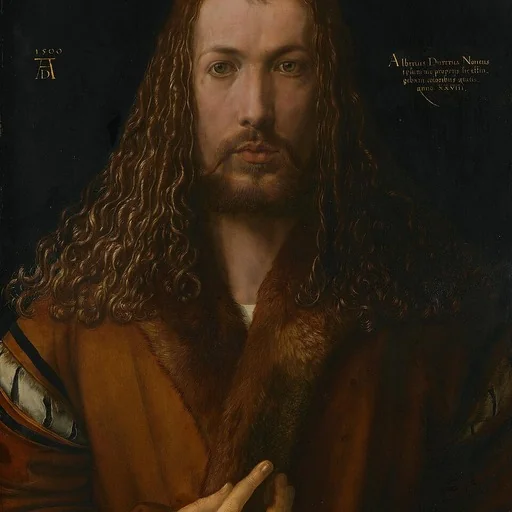
Albrecht Dürer spent his life in Nuremberg, a busy German city where artists traded prints like currency.

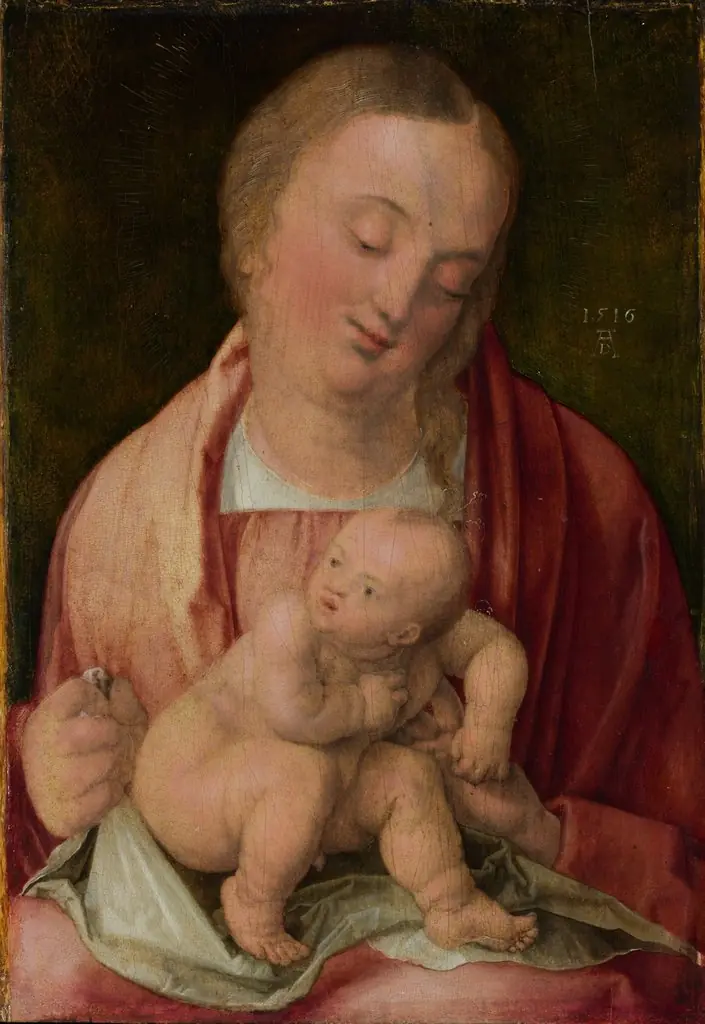
![Madonna and Child [obverse], by Albrecht Dürer](https://artifactworldgallery.com/img/albrecht-durer--madonna-and-child-obverse--d7b8ebf05d22ebe5-w320.webp)
![Lot and His Daughters [reverse], by Albrecht Dürer](https://artifactworldgallery.com/img/albrecht-durer--lot-and-his-daughters-reverse--b4ebf9b282faa17a-w320.webp)