Artwork
Christ on the Mount of Olives
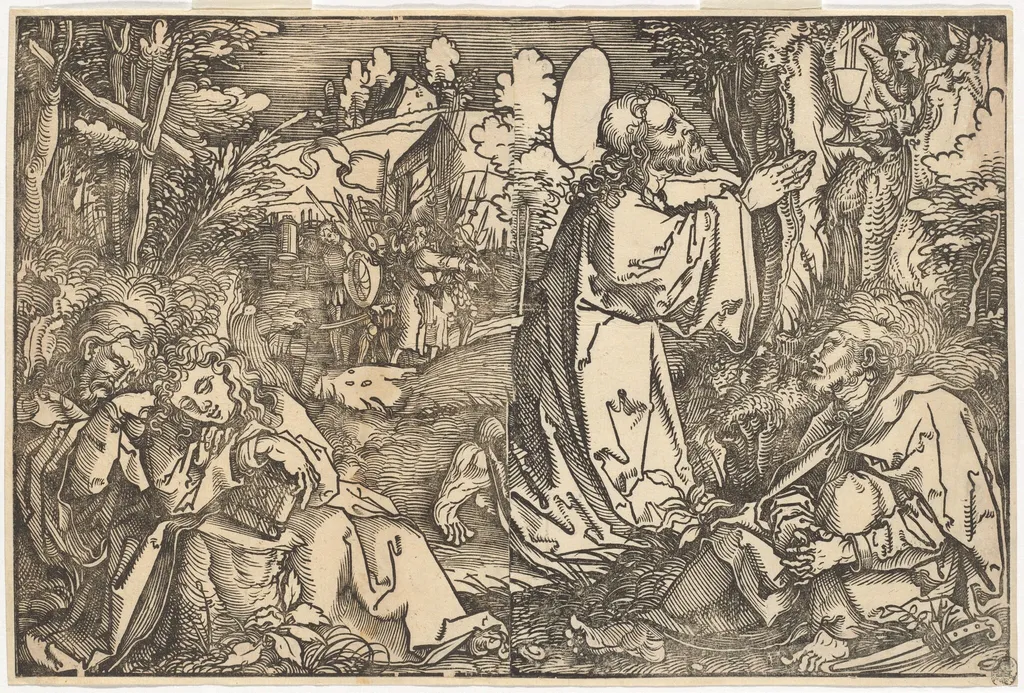
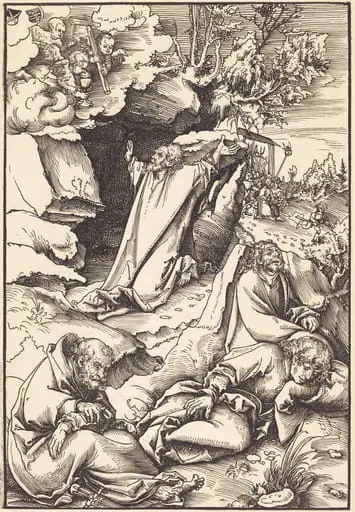
Christ on the Mount of Olives is an ink print by the Renaissance artist Weiditz, II, Hans. It dates from 1522 and is held in the collection of the National Gallery of Art.
About this work
Overview
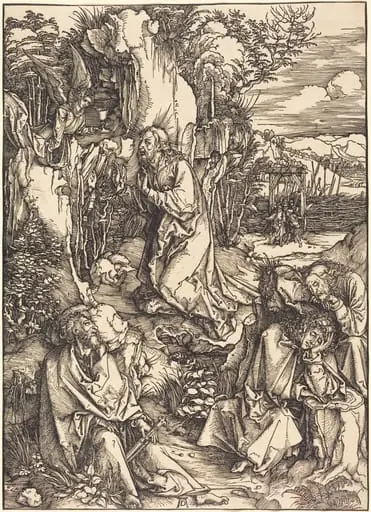
Christ on the Mount of Olives, a woodcut created by Hans Weiditz II around 1522, depicts a dramatic religious scene. Executed from two wood blocks on laid paper, the print showcases a chaotic moment in a densely composed environment.
Subject & Meaning
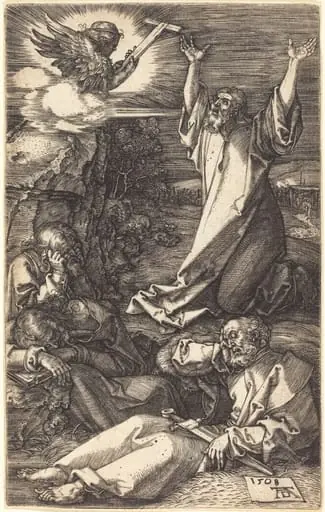
The woodcut centers on Jesus praying with raised hands on the Mount of Olives, surrounded by small, anxious figures. The overall mood conveys distress and turmoil, reflecting the emotional intensity of the biblical narrative.
Technique & Style
Characterized by sharp, repetitive lines, the woodcut achieves a textured, rough appearance, evident in both the tangled, dark background elements (such as trees and clouds) and the detailed, expressive figures.
History & Provenance
Created circa 1522 by Hans Weiditz II, specific details about the woodcut's history and ownership prior to its current location are not provided in the available information.
Context
Produced during a time of religious and artistic transformation in Europe, this woodcut exemplifies the use of woodblock printing for disseminating religious themes, leveraging the medium's capability for wide distribution.
Legacy
While the broader impact of 'Christ on the Mount of Olives' on subsequent art or religious illustration is not detailed here, it remains a testament to the expressive power of 16th-century woodcut techniques in capturing dramatic religious narratives.
Artist & collection