Artwork
Christ on the Mount of Olives
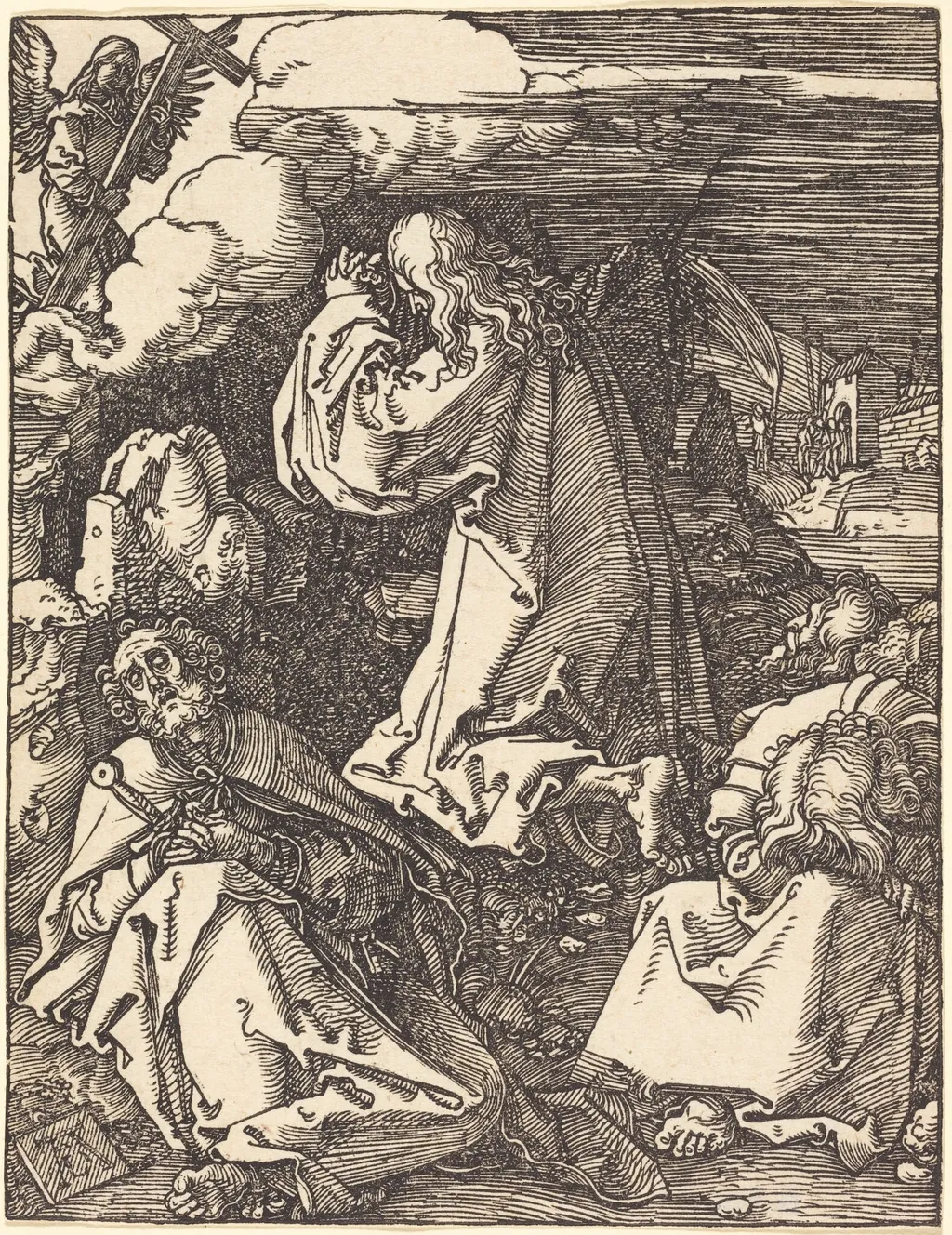
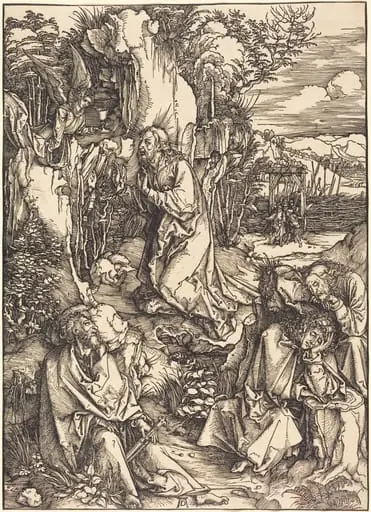
Christ on the Mount of Olives is an ink print by the Northern Renaissance artist Albrecht Dürer. It dates from 1510 and is held in the collection of the British Museum.
About this work
Overview
Christ kneels in the foreground on a rocky outcrop, his hands clasped in prayer, illuminated by a divine light that contrasts with the surrounding darkness.
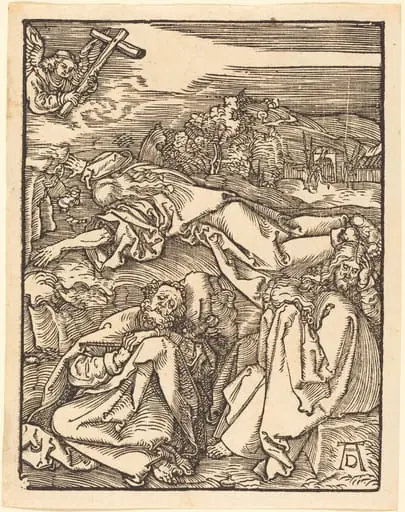
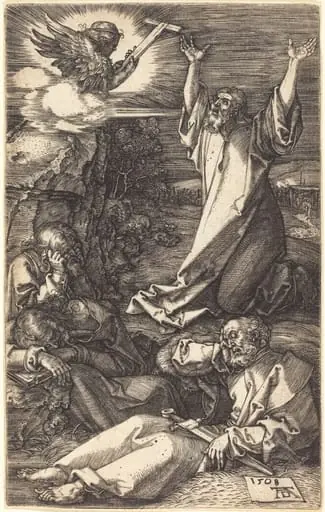
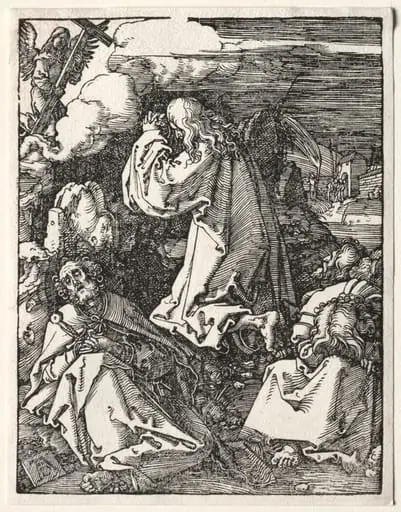
Christ on the Mount of Olives is a woodcut by Albrecht Dürer created in 1510. The composition depicts the biblical scene of Christ's agony in the Garden of Gethsemane. Christ kneels in the foreground on a rocky outcrop, his hands clasped in prayer, illuminated by a divine light that contrasts with the surrounding darkness. Below him, the three apostles Peter, James, and John are shown sleeping deeply, their relaxed postures emphasizing their failure to watch. A small angel descends from the upper right, presenting a chalice that symbolizes the cup of suffering Christ is about to accept. The background features dark, gnarled trees and a distant cityscape, likely representing Jerusalem. Dürer employs his characteristic mastery of line to create deep shadows and complex textures, particularly in the foliage and the rocky terrain. This work belongs to Dürer's mature period, following his second journey to Italy, and reflects his synthesis of Northern European detail with Italian Renaissance principles of composition and light. It is part of a series of religious prints that demonstrate his technical innovation in woodcut, using dense cross-hatching to achieve tonal depth previously unattainable in the medium.
Subject & Meaning
The image captures the biblical episode of Christ’s prayer in Gethsemane, emphasizing his solitary anguish contrasted with the oblivious rest of his disciples. The angel’s cup alludes to the impending Passion, serving as a visual prefiguration of the suffering that will follow.
Technique & Style
Dürer employs fine, closely spaced lines to render deep shadows and the texture of rock and foliage, creating a dense chiaroscuro effect typical of his later print work. The delicate hatching distinguishes the luminous angel from the darker surrounding landscape.
History & Provenance
Created during a period marked by personal and financial difficulties for Dürer, the print reflects his introspective mood. It was produced as a single‑sheet woodcut and circulated among collectors of religious prints in early sixteenth‑century Germany.
Context
The work belongs to Dürer’s series of devotional prints that explore New Testament moments with heightened emotional intensity. Its composition echoes earlier Northern Renaissance treatments of the Gethsemane scene while anticipating the more dramatic baroque interpretations that would follow.
Artist & collection
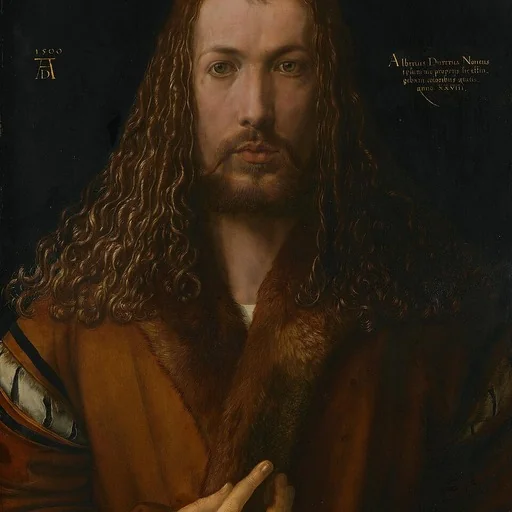
Artist
Albrecht Dürer spent his life in Nuremberg, a busy German city where artists traded prints like currency.

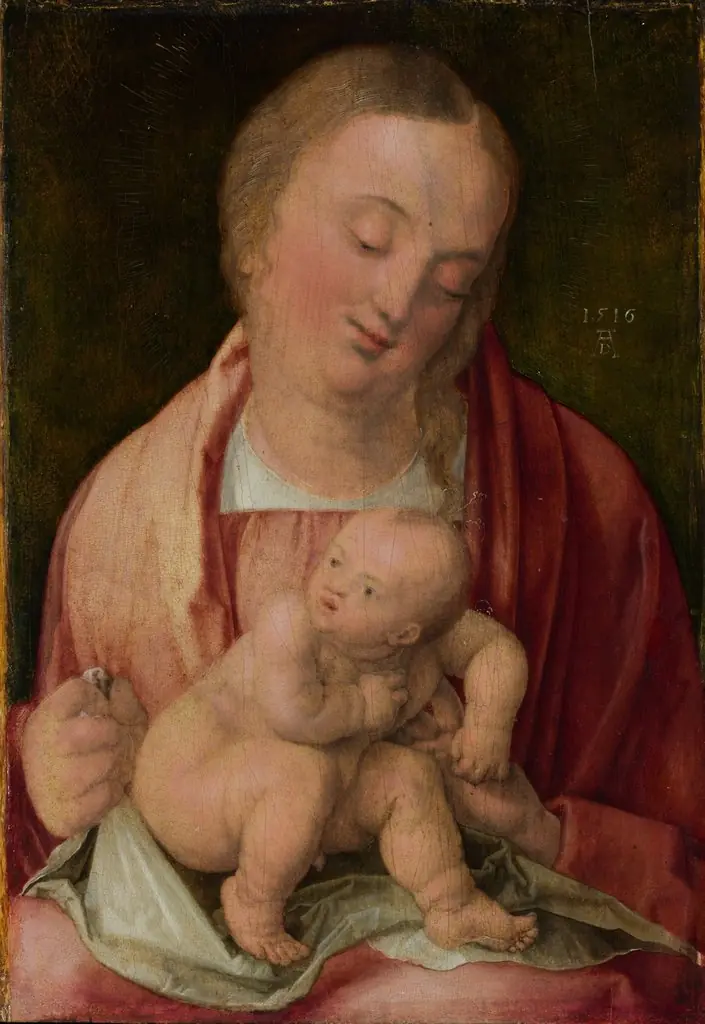
![Madonna and Child [obverse], by Albrecht Dürer](https://artifactworldgallery.com/img/albrecht-durer--madonna-and-child-obverse--d7b8ebf05d22ebe5-w320.webp)
![Lot and His Daughters [reverse], by Albrecht Dürer](https://artifactworldgallery.com/img/albrecht-durer--lot-and-his-daughters-reverse--b4ebf9b282faa17a-w320.webp)