Artwork
The Crucifixion
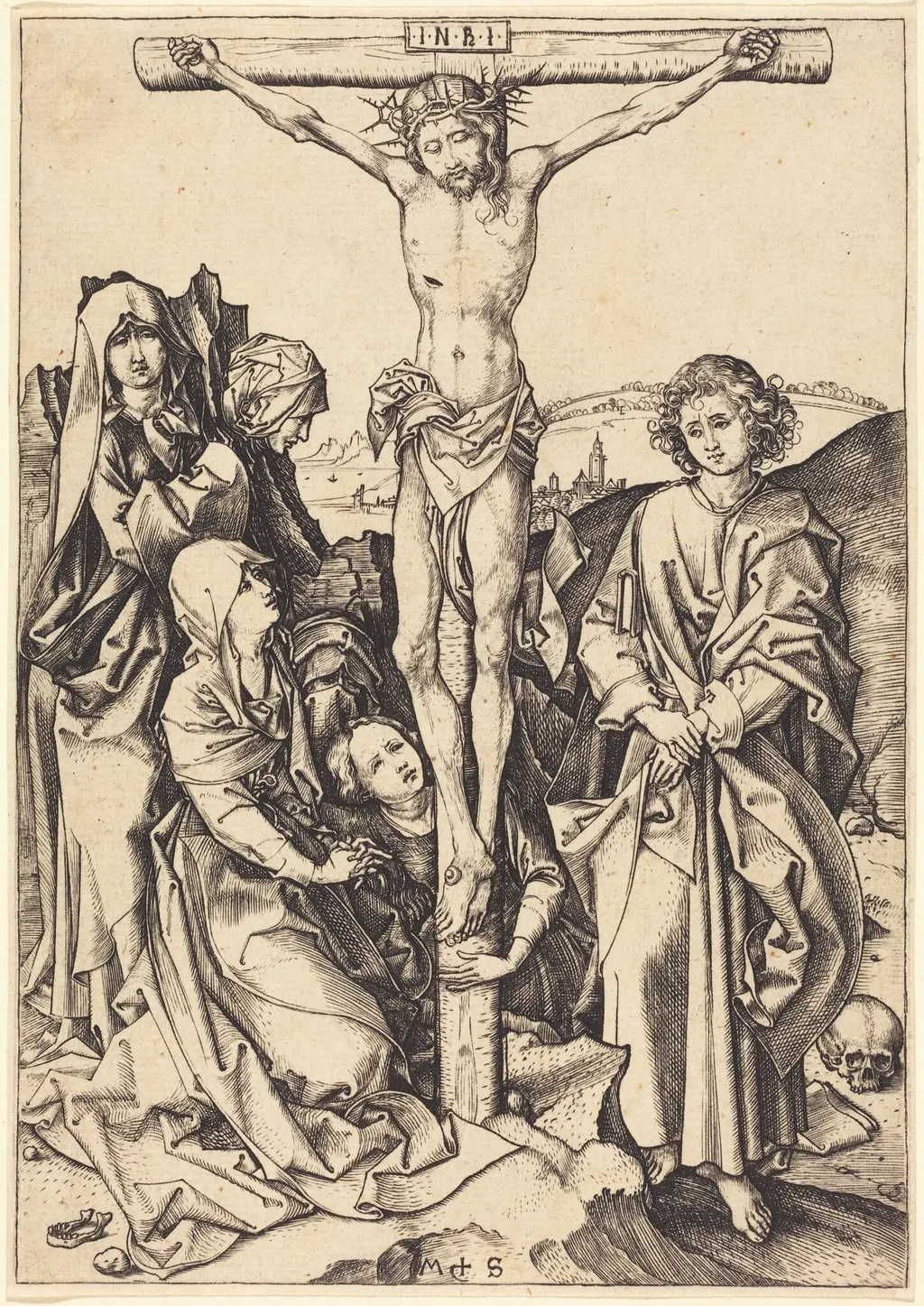
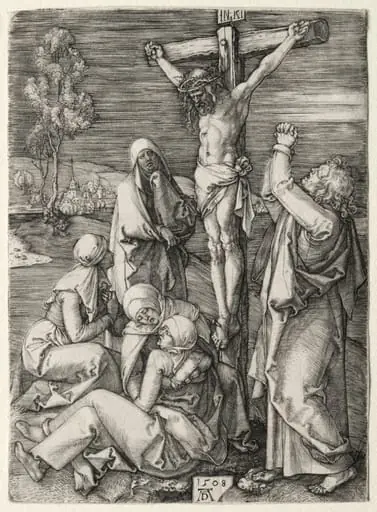
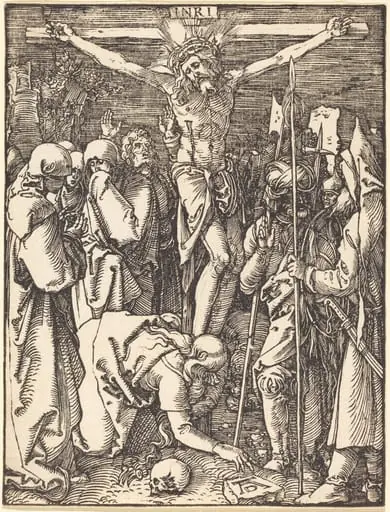
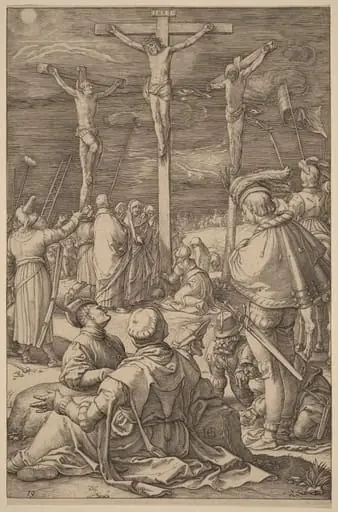
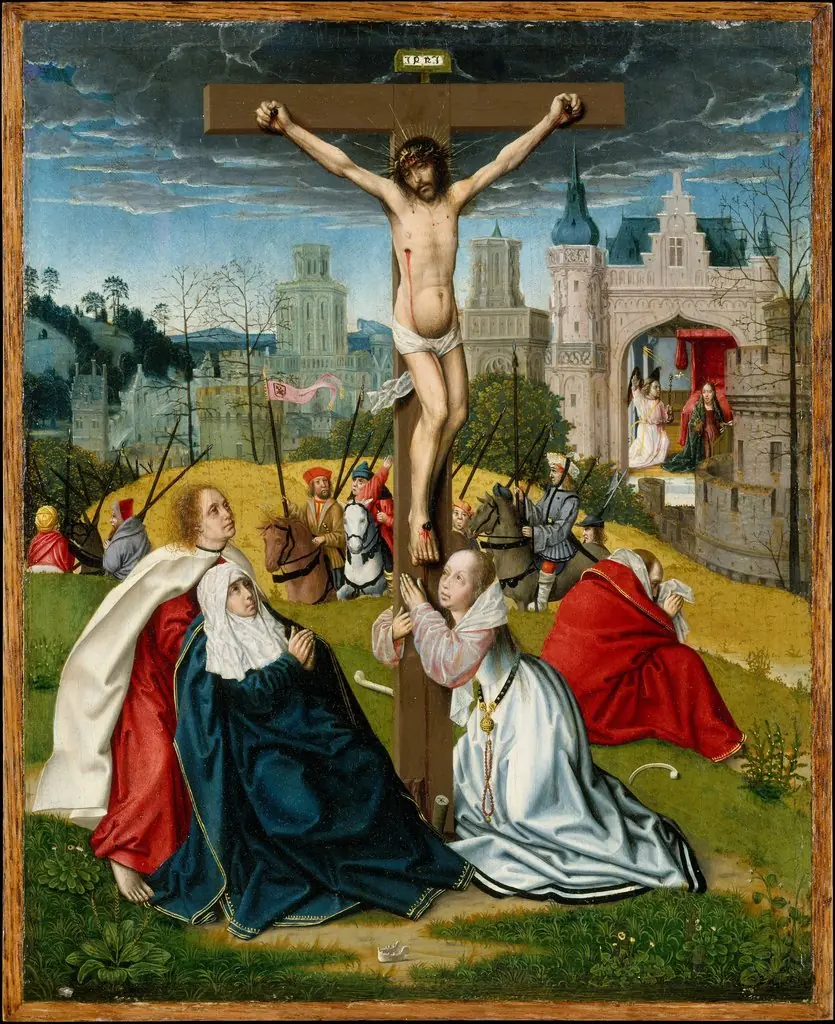
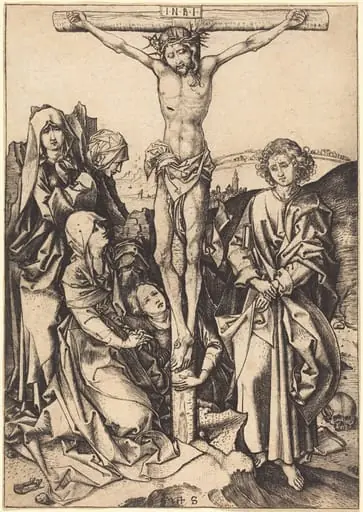
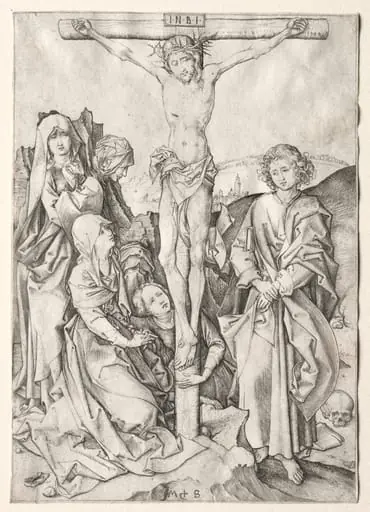
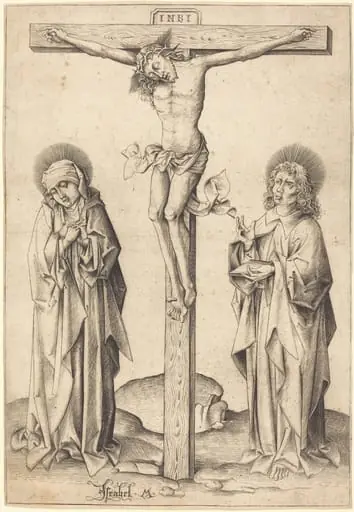
The Crucifixion is an ink print by the Renaissance artist Martin Schongauer. It dates from 1480 and is held in the collection of the National Gallery of Art.
About this work
Overview
A modest village and a rocky hill form the distant backdrop, giving the scene a sense of both intimacy and spatial depth.
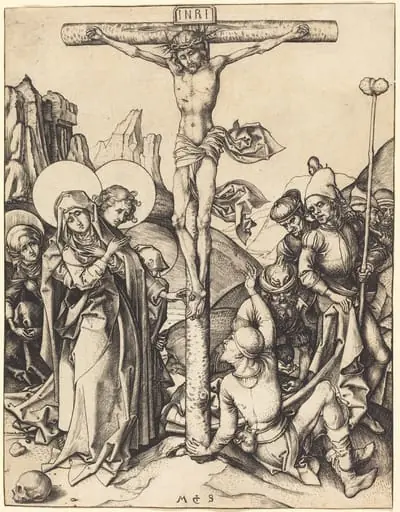
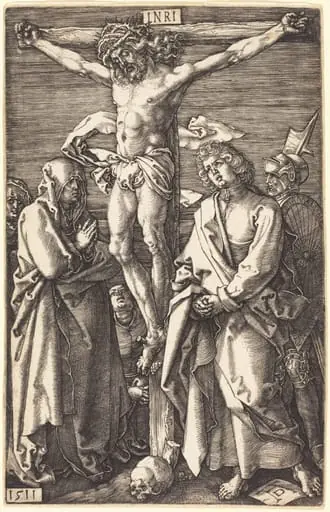
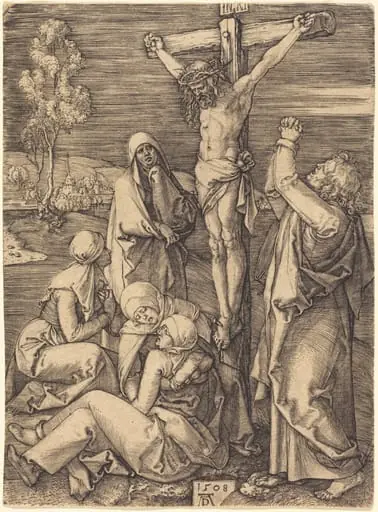
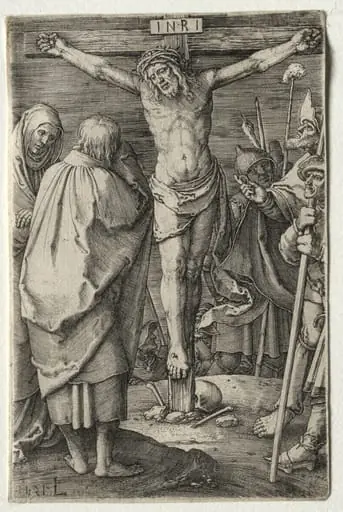
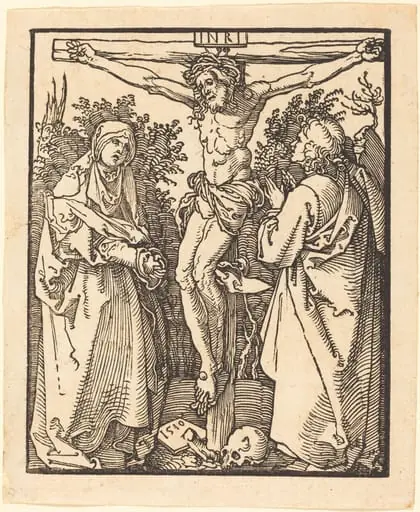
Created circa 1480, this copperplate engraving presents the traditional Christian narrative of the crucifixion. The central figure, nailed to a cross and crowned with thorns, dominates the composition, while a surrounding crowd of mourners and a winged attendant populate the foreground. A modest village and a rocky hill form the distant backdrop, giving the scene a sense of both intimacy and spatial depth.
Subject & Meaning
The work portrays the moment of Christ’s death on the cross, emphasizing human sorrow and divine sacrifice. The varied gestures of the onlookers—some weeping, others clasping hands—reflect a range of emotional responses to the event. The winged figure, often interpreted as an angelic presence, holds a tool that may allude to the instruments of the Passion, underscoring the theological significance of the scene.
Technique & Style
Schongauer employs a dense network of fine, intersecting lines to model volume and generate deep chiaroscuro, particularly in the folds of garments and the texture of hair. The engraving’s meticulous hatching creates a layered sense of shadow, while the orderly arrangement of figures maintains clarity despite the crowded composition. Such precision reflects the influence of contemporary gold‑smithing practices on printmaking.
History & Provenance
Attributed to Martin Schongauer, a leading Alsatian engraver active in the late 15th century, the print belongs to a corpus of roughly 116 known engravings. Schongauer’s career, spanning from his birth in Colmar around 1450 to his death in Breisach in 1491, positioned him as the foremost northern European printmaker before the emergence of Albrecht Dürer.
Context
The engraving emerges from a period when the medium was closely linked to the craft of goldsmiths, who transferred their skill in line work to paper. This technical background enabled the production of highly detailed images that could be disseminated widely, contributing to the spread of devotional imagery across the Holy Roman Empire in the decades preceding the Reformation.
Artist & collection

Artist
Martin Schongauer, also known as Martin Schön or Hübsch Martin by his contemporaries, was an Alsatian engraver and painter.