Artwork
The Crucifixion
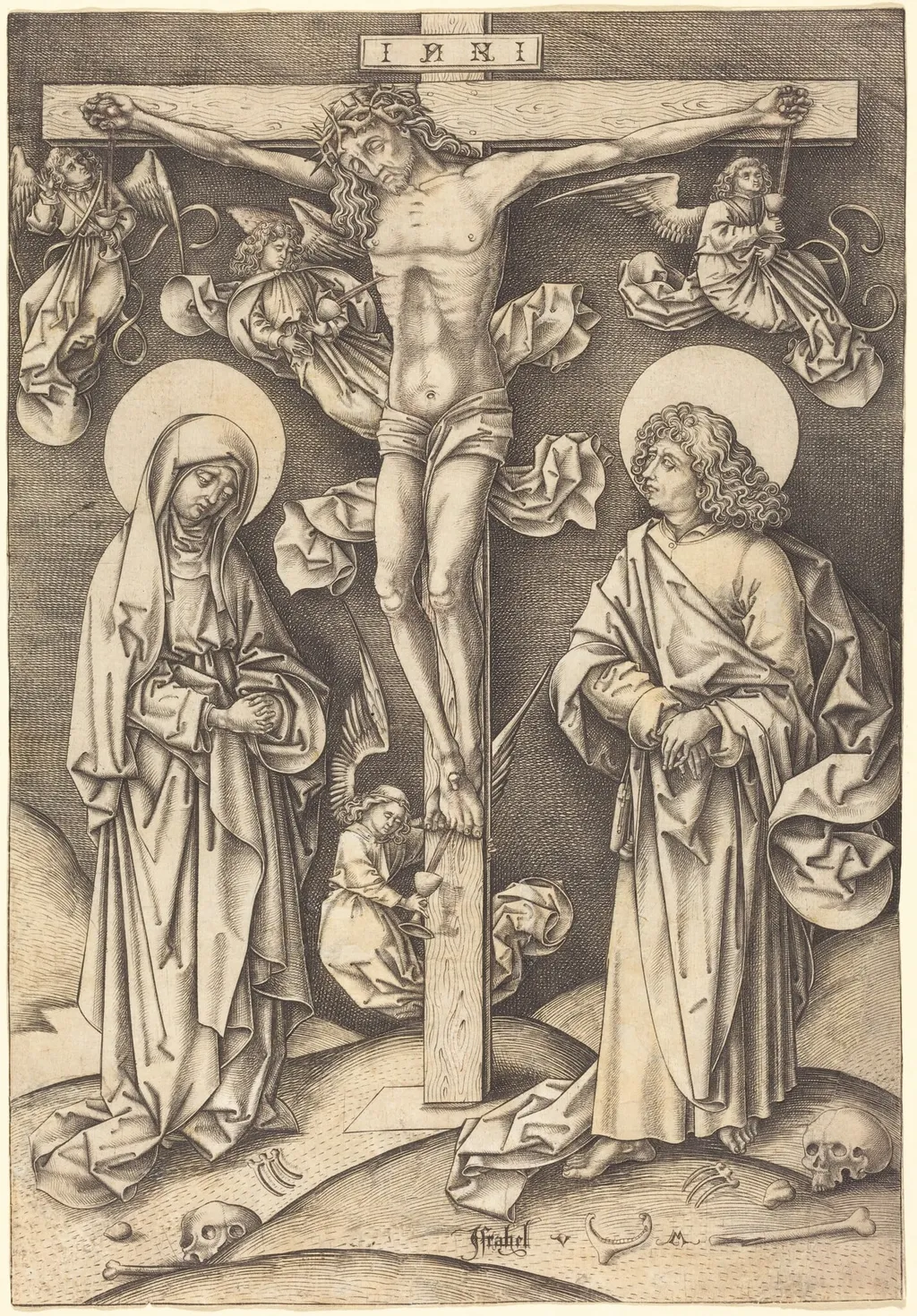
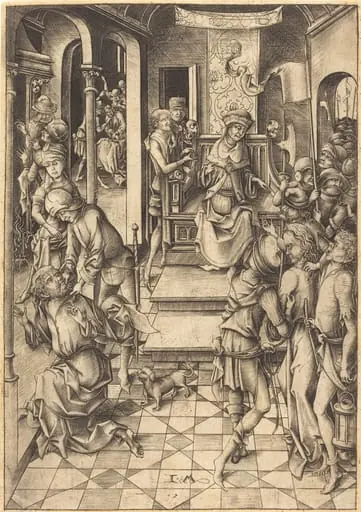
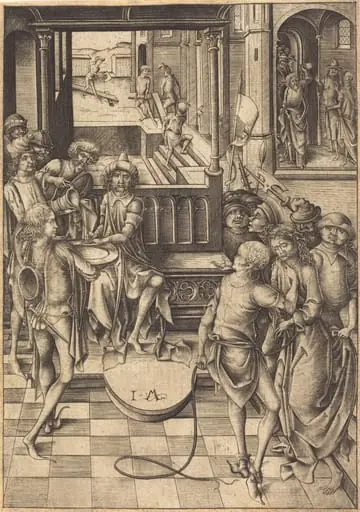
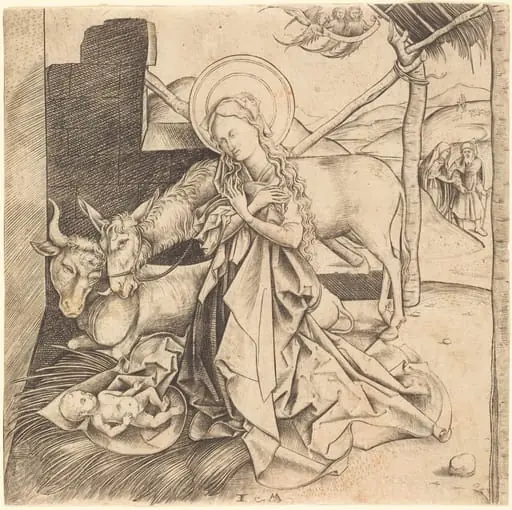
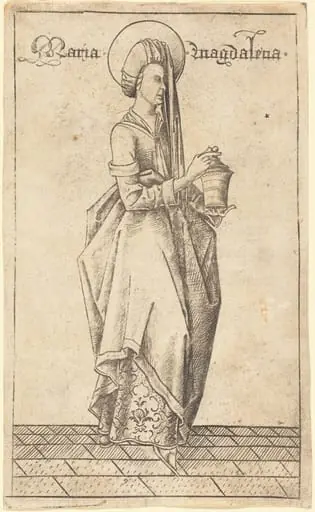
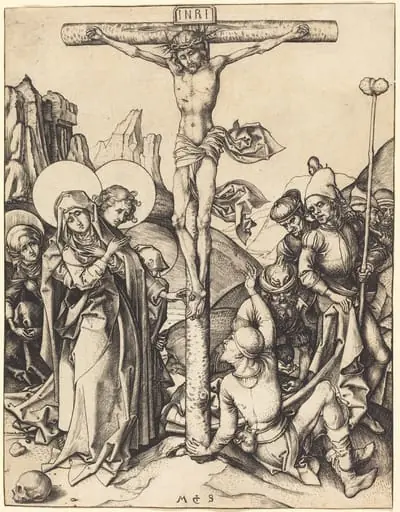
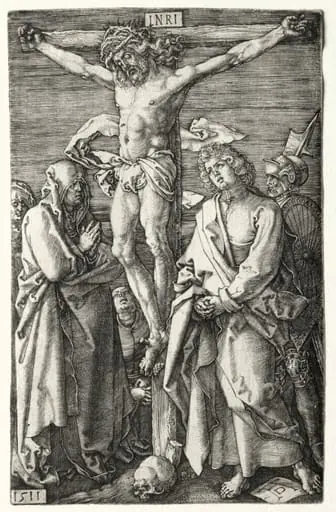
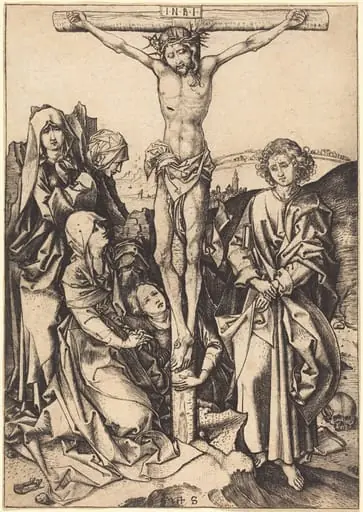
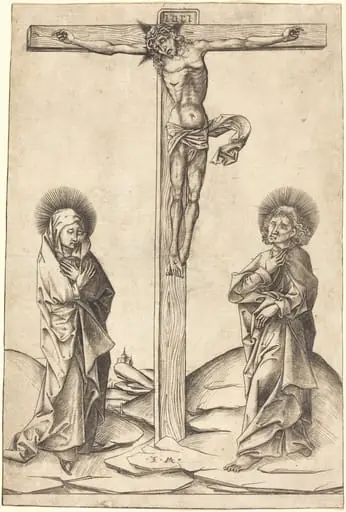
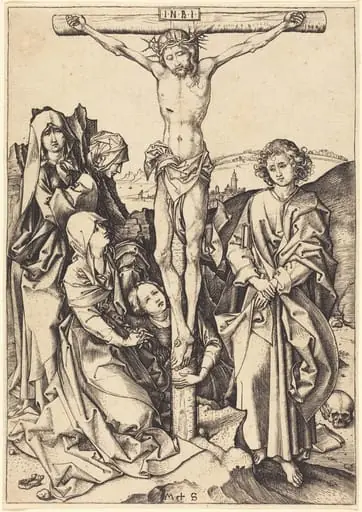
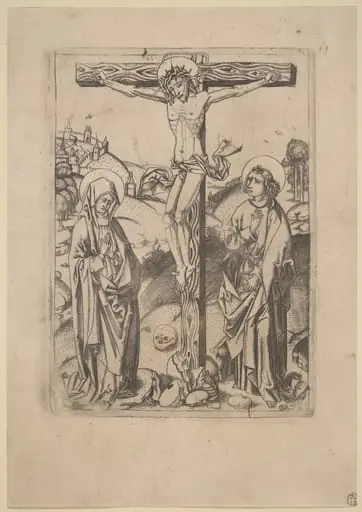
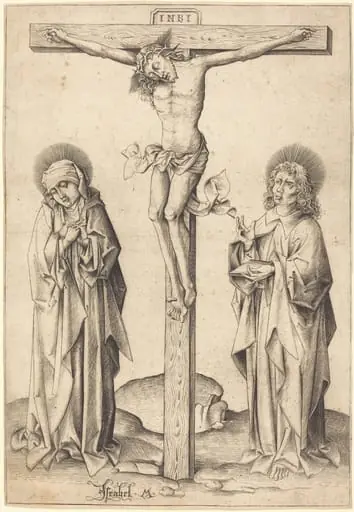
The Crucifixion is an ink print by the Renaissance artist Israhel van Meckenem. It dates from 1495 and is held in the collection of the National Gallery of Art.
About this work
Overview
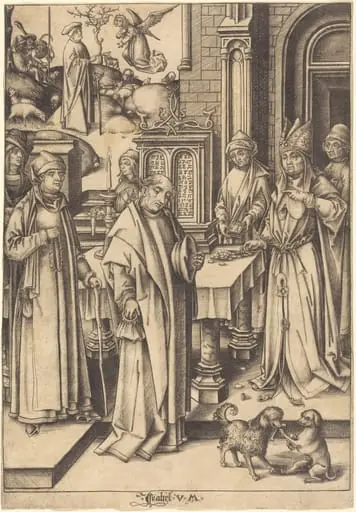
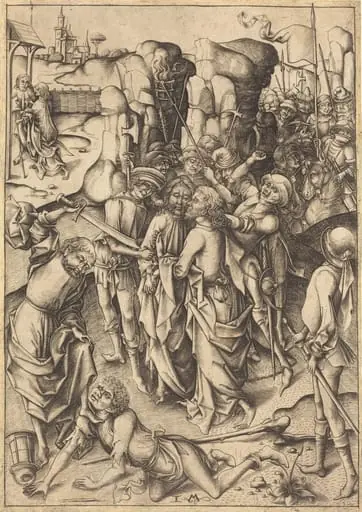
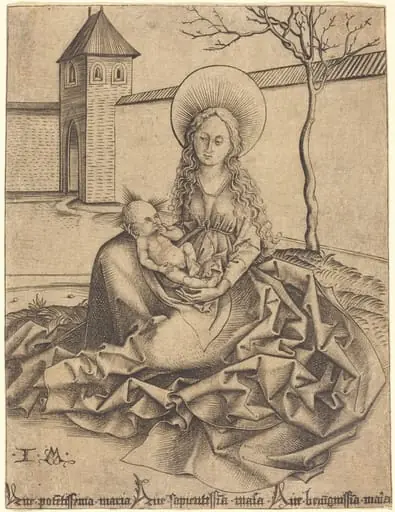
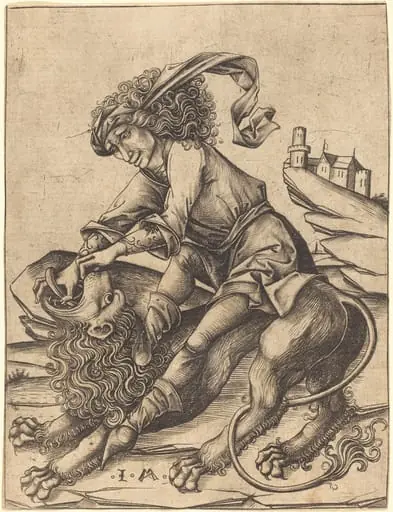
Van Meckenem, a German goldsmith and printmaker, was among the most productive engravers of the late 15th century, producing over six hundred works.
Created around 1495 by Israhel van Meckenem, this engraving on laid paper depicts the Crucifixion with subtle hand coloring. Van Meckenem, a German goldsmith and printmaker, was among the most productive engravers of the late 15th century, producing over six hundred works. His prints often reproduced existing compositions, helping disseminate religious imagery across Northern Europe. This piece exemplifies his technical precision and engagement with devotional subjects.
Subject & Meaning
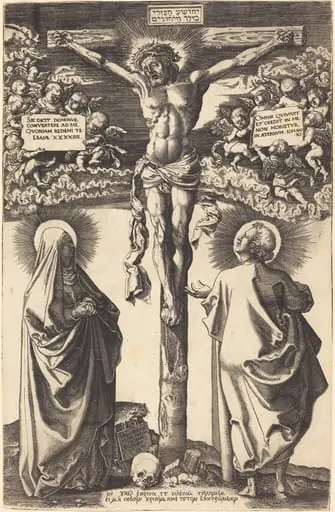
The scene centers on Christ nailed to the cross, surrounded by figures expressing grief and reverence. To the left, a hooded woman clasps her hands in prayer; to the right, a robed man stands with arms crossed, perhaps representing contemplation or authority. Angels above hold instruments of the Passion, while a small figure kneels at the base, near scattered bones—symbolizing Golgotha as the place of Adam’s burial. The composition reinforces themes of sacrifice and redemption central to Christian devotion.
Technique & Style
Van Meckenem employed fine, controlled lines to model form and depth, using cross-hatching to render shadows in the folds of garments and the musculature of Christ’s body. The engraving’s delicate texture suggests meticulous work on a copper plate, with minimal hand coloring enhancing key areas without obscuring the line work. The use of laid paper, with its characteristic chain lines, was typical of the period and suited to the fine detail of intaglio printing.
History & Provenance
The print originates from van Meckenem’s workshop in Bocholt, where he operated as both artist and publisher. His output was widely circulated, often copied or adapted by other engravers. While the exact early ownership of this specific impression is undocumented, its survival in good condition reflects its circulation among private collectors and religious institutions in the late 15th and early 16th centuries.
Context
In the decades before the Reformation, printed images like this served as accessible tools for personal devotion. Van Meckenem’s engravings met demand for portable, affordable religious scenes, especially among urban middle classes. His work bridges the late Gothic tradition and early Renaissance print culture, drawing on both Flemish models and German devotional practices to reach a broad audience.
Legacy
Van Meckenem’s prolific output helped standardize the visual language of Christian narrative in print. Though often derivative, his engravings preserved and transmitted compositional motifs that influenced later artists. His technical discipline and commercial approach laid groundwork for the printmaking boom of the 16th century, making religious imagery more widely available beyond manuscript illumination or painted altarpieces.
Artist & collection
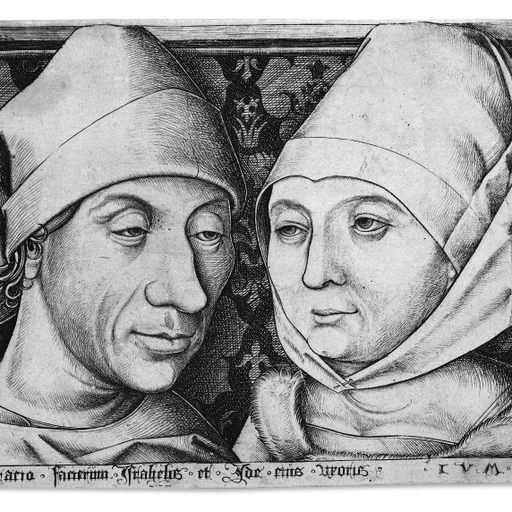
Artist
Israhel van Meckenem (c. 1445 – 10 November 1503), also known as Israhel van Meckenem the Younger, was a German printmaker and goldsmith, perhaps of a Dutch family origin. He was the most prolific engraver of the…