Artwork
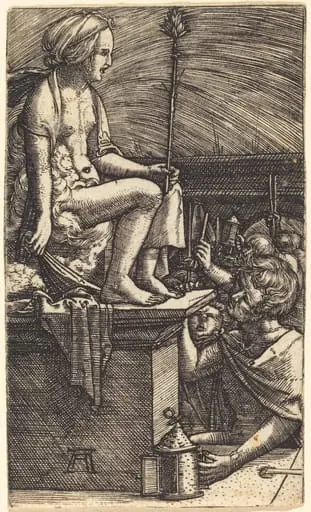
The Dream of the Doctor (Temptation of the Idler)
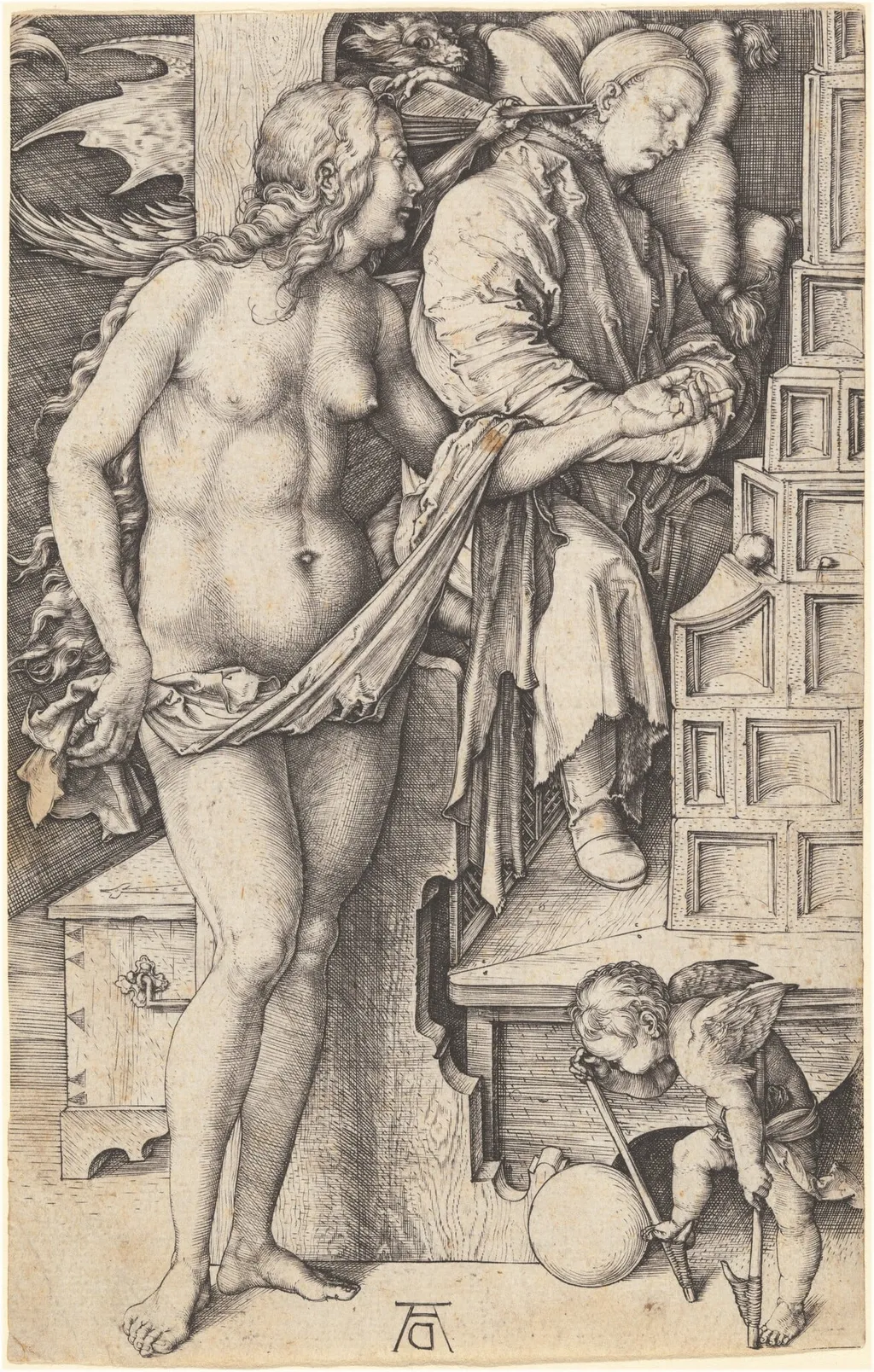
The Dream of the Doctor (Temptation of the Idler) is an ink print by the Northern Renaissance artist Albrecht Dürer. It dates from 1498 and is held in the collection of the National Gallery of Art.
About this work
Overview
Albrecht Dürer’s 1498 engraving, titled The Dream of the Doctor (also known as Temptation of the Idler), is a small-scale print executed on laid paper. The work is part of the collection of the National Gallery of Art in Washington, D.C., and exemplifies Dürer’s early exploration of narrative printmaking.
Subject & Meaning
The composition depicts an intimate interior scene in which a nude woman stands beside a seated man, gently pulling a cloth from his lap. The man reclines with one arm behind his head, suggesting a state of leisure, while a diminutive figure crouches on the floor, adding a subtle narrative element that invites speculation about the interaction’s purpose.
Technique & Style
Created by the engraving method, Dürer incised the image onto a copper plate and transferred it to laid paper through a counterproof process, yielding fine, crisp lines and delicate tonal variation. The work displays his characteristic precision in rendering anatomy and drapery, as well as a careful handling of light and shadow to model the figures within a confined space.
History & Provenance
The print was produced in Dürer’s late 1490s period, a time when he was establishing his reputation across Europe. It entered the National Gallery of Art’s holdings through acquisition in the 20th century, where it remains catalogued as an example of his early print output.
Artist & collection
Artist
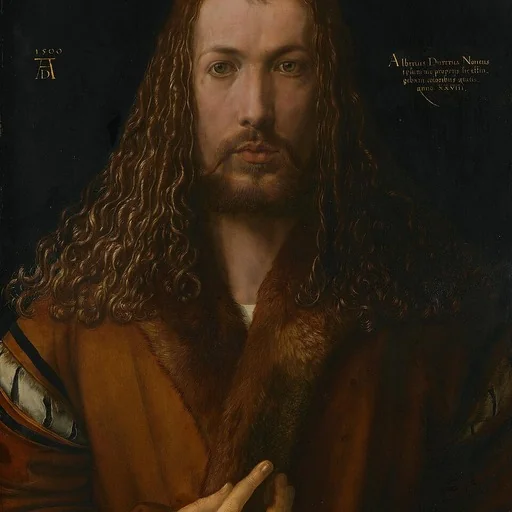
Albrecht Dürer spent his life in Nuremberg, a busy German city where artists traded prints like currency.

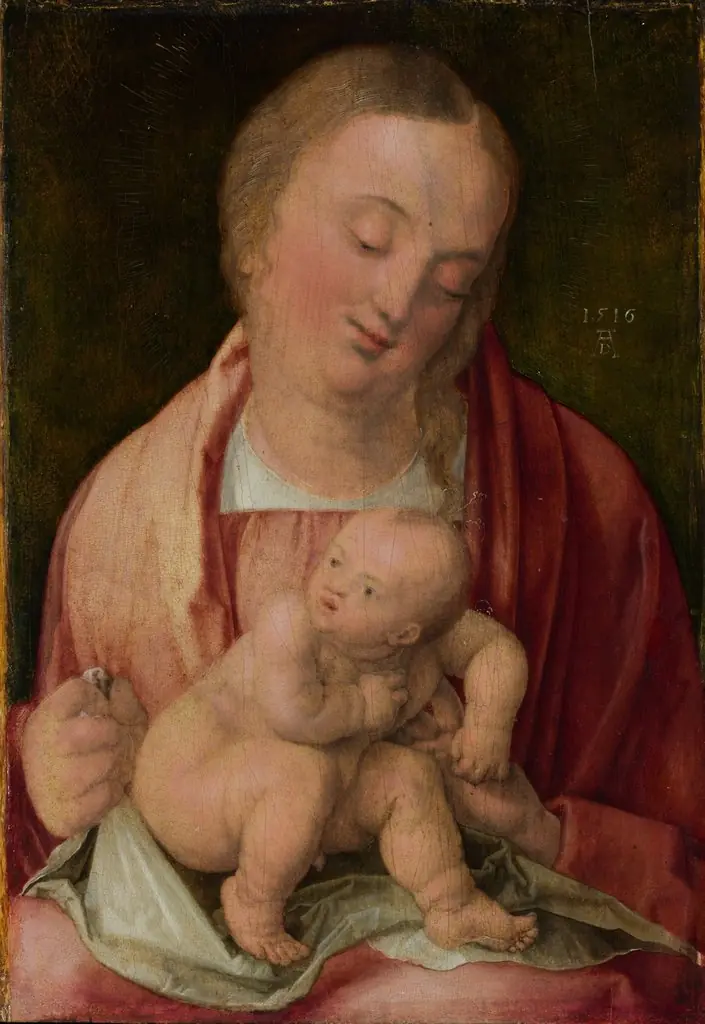
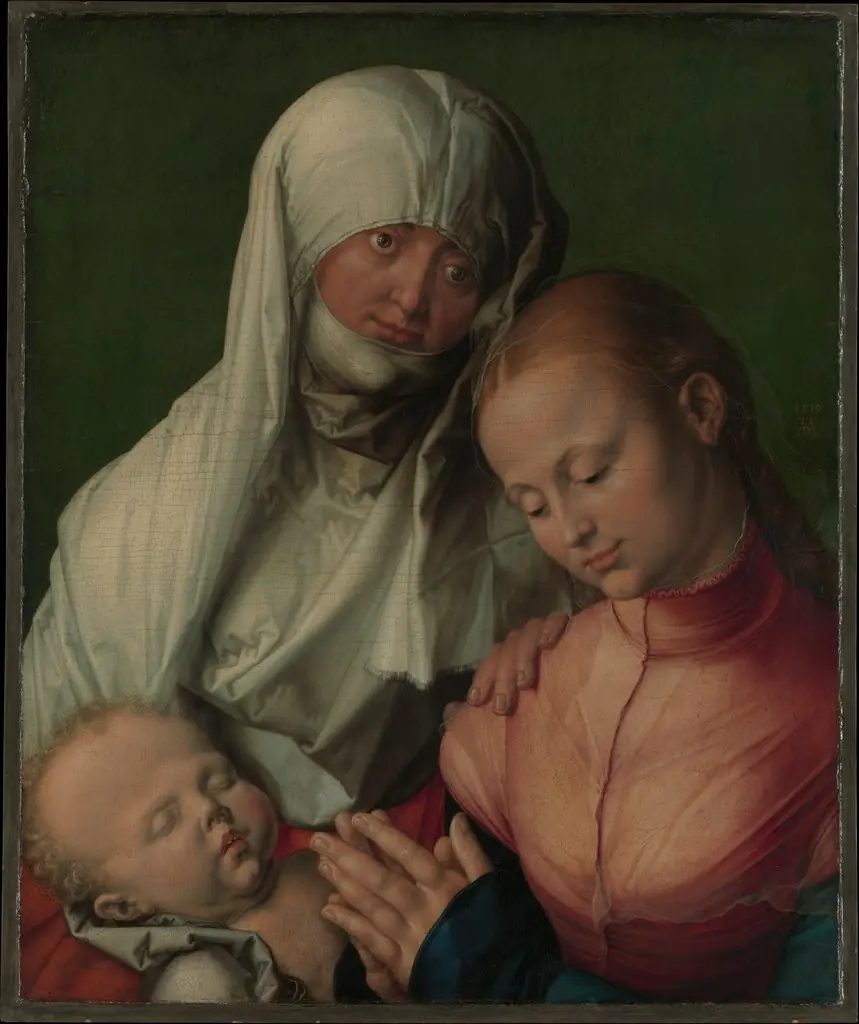
![Madonna and Child [obverse], by Albrecht Dürer](https://artifactworldgallery.com/img/albrecht-durer--madonna-and-child-obverse--d7b8ebf05d22ebe5-w320.webp)
![Lot and His Daughters [reverse], by Albrecht Dürer](https://artifactworldgallery.com/img/albrecht-durer--lot-and-his-daughters-reverse--b4ebf9b282faa17a-w320.webp)