Artwork
The Four Avenging Angels
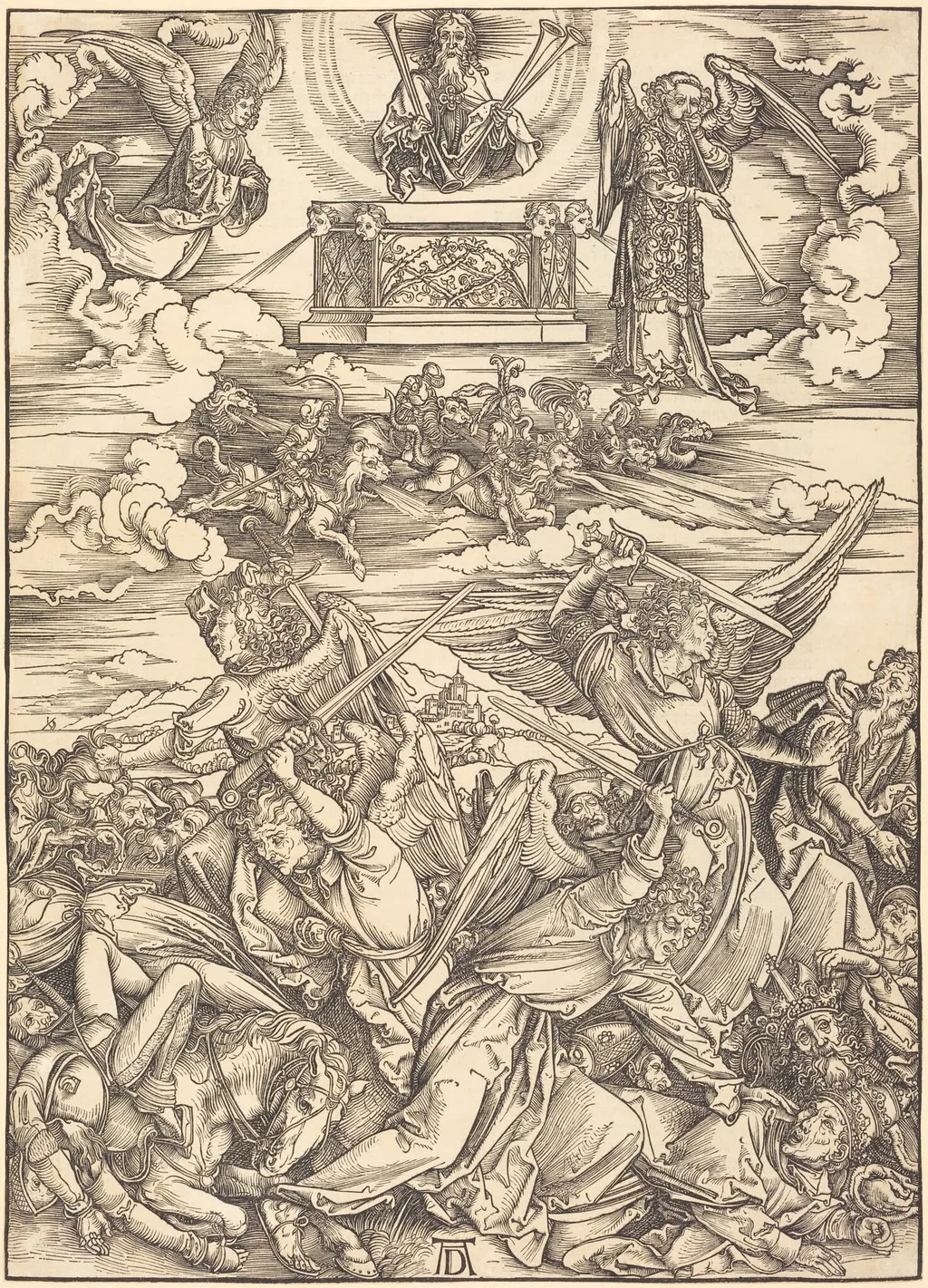
The Four Avenging Angels is an ink print by the Northern Renaissance artist Albrecht Dürer. It dates from 1497 and is held in the collection of the Metropolitan Museum of Art.
About this work
Overview
Albrecht Dürer’s *The Four Avenging Angels* is a woodcut print dating to approximately 1497. Part of a broader tradition of religious imagery, the work presents a scene drawn from Christian eschatology, rendered through the medium’s characteristic stark contrasts and linear precision. Dürer’s composition balances intricate detail with bold, graphic clarity, a hallmark of the woodcut technique.
Subject & Meaning
The print portrays four armored angels, each wielding a sword and exhibiting expressions of solemn intensity. One figure holds an open book, while another clutches a scroll, symbols often associated with divine judgment or revelation. The scene evokes themes of retribution and divine authority, aligning with apocalyptic narratives in Christian theology, where angels execute divine will.
Technique & Style
Executed in woodcut, the image relies on incised lines that transfer ink to paper, demanding deliberate, forceful carving.
Executed in woodcut, the image relies on incised lines that transfer ink to paper, demanding deliberate, forceful carving. Dürer’s design emphasizes strong contours and rhythmic patterns, particularly in the angels’ wings, where fine feather details contrast with the simplified, robust forms of their armor. The medium’s constraints—sharp lines and high contrast—lend the work its dramatic immediacy.
History & Provenance
Created during Dürer’s early career, *The Four Avenging Angels* reflects the artist’s engagement with religious themes prevalent in late 15th-century Europe. As a print, it was likely produced in multiple impressions, though the precise number of surviving copies remains uncertain. The work’s circulation would have contributed to Dürer’s growing reputation as a printmaker of technical and expressive skill.
Context
Woodcuts served as a primary means of disseminating religious imagery in the late Middle Ages and early Renaissance. Dürer’s work emerges from this tradition, responding to contemporary anxieties about divine judgment and moral accountability. The print’s apocalyptic subject matter resonated with audiences familiar with biblical prophecy, particularly in an era marked by social and religious upheaval.
Own this work as a print
Artist & collection
Artist
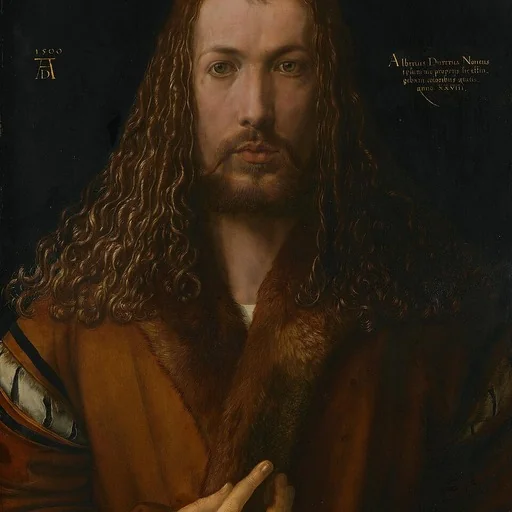
Albrecht Dürer spent his life in Nuremberg, a busy German city where artists traded prints like currency.

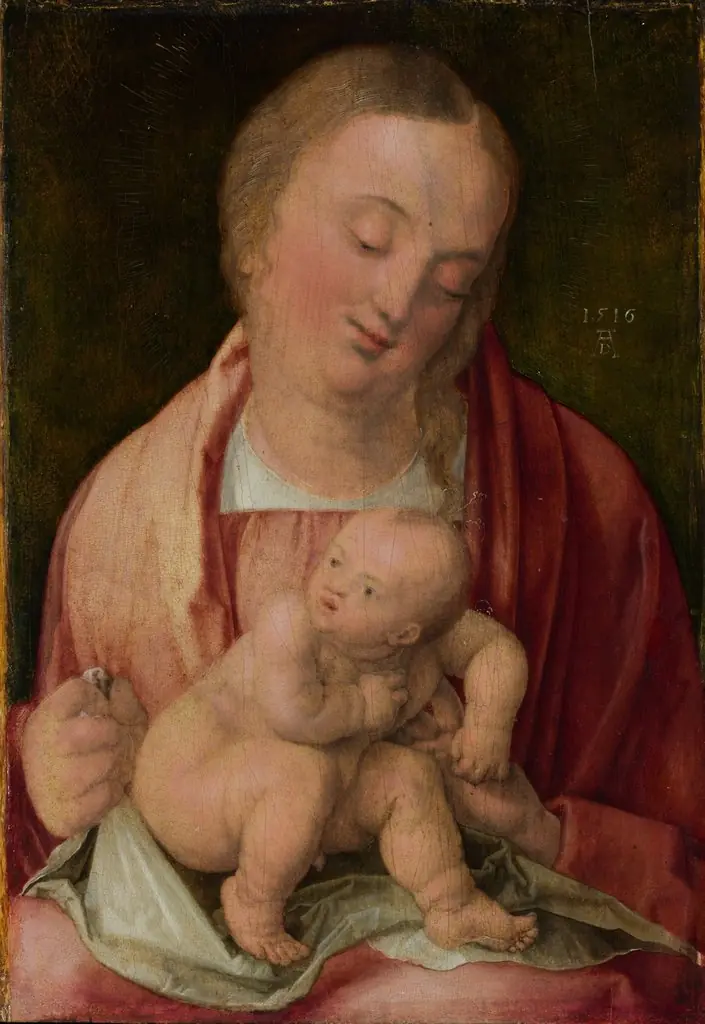
![Madonna and Child [obverse], by Albrecht Dürer](https://artifactworldgallery.com/img/albrecht-durer--madonna-and-child-obverse--d7b8ebf05d22ebe5-w320.webp)
![Lot and His Daughters [reverse], by Albrecht Dürer](https://artifactworldgallery.com/img/albrecht-durer--lot-and-his-daughters-reverse--b4ebf9b282faa17a-w320.webp)
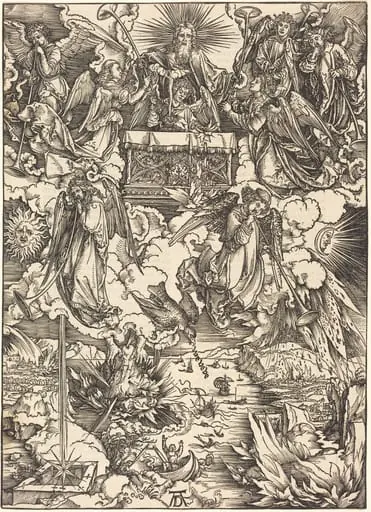 The Seven Angels with the Trumpets
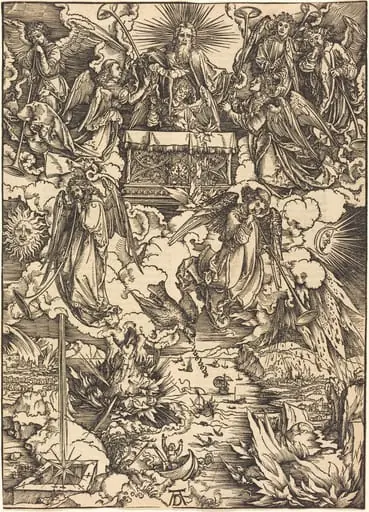 The Seven Angels with the Trumpets
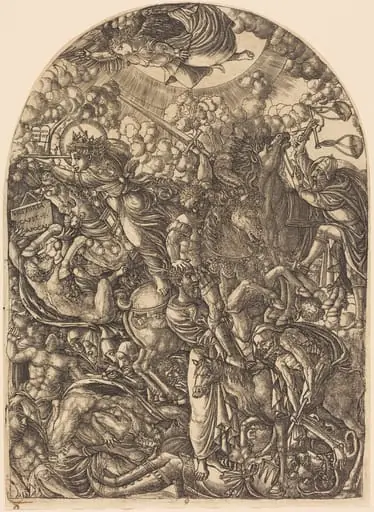 Saint John Sees the Four Horsemen
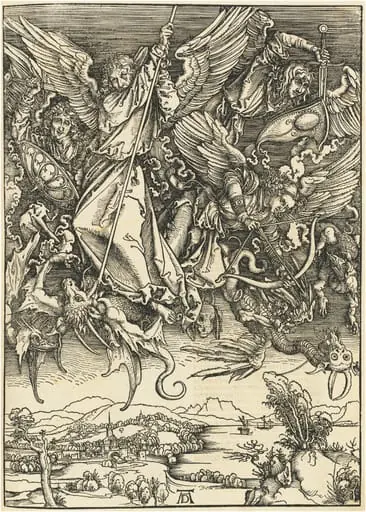 Saint Michael Fighting the Dragon
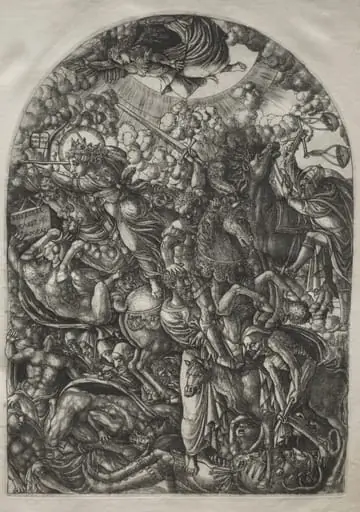 The Apocalypse: St. John Sees the Four Riders
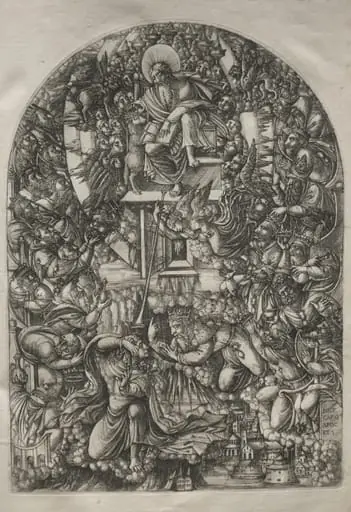 The Apocalypse: St. John Summoned to Heaven
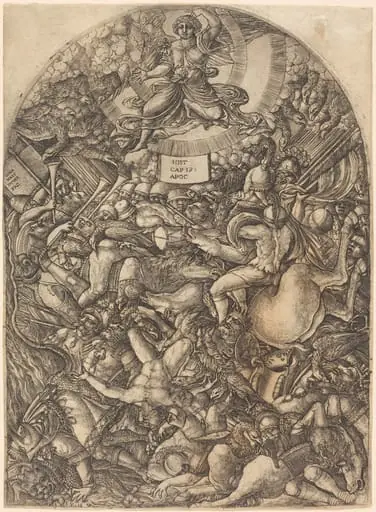 The Angel in the Sun Calling the Birds of Prey
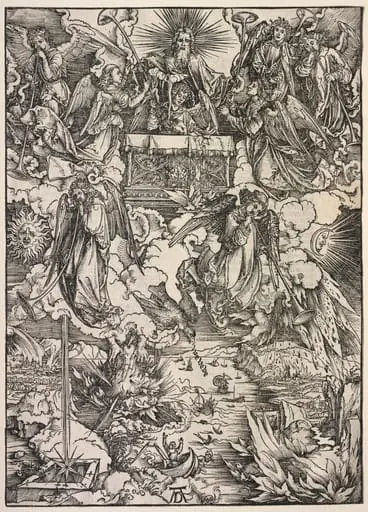 Revelation of St. John: Seven Angels with Trumpets