Artwork
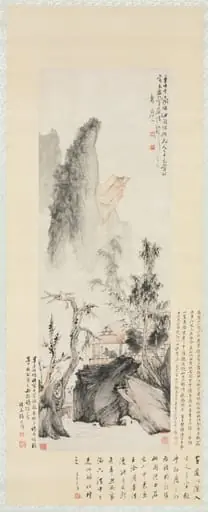
清 戴熙 仿古山水四屏 軸|Landscapes after old masters
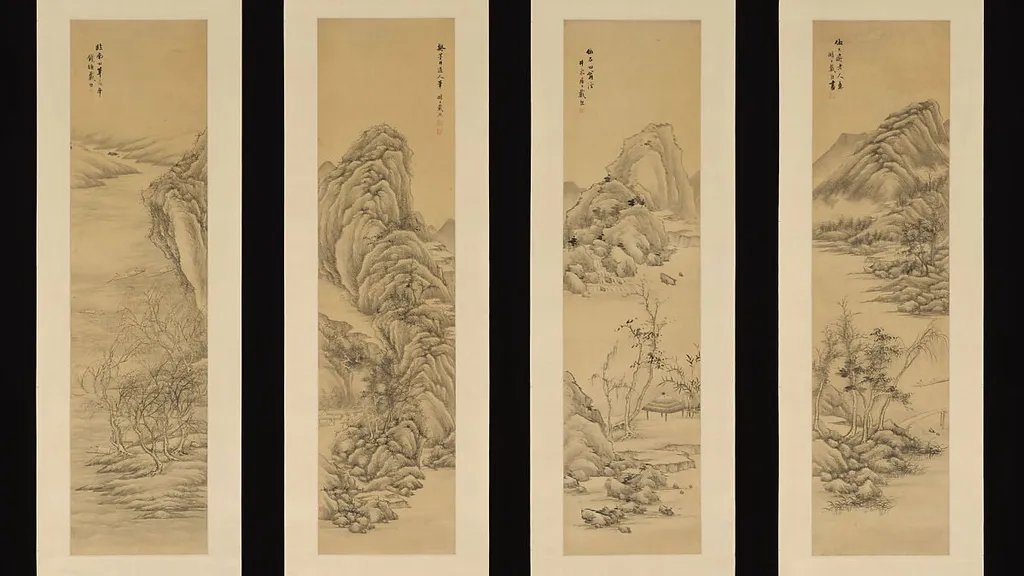
清 戴熙 仿古山水四屏 軸|Landscapes after old masters is an ink painting by the Qing dynasty painting artist Dai Xi. It dates from 1850 and is held in the collection of the Metropolitan Museum of Art.
About this work
Overview
The works are part of The Metropolitan Museum of Art’s collection, preserved as a unified ensemble that exemplifies 19th-century scholarly painting practices.
This set of four hanging scrolls, created by Dai Xi in 1850, presents landscape scenes rendered in ink on paper embedded with gold flecks. Each scroll is a deliberate reimagining of earlier Chinese painting traditions, reflecting the artist’s engagement with historical styles rather than direct observation. The works are part of The Metropolitan Museum of Art’s collection, preserved as a unified ensemble that exemplifies 19th-century scholarly painting practices.
Subject & Meaning
The scrolls depict idealized natural landscapes—rolling mountains, dense forests, winding rivers, and distant pavilions—drawn from canonical compositions of the Song and Yuan dynasties. These scenes are not literal places but evocations of poetic solitude and cultural continuity. By revisiting past masters, Dai Xi affirmed the value of tradition in a time of social change, positioning himself within a lineage of literati painters who saw art as moral and intellectual practice.
Technique & Style
Dai Xi employed fine, controlled ink brushwork to suggest texture and depth, adhering to classical methods of layering washes and dry-brush strokes. The gold flecks in the paper subtly enhance luminosity without overpowering the monochrome palette, a refined choice that elevates the work’s elegance. The compositions follow traditional vertical formats, with careful spatial recession and minimal human presence, emphasizing harmony between nature and the observer’s contemplative stance.
History & Provenance
Created in the mid-19th century during the Daoguang reign, the scrolls were likely produced for private scholarly collectors. They entered The Metropolitan Museum of Art’s collection through documented acquisitions in the 20th century. No earlier provenance is publicly recorded, but their preservation as a complete set suggests they were valued as a cohesive unit, possibly commissioned or assembled by a connoisseur with deep appreciation for historical styles.
Context
Dai Xi worked during a period of political instability and cultural reassessment in Qing China. While Western influences were emerging, literati painters like him turned inward, reviving classical forms as a means of cultural preservation. His work reflects the enduring role of ink painting among scholar-officials, who used artistic homage to assert identity and continuity amid rapid societal transformation.
Legacy
Dai Xi’s four-scroll set remains a representative example of late Qing literati painting, illustrating how tradition was actively sustained rather than passively inherited. His approach influenced later collectors and artists who sought to reconcile historical aesthetics with contemporary sensibilities. The scrolls continue to serve as pedagogical tools, demonstrating the enduring principles of Chinese ink landscape painting to modern audiences.
Artist & collection

Artist
Dai Xi spent his life in a quiet corner of China, far from the noisy politics of his time.


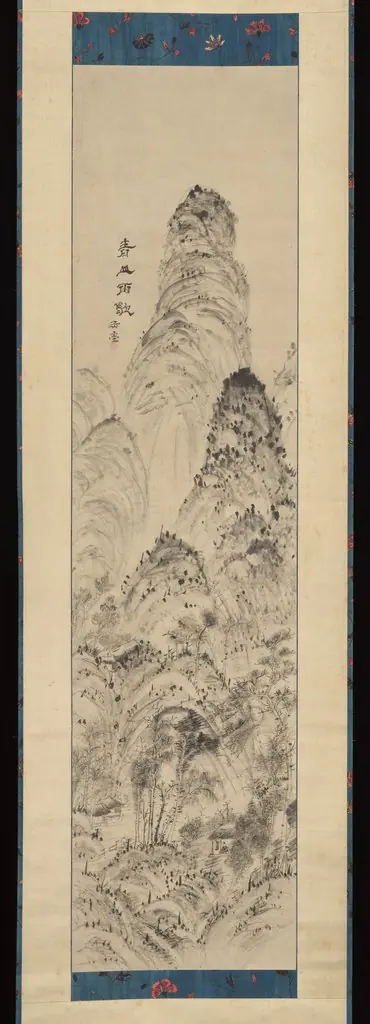 Green Mountains as the Rain Ceases
 Untitled
 Conversation in Autumn
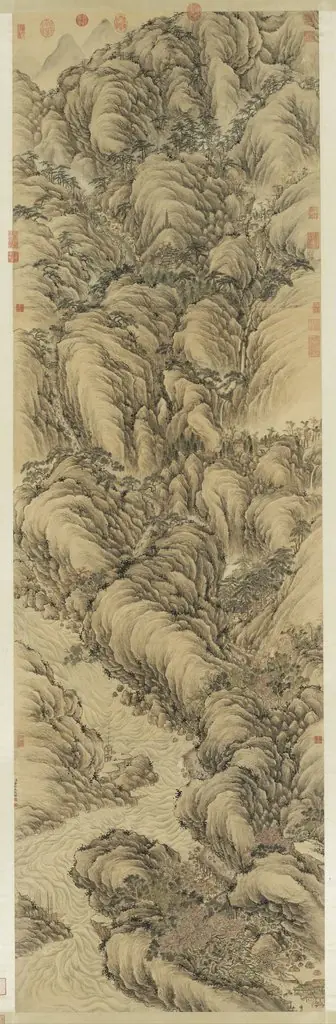 Travellers amongst the Streams and Mountain Passes
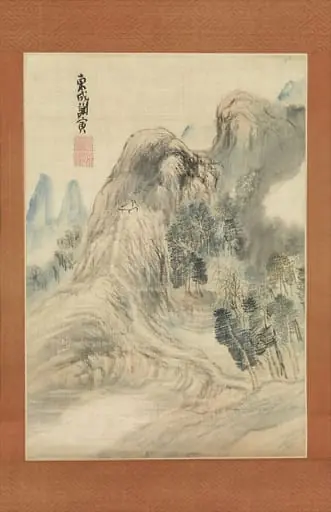 Untitled
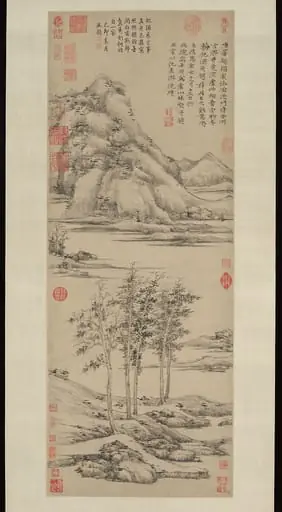 元 倪瓚 虞山林壑圖 軸|Woods and Valleys of Mount Yu
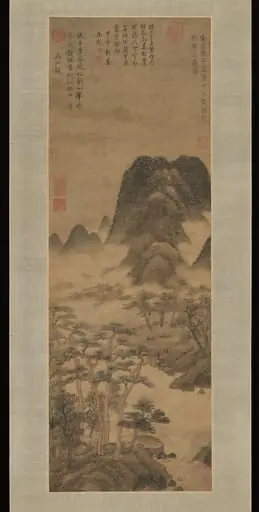 元 張羽 松軒春靄圖 軸|Spring Clouds at the Pine Studio
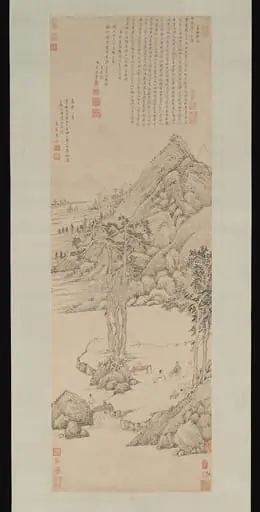 明 文嘉 為項元汴作山水圖 軸|Landscape dedicated to Xiang Yuanbian
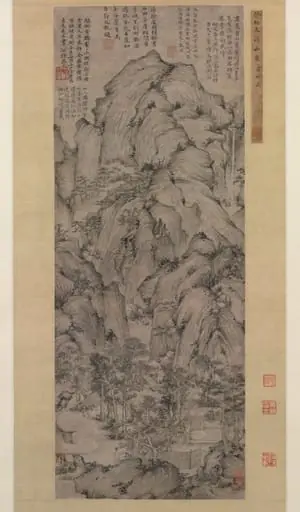 Streams and Mountains
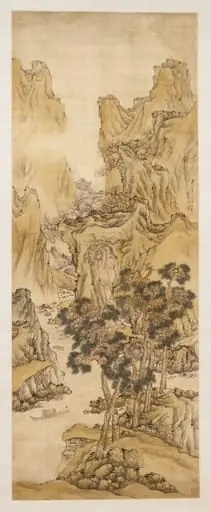 The Peach Blossom Spring