Artwork
Rain-coming Pavilion by the Stone Bridge at Mt. Tiantai

Rain-coming Pavilion by the Stone Bridge at Mt. Tiantai is an unspecified painting by the Chinese Orthodox School artist Dai Xi. It dates from 1848 and is held in the collection of the Cleveland Museum of Art. Rain-coming Pavilion by the Stone Bridge at Mt.
About this work
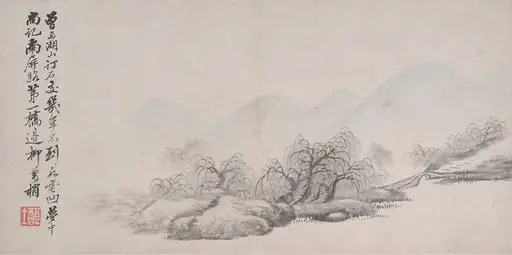
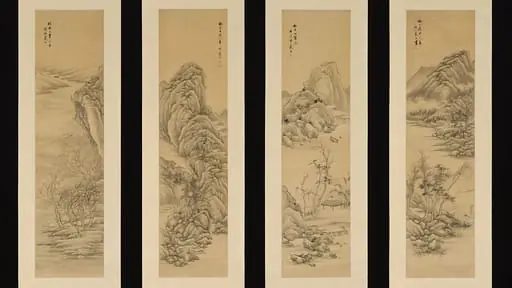
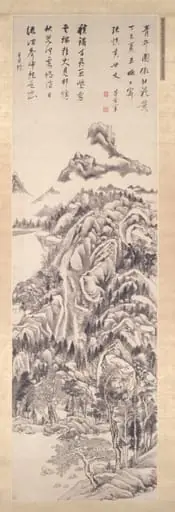
You see a long, narrow scroll of misty mountains, a stone bridge, and a small pavilion perched by a stream.
You see a long, narrow scroll of misty mountains, a stone bridge, and a small pavilion perched by a stream. Tiny figures walk the path, almost lost in the fog.
This painting marks a real moment—when a drought ended and a local official rebuilt the pavilion. The artist waited ten years to paint it, turning a news event into quiet memory. The soft ink blurs edges like mist, so the scene feels half-dream.
To see how other Chinese artists painted real places, look up *china, qing dynasty (1644-1911)*.
Overview
Rain-coming Pavilion by the Stone Bridge at Mt. Tiantai is a handscroll painting depicting a serene mountain landscape with a pavilion and stone bridge.
Subject & Meaning
The painting commemorates the 1838 reconstruction of a pavilion at Mount Tiantai in Zhejiang Province, renamed Yulai Pavilion to mark the end of a drought. It captures a moment in time, transforming a contemporary event into a nostalgic memory.
Technique & Style
The artist, Dai Xi, employed soft ink washes to create a dreamy atmosphere, blurring the edges of forms to evoke mist-shrouded mountains and a sense of depth.
History & Provenance
Dai Xi created the painting in 1848, a decade after the pavilion's reconstruction, reflecting on a significant local event.
Artist & collection

Artist
Dai Xi spent his life in a quiet corner of China, far from the noisy politics of his time.