Artwork
Christ on the Cross
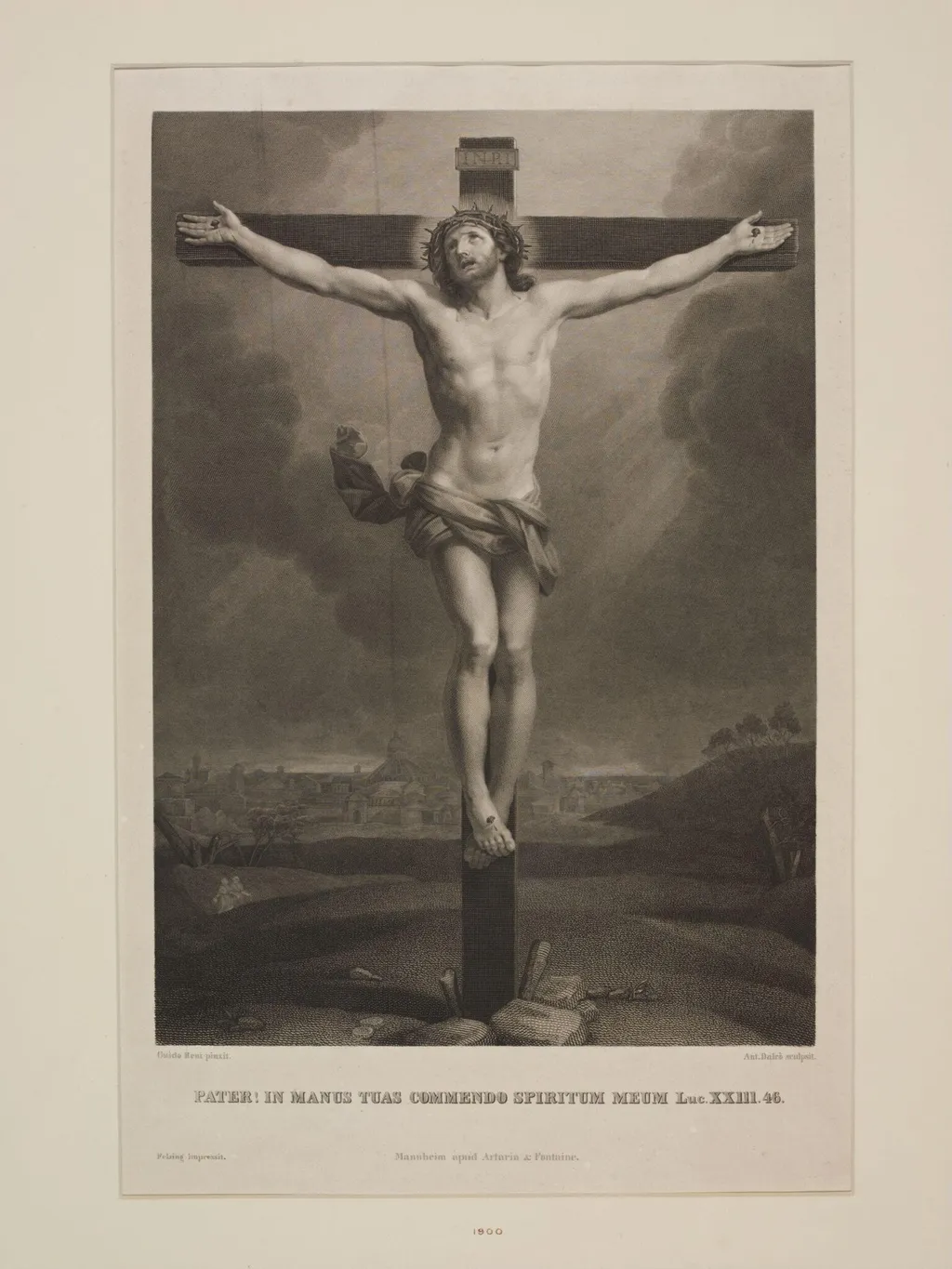
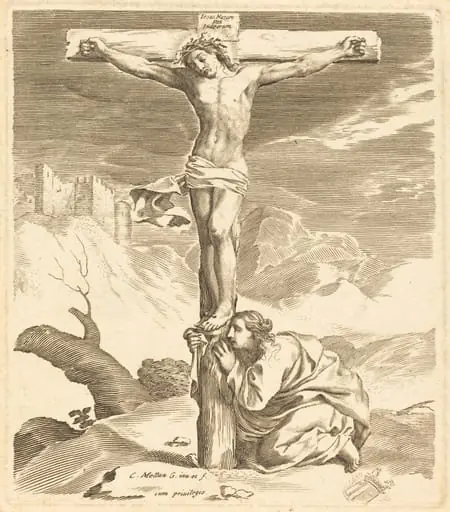
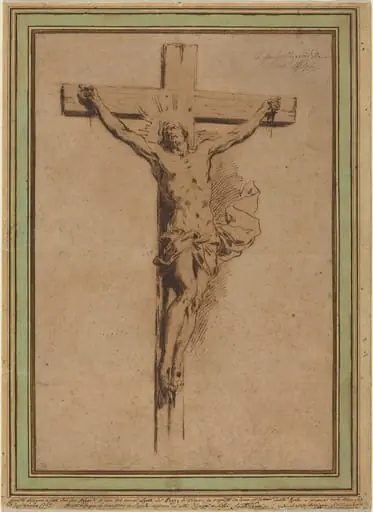
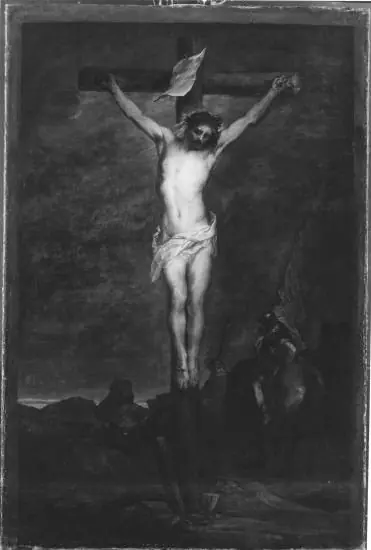
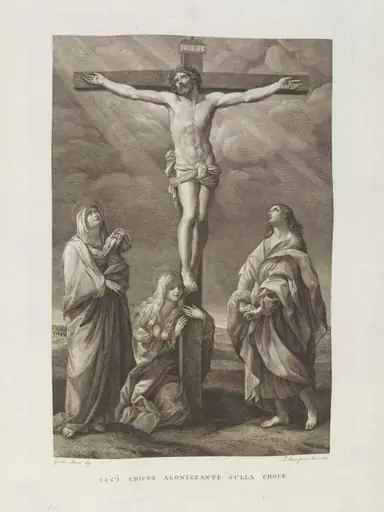
Christ on the Cross is a print by Antonio Dalcó. It dates from 1850 and is held in the collection of the Victoria and Albert Museum. This print on paper portrays Christ crucified, derived from a composition by Guido Reni.
About this work
Overview
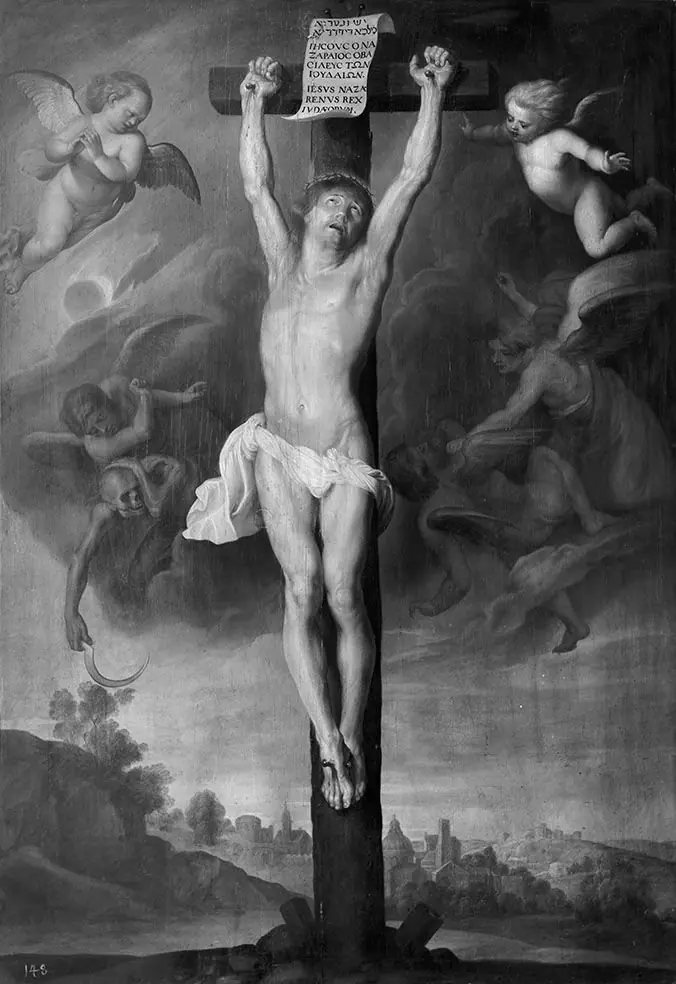
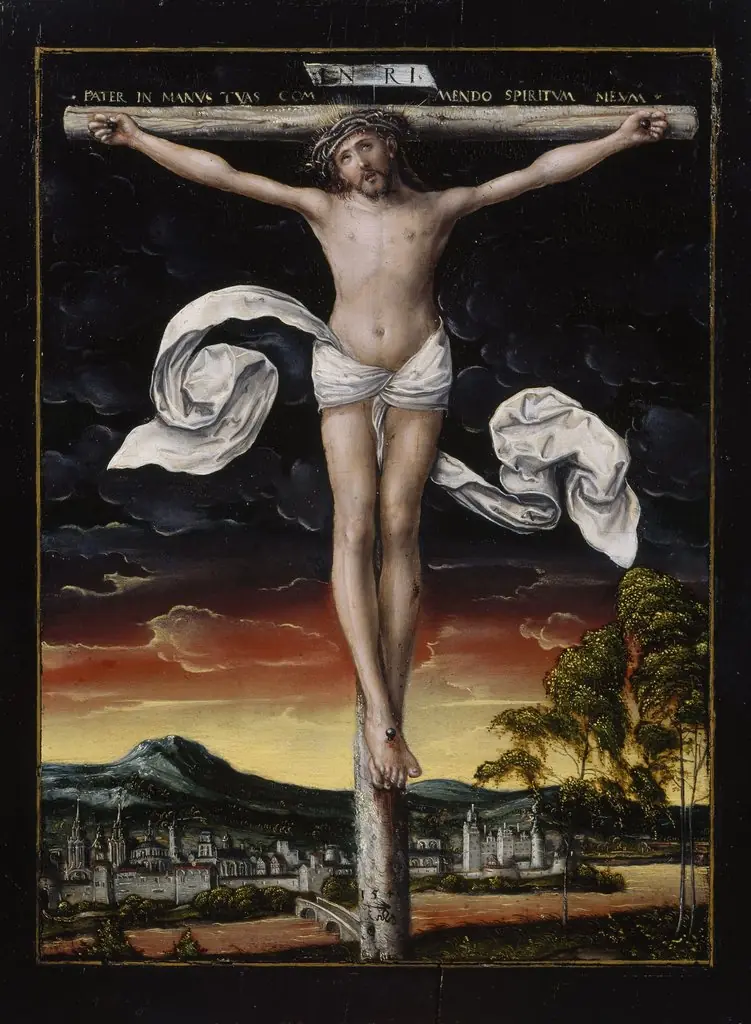
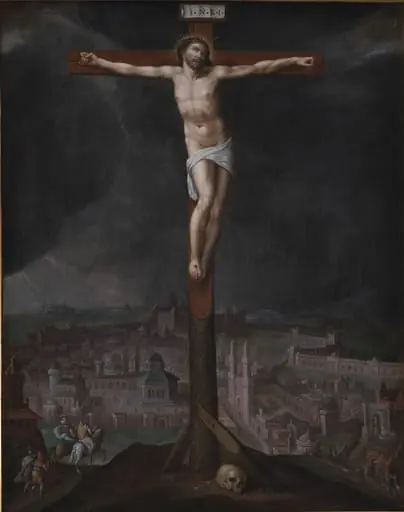
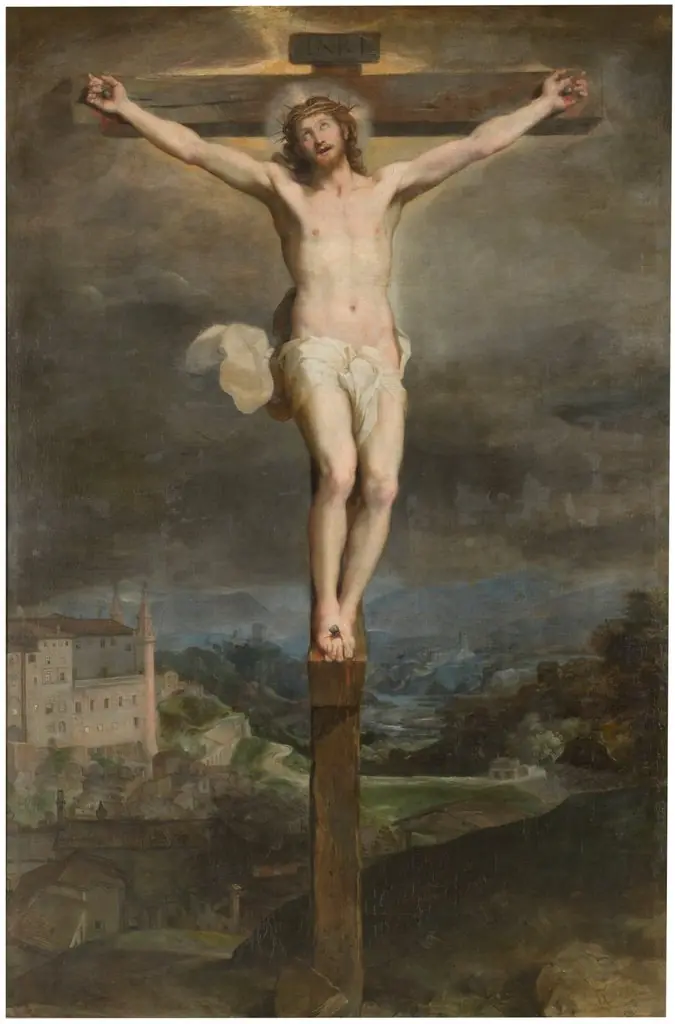
This print on paper portrays Christ crucified, derived from a composition by Guido Reni. The image is rendered in high contrast, emphasizing the figure against a deep, shadowed background. A faint landscape of hills and a distant settlement suggests a quiet, solemn setting. The inscription 'Pater! in manus tuas' appears, referencing Christ’s final words as recorded in Luke’s Gospel.
Subject & Meaning
The inscription invokes his surrender to divine will, reinforcing the theological theme of redemption through suffering.
The figure of Christ, naked except for a loincloth and crowned with thorns, embodies sacrifice and suffering. His arms are stretched wide, wrists pinned to the crossbeam, conveying both vulnerability and acceptance. The inscription invokes his surrender to divine will, reinforcing the theological theme of redemption through suffering. The stillness of the scene invites contemplation rather than drama.
Technique & Style
The artist employs chiaroscuro to model the body with dramatic lighting, highlighting the chest and hands while the surrounding areas recede into shadow. This technique enhances the three-dimensionality of the form and focuses attention on Christ’s physicality. The lines are precise, typical of engraved or etched prints, with fine details in the thorns and folds of the loincloth.
History & Provenance
The print originates from a 17th-century Italian tradition of reproducing religious paintings for devotional use. Based on Guido Reni’s original painting, it was likely produced by an engraver working in Bologna or Rome, where Reni’s compositions were widely circulated. Copies like this were distributed across Europe, serving both spiritual and artistic purposes.
Context
Created during the Counter-Reformation, such images reinforced Catholic teachings on Christ’s sacrifice and the efficacy of prayer. The emphasis on Christ’s humanity and suffering aligned with Church efforts to deepen personal piety. Prints like this were accessible to laypeople, making complex theological ideas visible and tangible in domestic settings.
Legacy
Though not attributed to Reni himself, this print helped disseminate his compositional style beyond painted altarpieces. It contributed to the standardization of Christ’s crucified image in popular devotion, influencing later religious imagery in both print and painting. Its quiet intensity contrasts with more theatrical Baroque depictions, preserving a restrained, meditative tradition.
Artist & collection
Artist
Antonio Dalcó’s 19th-century print Christ on the Cross shows a single, stark figure pinned to dark wood, lines cut deep to keep the moment sharp and still.