Artwork
Le juge de mesle
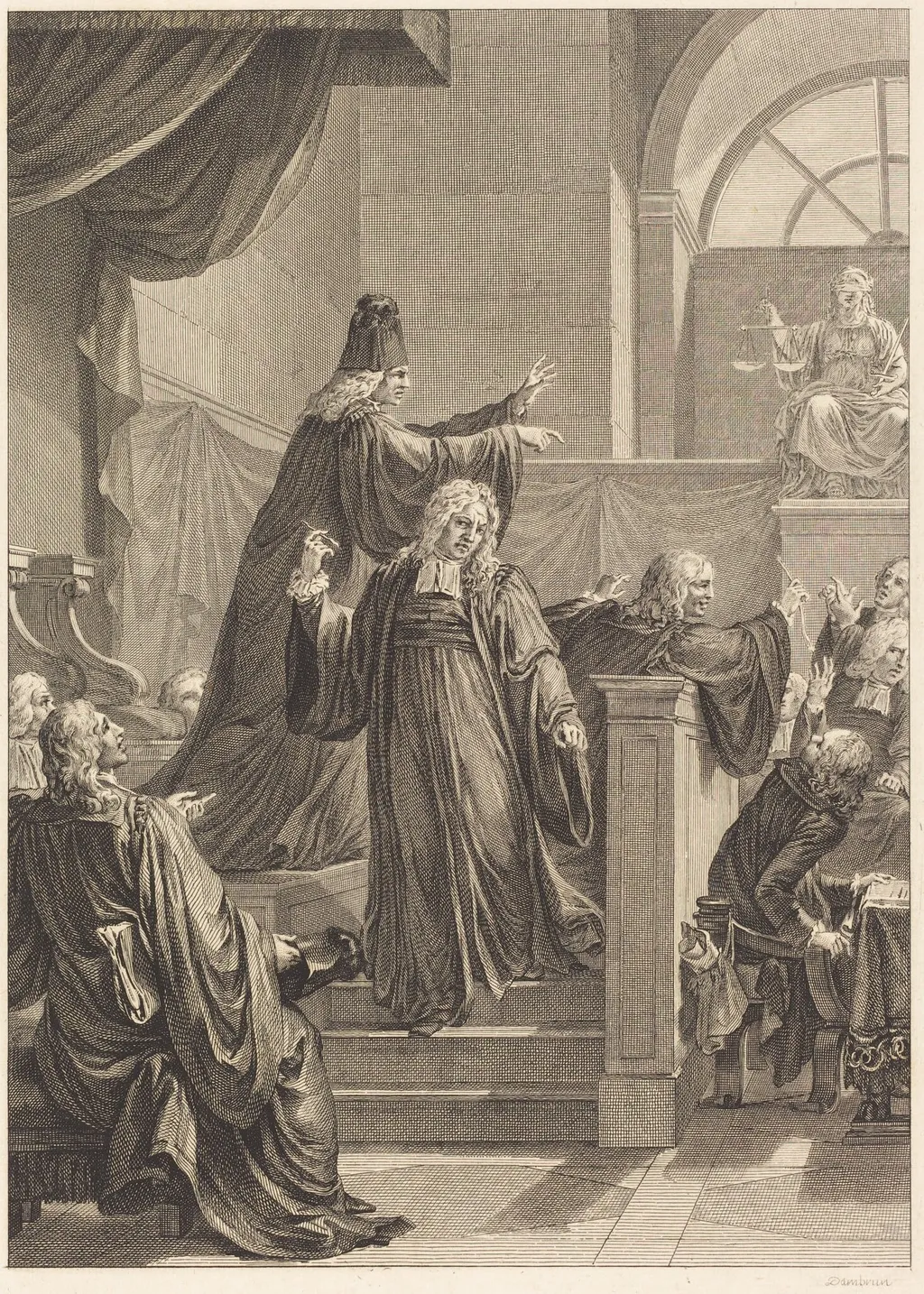
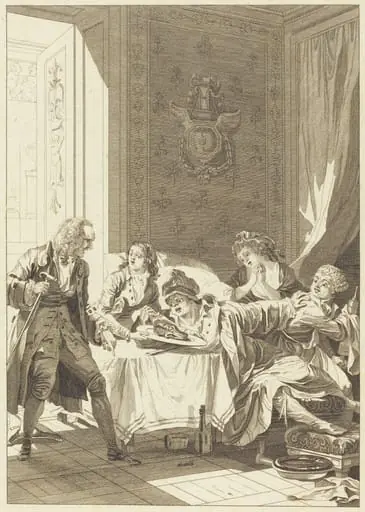
Le juge de mesle is an ink print by the Baroque artist Jean Dambrun. It dates from 1774 and is held in the collection of the National Gallery of Art.
About this work
Overview
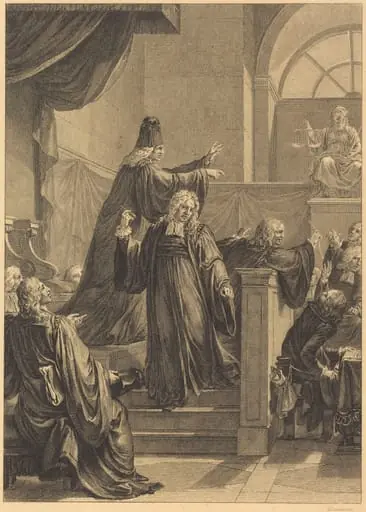
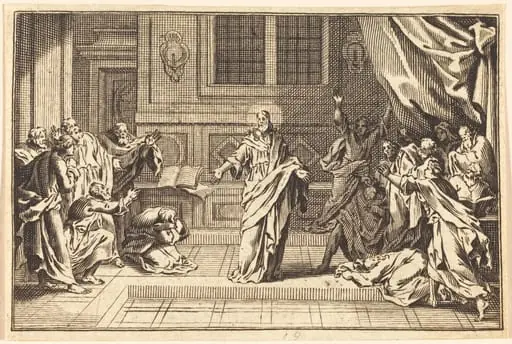
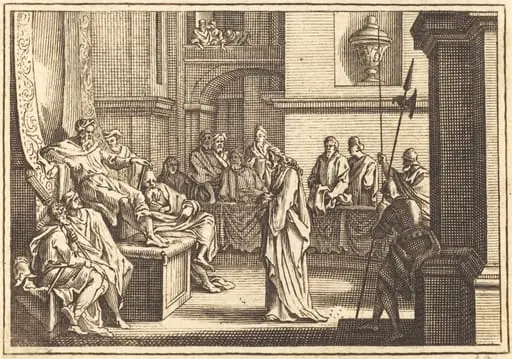
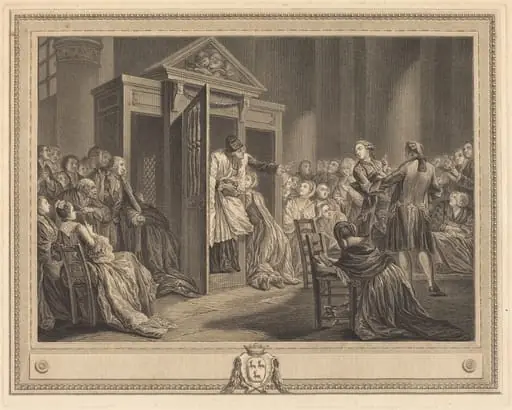
Jean Dambrun’s 1774 print, titled *Le juge de mesle*, is an engraving that depicts a solemn assembly within a vaulted interior that could be interpreted as either a church or a courtroom. Central to the composition is a robed figure elevated on a platform, gesturing upward while a surrounding crowd looks on, some holding books or raising their hands.
Subject & Meaning
The central figure appears to preside over a judgment, reinforced by the presence of two statues visible through a background window—one bearing scales, the traditional emblem of justice, and the other clutching a book, a symbol of law or scripture. The arrangement suggests an allegorical meditation on the relationship between divine authority and human jurisprudence.
Technique & Style
Dambrun employed the precise line work characteristic of engraving, using strong contrasts of light and shadow to heighten the scene’s dramatic tension. The crisp, angular strokes and deep chiaroscuro align the work with the late Baroque aesthetic, emphasizing movement and emotional intensity within the static medium of print.
History & Provenance
Created in 1774, the print emerges from the late eighteenth‑century French printmaking tradition, a period when engravers often produced works for both artistic and didactic purposes. While specific ownership records are scarce, the piece is catalogued among Dambrun’s known oeuvre of religious and moral subjects.
Context
The image reflects contemporary Enlightenment concerns, where the interplay of religious symbolism and legal motifs was common in visual culture. By juxtaposing human figures with allegorical statues, the work engages with ongoing debates about the sources of moral authority in pre‑revolutionary France.
Artist & collection