Artwork
Christ before Pilate
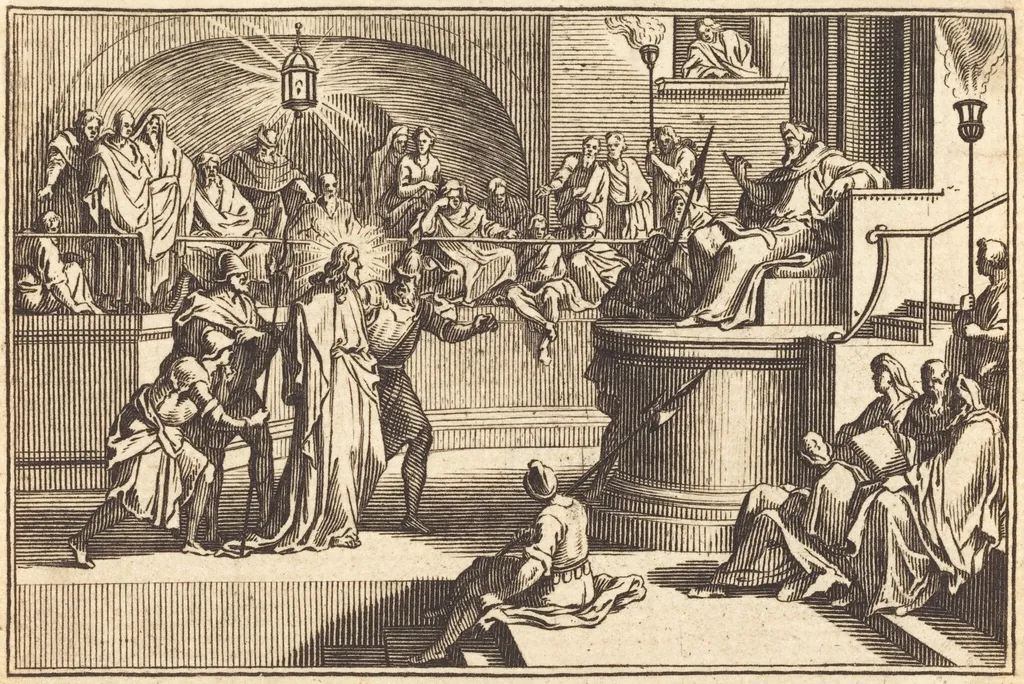
Christ before Pilate is an ink print by the Baroque artist French 17th Century. It dates from 1650 and is held in the collection of the National Gallery of Art.
About this work
Overview
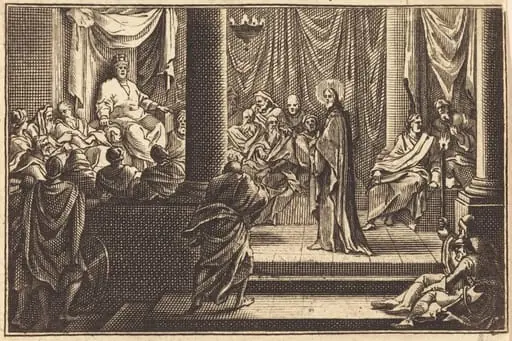
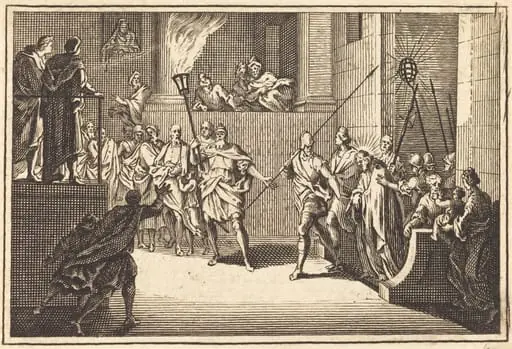
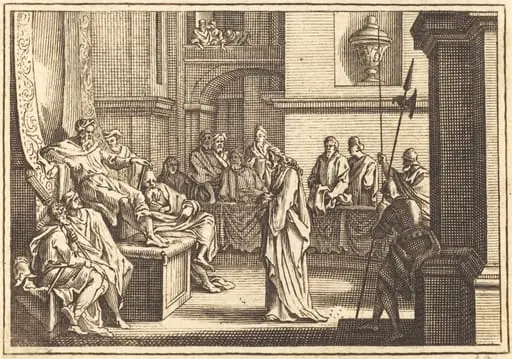
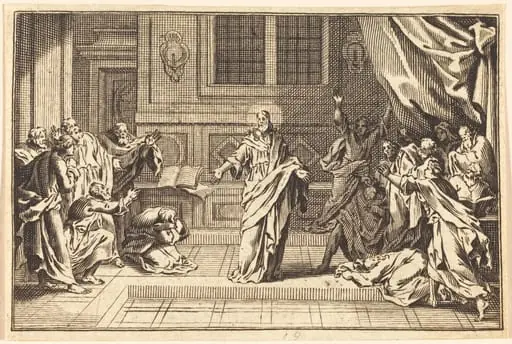
Central to the composition is a bearded, long‑haired man with his hands bound, and a balcony in the background holds additional onlookers.
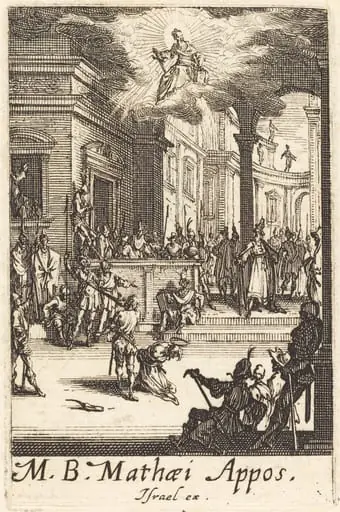
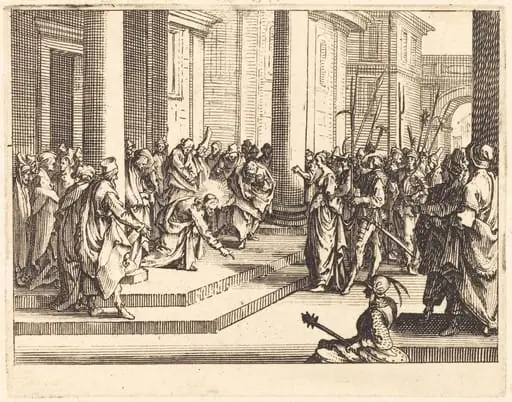
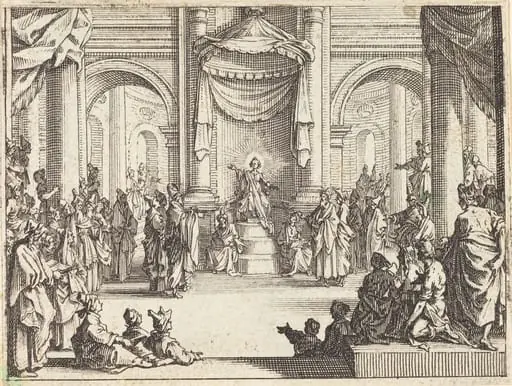
Christ before Pilate is an engraved print that depicts a densely populated scene split into two opposing groups. On the left, figures in robes gather around a long‑haired, loosely robed individual, while on the right, armored soldiers brandish torches and encircle a kneeling figure. Central to the composition is a bearded, long‑haired man with his hands bound, and a balcony in the background holds additional onlookers.
Subject & Meaning
The work illustrates the biblical episode in which Jesus is presented before the Roman governor Pontius Pilate. The contrasting clusters of clothed civilians and armed soldiers emphasize the tension between the religious crowd and the political authority, while the central, bound figure underscores the vulnerability of the condemned.
Technique & Style
Executed in engraving, the image relies on fine parallel lines that intersect to form cross‑hatching, creating subtle shadows and a textured surface. This method allows the artist to convey depth and a bustling atmosphere, rendering the multitude of figures and architectural details with a high degree of linear precision.
Context
Engraving was a primary means of reproducing narrative scenes in the early modern period, enabling wider dissemination of religious subjects. The composition’s crowded arrangement and dramatic lighting reflect the period’s interest in theatricality and moral storytelling through print media.
Artist & collection

Artist
Seventeenth-century French printmakers turned ink into story. Their tools were burin and acid, paper their stage. Look at the Beggar Woman with Rosary (1622), etched on laid paper, her hands folded around faith, or The…