Artwork
H Beard Print Collection
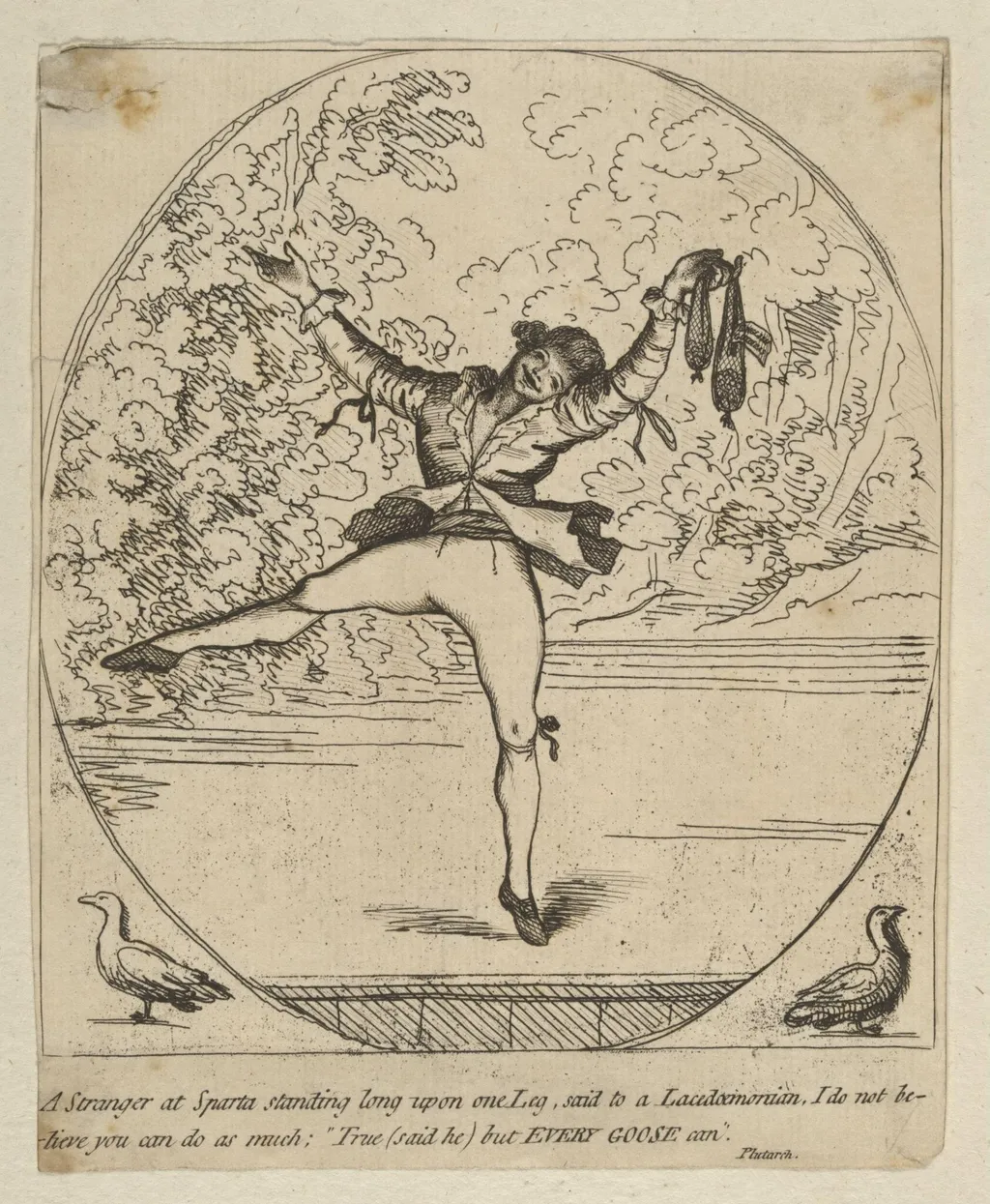
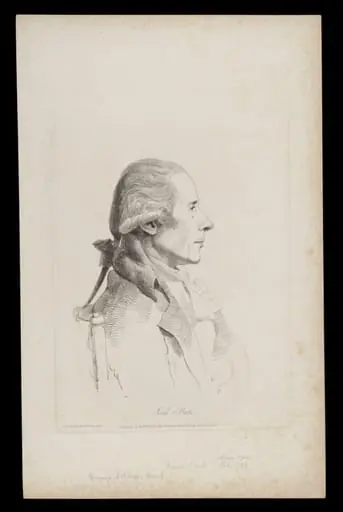
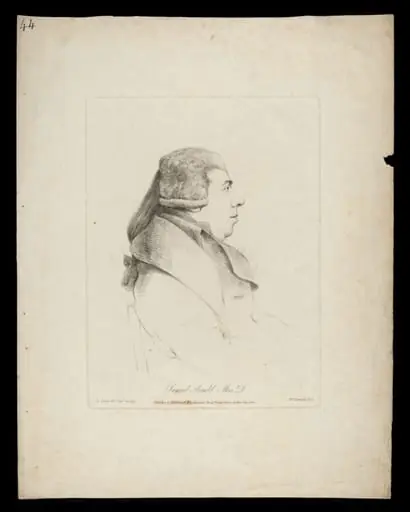
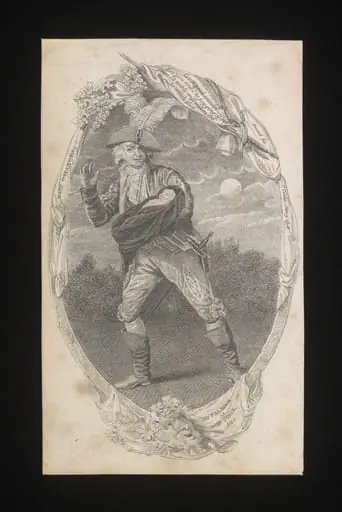
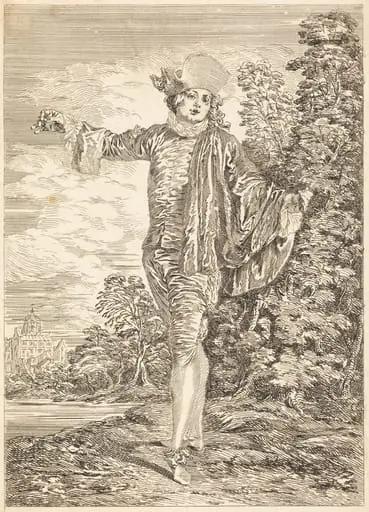
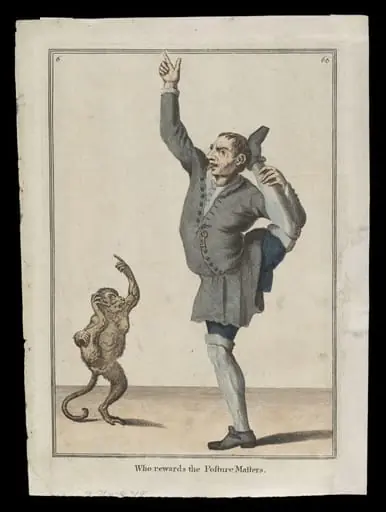
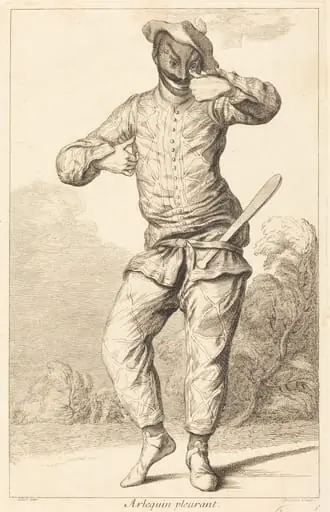
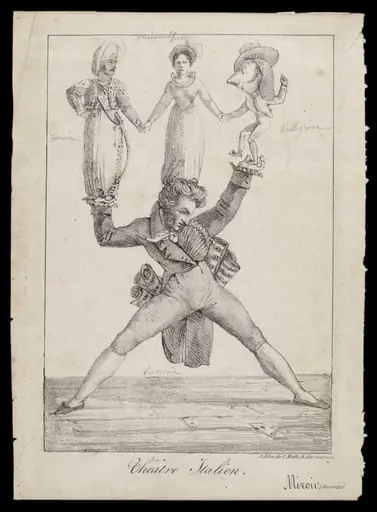
H Beard Print Collection is a print by George Dance. It dates from 1750 and is held in the collection of the Victoria and Albert Museum. This 18th-century print captures the dancer Auguste Vestris in mid-performance, rendered through engraved ink on paper.
About this work
Overview
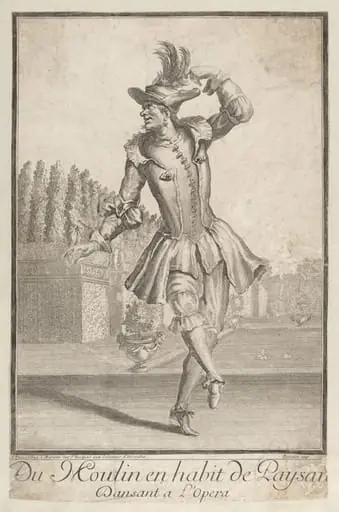
This 18th-century print captures the dancer Auguste Vestris in mid-performance, rendered through engraved ink on paper.
This 18th-century print captures the dancer Auguste Vestris in mid-performance, rendered through engraved ink on paper. The image freezes a moment of balletic motion, likely based on direct observation or a posed study. Accompanying the figure is a classical quotation from Plutarch, framing the dancer’s pose as both an athletic feat and a subject of ironic commentary on perceived simplicity versus trained mastery.
Subject & Meaning
The print centers on Vestris, renowned for his technical precision, depicted balancing on one leg—a signature pose of his repertoire. The Plutarch quote, referencing a goose’s effortless stance, undercuts the spectacle of dance by suggesting such balance is trivial. Yet the irony lies in the contrast: while a goose may hold the pose, only a dancer of Vestris’s caliber could sustain it with grace and control under public scrutiny.
Technique & Style
Executed in the intaglio tradition, the print uses fine lines carved into a metal plate to transfer ink onto paper. The composition emphasizes linear clarity, with minimal background detail to focus attention on Vestris’s elongated form and poised stance. The text is integrated as a typographic element, reinforcing the satirical tone without distracting from the visual rhythm of the figure.
History & Provenance
The print originates from the H. Beard collection, a 19th-century assemblage of theatrical imagery. Its production likely coincided with Vestris’s peak fame in Parisian and London stages during the 1770s–1790s. Though the original engraver remains unattributed, its circulation suggests demand for images linking classical rhetoric with contemporary performance culture.
Context
In late 18th-century Europe, ballet was increasingly celebrated as a refined art, yet often mocked by satirists for its perceived artificiality. This print navigates that tension: it elevates Vestris’s skill while invoking a wry classical allusion to question the value of spectacle. The juxtaposition reflects broader cultural debates about art, nature, and the body’s capacity for disciplined expression.
Legacy
The print endures as a document of how dance was visually and intellectually framed in its formative years. It illustrates the intersection of classical literature and performance, offering insight into how audiences interpreted technical prowess. Its preservation in institutions like the Victoria and Albert Museum underscores its role in tracing the evolution of theatrical representation.
Artist & collection
Artist
This printmaker worked in 18th- and early-19th-century London, turning public moments into sharp, black-and-white images.