Artwork
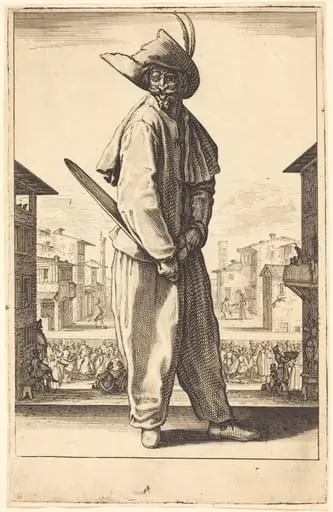
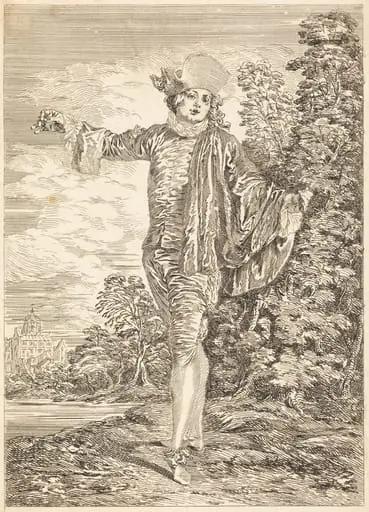
Arlequin pleurant
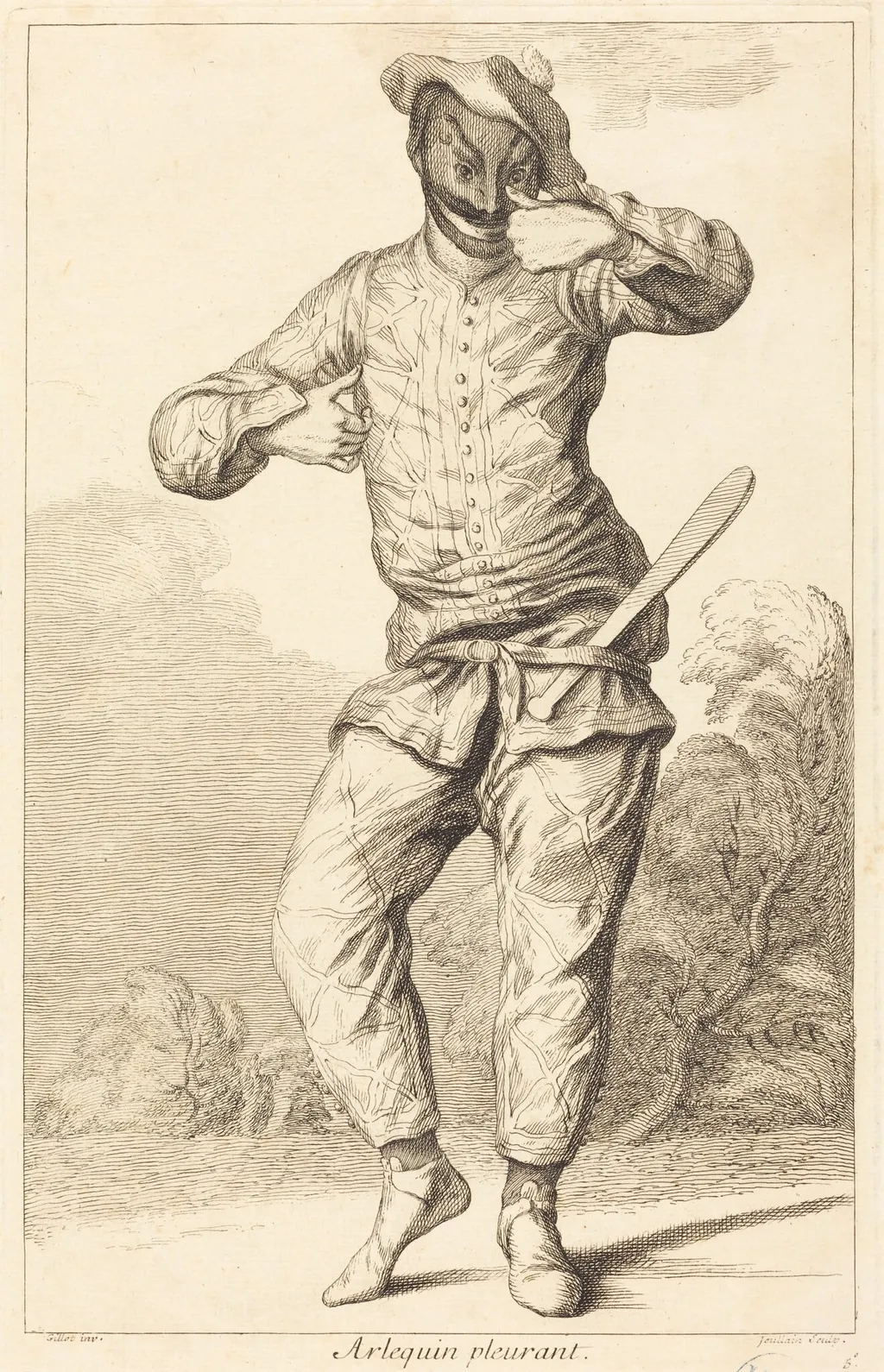
Arlequin pleurant is an ink print by the Baroque artist François Joullain. It dates from 1730 and is held in the collection of the National Gallery of Art.
About this work
Overview
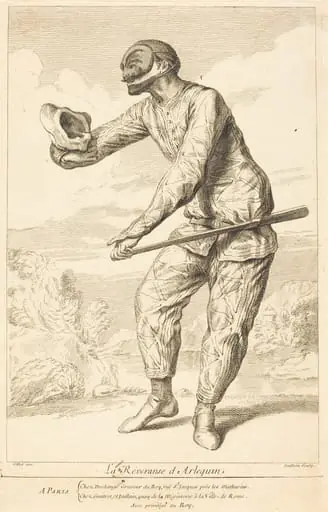
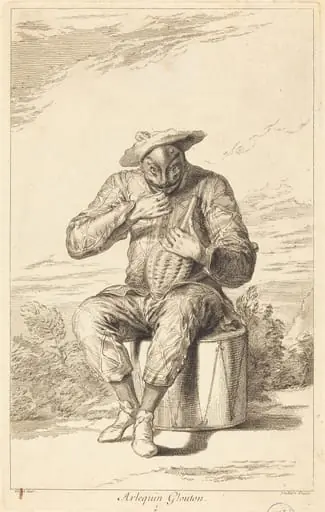
François Joullain’s etching *Arlequin pleurant*, dated around 1730, presents a solitary figure in a loose, patched costume. The print, executed on laid paper, captures the character in a moment of sorrow, with one hand wiping the face and the other resting on the hip, while a sword hangs at the side.
Subject & Meaning
The title identifies the subject as a weeping Arlequin, a traditional comic servant from commedia dell’arte. By portraying the clown in a slumped posture and with tear‑stained cheeks, Joullane hints at the vulnerability beneath the character’s usual flamboyance, suggesting a fleeting glimpse of private grief.
Technique & Style
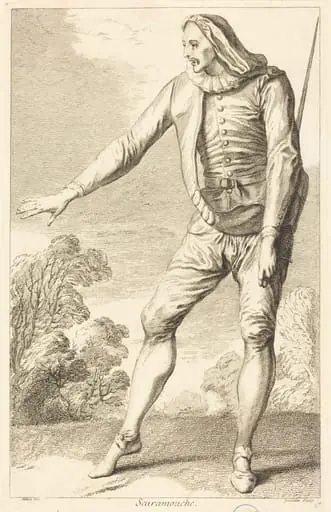
Joullane employed the etching process, allowing for rapid, fluid lines that convey movement and emotional immediacy. The sketch‑like quality of the drawing, with lightly rendered foliage in the background, emphasizes spontaneity over detailed finish, a hallmark of early 18th‑century printmaking.
History & Provenance
Created circa 1730, the work belongs to the period when Joullane was active as a publisher and printmaker in Paris. While specific ownership records are scarce, the etching has appeared in several catalogues of French prints from the Rococo era, confirming its attribution to the artist.
Context
Arlequin, a staple of theatrical tradition, often appeared in visual arts as a symbol of folly or disguise. In the early 1700s, French artists frequently explored the contrast between the character’s comic role and moments of genuine emotion, reflecting broader Enlightenment interests in human feeling.
Artist & collection