Artwork
Portret de bărbat
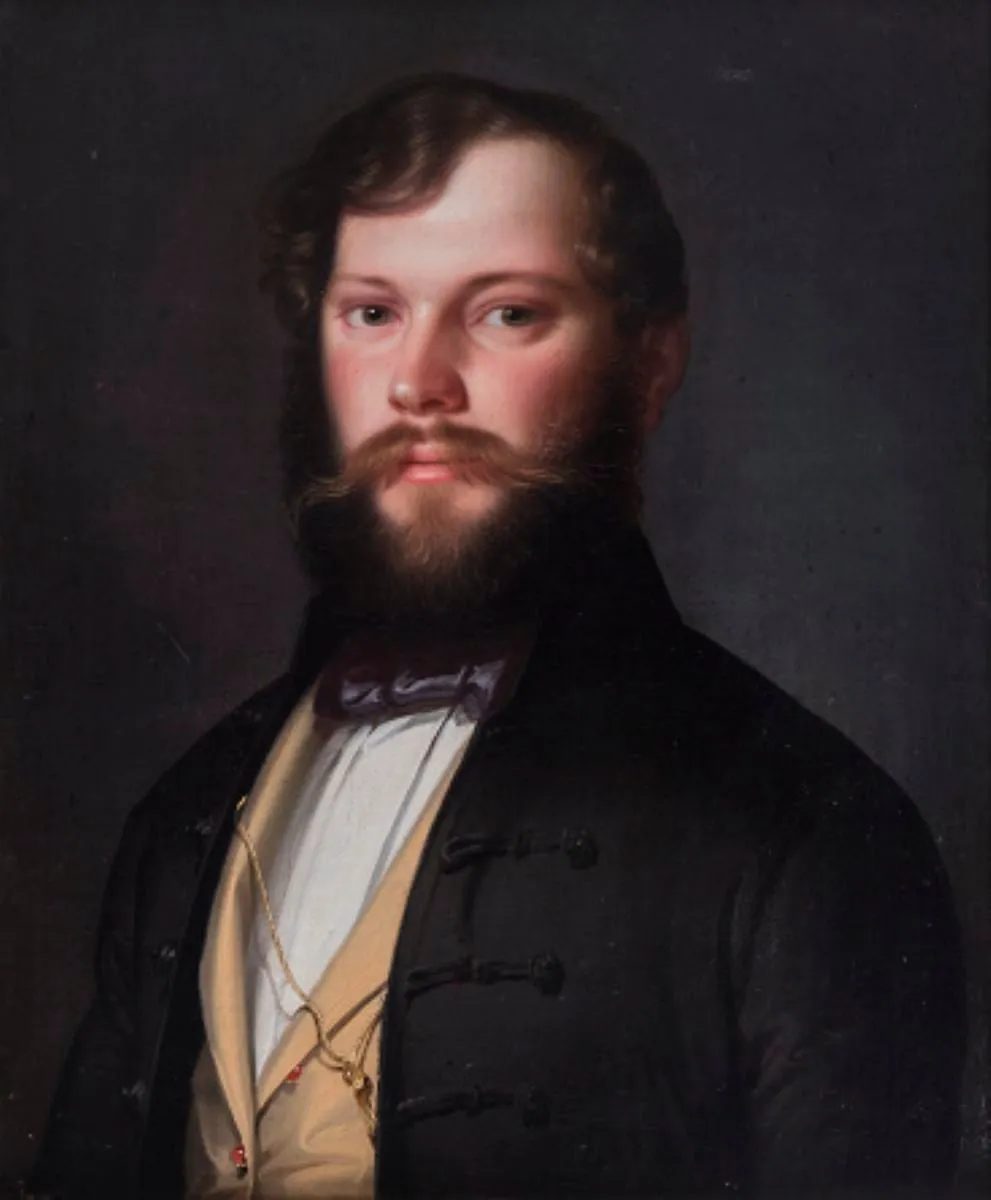
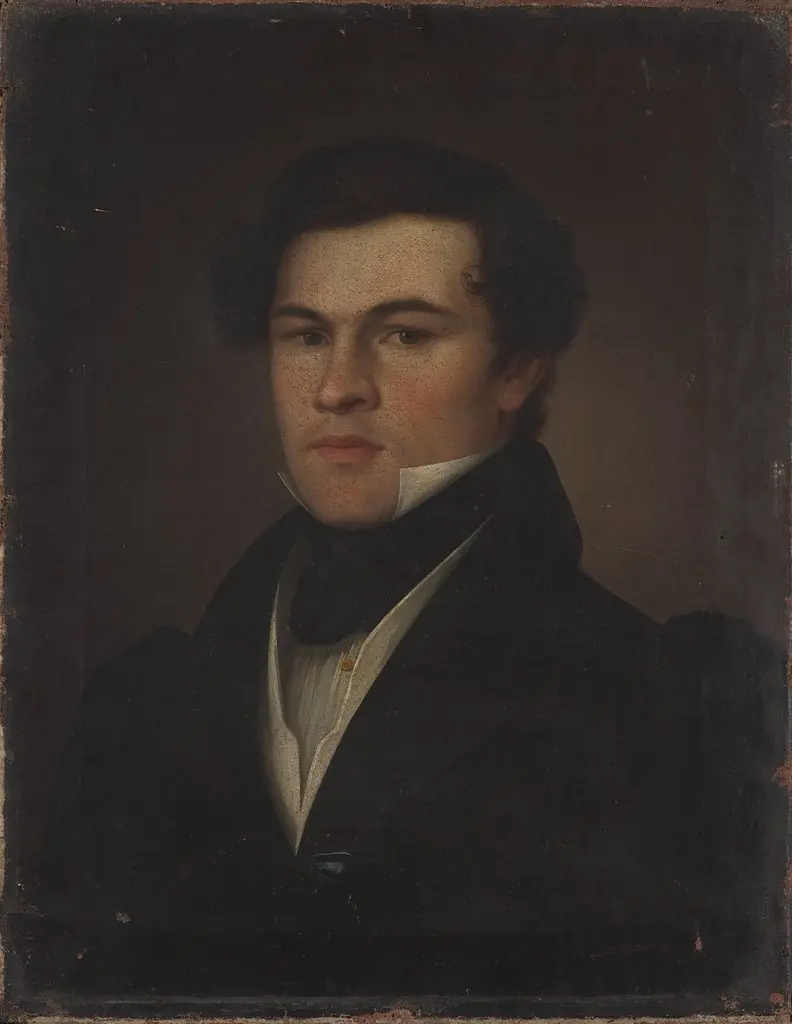
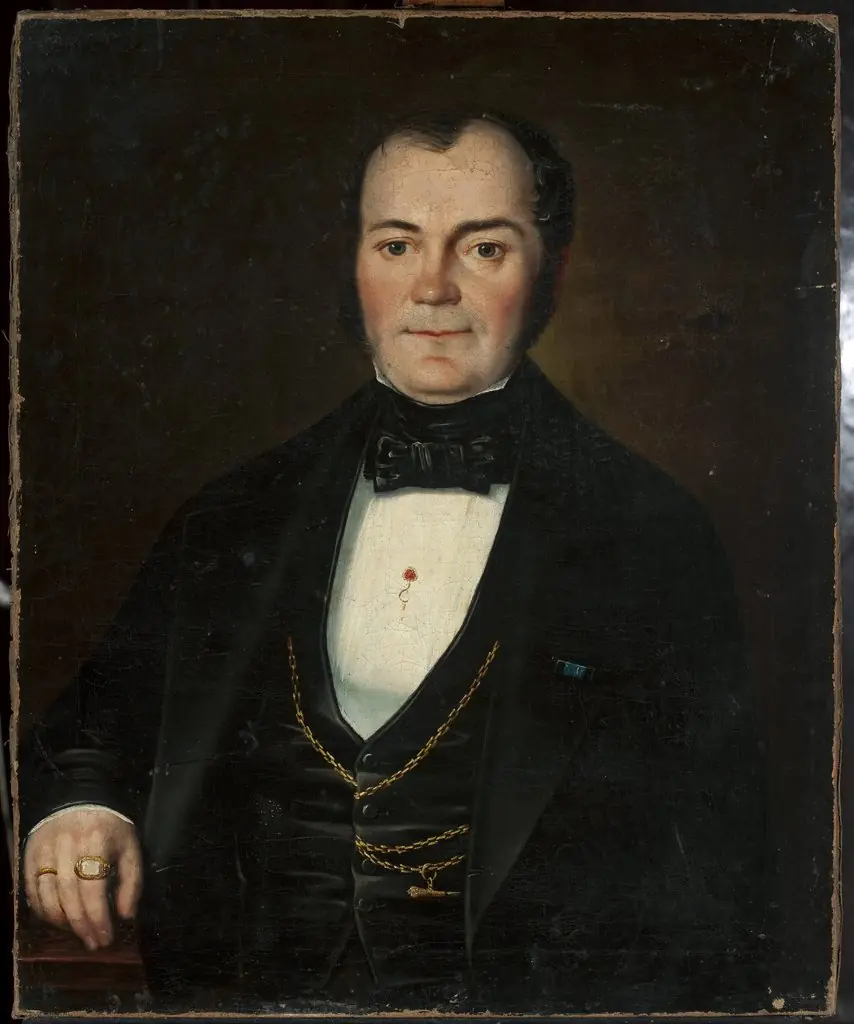
Portret de bărbat is an unspecified painting by Konstantin Daniel. It is held in the collection of the Timișoara National Museum of Art. This portrait depicts a man in formal attire, rendered with careful attention to texture and light.
About this work
Overview
The painting’s style suggests a 19th-century academic tradition, though the artist and exact date remain unidentified.
This portrait depicts a man in formal attire, rendered with careful attention to texture and light. The subject wears a black jacket, white shirt, tan vest, dark bow tie, and a gold chain bearing a red gemstone. The dark gray background isolates the figure, emphasizing his presence. The painting’s style suggests a 19th-century academic tradition, though the artist and exact date remain unidentified.
Subject & Meaning
The man’s dignified posture and refined clothing indicate social standing, possibly professional or aristocratic. The gold chain with a red stone may signify membership in an order, a family heirloom, or personal distinction. His direct gaze and stillness convey quiet authority rather than overt display, aligning with portraiture conventions that valued restraint and character over flamboyance.
Technique & Style
The artist employs subtle gradations of tone to model the face and fabric, creating a sense of volume. Light falls gently across the chest and face, contrasting with the deep shadows of the jacket and background. Brushwork is controlled, with smooth transitions between surfaces, suggesting training in academic portraiture traditions focused on realism and spatial depth.
History & Provenance
The painting’s origin and ownership history are undocumented. No signature, inscription, or archival record has been publicly verified. While stylistic elements point to 19th-century European practice, the absence of definitive attribution leaves its provenance uncertain. References to artists Daniel and Konstantin may indicate possible associations, but no confirmed link exists.
Context
This portrait reflects the persistence of formal portraiture in the 19th century, even as photographic reproduction began to challenge painted likenesses. The subdued palette and emphasis on texture align with academic norms in regions such as Eastern Europe or the Balkans, where traditional techniques endured longer than in Western centers. The subject’s attire suggests urban, middle- or upper-class identity.
Legacy
Though not widely recognized in major collections, the work exemplifies the quiet persistence of hand-painted portraiture during a period of rapid visual change. Its survival offers insight into regional artistic practices outside dominant canons. Without clear attribution, its legacy remains tied to its craftsmanship and the dignity it preserves in its subject’s representation.
Artist & collection
Artist
Konstantin Daniel made religious and portrait prints and paintings in mid-19th-century Serbia.
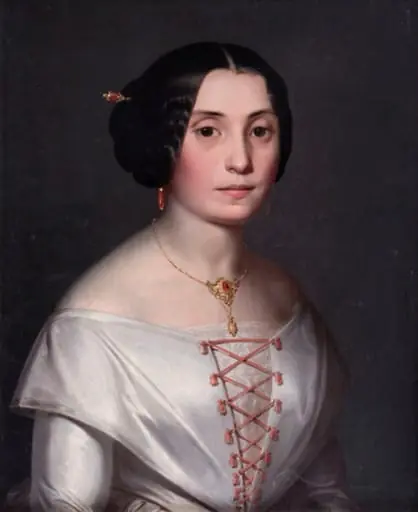
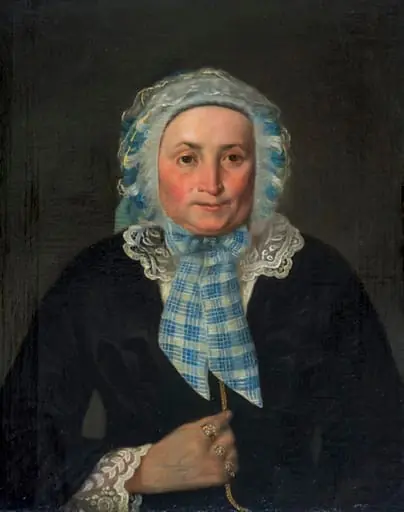
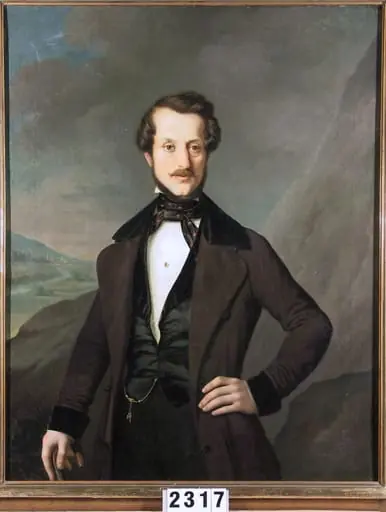 Portret de bărbat
 Portrait of Franciszek Ksawery Andrychewicz
 Portrait of a Man
 Self-portrait
 Portrait of a man
 Portrait of Mikhail Lermontov
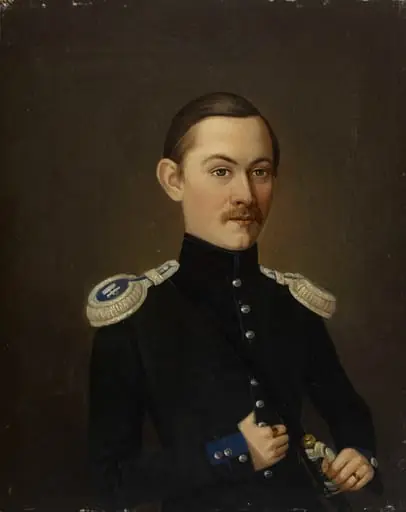 Esikuntakapteeni Danielsson
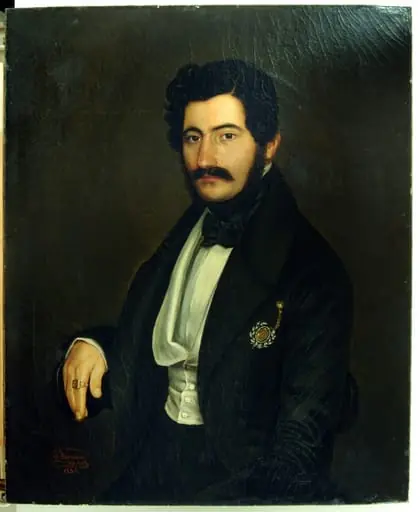 Aga Iancu Manu
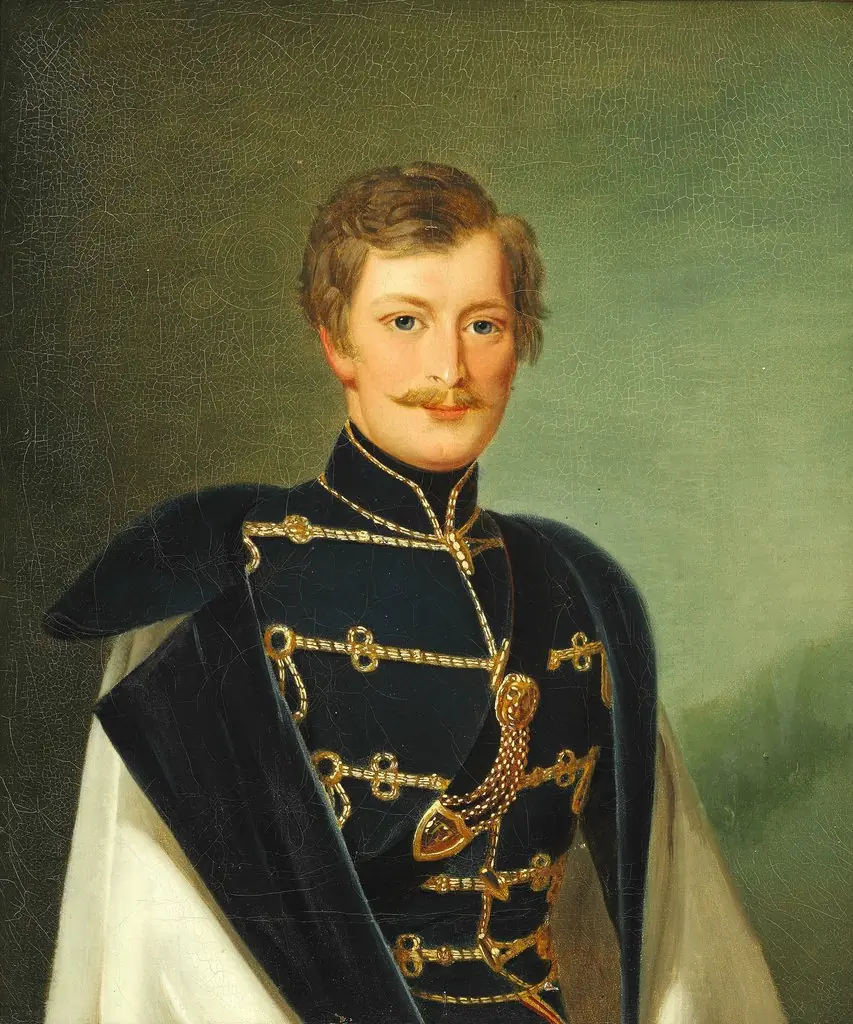 Hartvig Frederik Emil Benzon, Master of the Royal Hunt
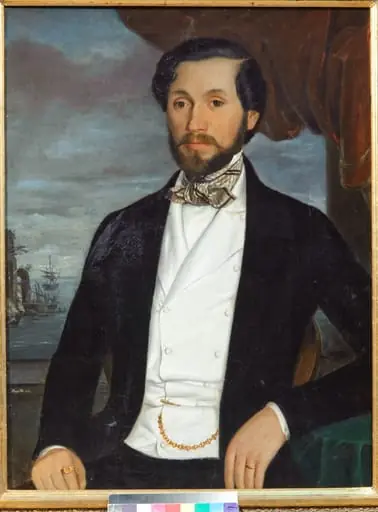 Portretul pictorului Carol Popp de Szathmári
 Portrait of a Hussar Guards Officer
 Portrait of Jan Reszke