Artwork
Portrait of Franciszek Ksawery Andrychewicz
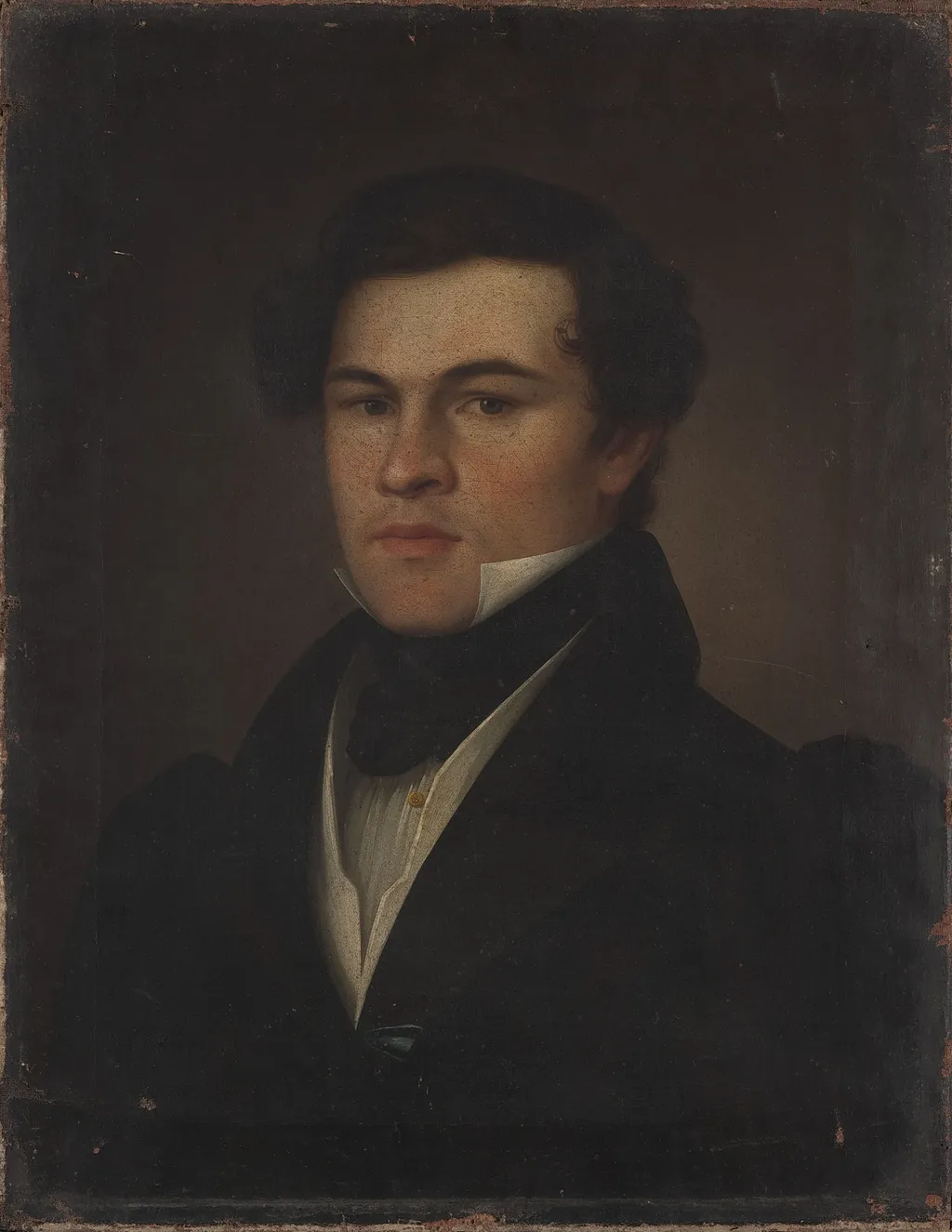
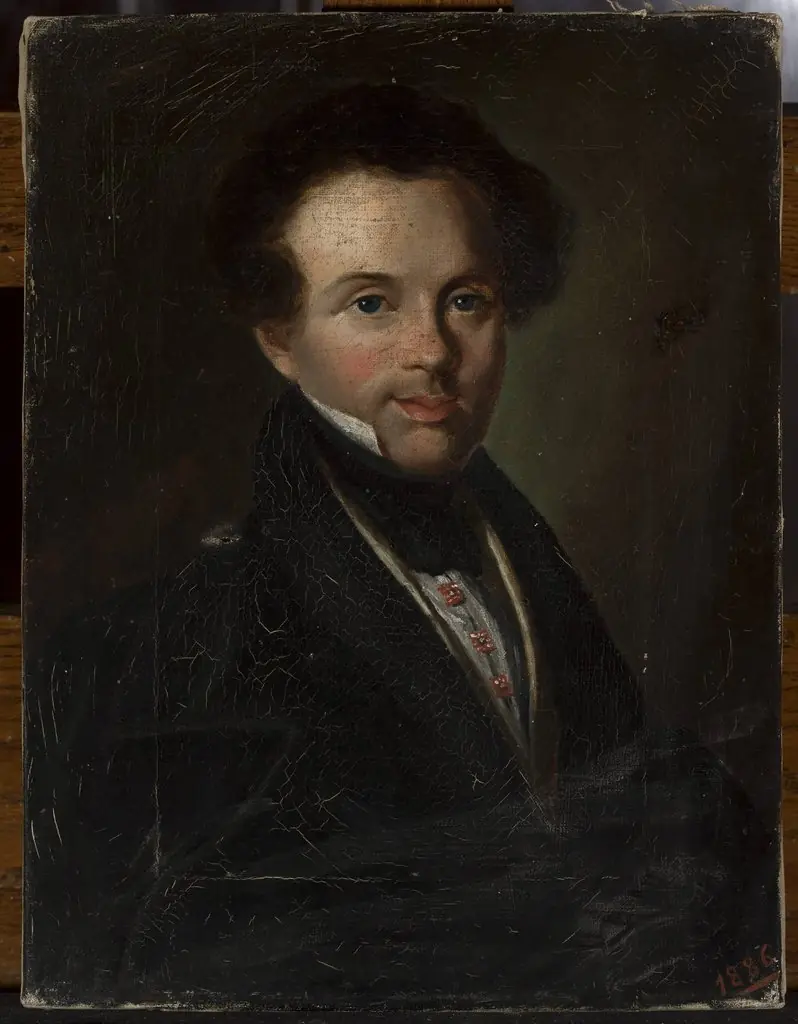
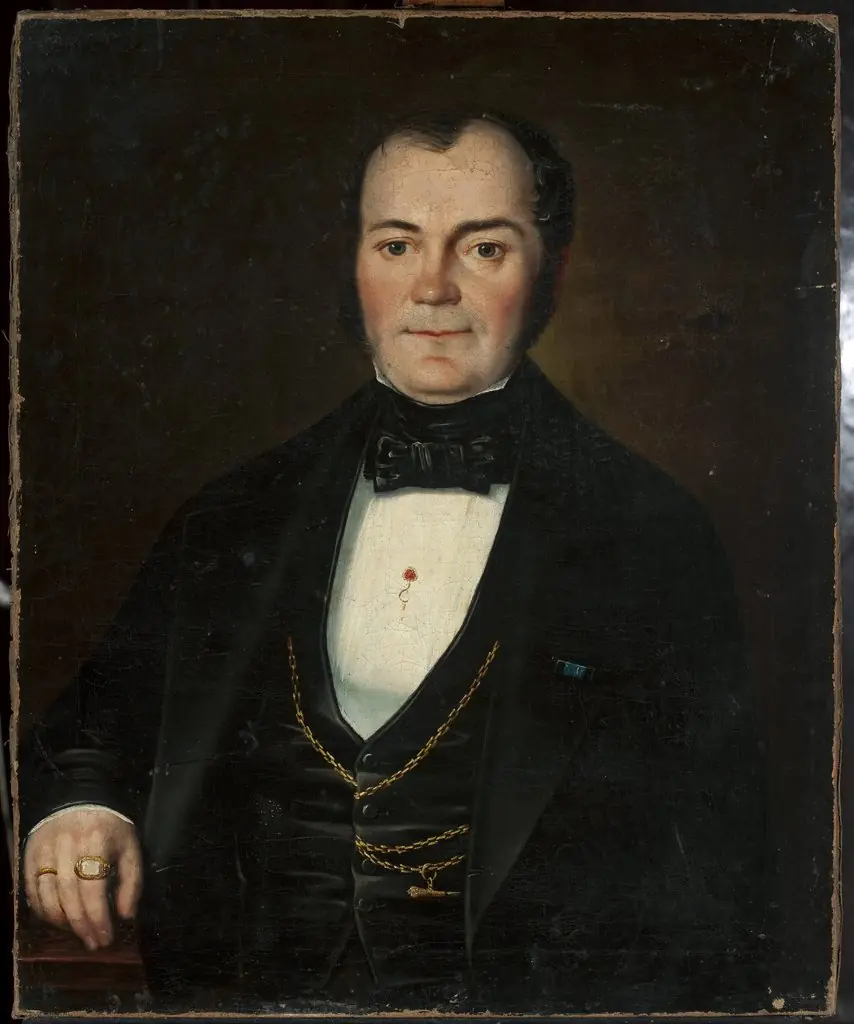
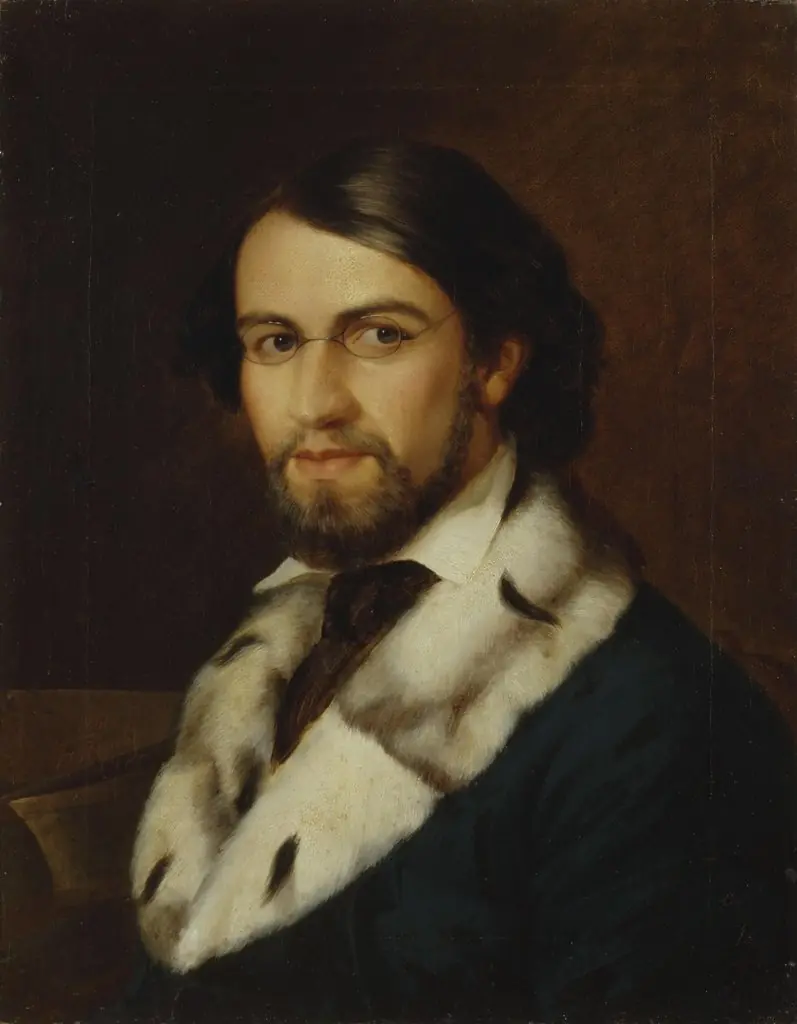
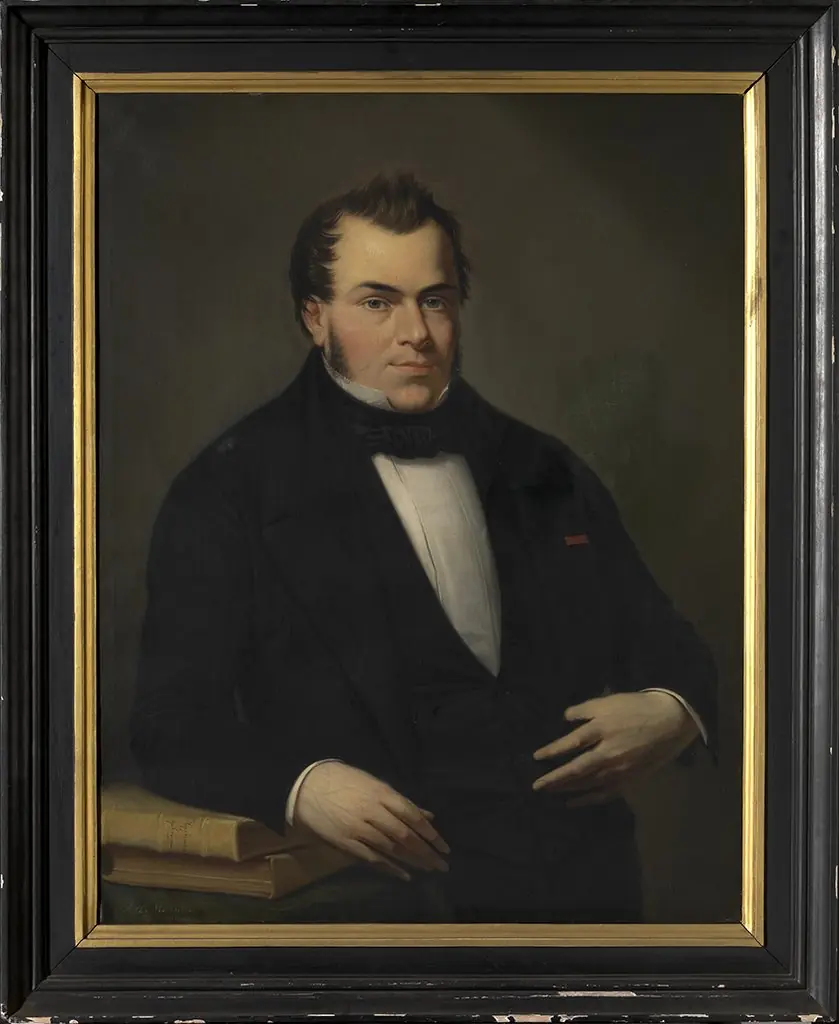
Portrait of Franciszek Ksawery Andrychewicz is an oil painting by Unknown. It dates from 1830 and is held in the collection of the National Museum in Warsaw. This oil painting portrays Franciszek Ksawery Andrychewicz, a Polish nobleman, rendered with careful attention to texture and form.
About this work
This portrait depicts a man with dark hair, wearing a black coat over a white shirt and black bow tie. The background is a muted brown color. The man's attire and the style of the painting suggest it may be from the early 19th century. The use of oil paint and the attention to detail in the subject's clothing and facial features are notable.
Overview
This oil painting portrays Franciszek Ksawery Andrychewicz, a Polish nobleman, rendered with careful attention to texture and form.
This oil painting portrays Franciszek Ksawery Andrychewicz, a Polish nobleman, rendered with careful attention to texture and form. Executed in the early 19th century, the work reflects the conventions of portraiture from that era, emphasizing dignity and social standing through precise rendering of attire and posture. The muted brown background isolates the figure, focusing attention on his expression and clothing.
Subject & Meaning
The sitter, dressed in a black coat, white shirt, and black bow tie, presents a formal, composed demeanor. His attire signals membership in the educated or aristocratic class of early 19th-century Poland. The portrait does not include symbolic objects or elaborate settings, suggesting an emphasis on personal presence rather than status markers, aligning with emerging trends in intimate, individualized portraiture.
Technique & Style
Oil paint is applied with controlled brushwork to capture the sheen of fabric and the subtlety of skin tone. The rendering of the bow tie and coat lapels demonstrates attention to material detail, while the face is modeled with soft transitions to convey volume and lifelike presence. The palette remains restrained, favoring tonal harmony over color contrast, typical of academic portraiture of the period.
History & Provenance
The painting's origins trace to Poland during the early 1800s, a time of political upheaval following the partitions of the Polish-Lithuanian Commonwealth. While specific ownership records are limited, the portrait likely served as a private commission, possibly to commemorate a family member’s social position or personal achievement during a period of national fragmentation.
Context
In early 19th-century Poland, portraiture functioned as both personal record and cultural assertion. Amid foreign domination, the nobility and intelligentsia used visual representation to preserve identity and continuity. This portrait, devoid of overt political symbols, reflects a quiet resilience — a focus on the individual as a vessel of heritage in uncertain times.
Legacy
The portrait endures as a quiet example of Polish academic portraiture, valued for its restraint and technical precision. Though not widely exhibited, it contributes to the broader understanding of how personal identity was visually constructed in a nation without sovereign statehood. Its preservation offers insight into the aesthetic values of Poland’s landed gentry during the Napoleonic era.
Artist & collection

 Domestic Scene
 Giacomo and Cardinal Marco, investing Andrea, Abbot of San Zeno, with his Benefice
 The Nymph of Fontainebleau
 Portrait of a Woman
 Madonna and Child with Saints in the Enclosed Garden
 Venus and Minerva
 Family Group of Four on Sofa
 Wall painting from Room H of the Villa of P. Fannius Synistor at Boscoreale