Artwork
Fort of Ramnugger, near Benares, possibly Agra Fort.
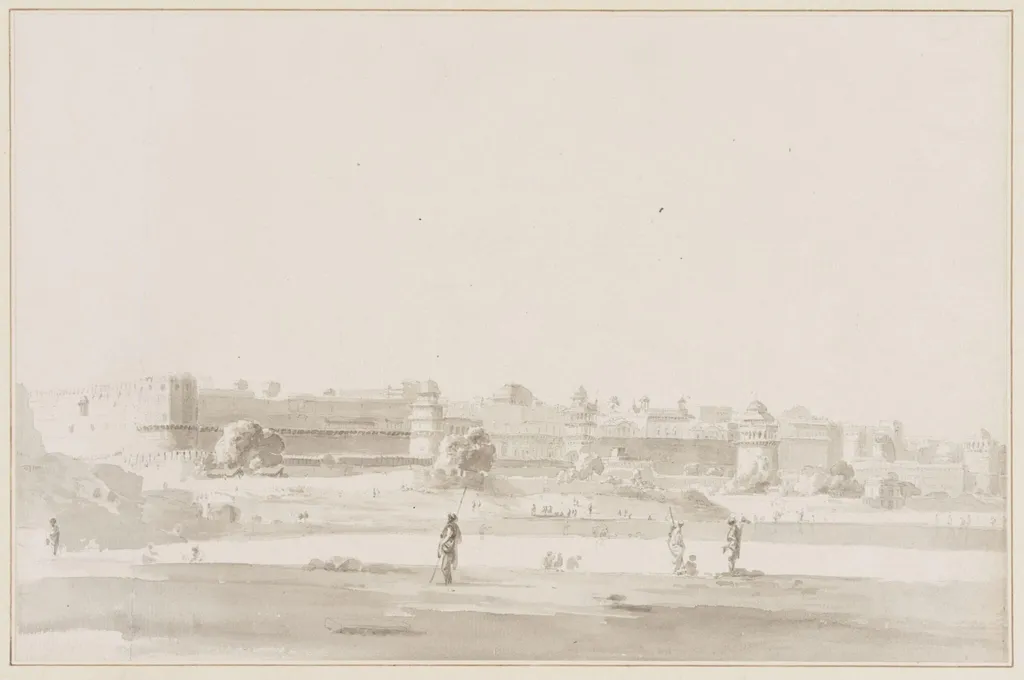
Fort of Ramnugger, near Benares, possibly Agra Fort. is a watercolor work on paper by the Baroque artist Thomas Daniell. It dates from 1749 and is held in the collection of the Victoria and Albert Museum.
About this work
Overview
The composition emphasizes spatial depth, with the structure rising above the horizon while human figures in the foreground remain small and subdued.
Thomas Daniell’s watercolour captures a distant fort, likely Agra Fort, seen across a river from a low vantage point. The composition emphasizes spatial depth, with the structure rising above the horizon while human figures in the foreground remain small and subdued. The medium’s transparency lends a quiet, atmospheric quality, characteristic of Daniell’s topographical approach to Indian architecture during his travels in the late 18th century.
Subject & Meaning
The painting presents a fortified structure as a symbol of imperial presence, framed by the natural landscape and everyday activity along the riverbank. The scale contrast between the monumental architecture and the diminutive figures suggests human life existing in the shadow of political power. No narrative is overtly staged; instead, the scene conveys observation and quiet reverence for the built environment.
Technique & Style
Daniell employed watercolour with layered washes to suggest form and distance, using subtle tonal shifts to model the fort’s walls and towers. Delicate linework defines architectural details without heavy outline, while the softness of the medium enhances the hazy, luminous quality of the river and sky. The technique reflects a blend of European topographical precision and the atmospheric effects favored in landscape traditions of the period.
History & Provenance
Created during Daniell’s extended tour of India between 1786 and 1794, the work belongs to a series of watercolours documenting Mughal and regional architecture. It was likely made as a preparatory study for later engravings published in his monumental 'Oriental Scenery'. The painting remained in the artist’s possession until his death, later entering private collections before being acquired by public institutions.
Context
Daniell’s work emerged amid growing British interest in Indian monuments during the East India Company’s expansion. His depictions were not merely topographical but contributed to shaping European perceptions of India’s architectural heritage. Unlike later romanticized portrayals, his approach was restrained, aiming for accuracy over dramatic effect, aligning with Enlightenment-era ideals of documentation.
Legacy
Daniell’s watercolours, including this one, helped establish a visual record of India’s historic sites before widespread colonial alteration. His method influenced subsequent artists and surveyors, and his published engravings became key references for scholars and travelers. The work endures as a quiet testament to the intersection of observation, colonial curiosity, and the preservation of architectural memory.
Artist & collection


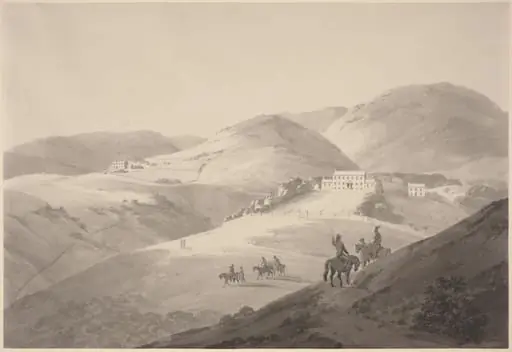
![Ruins of the Palace at Madura [The Palace of Tirumulla Nayak], by Thomas Daniell](https://artifactworldgallery.com/img/thomas-daniell--ruins-of-the-palace-at-madura-the-palace-of-tirumulla-nayak--7010c7fb1f671f0f-w320.webp)
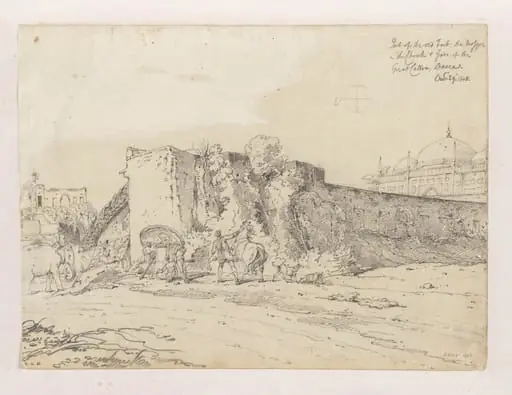 Part of the old fort: the mosque in the chowk and gate of the Great Katra, Dhaka (Dacca)
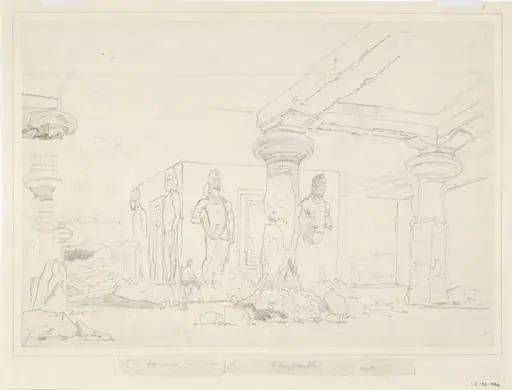
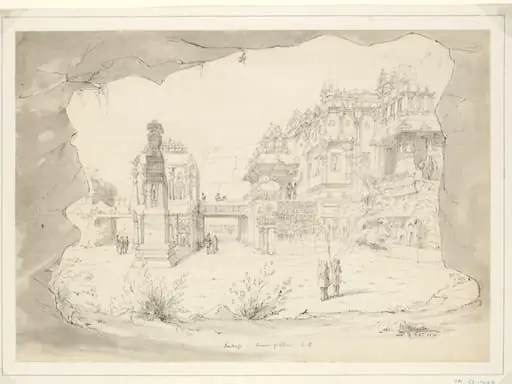 Kailasanatha Temple, Ellora
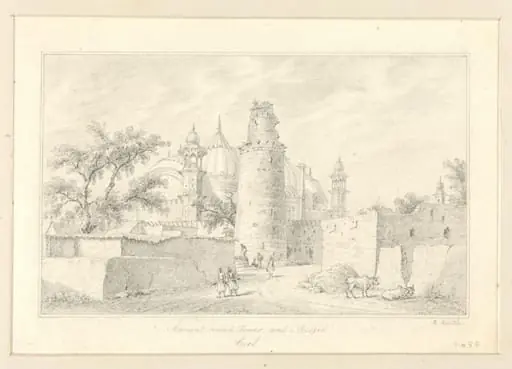 Ancient round tower and Musjid, Coel.
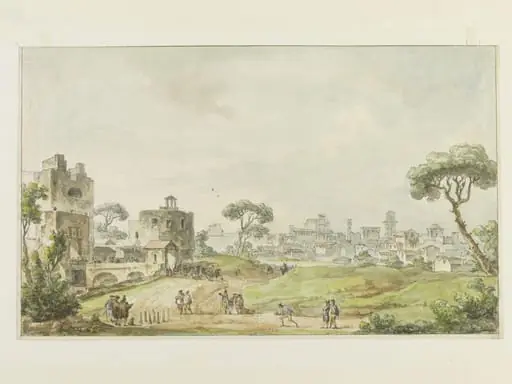 Untitled
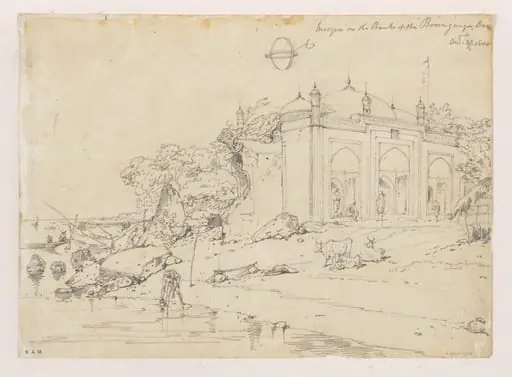 A mosque on the banks of the Buriganga River, Dhaka, Bangladesh
 Ruines dune fontaine près dAlger
 Santa Constanza, Rome
 Boley Hill and Castle, Rochester, with the "Justice Tree"
 Hampstead Heath, Evening Light
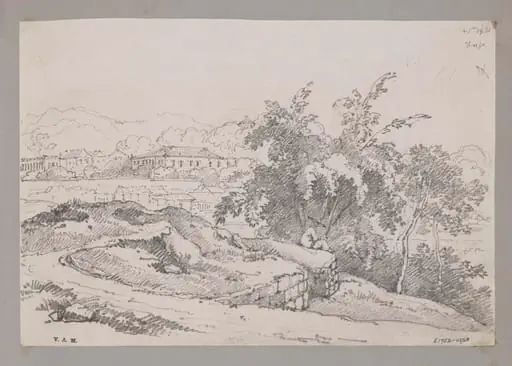 The Casa, Macao, in the gardens of which is Camoens' Cave (the residence of Lady Pereira), Macao
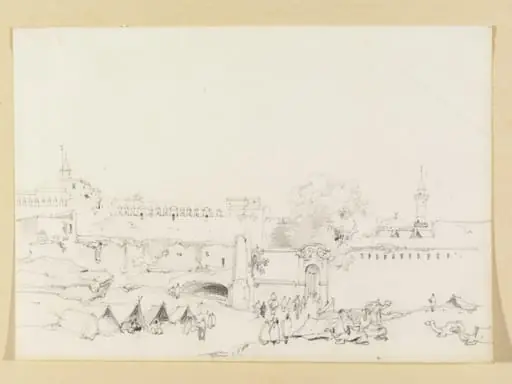 Outside the walls of Sétif, Algeria