Artwork
Ruines dune fontaine près dAlger
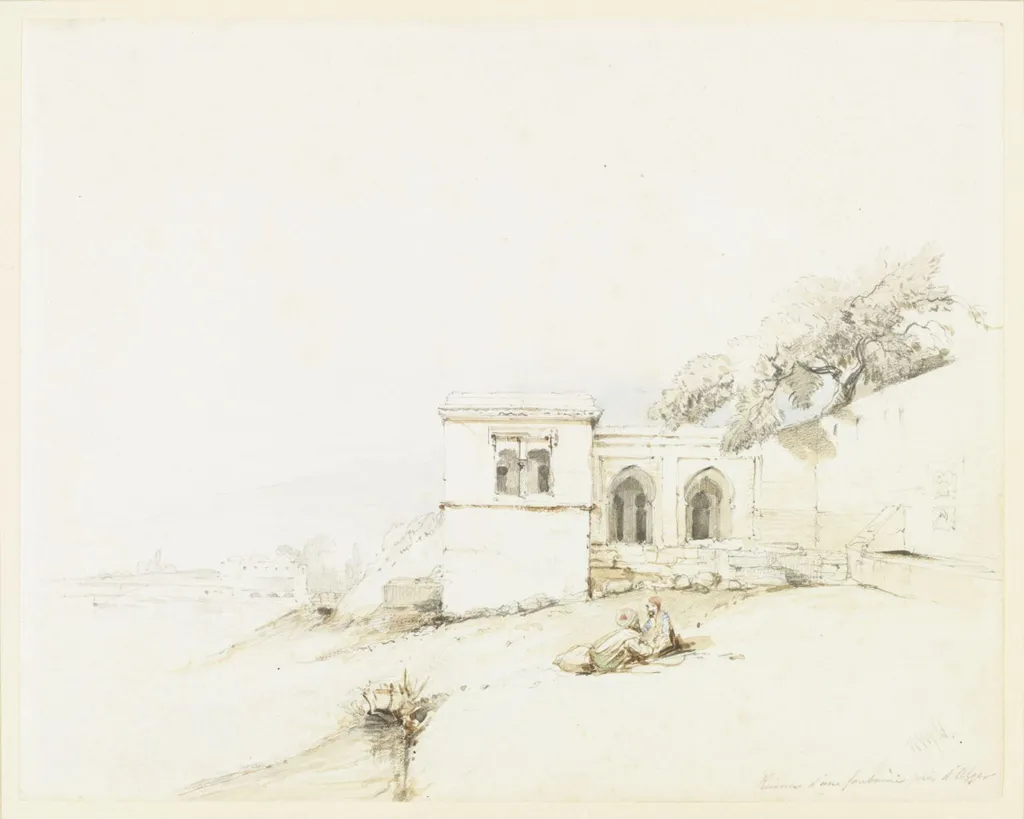
Ruines dune fontaine près dAlger is a watercolor work on paper by the Romanticist artist William RI Wyld. It dates from 1833 and is held in the collection of the Victoria and Albert Museum.
About this work
Overview
This watercolour, dated 1833, captures the remains of a fountain structure near Algiers, executed by British artist William Wyld during his travels in North Africa. It was later reproduced as plate 31 in his 1835 publication, *Voyage pittoresque dans la Régence d'Alger*. The work entered a public collection in 1968 after acquisition from a private dealer in London.
Subject & Meaning
The scene portrays a weathered architectural fragment, its arched openings and flat roof suggesting Islamic or Ottoman influence. Two figures rest near the dry fountain, their small scale emphasizing the ruin’s scale and solitude. The image conveys quiet decay, reflecting 19th-century European fascination with the remnants of foreign civilizations, without overt sentimentality or narrative.
Technique & Style
Wyld employed loose, rapid pencil strokes and diluted washes to suggest form and atmosphere rather than define detail. The pale, translucent layers evoke sunlight on stone, while the absence of sharp contours gives the scene an ephemeral quality. The technique aligns with topographical sketching traditions, prioritizing immediacy and mood over precision.
History & Provenance
Created during Wyld’s journey to Algeria in 1833, the watercolour was included in his 1835 illustrated travelogue. It remained in private hands until November 1968, when it was acquired from P. Heathcote-Williams for £32. Its subsequent inclusion in a public collection preserved its connection to early European documentation of North African architecture.
Context
Wyld’s work emerged amid a surge of European interest in Algeria following its colonization by France in 1830. Artists and travelers documented the region’s architecture as both cultural record and exotic subject. His sketches, though modest in scale, contributed to a broader visual archive of a changing North African landscape.
Legacy
Though not widely known today, Wyld’s Algerian watercolours remain part of a significant body of 19th-century travel art. His approach—unembellished and observational—offers a quiet counterpoint to more dramatic Orientalist imagery. The work is held in institutional collections, including the Victoria and Albert Museum, where it contributes to studies of colonial-era visual culture.
Artist & collection
Artist
William Wyld brought 19th-century watercolours to life with scenes from Europe and North Africa.

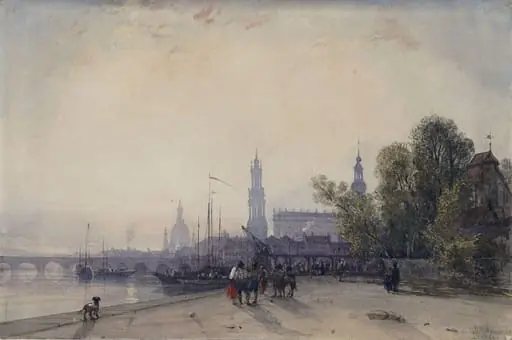
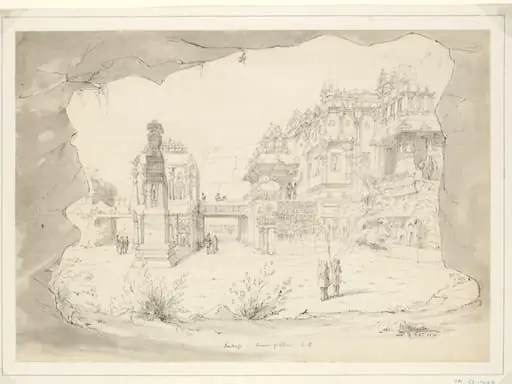 Kailasanatha Temple, Ellora
![Ruins of the Palace at Madura [The Palace of Tirumulla Nayak], by Thomas Daniell](https://artifactworldgallery.com/img/thomas-daniell--ruins-of-the-palace-at-madura-the-palace-of-tirumulla-nayak--7010c7fb1f671f0f-w320.webp) Ruins of the Palace at Madura [The Palace of Tirumulla Nayak]
Ruins of the Palace at Madura [The Palace of Tirumulla Nayak]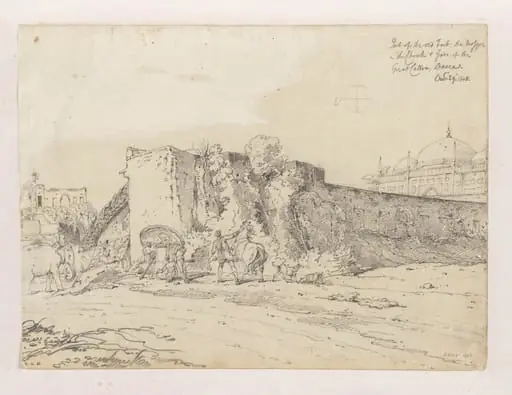 Part of the old fort: the mosque in the chowk and gate of the Great Katra, Dhaka (Dacca)
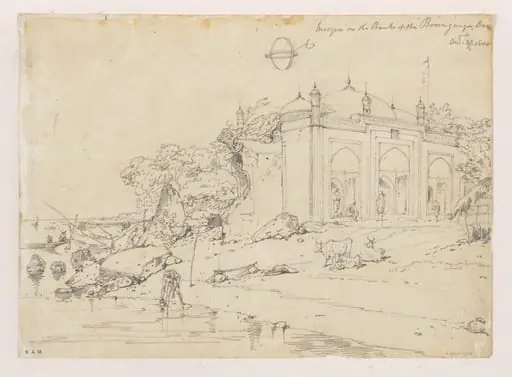 A mosque on the banks of the Buriganga River, Dhaka, Bangladesh
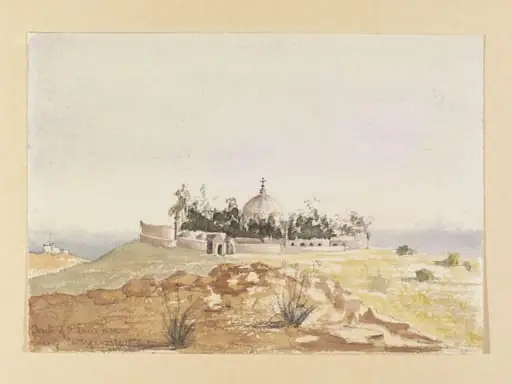 Tomb of St. Louis on the ruins of Carthage
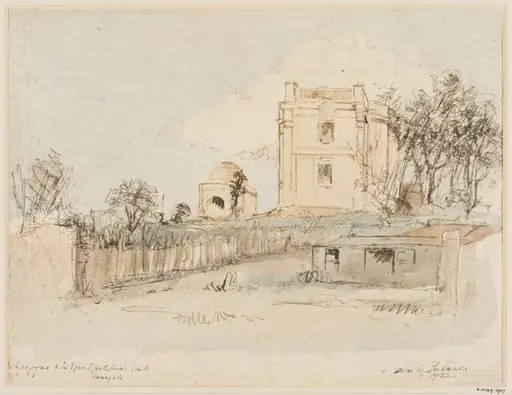 The Synagogue and Sir Moses Montefiore's Tomb, Ramsgate
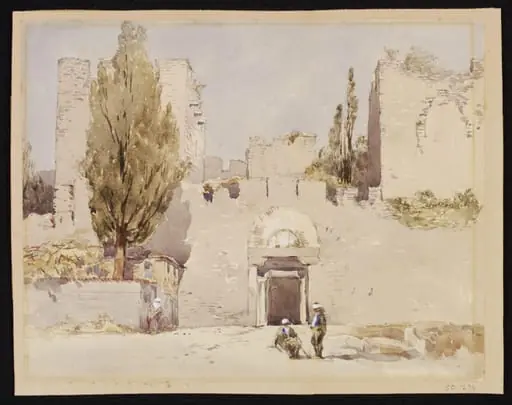 Entrance to the Cannon Gate (Top Kapisi) in Constantinople
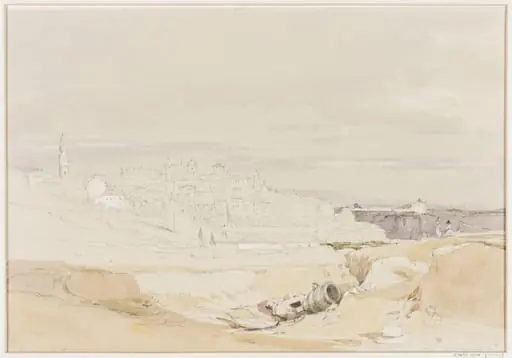 Sketch in Portugal
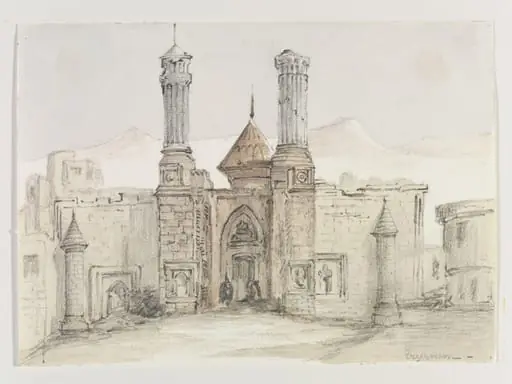 Erzeroum
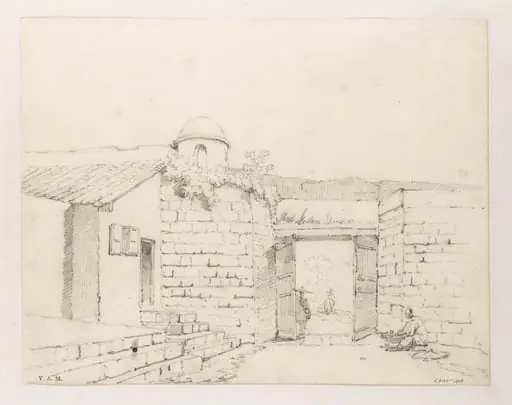 A gateway with a domed turret, Macau
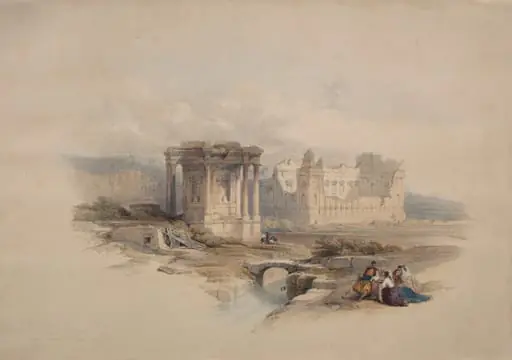 Circular Temple at Baalbec
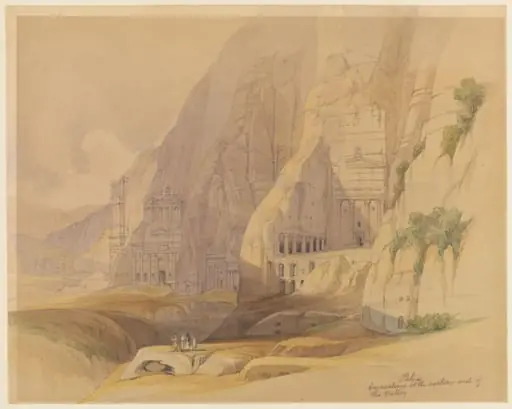 Petra Excavations at the eastern end of the Valley