Artwork
Kailasanatha Temple, Ellora
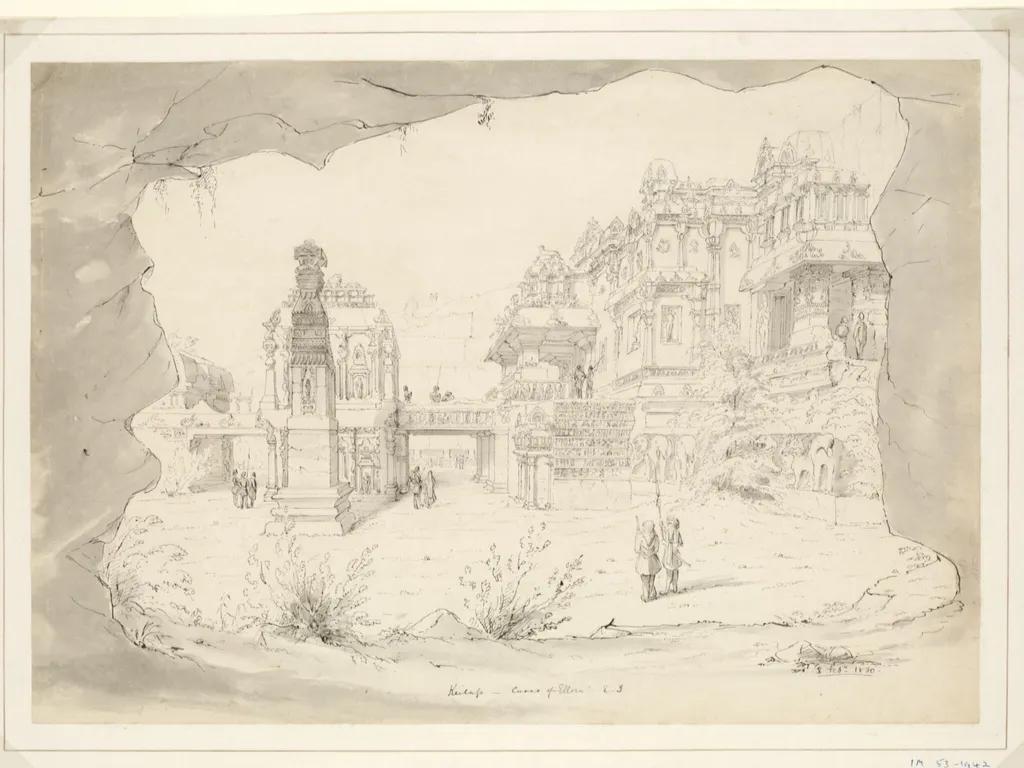
Kailasanatha Temple, Ellora is a drawing by the Romanticist artist William Maj. Gen. Lacy. It dates from 2 and is held in the collection of the Victoria and Albert Museum. This 1830 drawing by Major General William Lacy depicts the Kailasanatha Temple at Ellora, a monumental rock-cut structure in western India.
About this work
This drawing shows the Kailasanatha Temple at Ellora, carved right into the rock. Major General William Lacy made it in 1830 while stationed in India.
He sketched thirteen Ellora caves to capture their huge scale and fine carvings. His work reflects Romanticism’s love for wild grandeur and distant places.
Look up the Victoria and Albert Museum to see more of his drawings.
Overview
This 1830 drawing by Major General William Lacy depicts the Kailasanatha Temple at Ellora, a monumental rock-cut structure in western India.
Subject & Meaning
The drawing captures the temple's grandeur, showcasing its intricate carvings and massive scale, characteristic of Ellora's rock-cut architecture.
History & Provenance
Lacy created this work while stationed in India with his regiment from 1818 to 1833. It is part of a series of thirteen drawings of Ellora caves, reflecting his interest in the region's monumental architecture.
Technique & Style
The drawing's viewpoint emphasizes the temple's scale, a compositional choice popular among artists. Lacy's work is associated with Romanticism, which valued the grandeur and exoticism of distant landscapes.
Artist & collection
Artist
William Lacy drew what he saw on the road. In early 1830 he stood inside India’s Ellora caves and sketched the towering stone carvings—Kailasanatha Temple on February 2nd, then the grand doorway of Indra Sabha Cave five…

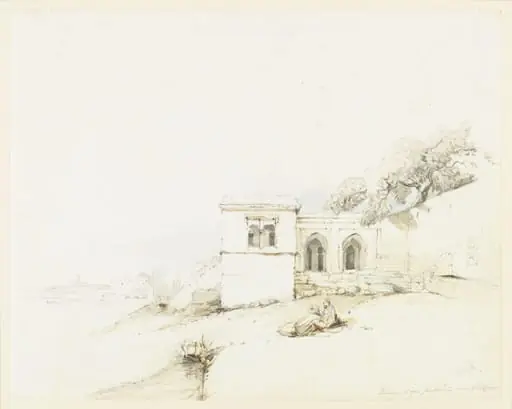 Ruines dune fontaine près dAlger
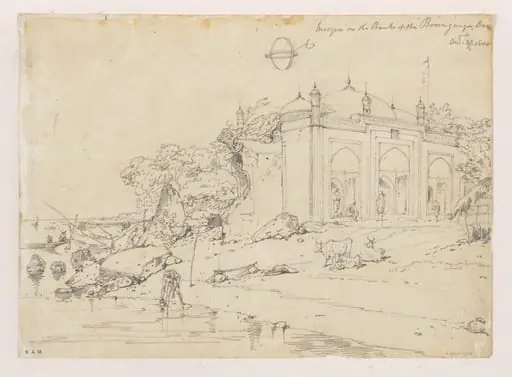 A mosque on the banks of the Buriganga River, Dhaka, Bangladesh
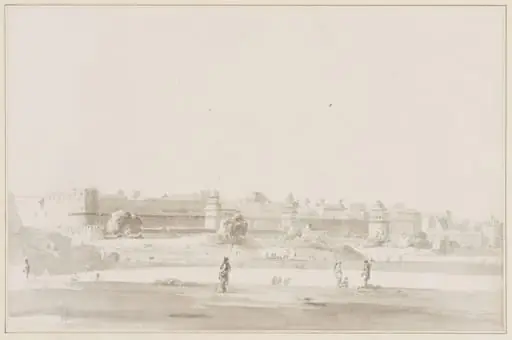 Fort of Ramnugger, near Benares, possibly Agra Fort.
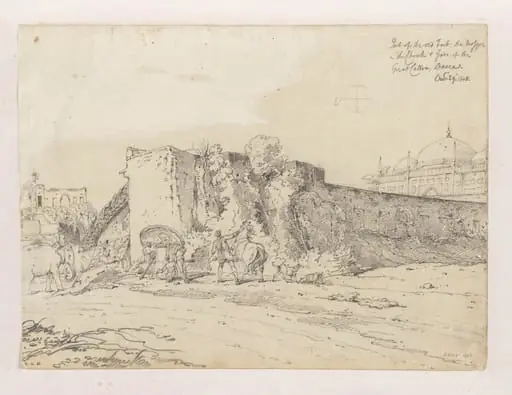 Part of the old fort: the mosque in the chowk and gate of the Great Katra, Dhaka (Dacca)
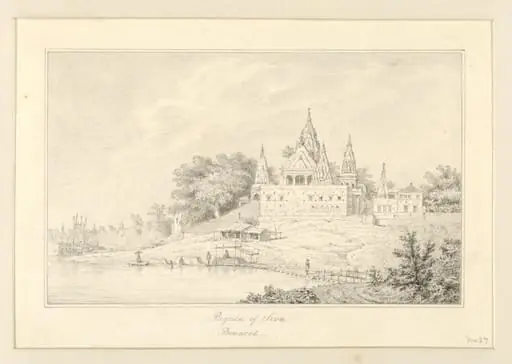 Pagoda of Siva, Benares
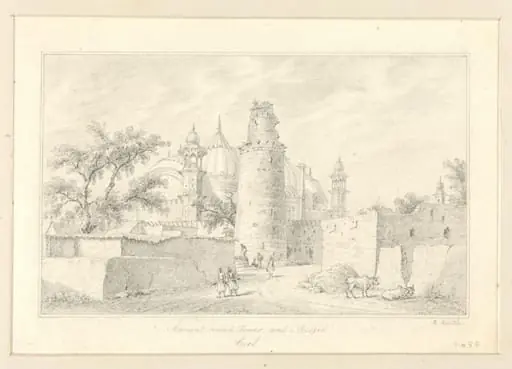 Ancient round tower and Musjid, Coel.
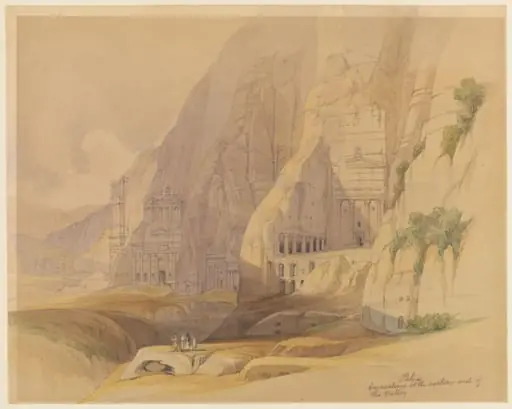 Petra Excavations at the eastern end of the Valley
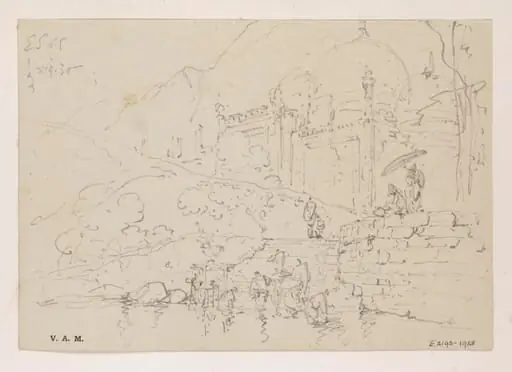 A domed tomb in India, with steps leading down to water
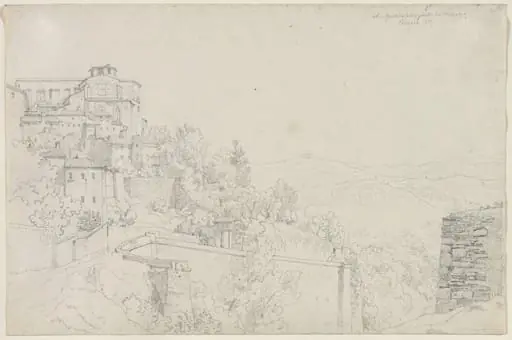 Saint Agostino from Bulagajo, Perugia (San Agostino dalla parte del Bulagajo, Perugia)
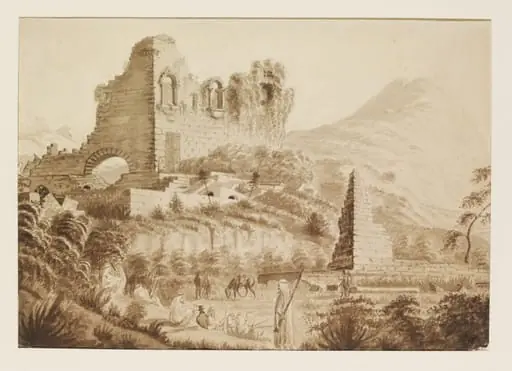 Villa Sevillana on the Road from Bona to Constantine