Artwork
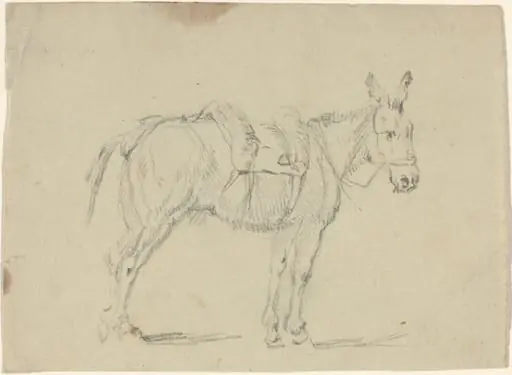
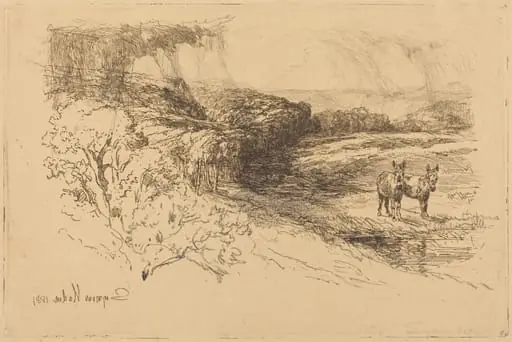
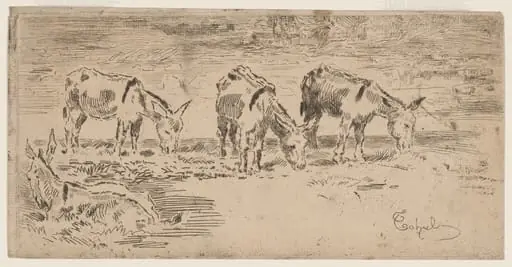
Donkey in a Field (L'Ane au pre)
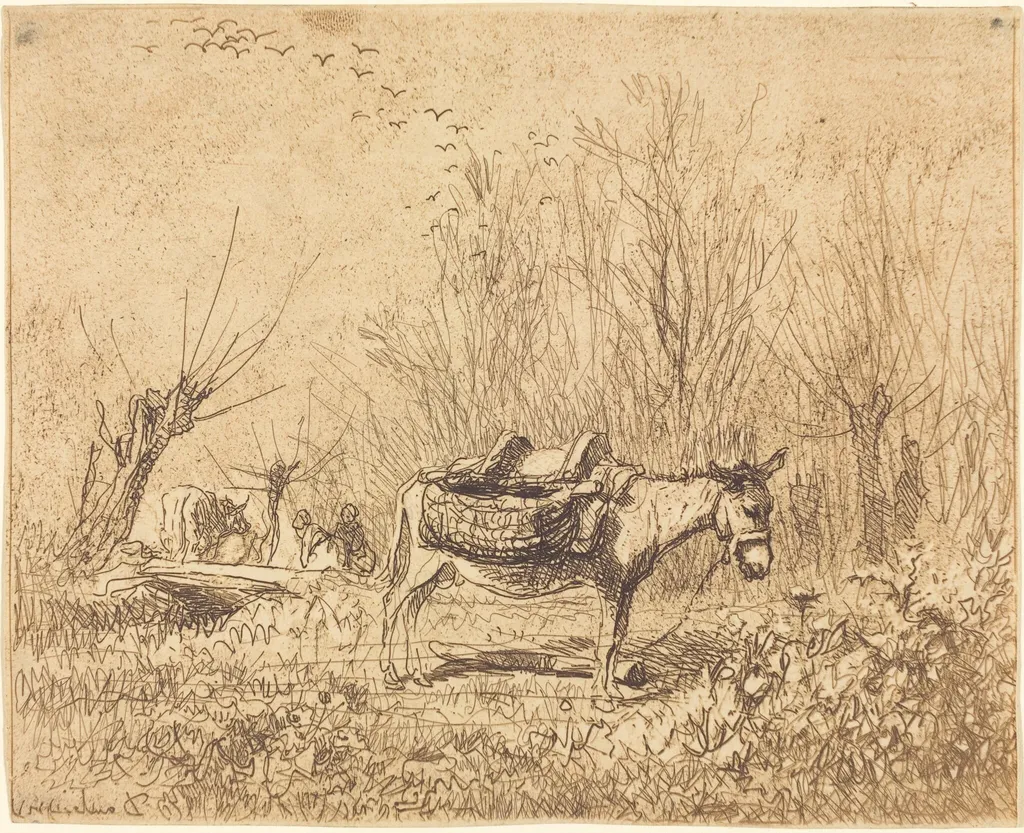
Donkey in a Field (L'Ane au pre) is a print by the Impressionist artist Charles François Daubigny. It dates from 1862 and is held in the collection of the National Gallery of Art. Created in 1862, *Donkey in a Field* (L’Ane au pré) is a small print by French artist Charles‑François Da Daubigny.
About this work
Overview
Created in 1862, *Donkey in a Field* (L’Ane au pré) is a small print by French artist Charles‑François Da Daubigny. Executed with the experimental cliché‑verre method, the work presents a solitary donkey amid a sparse, sun‑lit meadow. The composition reflects Daubigny’s longstanding fascination with open countryside and the effects of natural illumination on simple, everyday subjects.
Subject & Meaning
The image captures a lone donkey feeding on dry, tall grass, rendered with minimal detail yet enough emphasis on the animal’s head and legs to convey its presence. By focusing on a humble farm animal in an expansive field, Daubigny underscores the quiet dignity of rural labor and the unadorned beauty of the French landscape.
Technique & Style
Cliché‑verre, a hybrid of drawing and photography, involves inscribing lines onto a glass plate, coating it with a light‑sensitive emulsion, and exposing it to create a print. Daubigny’s hand is evident in the loose, sketch‑like strokes that define the donkey and the surrounding vegetation, using stark contrasts of line rather than tonal shading to suggest form.
History & Provenance
Daubigny, a leading figure of the Barbizon school, employed the cliché‑verre process in several works as a bridge between traditional drawing and emerging photographic practices. *Donkey in a Field* was produced during a period when he was influencing younger artists who would later form Impressionism, and it remains documented in several European print collections.
Artist & collection
Artist
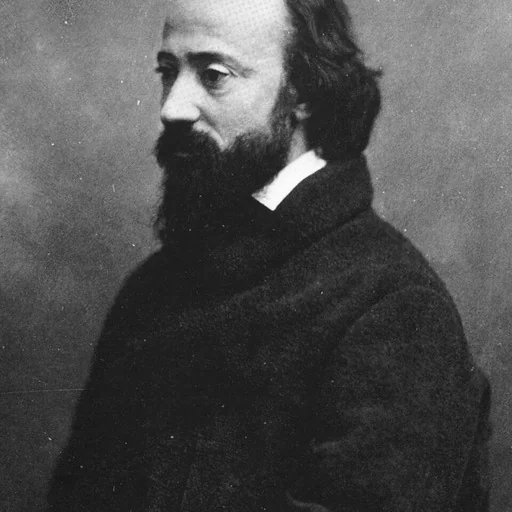
Charles-François Daubigny ( DOH-bin-yee, US: DOH-been-YEE, doh-BEEN-yee, French: ; 15 February 1817 – 19 February 1878) was a French painter, one of the members of the Barbizon school, and is considered an important precursor of…