Artwork
Herd of Pigs
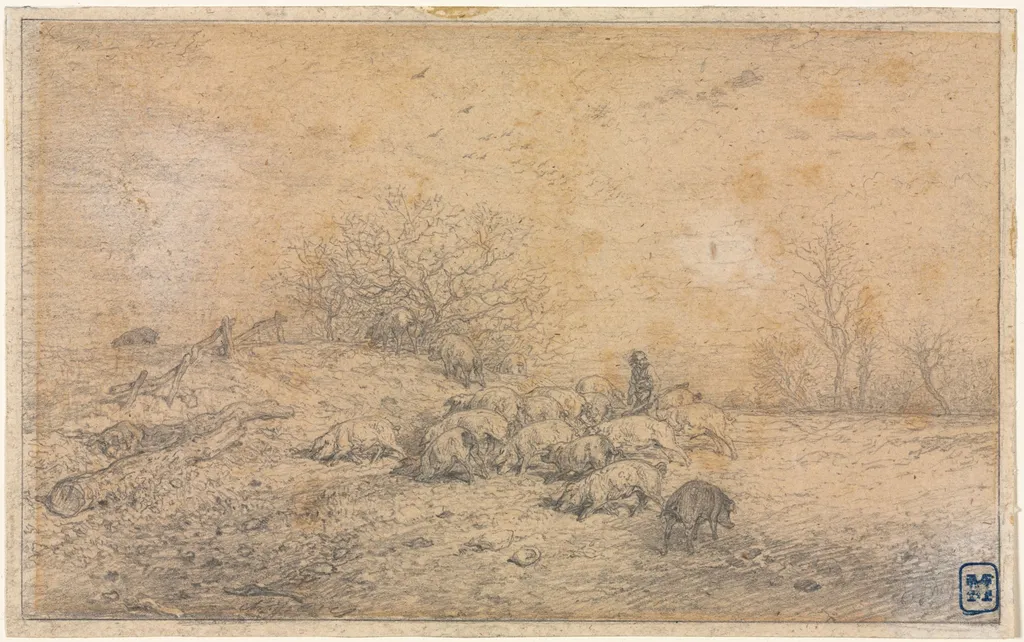
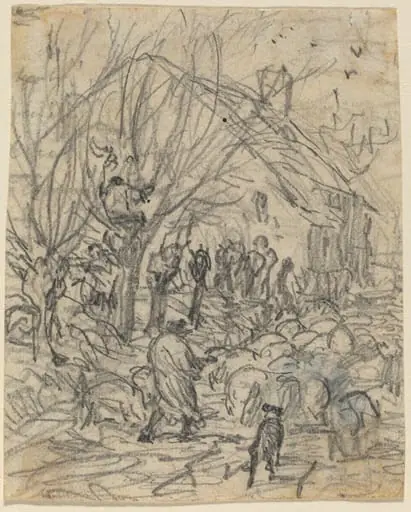
Herd of Pigs is a drawing by the Romanticist artist Charles Jacque. It dates from 1845 and is held in the collection of the Cleveland Museum of Art. Created around 1845 by Charles-Émile Jacque, this drawing is a modest yet deliberate study of rural life.
About this work
Overview
Its simplicity reflects the movement’s commitment to truth in depicting the natural world as it was encountered, not as it was imagined.
Created around 1845 by Charles-Émile Jacque, this drawing is a modest yet deliberate study of rural life. As a member of the Barbizon School, Jacque turned away from idealized narratives to observe the everyday. The work captures a group of pigs in a barren, rocky field, rendered without color or embellishment. Its simplicity reflects the movement’s commitment to truth in depicting the natural world as it was encountered, not as it was imagined.
Subject & Meaning
The pigs, scattered and unposed, inhabit a harsh, arid landscape marked by sparse vegetation and uneven earth. Rather than symbolizing abundance or domesticity, they appear as part of the land’s raw ecology. The scene resists sentimentality, presenting animals not as ornaments of the farm but as creatures shaped by their environment. This aligns with the Barbizon ethos: nature and its inhabitants exist independently of human narrative.
Technique & Style
Executed in monochrome, the drawing relies on linear precision and subtle tonal shifts to define form and texture. The pigs are suggested with minimal strokes, their bulk implied rather than detailed. The ground is rendered with rough, angular marks that convey dryness and resistance. Jacque’s hand prioritizes atmosphere over finish, emphasizing the tactile quality of the terrain over decorative effect.
History & Provenance
The drawing originates from Jacque’s early period, when he was deeply engaged with the Barbizon artists’ collective practice near Fontainebleau. Though less documented than his engravings or oil paintings, this sketch likely served as a preparatory study or personal observation. Its survival suggests it held value as a record of direct engagement with the landscape, consistent with the group’s working methods.
Context
In mid-19th-century France, artists increasingly sought subjects beyond urban and historical themes. The Barbizon School, including Jacque and Millet, turned to the countryside as a site of authentic experience. This drawing reflects a broader cultural shift: nature was no longer a backdrop for myth or allegory, but a subject worthy of quiet, unadorned attention.
Legacy
Jacque’s work contributed to a redefinition of artistic value in rural representation. By focusing on the unglamorous and the ordinary, he helped lay groundwork for later realist and naturalist movements. Though not widely exhibited, such drawings influenced artists who valued direct observation over studio convention, reinforcing the legitimacy of humble subjects in serious art.
Artist & collection
Artist
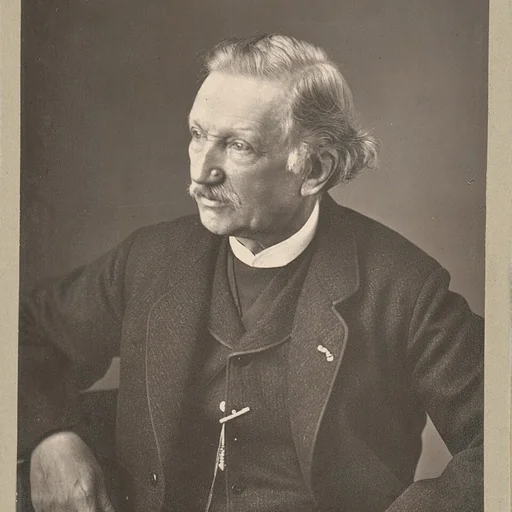
Charles-Émile Jacque (23 May 1813 – 7 May 1894) was a French painter of Pastoralism and engraver who was, with Jean-François Millet, part of the Barbizon School. He first learned to engrave maps when he spent seven years in the French Army.

 A Flock of Sheep before a Farmhouse
 Herd in a Stream
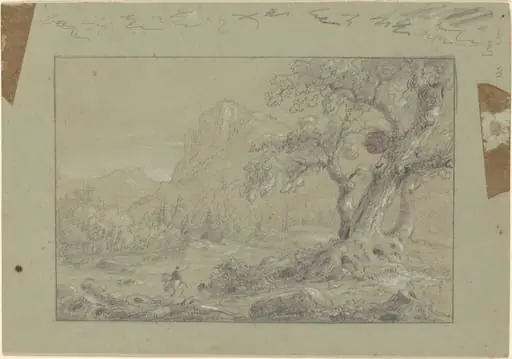 Study for "The Mountain Ford"
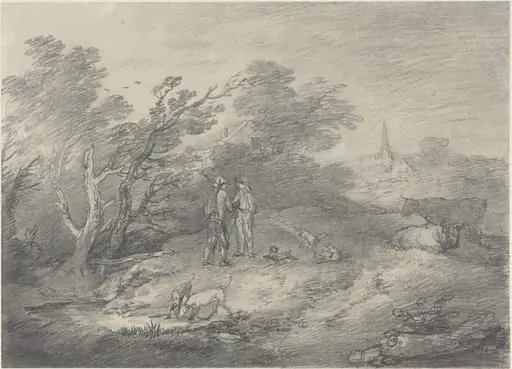 Woods Near a Village with Rabbit Catchers and Their Greyhounds
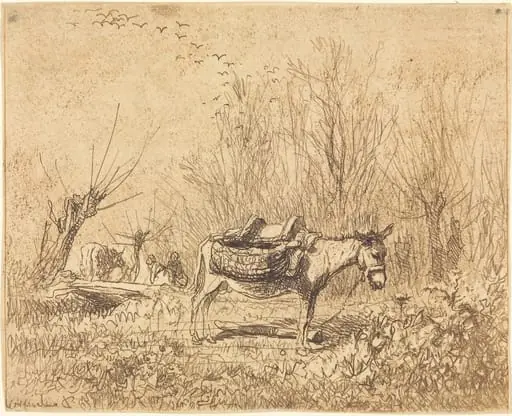 Donkey in a Field (L'Ane au pre)
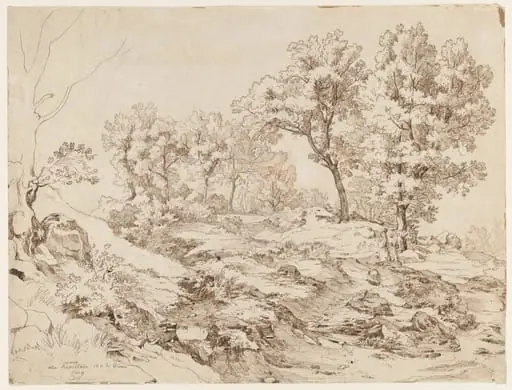 La Serpentara near Olevano
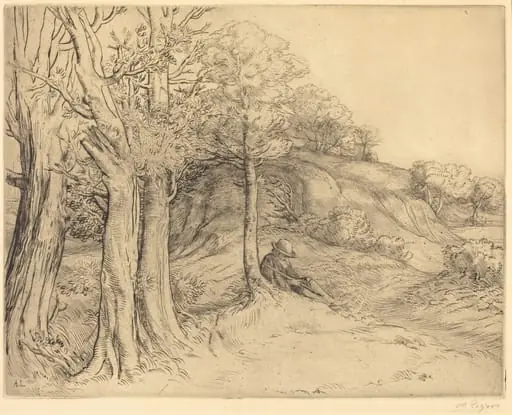 Solitude (Solitude (Paysage))
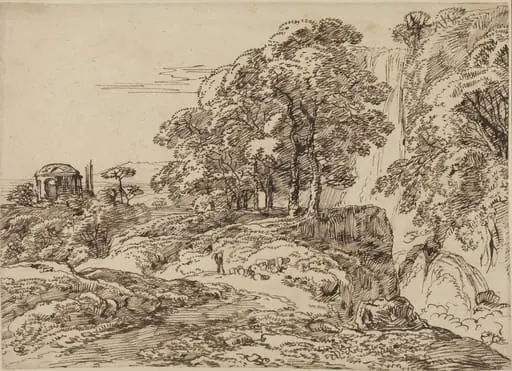 Pastoral Landscape with a Waterfall and a Temple
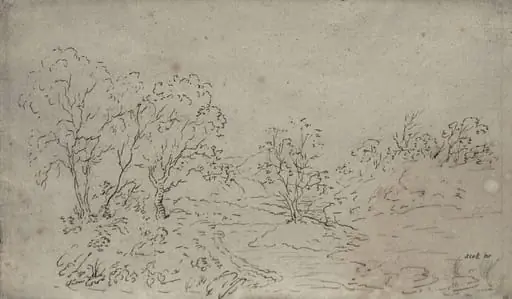 Landscape: a stream running between trees
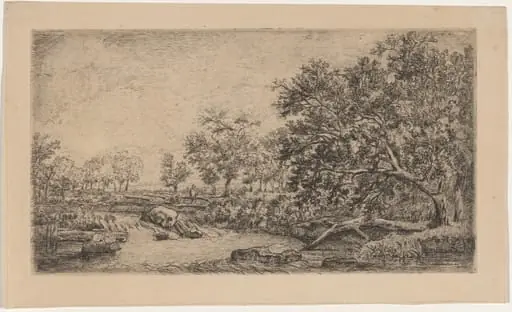 A t Pontchéry, Isère (A Pontcheruy , Isère, vue d’une chute d’eau)
 The Wheatfield. After Jacob Ruysdael
 Cattle, sheep and goats