Artwork
Ferry (Le Bac)
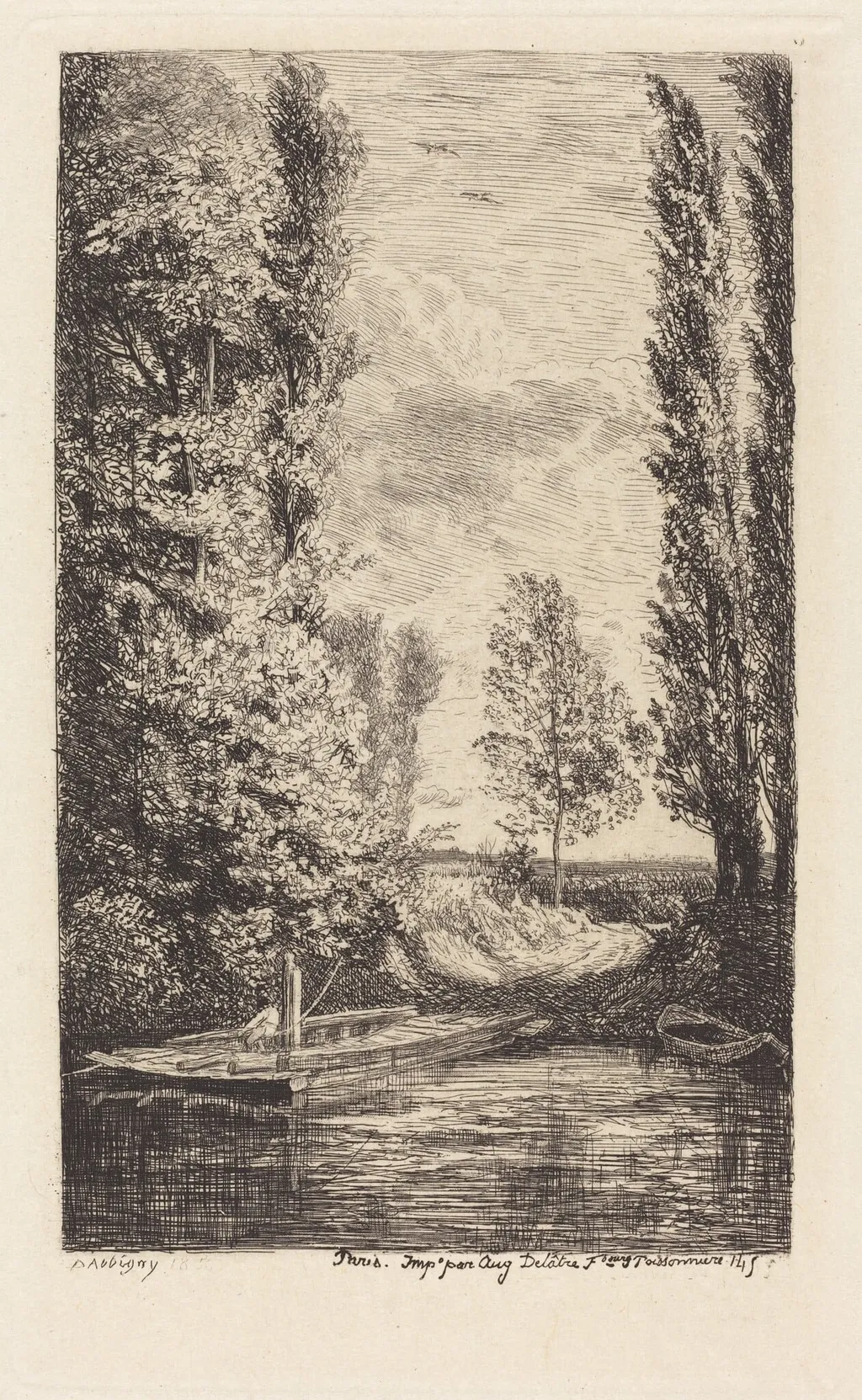
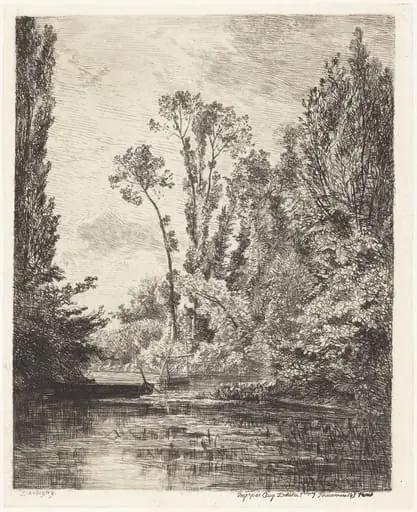
Ferry (Le Bac) is an ink print by the Impressionist artist Charles François Daubigny. It dates from 1850 and is held in the collection of the National Gallery of Art.
About this work
Overview
Charles-François Daubigny produced the etching *Ferry (Le Bac)* in 1850, part of his extensive engagement with printmaking alongside his landscape painting.
Charles-François Daubigny produced the etching *Ferry (Le Bac)* in 1850, part of his extensive engagement with printmaking alongside his landscape painting. A figure linked to the Barbizon school, he used etching to explore natural scenes with quiet intimacy. This work exemplifies his interest in everyday riverine life, rendered not as grand spectacle but as subtle, observed moments. His technical precision in etching allowed for nuanced atmospheric effects.
Subject & Meaning
The scene captures a modest river crossing, with a small boat moored to a post amid calm water. Tall, intricately rendered trees frame the composition, suggesting a secluded, undisturbed stretch of the French countryside. The absence of figures emphasizes solitude and stillness. Daubigny’s focus on this uneventful moment reflects a broader shift toward valuing ordinary natural settings over idealized or dramatic subjects.
Technique & Style
Daubigny employed fine, controlled etching lines to model light and texture across the water’s surface, creating a woven effect that suggests gentle ripples and reflections. The trees are rendered with dense, overlapping strokes, enhancing their tactile presence. The plate’s tonal range is restrained, favoring subtle gradations over stark contrasts. This method aligns with his preference for atmospheric realism, achieved through meticulous handwork on metal plates treated with acid.
History & Provenance
Created in 1850, *Ferry (Le Bac)* emerged during a period when Daubigny was deepening his exploration of printmaking as an independent art form. While few records detail its early ownership, the work was likely circulated among artists and collectors familiar with Barbizon aesthetics. Its survival in institutional collections today reflects its role as a representative example of mid-19th-century French graphic art.
Context
In the 1850s, French artists increasingly turned to direct observation of nature, rejecting academic conventions. Daubigny’s etchings, including this one, contributed to this shift by capturing transient light and quiet rural scenes. His use of etching—less formal than engraving—allowed for spontaneity, aligning with the emerging values of the Barbizon painters who worked en plein air and prioritized authenticity over idealization.
Legacy
Daubigny’s prints, including *Ferry (Le Bac)*, influenced later artists seeking to translate the immediacy of landscape into graphic media. His technical approach to etching—emphasizing tone and texture over line—foreshadowed the tonal experiments of the Impressionists. Though less celebrated than his paintings, his prints remain significant for their quiet innovation in capturing the essence of the natural world through intimate, handcrafted means.
Artist & collection
Artist
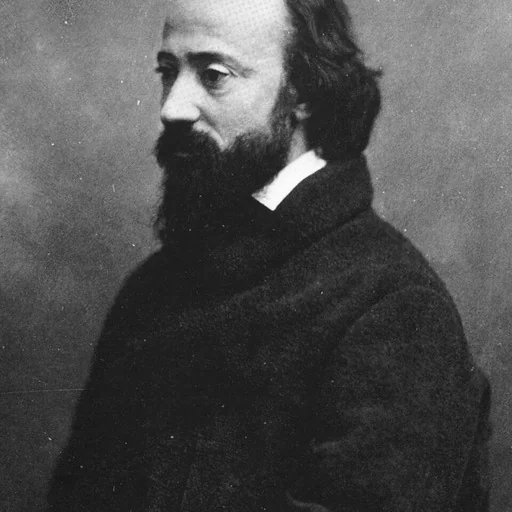
Charles-François Daubigny ( DOH-bin-yee, US: DOH-been-YEE, doh-BEEN-yee, French: ; 15 February 1817 – 19 February 1878) was a French painter, one of the members of the Barbizon school, and is considered an important precursor of…

 The Virgin Islands in Bezons (Les Iles vierges a Bezons)
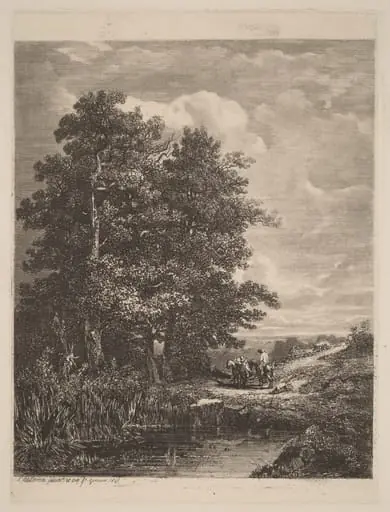 Riders by a Pond
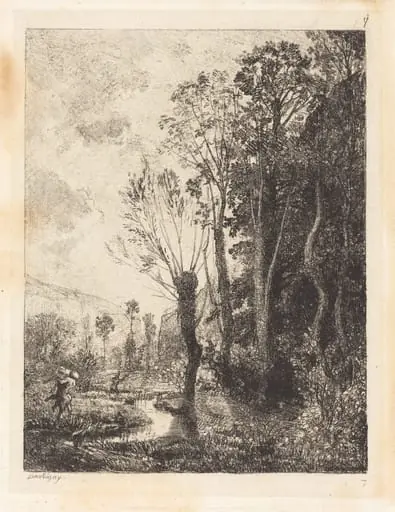 Satyr (Le Satyre)
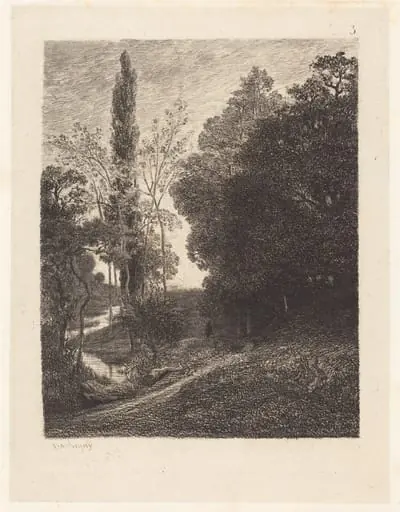 The Banks of the Cousin (Les Bords du Cousin)
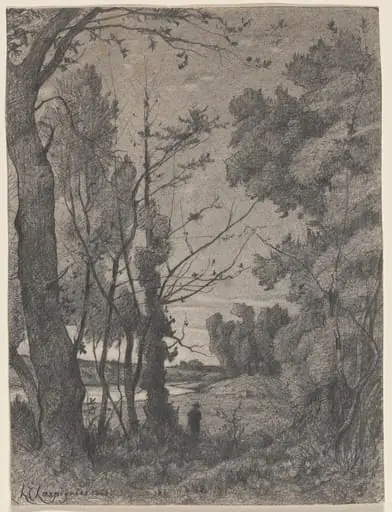 Wooded Landscape beside a River
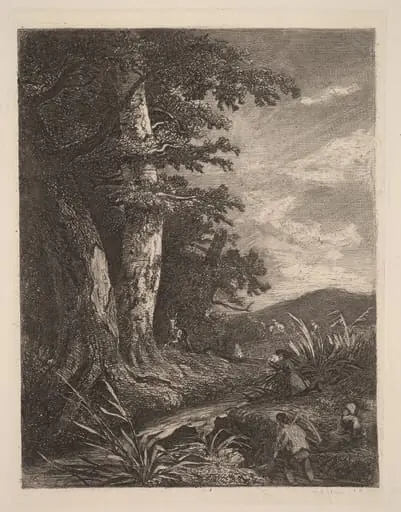 Deer by a Stream
 Brook in the Val Mondois
 Landscape with Trees, Girl Crossing Footbridge
 Fir Trees at the Water
 The Water's Course
 Chemin Creux
 Mouldering Tree Trunk