Artwork
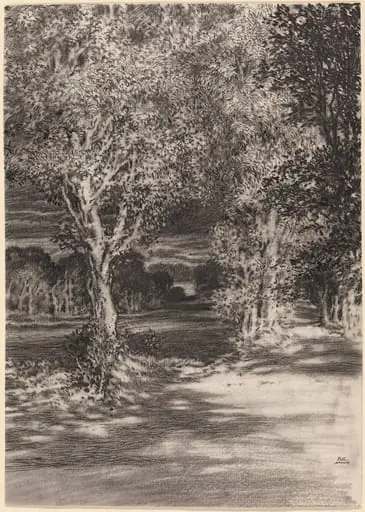
Wooded Landscape beside a River
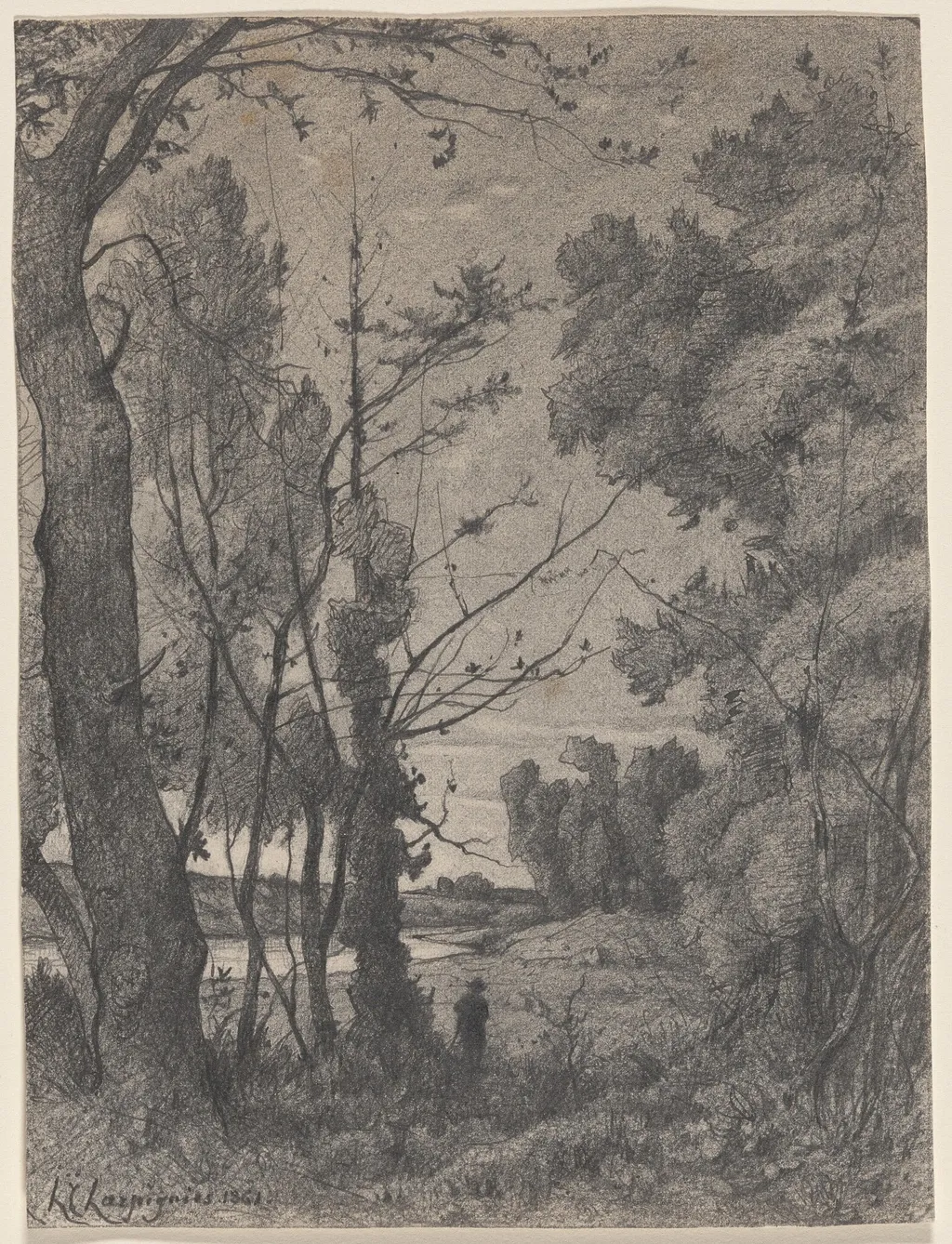
Wooded Landscape beside a River is a graphite drawing by the Impressionist artist Henri-Joseph Harpignies. It dates from 1861 and is held in the collection of the National Gallery of Art.
About this work
Overview
Wooded Landscape beside a River, a graphite and white chalk drawing on wove paper, was executed by Henri-Joseph Harpignies in 1861. It is part of the collection at the National Gallery of Art in Washington.
Subject & Meaning
The drawing depicts a winter or late autumn landscape featuring bare, twisted trees, rocky terrain, and a river flowing through the scene, with distant hills. The monochromatic palette in shades of gray and white emphasizes the natural, unromanticized state of the landscape.
Technique & Style
Harpignies employed a rapid drawing technique, combining graphite for darker accents and white chalk for highlights. The rough, detailed lines suggest a swift execution, capturing the interplay of light and shadow in the scene.
History & Provenance
Created in 1861, the work is now held in the collection of the National Gallery of Art, Washington, though the full provenance history prior to its acquisition is not detailed here.
Context
This drawing aligns with the Realist movement's emphasis on everyday, unidealized subjects and attention to natural detail, reflecting Harpignies' adherence to these artistic principles.
Own this work as a print
Artist & collection


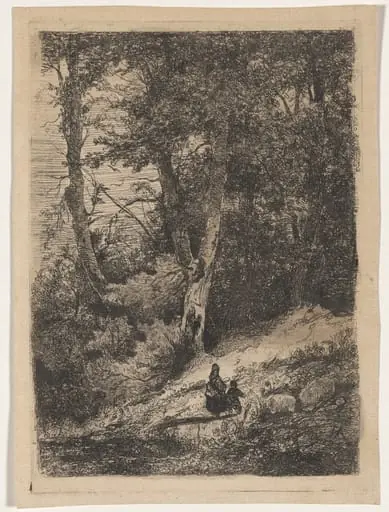 The Inner Forest (Intérieur du bois)
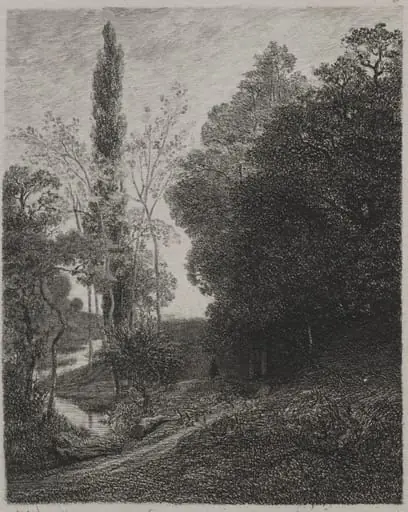 Banks of the River Cousin
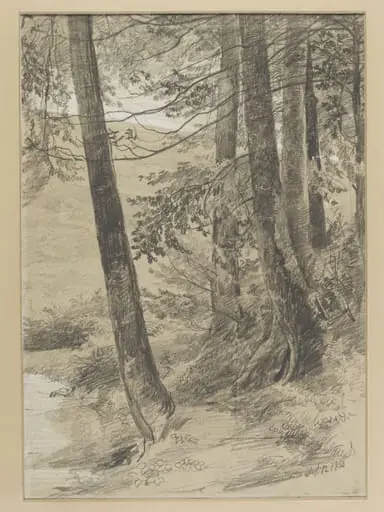 Study of tree stems at King George's Hill, Abinger
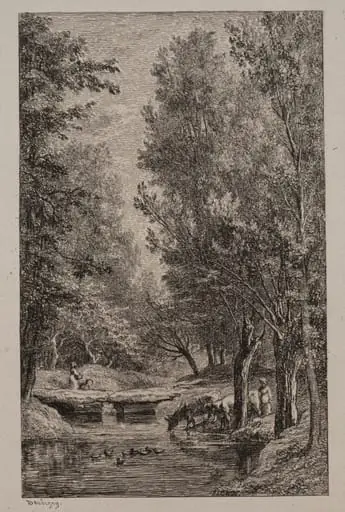 Brook in the Val Mondois
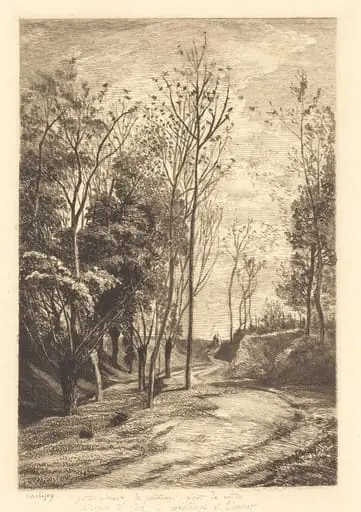 Little Birds (Les Petits oiseaux)
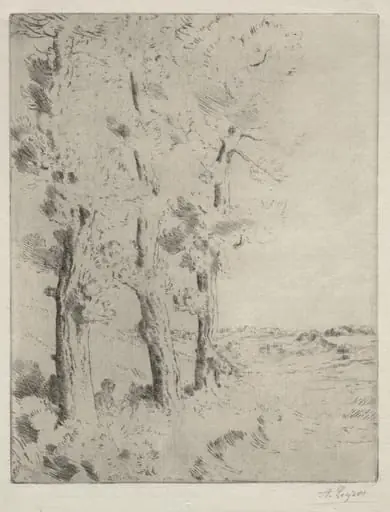 The Reader: The Lecture under the Trees
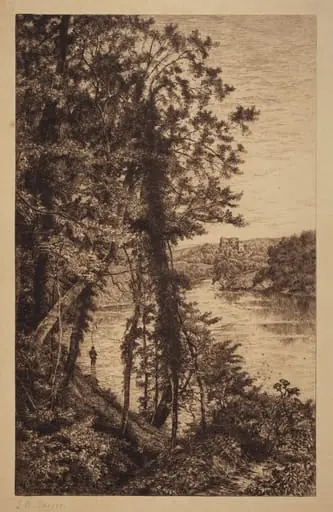 Untitled (Landscape with Fisherman)
 The Marshes of Burbanche (Marais de la Burbanche)
 The Herdsman's Cottage
 Summer—Easthampton
 Satyr (Le Satyre)
 Sunset and Moonrise at Cilian-Aeron