Artwork
The Ford (Le Gue)
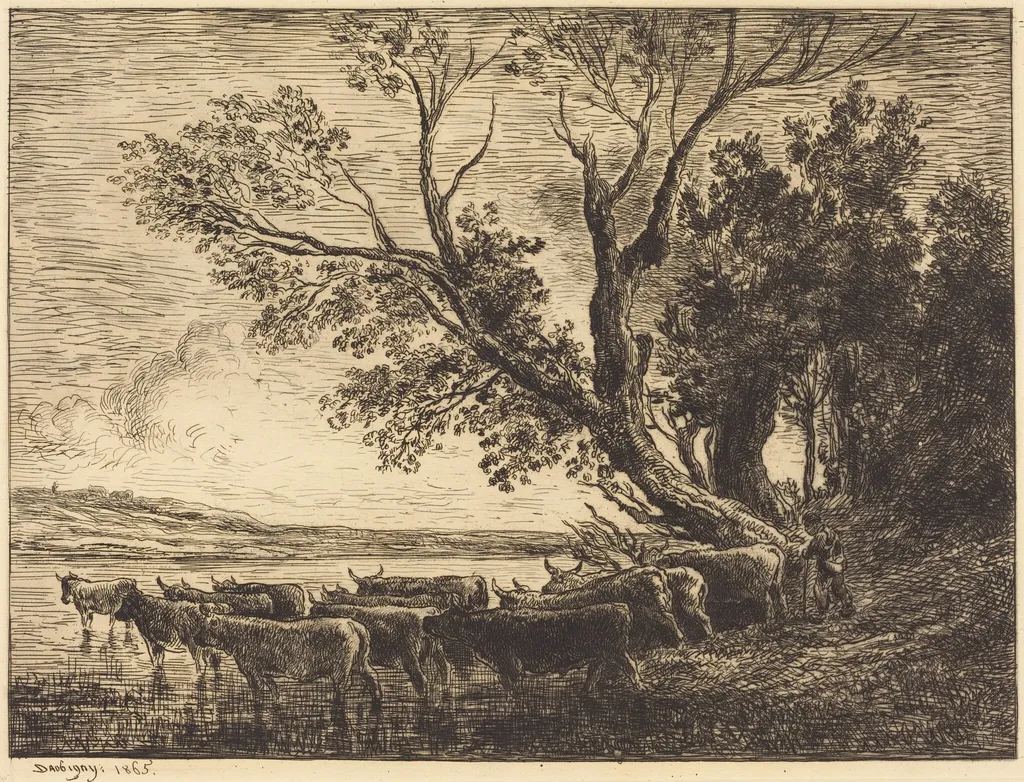
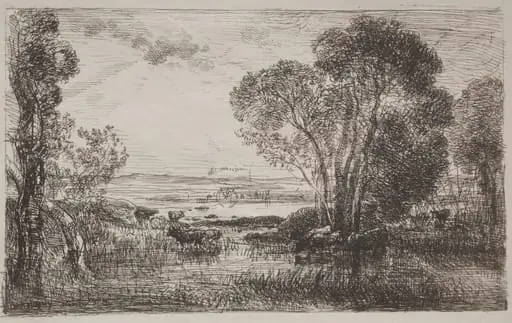
The Ford (Le Gue) is an ink print by the Impressionist artist Charles François Daubigny. It dates from 1865 and is held in the collection of the National Gallery of Art.
About this work
Overview
A figure associated with the Barbizon school, he used the medium to capture quiet rural moments with immediacy.
Charles-François Daubigny produced *The Ford (Le Gue)* in 1865 as an etching, part of his sustained engagement with printmaking alongside his landscape paintings. A figure associated with the Barbizon school, he used the medium to capture quiet rural moments with immediacy. This work exemplifies his shift toward direct observation of nature, moving away from idealized compositions toward intimate, unembellished scenes of the French countryside.
Subject & Meaning
The scene depicts a tranquil riverbank where three cows graze near the water’s edge, framed by a solitary tree on a gentle slope. No human figures appear, emphasizing solitude and the rhythm of natural life. The absence of narrative or drama invites contemplation of the land itself, reflecting Daubigny’s reverence for ordinary rural environments and his interest in the quiet harmony between animals, water, and earth.
Technique & Style
Daubigny employed fine, irregular etched lines to model form and texture, creating a sense of atmospheric depth without heavy shading. The wavy, delicate strokes in the background suggest both sky and distant terrain, blurring boundaries between elements. His use of the etching technique—where acid bites into a metal plate—allowed for spontaneous, sketch-like marks that preserved the immediacy of his outdoor studies.
History & Provenance
Created in 1865, *The Ford (Le Gue)* emerged during a period when Daubigny was actively experimenting with print media, including cliché verre. While specific early ownership records are sparse, the work entered broader circulation through print collections of the time, aligning with growing interest in artist-made prints as independent artworks rather than mere reproductions.
Context
In mid-19th century France, landscape art was gaining legitimacy as a serious subject, freed from historical or mythological frameworks. Daubigny’s etchings, like this one, contributed to a movement that valued direct engagement with nature. His practice influenced younger artists, including the Impressionists, who admired his loose handling and commitment to painting and printing en plein air.
Legacy
Daubigny’s etchings, including *The Ford (Le Gue)*, helped redefine printmaking as a vehicle for personal expression rather than reproduction. His emphasis on naturalism and tactile line work paved the way for later artists to treat prints as original artistic statements. The work remains a quiet but significant example of how landscape was reimagined through the intimacy of the printed line.
Own this work as a print
Artist & collection
Artist
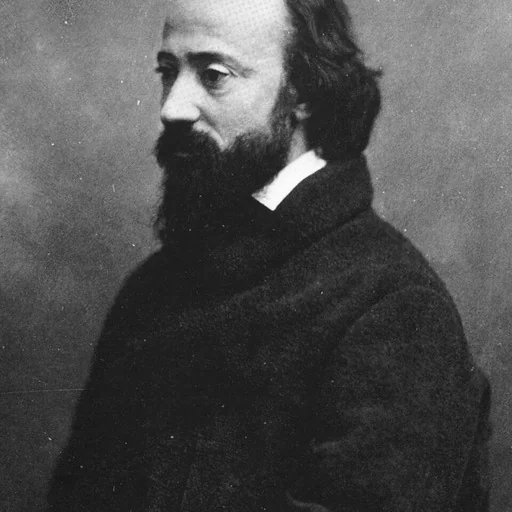
Charles-François Daubigny ( DOH-bin-yee, US: DOH-been-YEE, doh-BEEN-yee, French: ; 15 February 1817 – 19 February 1878) was a French painter, one of the members of the Barbizon school, and is considered an important precursor of…

 The Hydraulic Machine
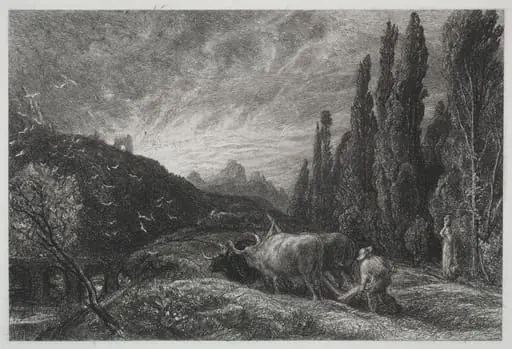 The Early Plowman
 Old Cedars, Coast of Maine
 A Forest Marsh with Travelers on a Bank (The Travelers)
 The Three Trees
 A Couple Seated among Trees above a Lake
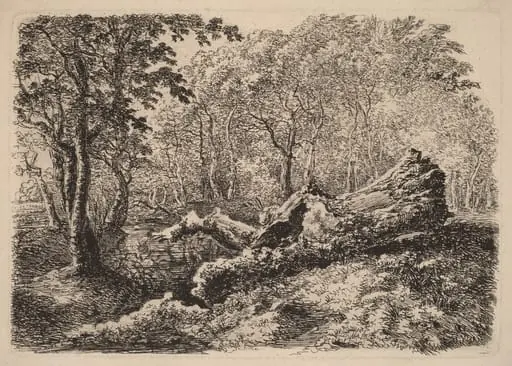 Mouldering Tree Trunk
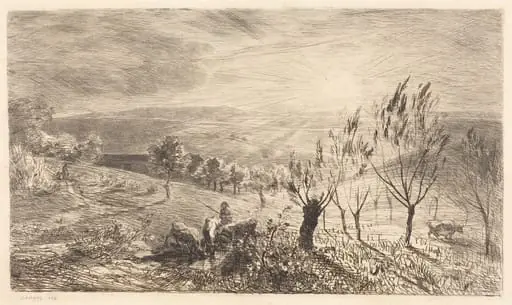 Sunrise (Le Lever du soleil)
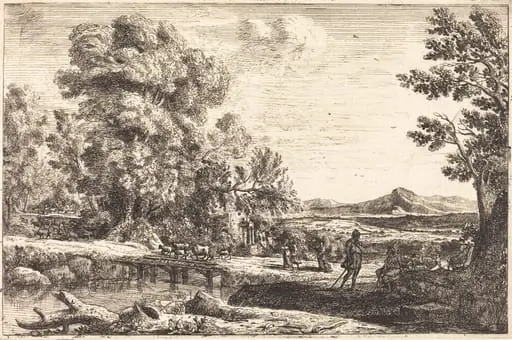 Rebecca and Eliezer (Le pont de bois)
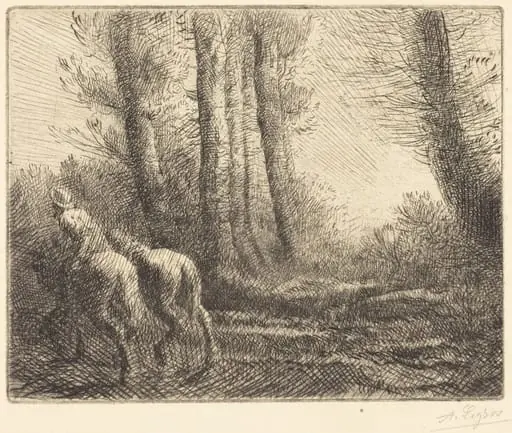 Return from the Plowing (Le retour de labourage)