Artwork
Rebecca and Eliezer (Le pont de bois)
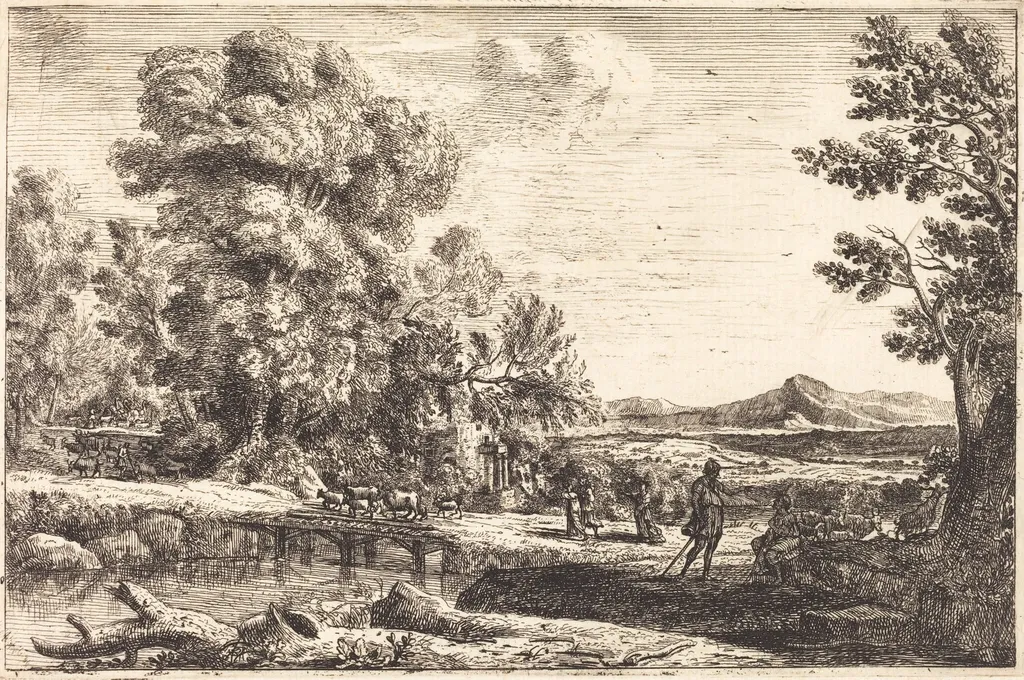
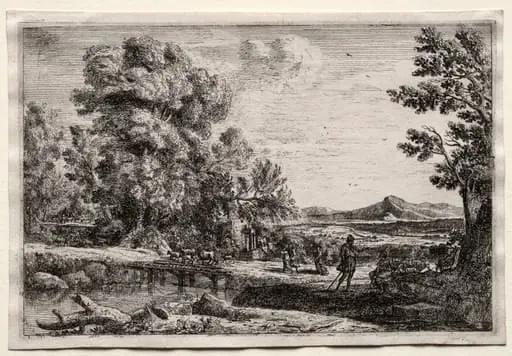
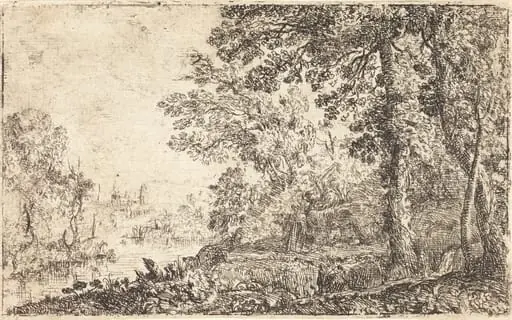
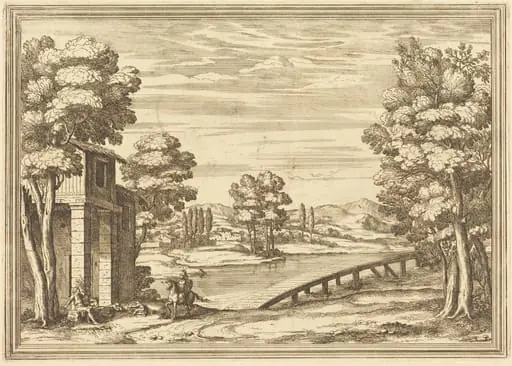
Rebecca and Eliezer (Le pont de bois) is an ink print by the Baroque artist Claude Lorrain. It dates from 1640 and is held in the collection of the National Gallery of Art.
About this work
Overview
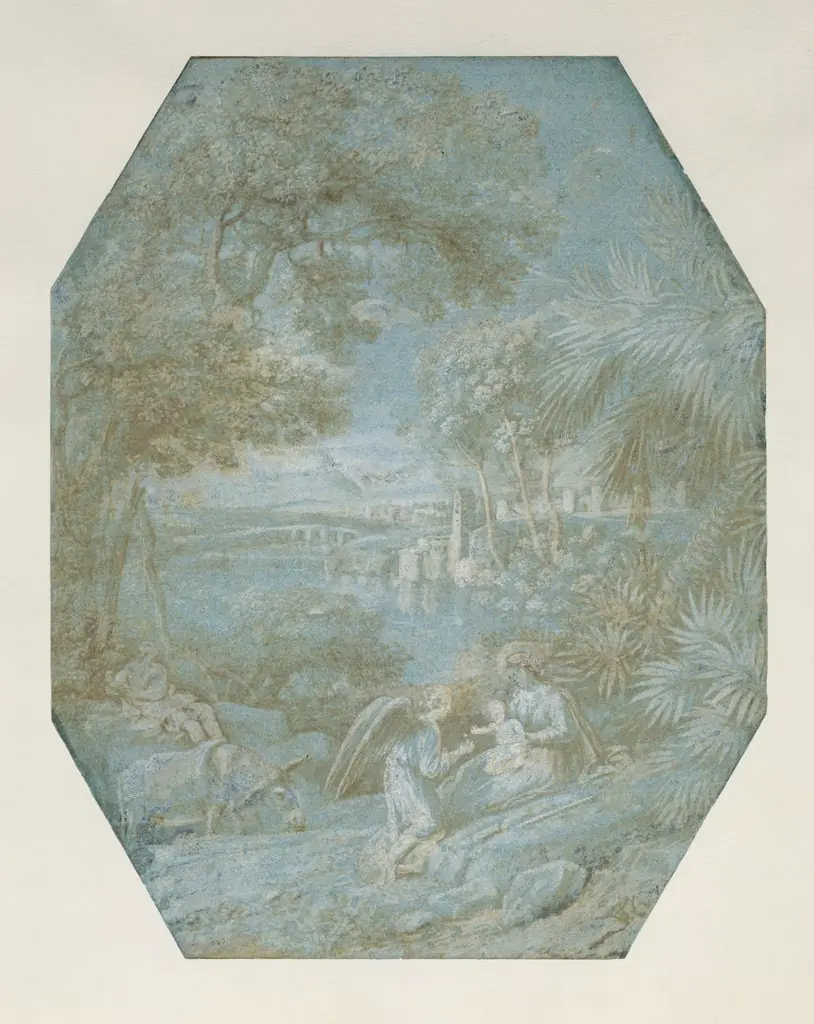
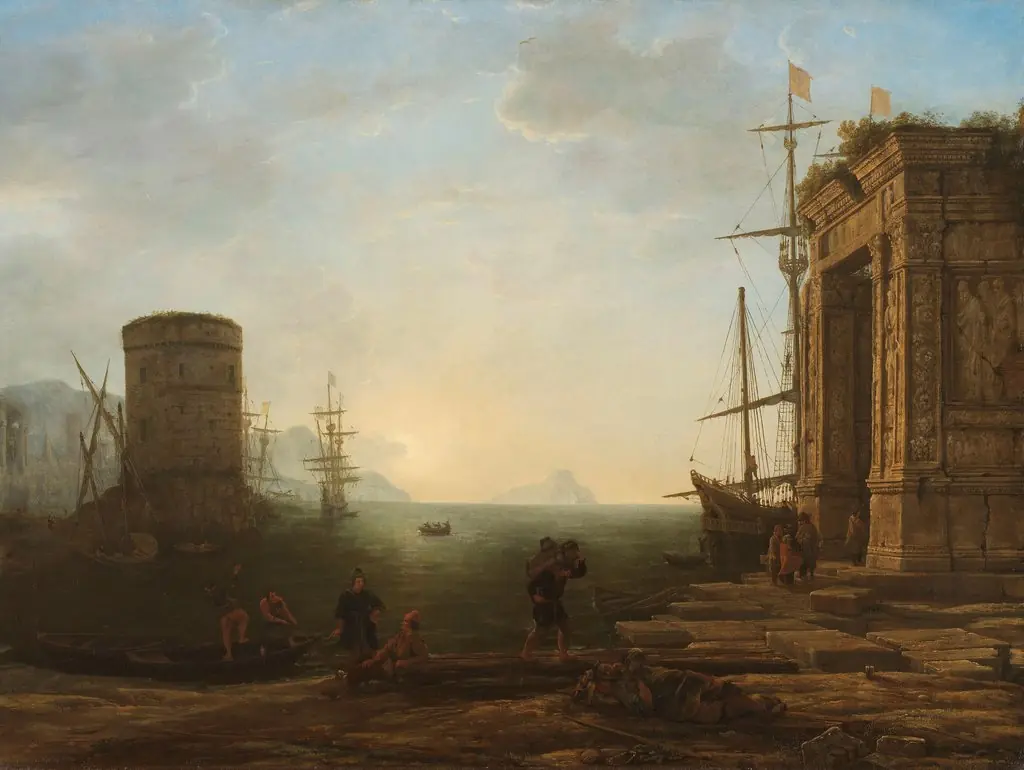
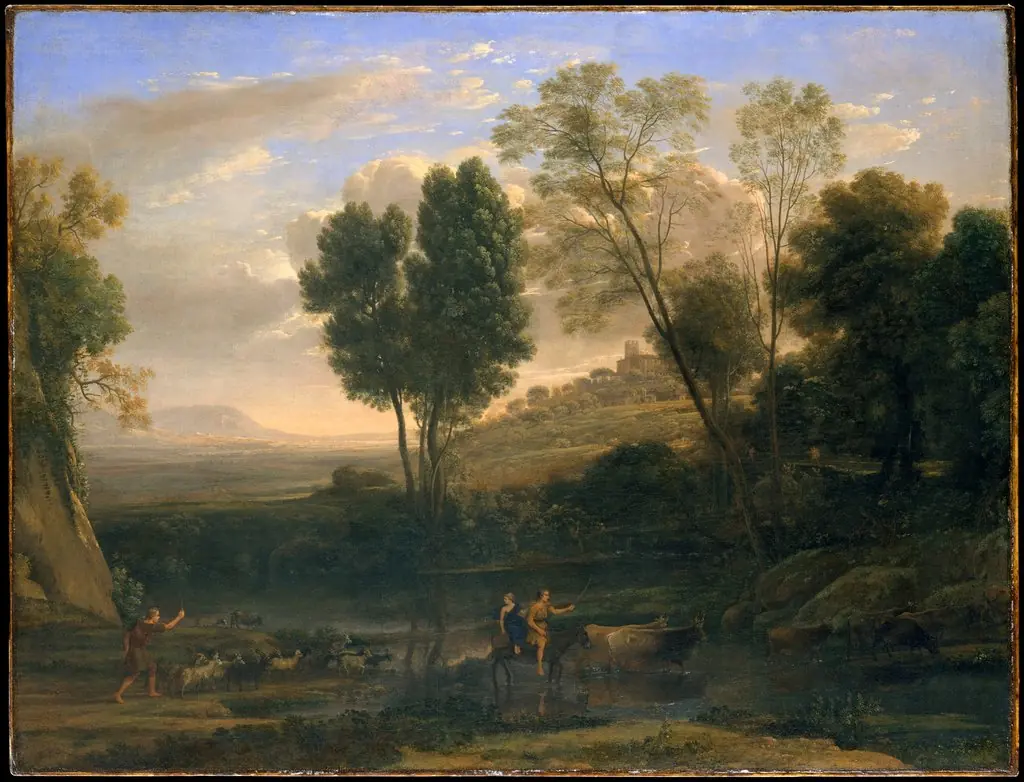
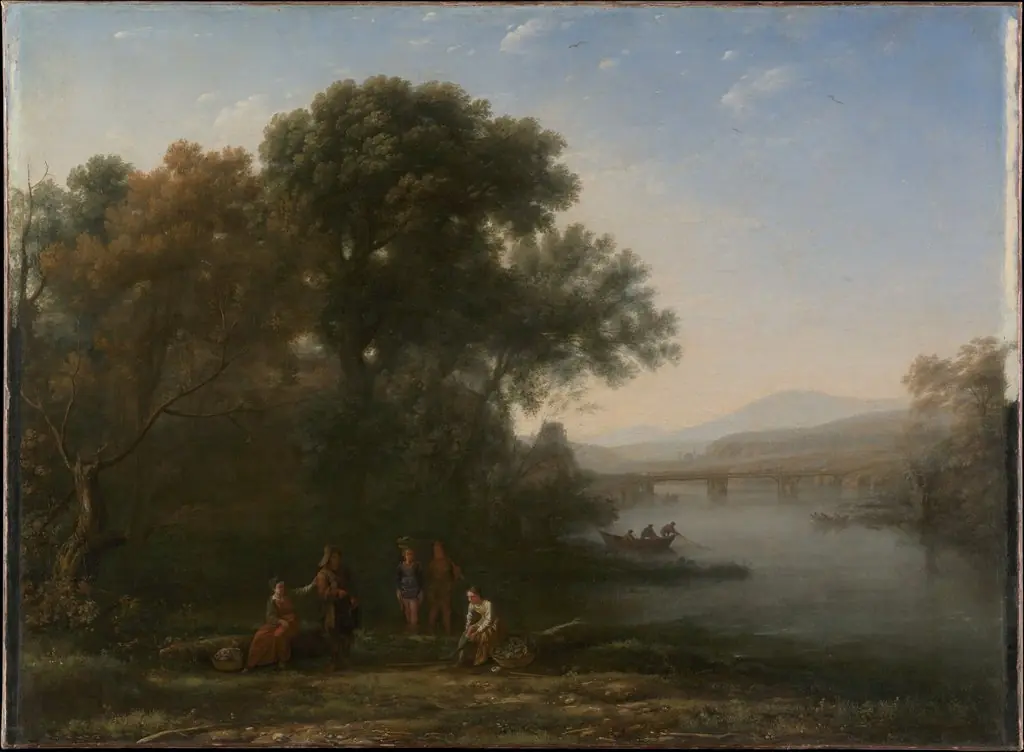
Created around 1640, this print by Claude Lorrain combines etching with drypoint to render a quiet landscape that frames a biblical episode. The composition centers on a modest wooden bridge crossing a narrow stream, set amid gently rolling terrain and distant mountains, conveying a calm, pastoral atmosphere.
Subject & Meaning
The scene illustrates the encounter between Rebecca and Eliezer, a story from the Hebrew Bible. By placing the figures within an expansive natural setting, Lorrain transforms the narrative into a broader meditation on harmony between human action and the surrounding environment.
Technique & Style
Lorrain employs the fine lines of etching alongside the richer, burr‑produced strokes of drypoint, giving the work a tactile quality. The delicate rendering of foliage, water, and stone demonstrates his Baroque attention to atmospheric perspective and the subtle modulation of light across the landscape.
History & Provenance
Born in the Duchy of Lorraine circa 1600, Lorrain spent most of his career in Italy, where he gained reputation for landscape painting. This print, produced during his early Italian period, reflects his practice of translating painted motifs into print form for wider circulation among collectors.
Context
In the mid‑17th century, artists often used biblical or classical subjects as pretexts for showcasing idealized nature. Lorrain’s work aligns with this tradition, using the Rebecca and Eliezer story to explore the serene, idealized countryside that would become a hallmark of his oeuvre.
Own this work as a print
Artist & collection
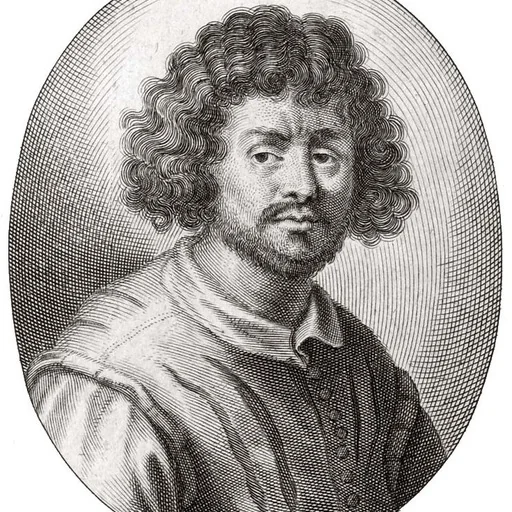
Artist
Claude Lorrain (French: ; born Claude Gellée , called le Lorrain in French; traditionally just Claude in English; c.