Artwork
8 heures du matin
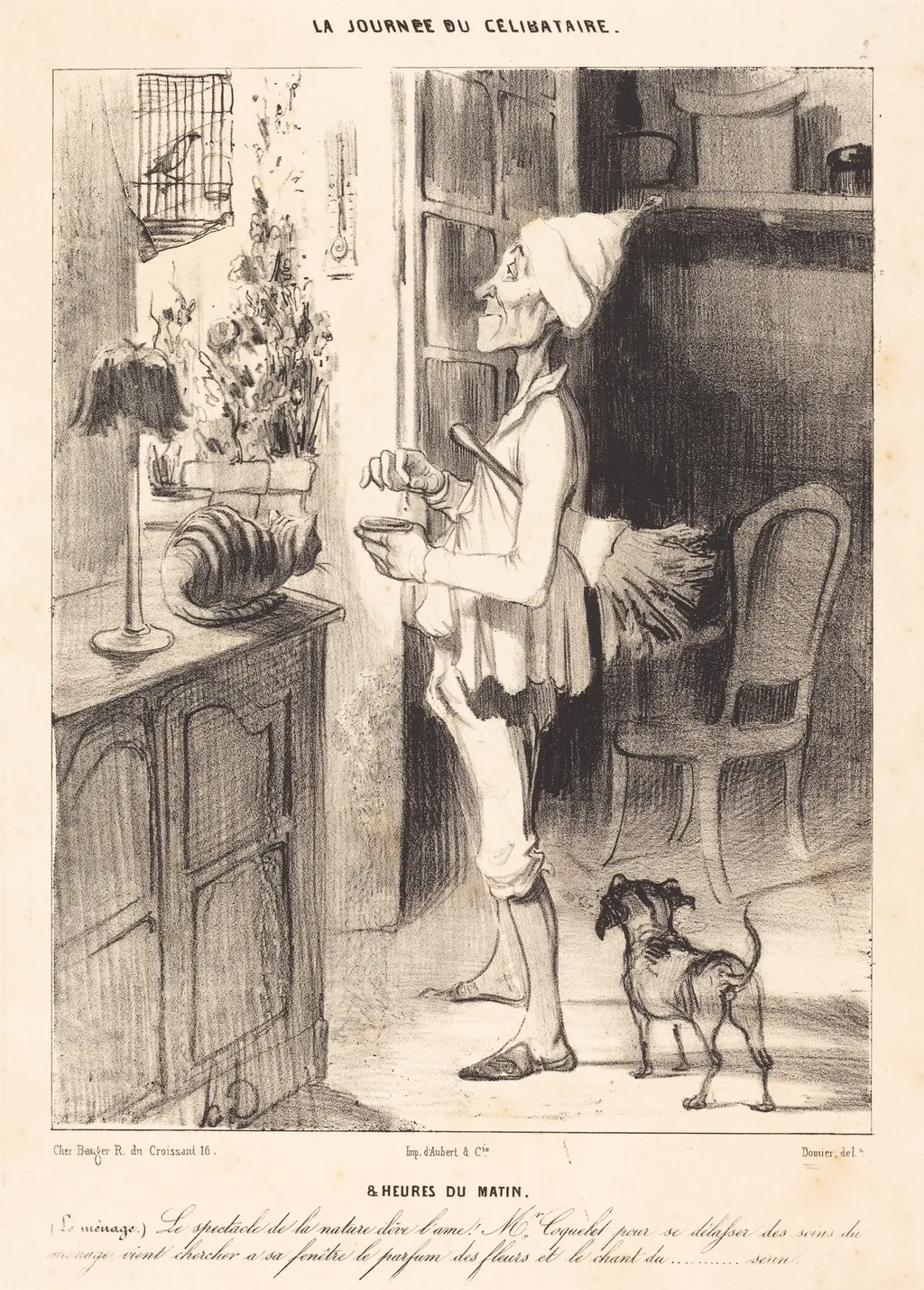
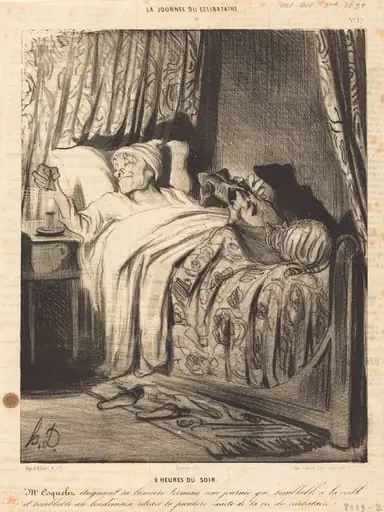
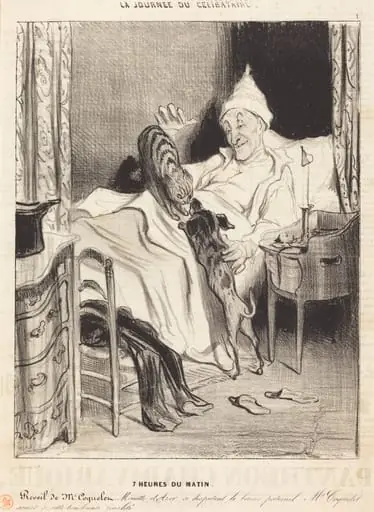
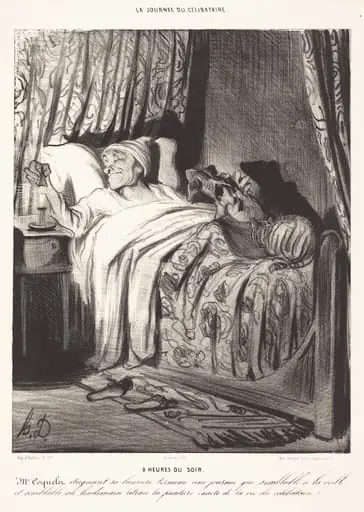
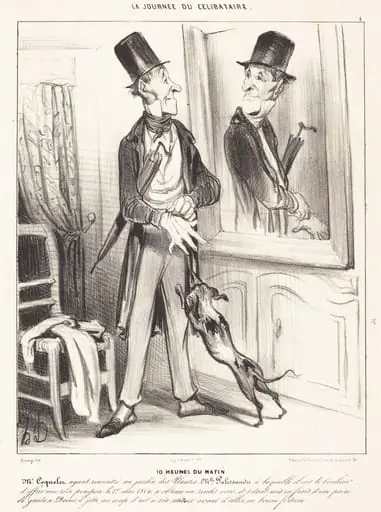
8 heures du matin is a crayon print by the Romanticist artist Honoré Daumier. It dates from 1839 and is held in the collection of the National Gallery of Art.
About this work
The man appears to be preparing breakfast, as evidenced by the bowl and spoon in his hands.
This image depicts a man standing in a room, holding a bowl and spoon in his hands. He is dressed in a white shirt, pants, and a hat, and has a dog by his side. The room is furnished with a chair, a table, and a birdcage hanging from the ceiling.
The man appears to be preparing breakfast, as evidenced by the bowl and spoon in his hands. The dog is standing next to him, looking up at him. The room is dimly lit, with a warm glow emanating from the window.
The image is a crayon lithograph in black on wove paper, created by Honoré Daumier in 1839. It is held at the National Gallery of Art, Washington. Next, explore the technique of lithography.
Overview
8 heures du matin is a 1839 crayon lithograph by Honoré Daumier, a French artist known for his satirical prints. The work is held at the National Gallery of Art, Washington.
Subject & Meaning
The print depicts a man preparing breakfast in a dimly lit room, accompanied by a dog. The scene is rendered in a straightforward manner, but its significance lies in its potential as social commentary, characteristic of Daumier's work.
Technique & Style
Created using crayon lithography on wove paper, the image showcases Daumier's use of the medium to achieve a range of tonal values. The technique allowed for mass production, making his work widely accessible through publications like La Caricature and Le Charivari.
History & Provenance
Daumier produced 8 heures du matin during his tenure as a caricaturist for French newspapers, a period marked by his sharp critique of post-1830 French society. His work was informed by his republican democratic views.
Artist & collection

Artist
Honoré-Victorin Daumier was a French painter, sculptor, and printmaker, whose many works offer commentary on the social and political life in France, from the Revolution of 1830 to the fall of the Second French Empire in 1870.