Artwork
10 heures du matin
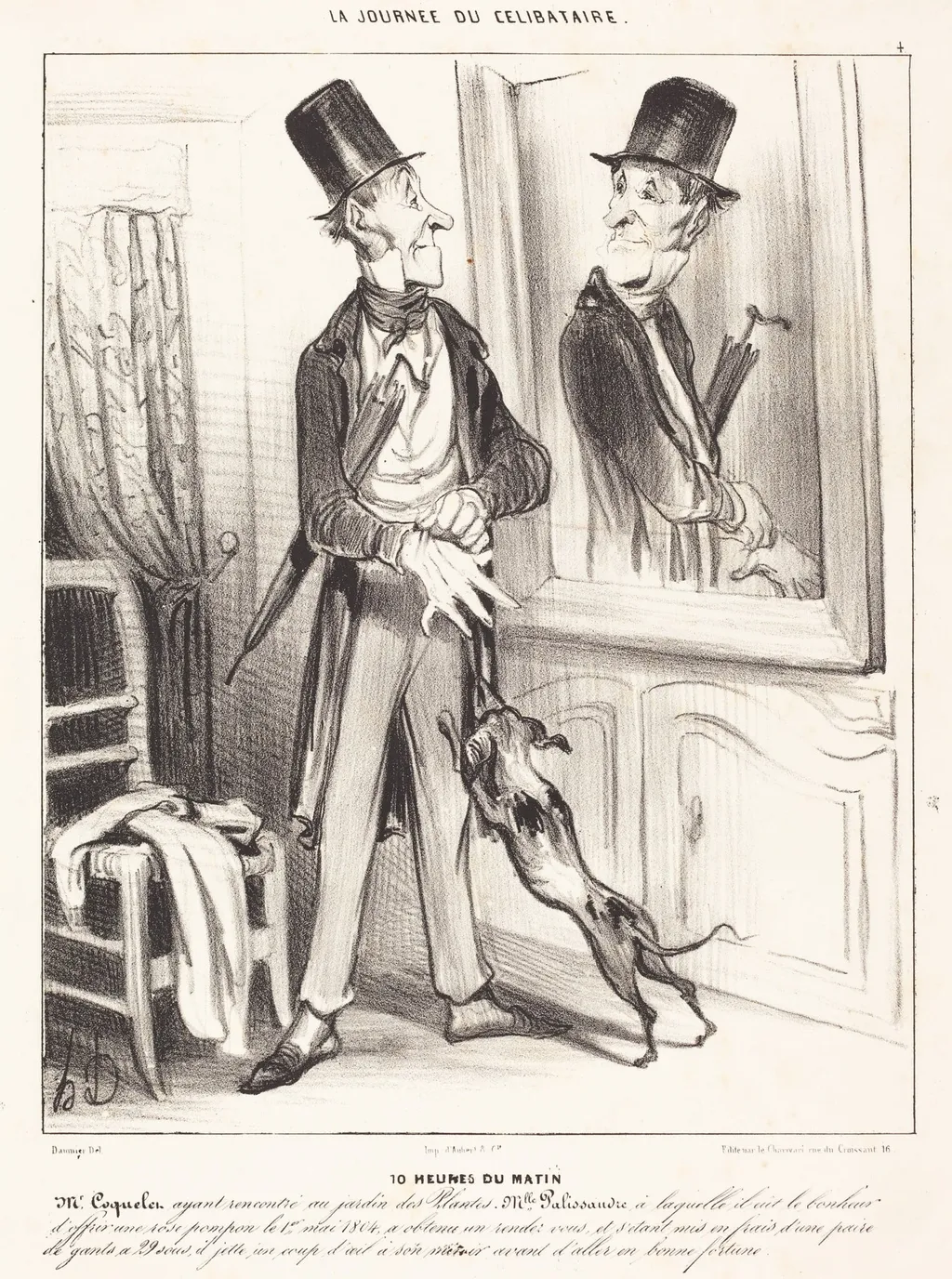
10 heures du matin is a crayon print by the Romanticist artist Honoré Daumier. It dates from 1839 and is held in the collection of the National Gallery of Art.
About this work
Overview
Honoré Daumier’s 1839 lithograph *10 heures du matin* is a black crayon drawing executed on wove paper. The print presents a solitary gentleman in a long coat and top hat, standing before a mirror that reflects his own image. A cane rests in his hand, and a chair with a draped coat appears to his left, creating a balanced composition.
Subject & Meaning
The figure’s upright posture and self‑assured expression convey a sense of personal confidence, while the mirror introduces a visual dialogue between outward appearance and inner identity. By positioning the man before his reflection, Daumier invites contemplation of societal self‑presentation during a period of heightened public scrutiny.
Technique & Style
Created with crayon lithography, the work relies on stark black lines against the white of the wove paper, emphasizing contour and texture. Daumier’s handling of the medium allows for precise detailing of clothing folds and facial features, while the limited palette reinforces the satirical tone characteristic of his prints.
Context
Produced during the July Monarchy, the lithograph reflects Daumier’s engagement with contemporary French politics. Known for his contributions to satirical journals such as *La Caricature* and *Le Charivari*, he employed caricature to critique the monarchy, aristocracy, and clergy, aligning the image with his republican, democratic convictions.
History & Provenance
The print is documented as part of Daumier’s early series of socially critical works from the late 1830s. Its ownership history traces back to private collections before entering public museum holdings, where it is displayed as an example of his politically charged lithographic practice.
Artist & collection
Artist
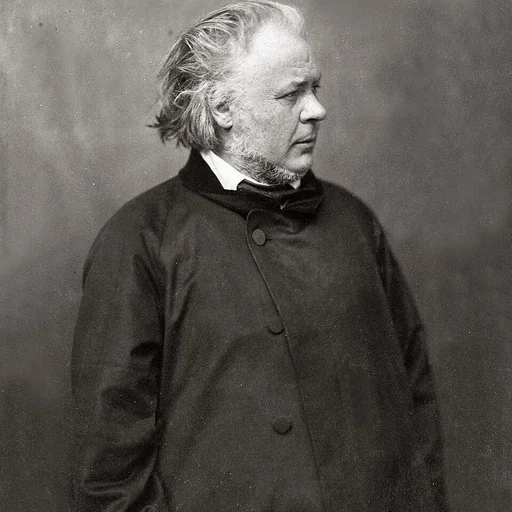
Honoré-Victorin Daumier was a French painter, sculptor, and printmaker, whose many works offer commentary on the social and political life in France, from the Revolution of 1830 to the fall of the Second French Empire in 1870.


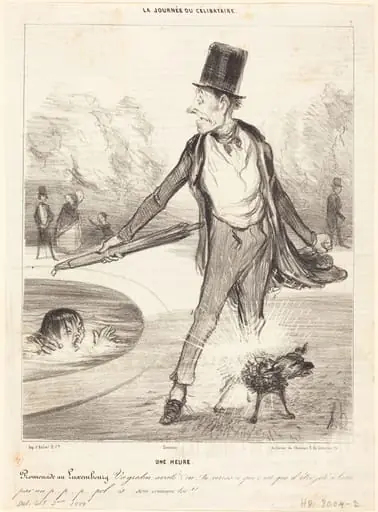 Une heure - Promenade au Luxembourg
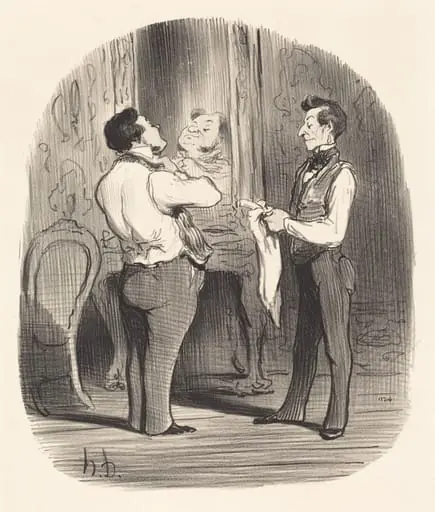 Le Jour ou il s'agit de faire une conquête
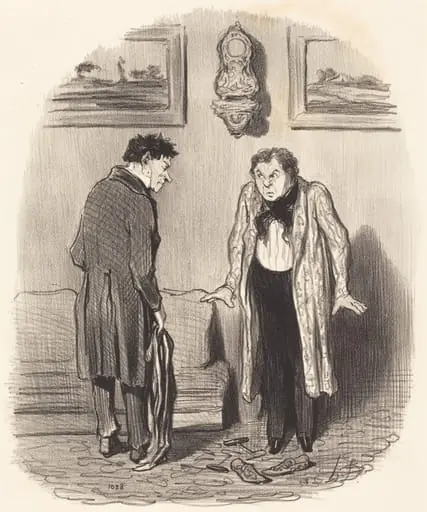 Mais quand je vous dis que je ne peux pas remuer les pieds...
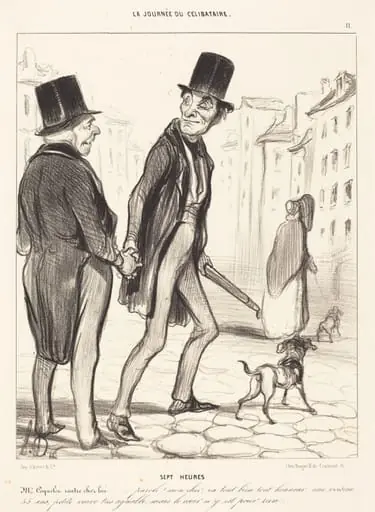 Sept heures
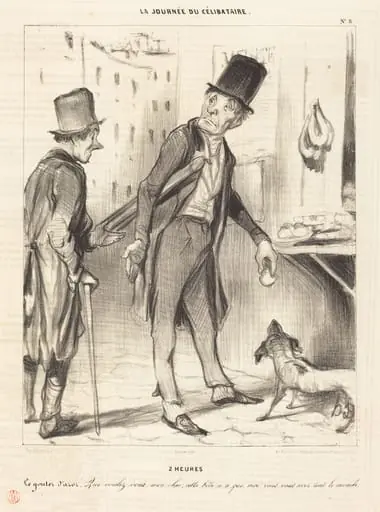 2 heures - Le gouter d'Azor
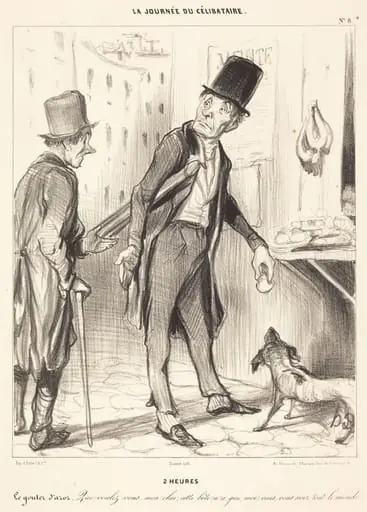 2 heures
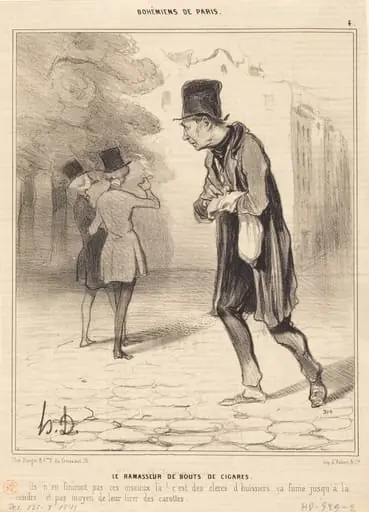 Le Ramasseur de bouts de cigares
 Sans doute M. Riflot le droit...
 Il n'ya pas pourtant qu'une heure que je tire!
 Oh! quant a la vue, vous ne trouverez pas mieux qu'ici!