Artwork
Adolphe Crémieux
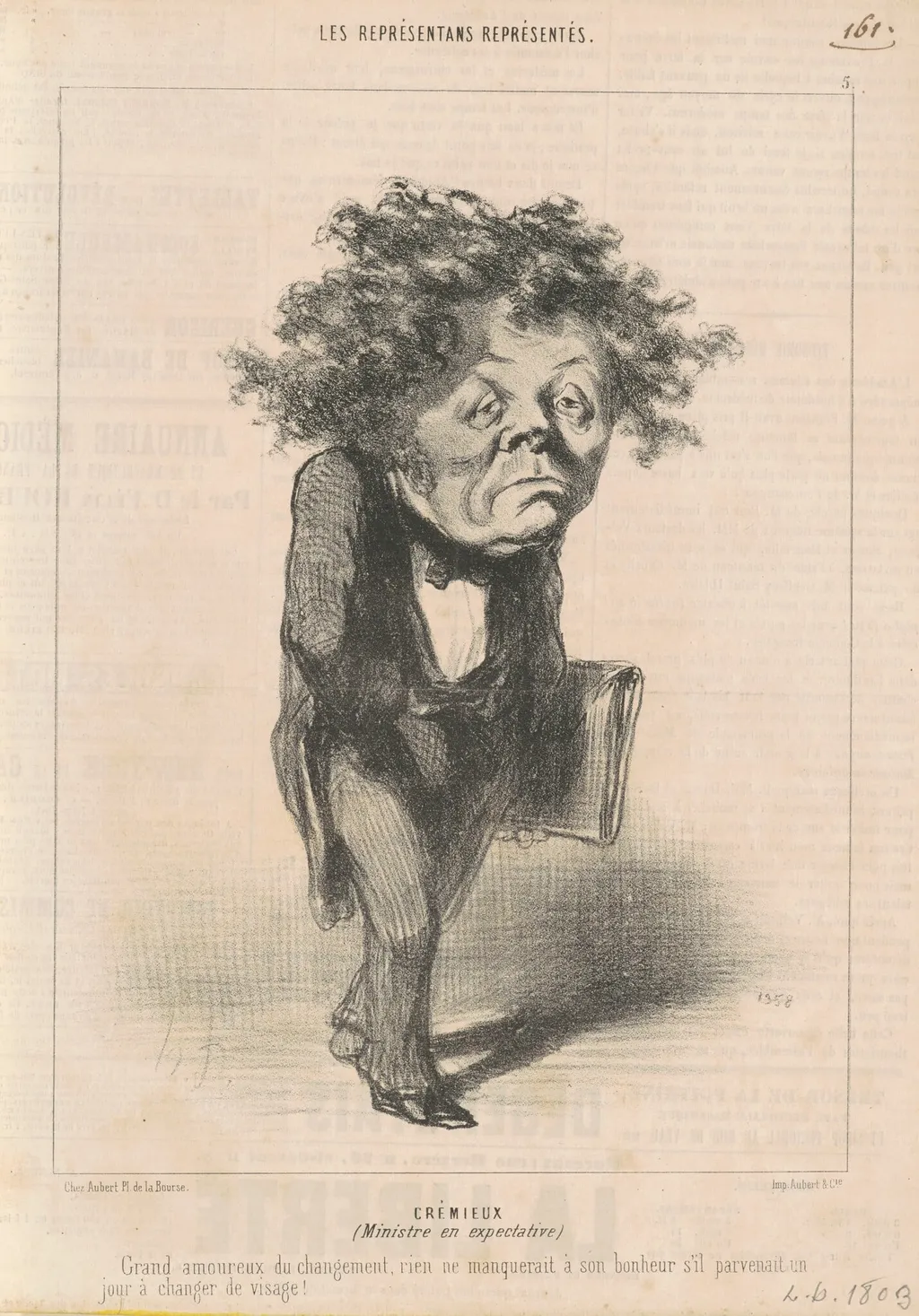
Adolphe Crémieux is an ink print by the Romanticist artist Honoré Daumier. It dates from 1848 and is held in the collection of the National Gallery of Art.
About this work
Overview
Honoré Daumier’s 1848 lithograph depicts Adolphe Crémieux, a French minister, in a sharply exaggerated manner. The print foregrounds a disproportionately large head and untamed hair, characteristic of Daumier’s satirical portraiture, and situates the figure within a textual frame that underscores his official role.
Subject & Meaning
The work lampoons Crémieux’s public persona, using caricature to question the authority and demeanor of a political figure. By amplifying physical traits, Daumée invites viewers to consider the broader implications of power and the often‑flamboyant nature of contemporary politics.
Technique & Style
Executed in lithography, the image relies on bold line work and stark contrasts typical of mid‑nineteenth‑century printmaking. Daumier’s approach—simplified forms, exaggerated proportions, and minimal shading—serves the immediacy of satire, allowing rapid reproduction for a wide audience.
History & Provenance
Created during the revolutionary upheavals of 1848, the print was likely circulated among political pamphlets and newspapers. Its survival in museum collections reflects the period’s demand for visual commentary on governmental affairs.
Context
The lithograph emerges from a climate of intense political agitation in France, where caricature became a common vehicle for dissent. Daumier, a regular contributor to satirical journals, used his art to critique ministers like Crémieux amid the Second Republic’s turbulent early years.
Artist & collection

Artist
Honoré-Victorin Daumier was a French painter, sculptor, and printmaker, whose many works offer commentary on the social and political life in France, from the Revolution of 1830 to the fall of the Second French Empire in 1870.