Artwork
Ah! il prétend m'empêcher d'aller...
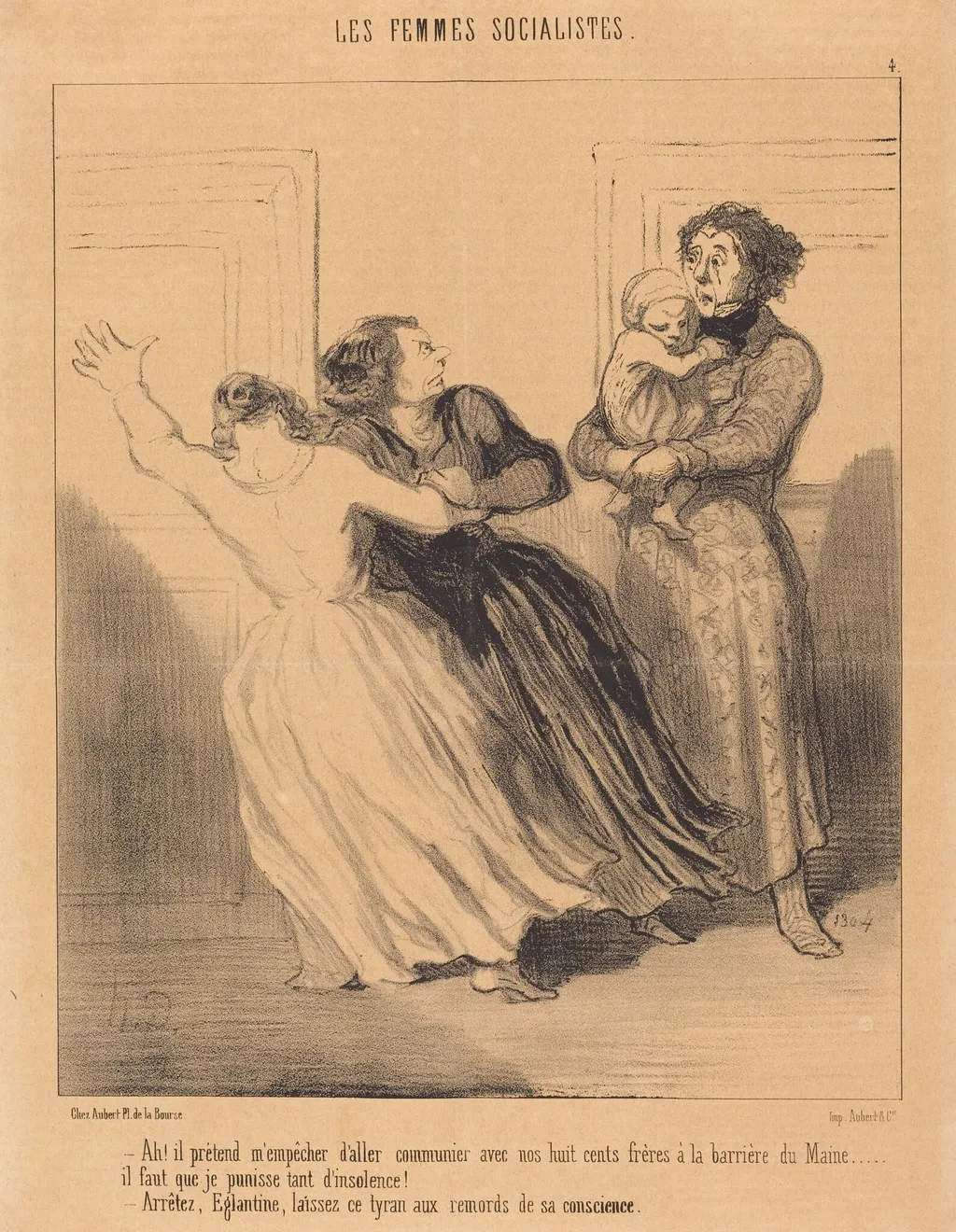
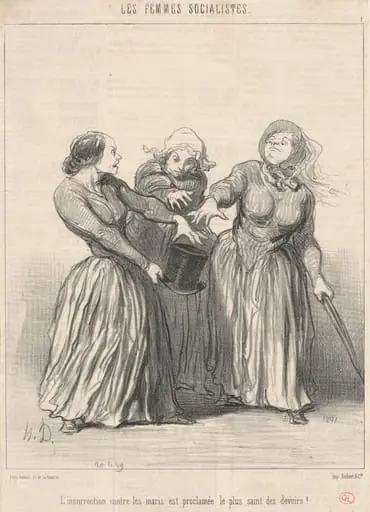
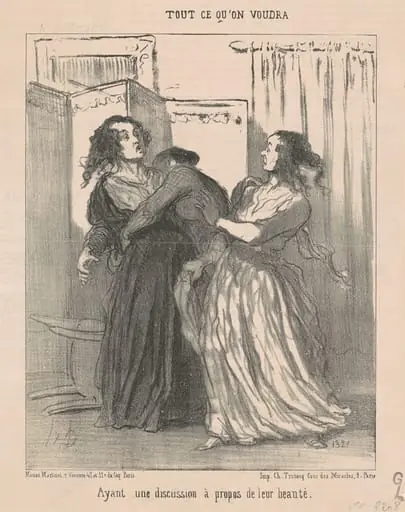
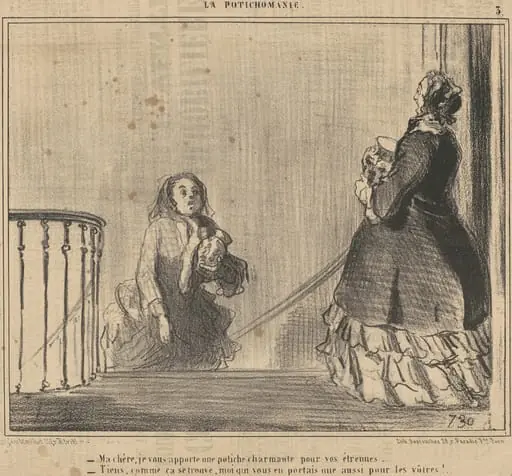
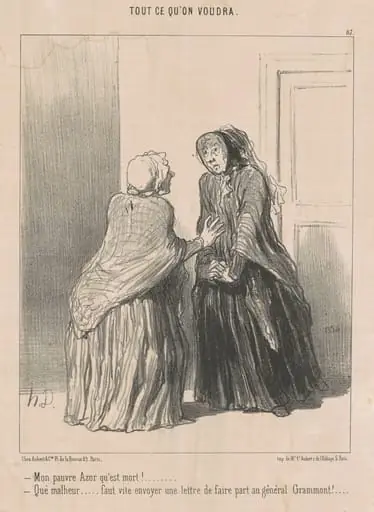
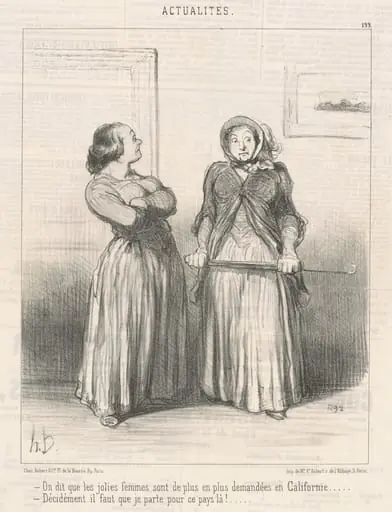
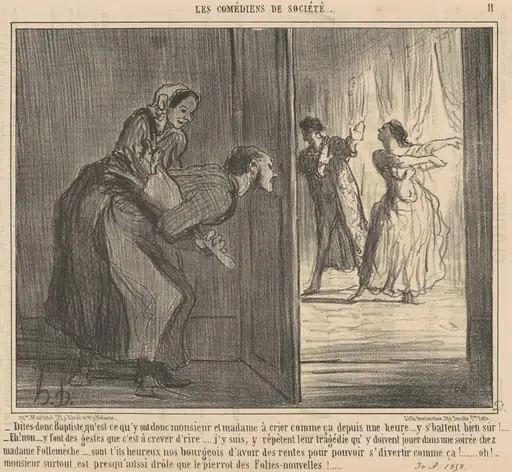
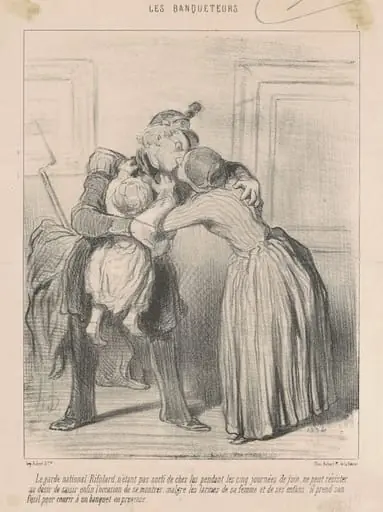
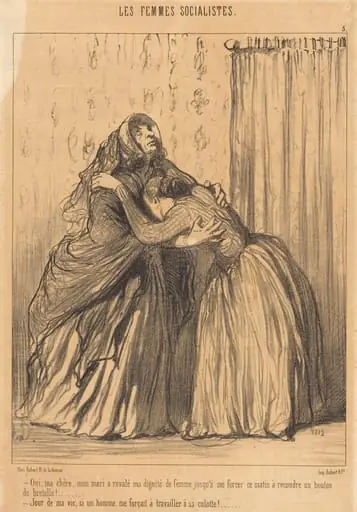
Ah! il prétend m'empêcher d'aller... is an ink print by the Romanticist artist Honoré Daumier. It dates from 1849 and is held in the collection of the National Gallery of Art.
About this work
Overview
The work belongs to a series addressing gender and power in post-revolutionary France, using everyday scenes to critique broader societal shifts.
Created in 1849, this lithograph by Honoré Daumier captures a moment of domestic tension infused with political undertones. Printed in black ink on newsprint, it was likely published in a satirical journal like *Le Charivari*. The work belongs to a series addressing gender and power in post-revolutionary France, using everyday scenes to critique broader societal shifts. Its rough, immediate style reflects the urgency of its political message and the constraints of mass-printed media.
Subject & Meaning
Two women are depicted in a modest interior: one gestures emphatically, clutching a jug, while the other holds a child, her expression one of alarm. The title, 'Les Femmes Socialistes,' frames the scene as a commentary on women’s emerging political engagement. Daumier portrays not endorsement but unease—suggesting societal discomfort with women stepping beyond domestic roles. The tension between action and restraint hints at fears surrounding gendered authority and revolutionary ideals.
Technique & Style
Daumier employed lithography to achieve rapid, expressive lines suited to daily publication. The ink is applied with loose, energetic strokes, emphasizing gesture over detail. Background elements like the window and door are suggested with minimal marks, focusing attention on the figures’ postures and facial expressions. The use of newsprint underscores the work’s ephemeral nature and its role in public discourse rather than fine art collection.
History & Provenance
Produced during the turbulent years following the 1848 Revolution, the print was likely published in a periodical that regularly featured Daumier’s political cartoons. Though originally circulated in newspapers, few original impressions survive due to the fragile nature of newsprint. The work’s survival is tied to later archival efforts by institutions recognizing its significance as social documentation rather than mere illustration.
Context
In late 1840s France, debates over women’s roles intensified amid rising socialist and republican movements. Daumier’s imagery responds to anxieties about female participation in public life, often portrayed with irony or alarm in the press. His prints did not advocate for specific policies but exposed the contradictions and tensions within society’s response to change, using humor and exaggeration to provoke reflection.
Legacy
Daumier’s lithographs, including this one, helped redefine printmaking as a vehicle for social critique. His influence extended to later generations of illustrators and cartoonists who adopted his direct visual language. Though initially dismissed as journalistic, these works are now studied for their nuanced portrayal of class, gender, and power, offering insight into the everyday realities of political upheaval.
Own this work as a print
Artist & collection

Artist
Honoré-Victorin Daumier was a French painter, sculptor, and printmaker, whose many works offer commentary on the social and political life in France, from the Revolution of 1830 to the fall of the Second French Empire in 1870.