Artwork
On dit que les jolies femmes sont ...
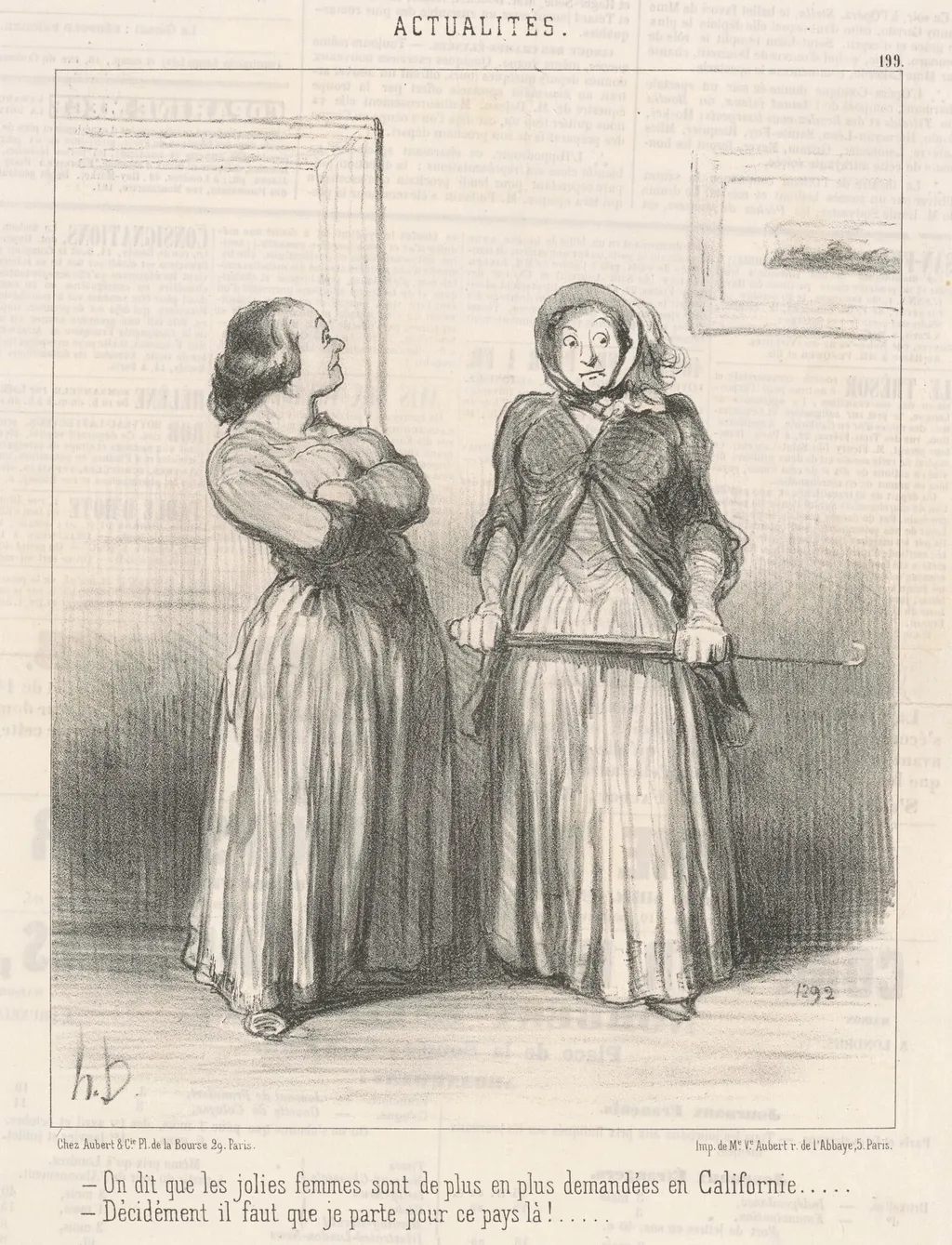
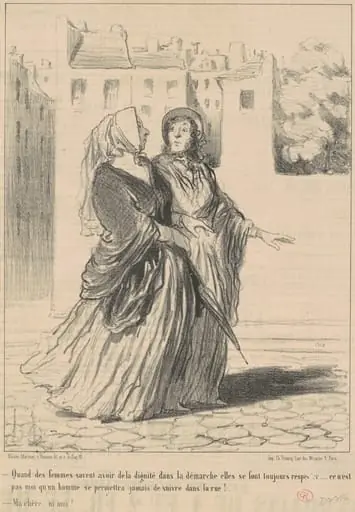
On dit que les jolies femmes sont ... is an ink print by the Impressionist artist Honoré Daumier. It dates from 1850 and is held in the collection of the National Gallery of Art.
About this work
Overview
This lithograph by Honoré Daumier captures a quiet, unguarded moment between two women in a sparse interior.
This lithograph by Honoré Daumier captures a quiet, unguarded moment between two women in a sparse interior. The title, 'On dit que les jolies femmes sont...', hints at gossip or societal commentary, though the phrase remains unfinished. Daumier’s use of lithography allows for fluid, expressive lines that convey subtle emotional contrasts without elaborate detail, focusing attention on gesture and expression.
Subject & Meaning
The two figures embody contrasting reactions to an unseen remark—one woman stands rigid, arms folded, her expression detached; the other turns sharply, mouth agape, as if startled by something said. The tension between composure and surprise suggests a critique of social performance, perhaps mocking the way women are expected to respond to idle chatter or societal judgment. The ambiguity of the title invites speculation about the nature of the remark itself.
Technique & Style
Daumier employed lithography, drawing directly onto a limestone plate with a greasy crayon before transferring the image to paper. The medium’s capacity for tonal variation and spontaneous line work suited his observational style. Here, minimal shading and loose contours define form, emphasizing movement and expression over realism. The bare room and lack of ornamentation focus the viewer’s attention entirely on the figures’ psychological interplay.
History & Provenance
Created during the 1860s, this print emerged from Daumier’s prolific output of satirical lithographs published in French periodicals. Though not part of a widely known series, it aligns with his broader project of documenting everyday life with wit and precision. The work was likely produced for private circulation or inclusion in a collected album, reflecting Daumier’s interest in capturing fleeting human moments beyond political caricature.
Context
In mid-19th century Paris, lithography was a dominant medium for mass-produced imagery, used in newspapers and illustrated journals. Daumier, working within this ecosystem, turned the technique toward psychological observation rather than overt satire. His depictions of ordinary women often challenged idealized portrayals in academic art, offering instead candid, unromanticized glimpses into domestic life and social nuance.
Legacy
Daumier’s lithographs, including this one, influenced later artists seeking to capture authentic human behavior through simplified forms. His ability to convey complex emotion with minimal means prefigured modernist approaches to figure drawing and printmaking. Though not widely exhibited in his lifetime, his work gained recognition in the 20th century as a vital record of bourgeois life and its quiet tensions.
Artist & collection

Artist
Honoré-Victorin Daumier was a French painter, sculptor, and printmaker, whose many works offer commentary on the social and political life in France, from the Revolution of 1830 to the fall of the Second French Empire in 1870.