Artwork
Ainsi donc, mon ami, a vingt-deux ans...
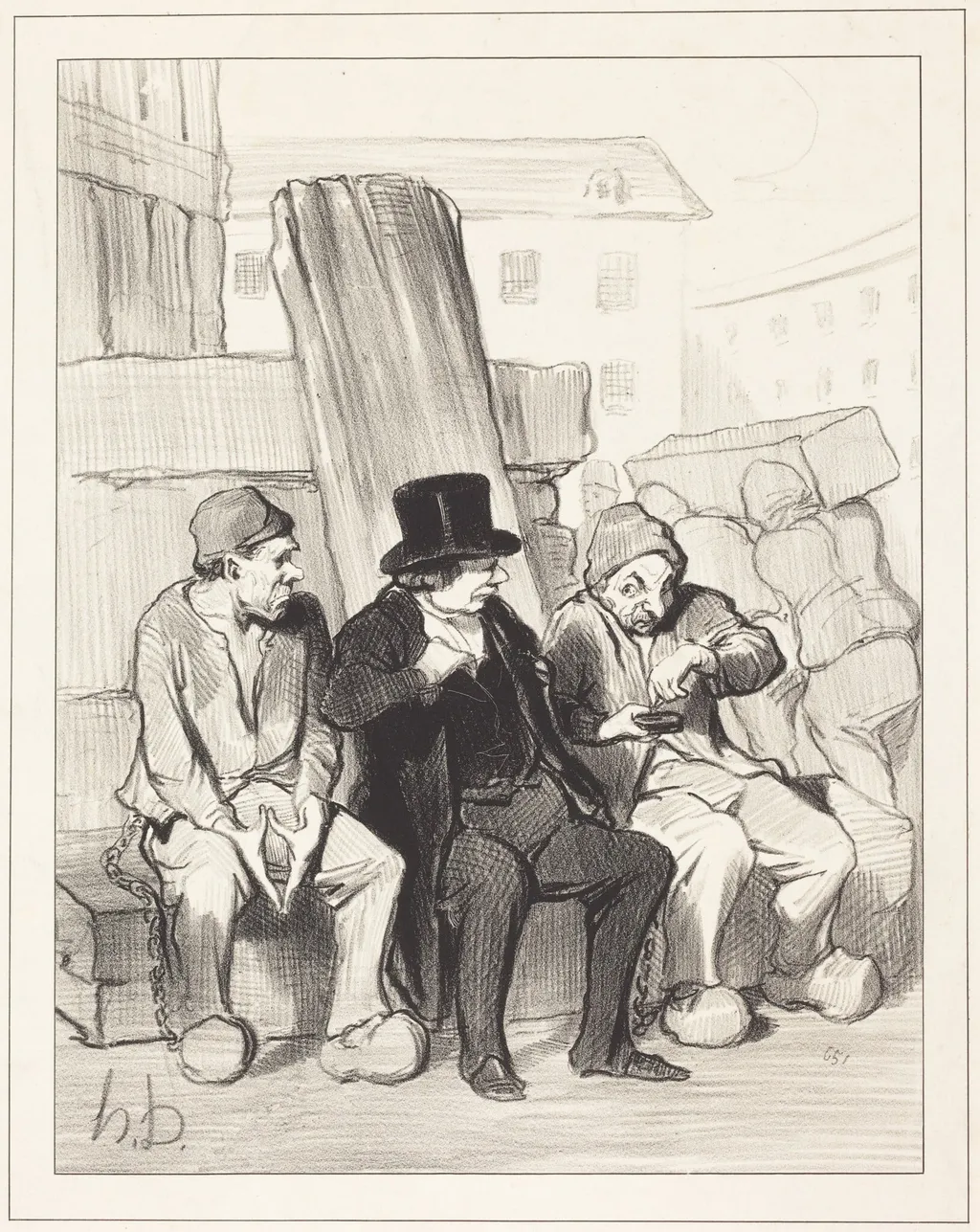
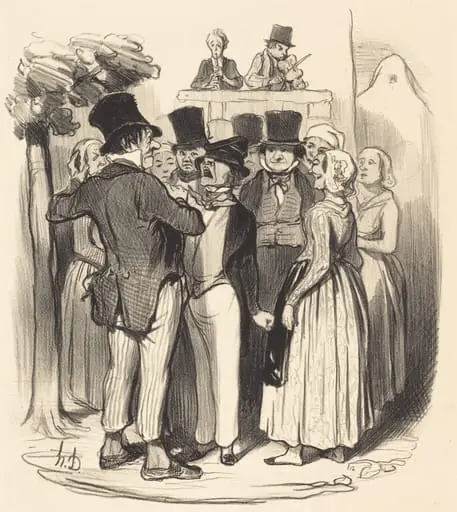
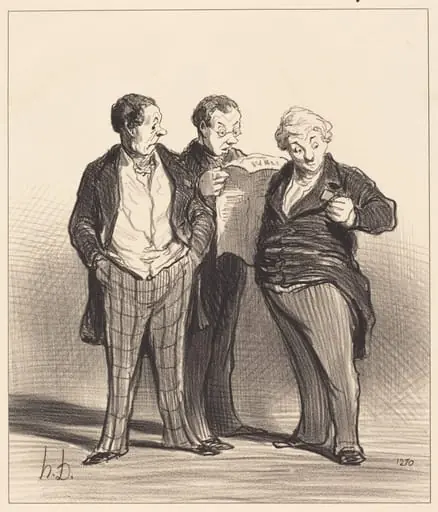
Ainsi donc, mon ami, a vingt-deux ans... is an ink print by the Romanticist artist Honoré Daumier. It dates from 1844 and is held in the collection of the National Gallery of Art.
About this work
Overview
It reflects his sustained engagement with public life under the July Monarchy, using the accessible medium of print to reach a broad urban audience.
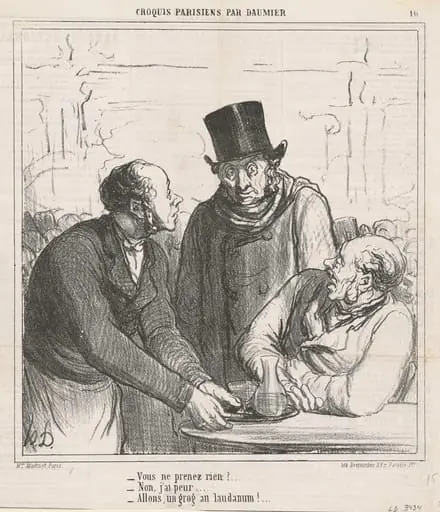
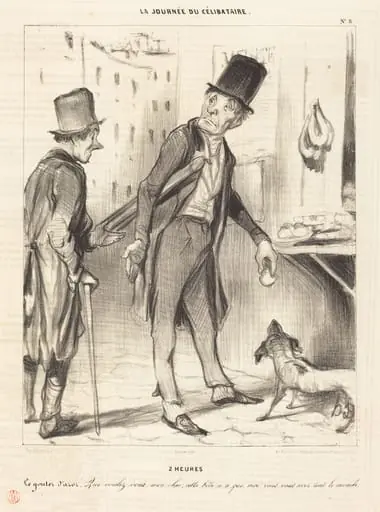
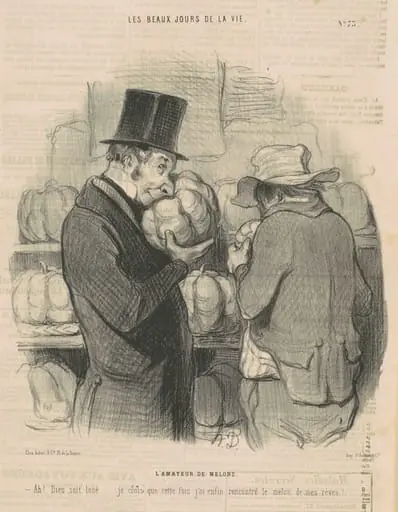
Created in 1844, this lithograph by Honoré Daumier is one of many satirical works produced for Parisian periodicals like *Le Charivari*. It reflects his sustained engagement with public life under the July Monarchy, using the accessible medium of print to reach a broad urban audience. The image captures a moment of quiet interaction among three men, rendered with minimal detail but strong emotional resonance.
Subject & Meaning
The three figures, seated on a bench, suggest a casual exchange among men of differing social standing. The central man, in a top hat, appears to be delivering a remark, while the others listen with subdued expressions. The scene avoids overt caricature, instead conveying a sense of weary reflection, possibly alluding to the disillusionment of youth or the quiet resignation of ordinary citizens under political stagnation.
Technique & Style
Daumier employed lithography to achieve a range of tonal contrasts, using hatched lines and smudged shading to model form and suggest texture. The background is deliberately indistinct, focusing attention on the figures’ postures and facial expressions. His economy of line and avoidance of decorative detail heighten the psychological weight of the moment, characteristic of his mature graphic style.
History & Provenance
The print was published during a period of heightened political tension in France, shortly before the 1848 revolution. Daumier regularly contributed to journals that challenged authority, and this work fits within a series of observational prints that subtly critique social hierarchies. Its survival in museum collections underscores its recognition as a significant example of 19th-century political graphic art.
Context
In the 1840s, Parisian lithographic journals served as a vital platform for dissent, circumventing censorship through visual metaphor. Daumier’s work, though not always overtly political, tapped into widespread public sentiment about class, aging, and the erosion of idealism. This image resonates with the mood of a generation caught between hope and compromise under Louis-Philippe’s regime.
Legacy
Daumier’s ability to distill complex social dynamics into simple, intimate scenes influenced later generations of illustrators and realist artists. This lithograph exemplifies his shift from broad satire toward nuanced human observation, laying groundwork for modern graphic storytelling. Its understated power continues to be studied for its emotional precision and formal restraint.
Artist & collection

Artist
Honoré-Victorin Daumier was a French painter, sculptor, and printmaker, whose many works offer commentary on the social and political life in France, from the Revolution of 1830 to the fall of the Second French Empire in 1870.