Artwork
L'Interdiction du port des décorations
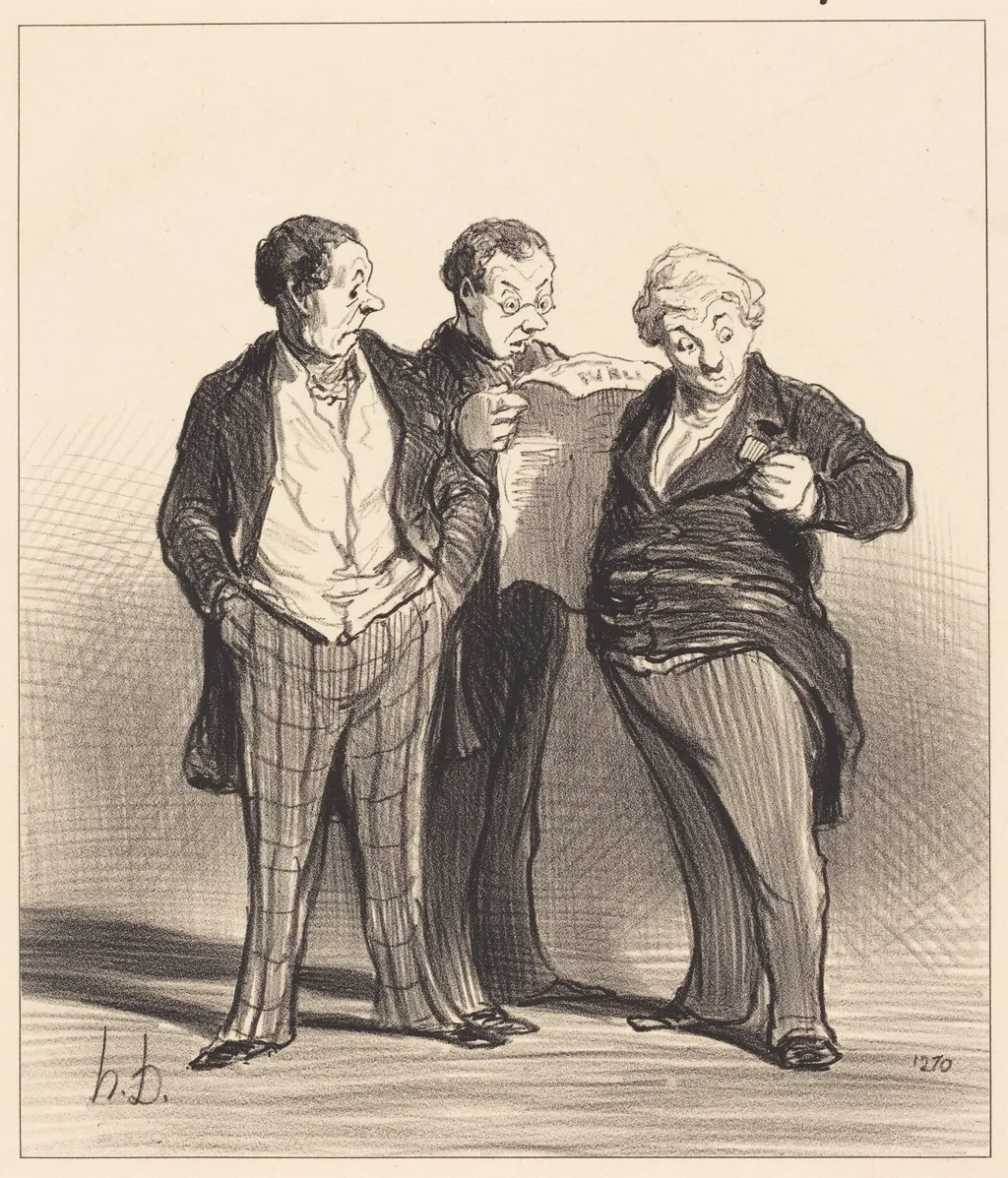
L'Interdiction du port des décorations is an ink print by the Romanticist artist Honoré Daumier. It dates from 1848 and is held in the collection of the National Gallery of Art.
About this work
Overview
The image targets the symbolic removal of honors, reflecting broader debates over class, legitimacy, and state authority in the wake of the February Revolution.
Created in 1848, this lithograph by Honoré Daumier captures a moment of social tension during France’s revolutionary year. As a prolific printmaker for satirical newspapers, Daumier used the accessibility of lithography to reach a broad public. The image targets the symbolic removal of honors, reflecting broader debates over class, legitimacy, and state authority in the wake of the February Revolution.
Subject & Meaning
The scene depicts three figures reacting to the ban on wearing decorations: a disinterested man, a man displaying a medal, and a woman expressing disapproval. Their exaggerated expressions and postures mock the vanity and institutionalized privilege tied to state honors. The work critiques the persistence of aristocratic symbols even as republican ideals gained ground, suggesting the futility of clinging to outdated markers of status.
Technique & Style
Daumier employed rapid, expressive linework characteristic of lithographic sketching, with loose contours and minimal shading. The figures are rendered with caricatured features, heightening their emotional responses. The rough, almost spontaneous quality of the drawing enhances its satirical urgency, mirroring the immediacy of newspaper publication and the volatility of the political moment.
History & Provenance
Produced during the early months of the Second Republic, the print likely appeared in *Le Charivari*, where Daumier regularly published political cartoons. Though no original publication record survives, its thematic consistency with his other works from 1848 suggests it was part of a broader campaign to question the continuity of elite symbols amid democratic reform.
Context
In 1848, the provisional government banned the public display of Bourbon and July Monarchy insignia to dismantle visible symbols of past regimes. Daumier’s image responds to this policy not as endorsement but as ironic observation—highlighting how deeply embedded these symbols remained in social behavior, even among those who claimed to oppose them.
Legacy
The print exemplifies Daumier’s role in shaping political satire through mass media. His use of lithography democratized critique, influencing later generations of cartoonists and illustrators. While not widely exhibited in his lifetime, his prints gained recognition in the 20th century as vital documents of 19th-century French political culture.
Artist & collection
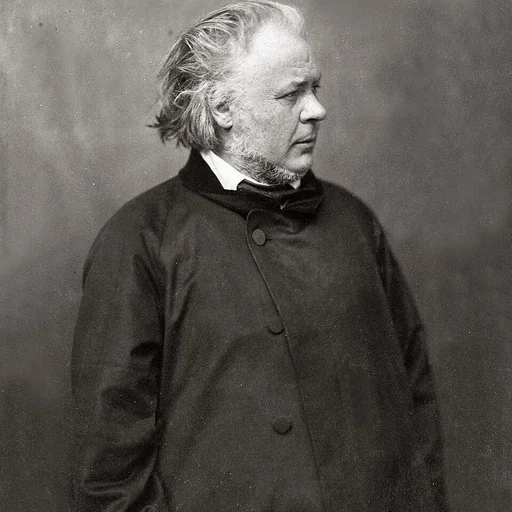
Artist
Honoré-Victorin Daumier was a French painter, sculptor, and printmaker, whose many works offer commentary on the social and political life in France, from the Revolution of 1830 to the fall of the Second French Empire in 1870.

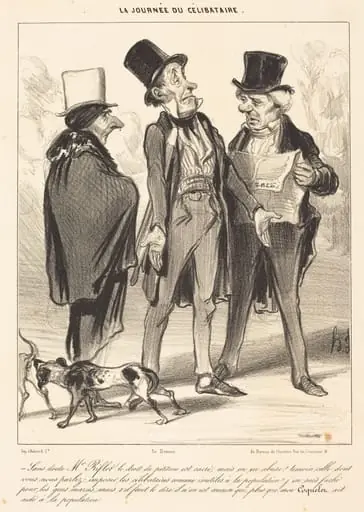 Sans doute M. Riflot le droit...
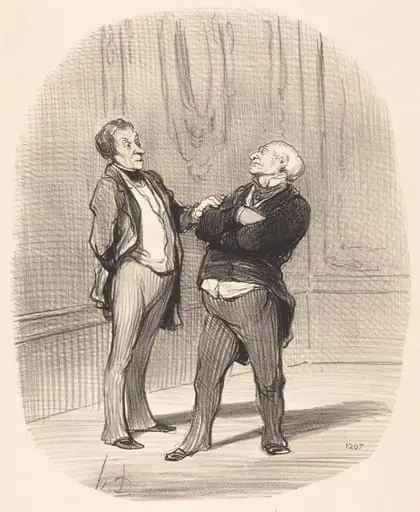 Il y a la guerre... les loyers vont... diminuer...
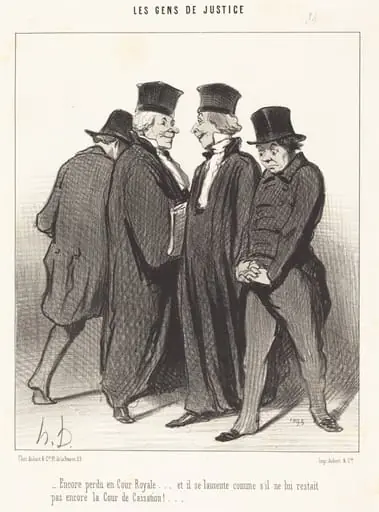 Encore perdu en Cour Royale... et il se lamente...
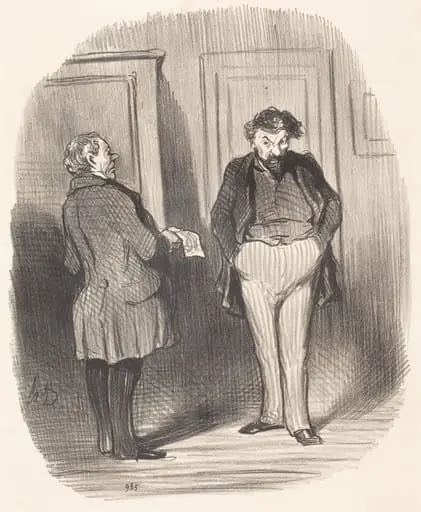 Pourriez-vous me dire...? J'ai la grippe!...
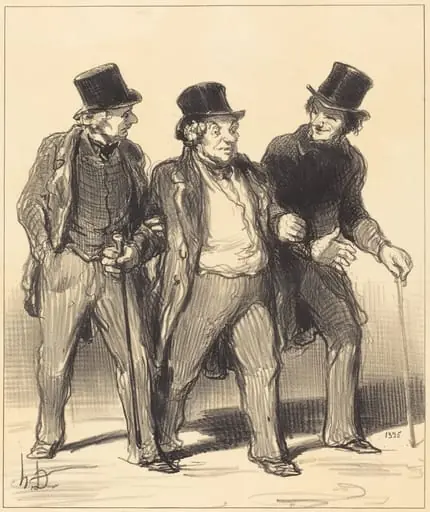 Il me semble que j'aperçois... un... chien... pas muselé!...
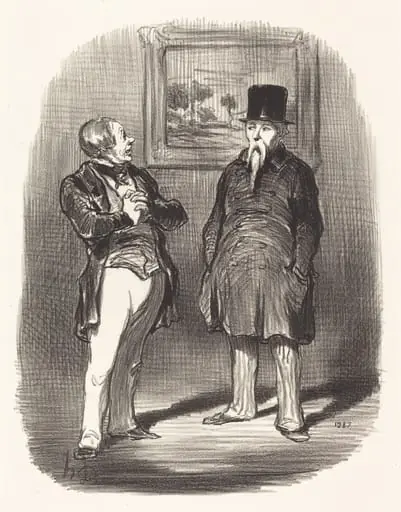 Tiens... je ne te reconnaissais pas...
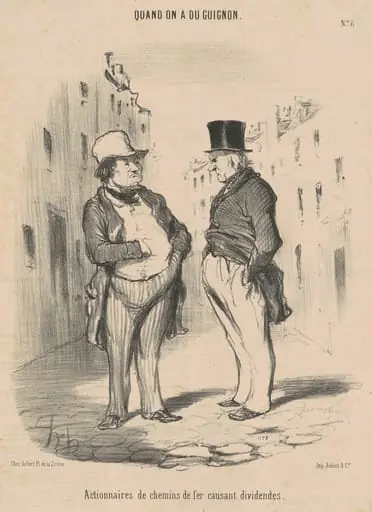 Actionnaires de chemins de fer causant dividendes
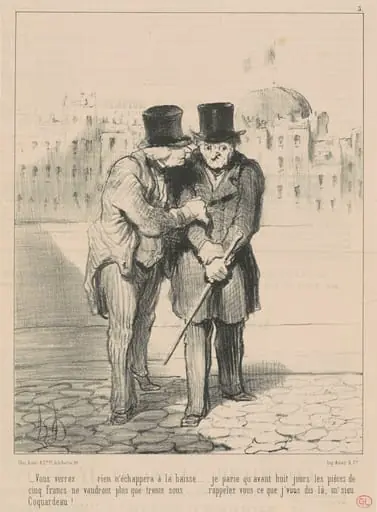 Vous verrez ... rien n'échappera a la baisse ...
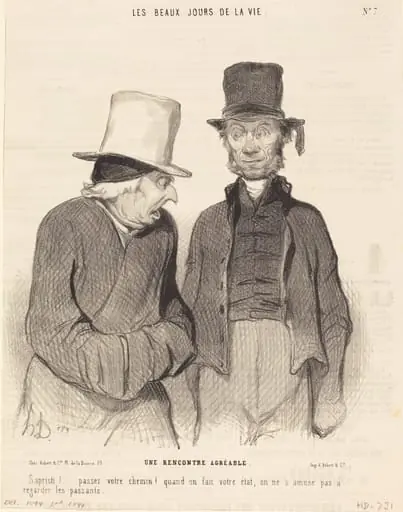 Une Rencontre agréable
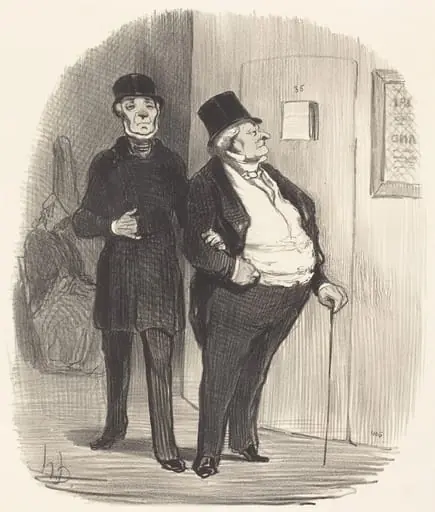 Un Jour de représentation a bénéfice...
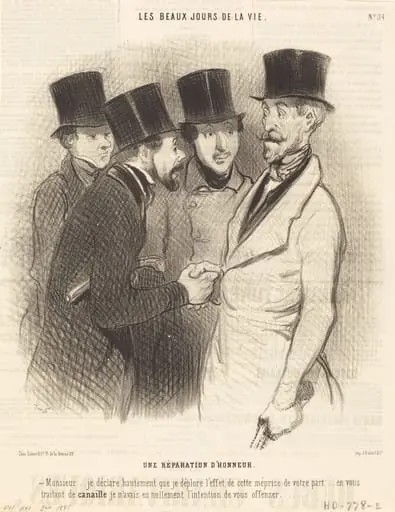 Une Réparation d'honneur
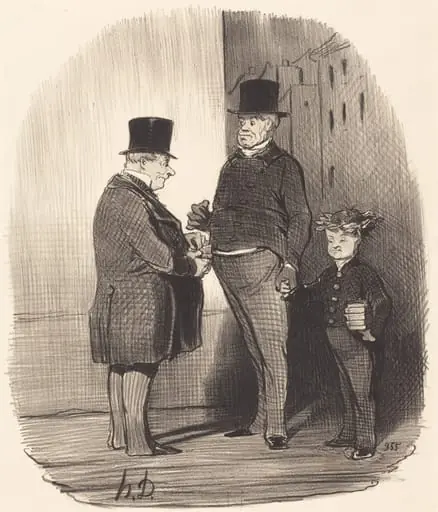 Ah! vous êtes fort en vers latins, jeune homme...