Artwork
Arthur, vous m'aviez promis un trône...
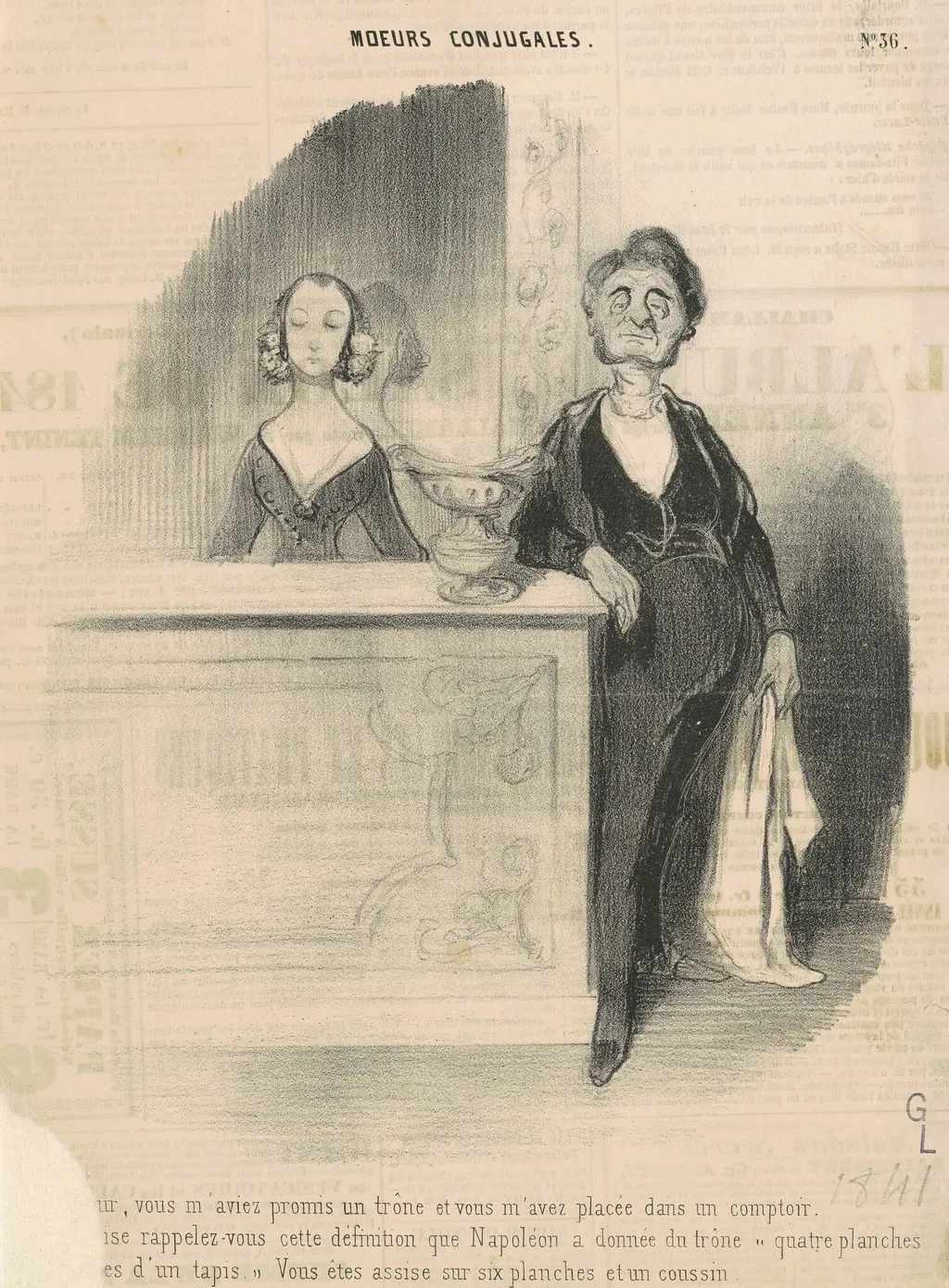
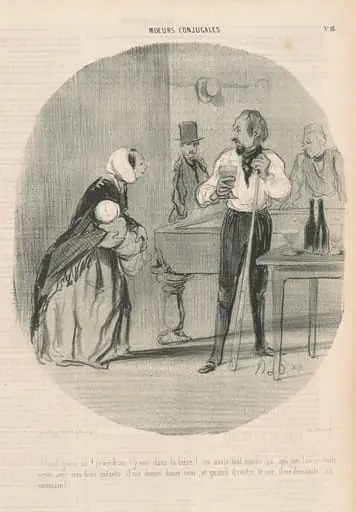
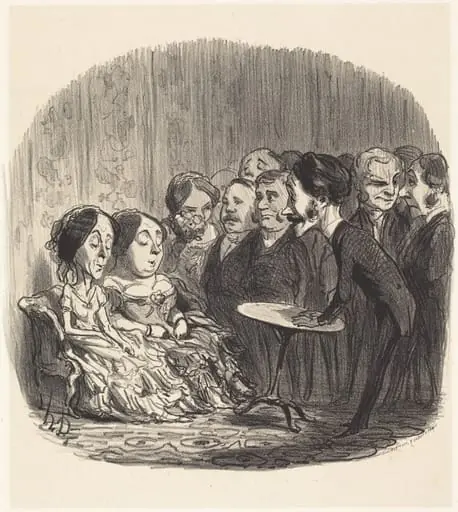
Arthur, vous m'aviez promis un trône... is an ink print by the Romanticist artist Honoré Daumier. It dates from 1841 and is held in the collection of the National Gallery of Art.
About this work
Overview
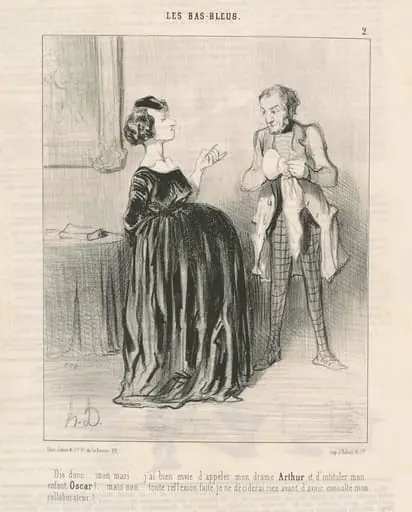
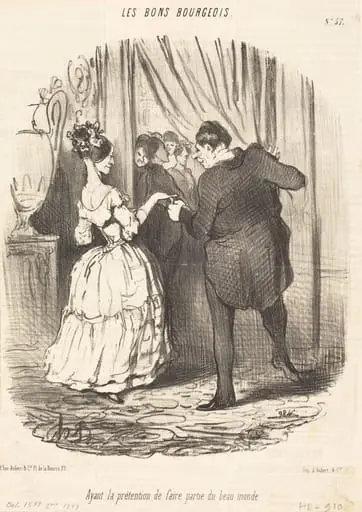
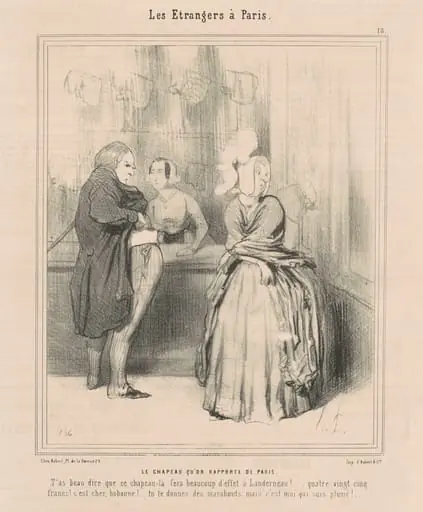
Created in 1841 by Honoré Daumier, this lithograph is part of a series examining domestic life in mid-19th-century France. Rendered in monochrome, the print captures a quiet, tense exchange between two figures, framed from the waist up. The simplicity of the medium underscores the psychological weight of the scene, avoiding theatricality in favor of subtle emotional nuance.
Subject & Meaning
The figures appear to be engaged in a private confrontation, their gazes locked in an unspoken negotiation. The woman’s low-necked dress and the man’s formal attire suggest a social setting where appearances matter. The title, referencing a broken promise of a throne, metaphorically critiques marital expectations and the erosion of trust, framing personal betrayal as a political allegory.
Technique & Style
Daumier employed lithography to achieve fine tonal gradations with minimal lines, emphasizing texture and expression over detail. The monochrome palette focuses attention on posture and facial expression. His brushwork on stone is economical yet precise, using contrast and shadow to convey psychological tension rather than narrative exposition.
History & Provenance
The print was produced during Daumier’s early career, when he contributed satirical illustrations to the journal La Caricature.
The print was produced during Daumier’s early career, when he contributed satirical illustrations to the journal La Caricature. It was likely circulated among Parisian intellectuals and critics who appreciated his sharp social commentary. The work remained in private collections until entering public museum holdings in the 20th century, where it is now recognized as a key example of his graphic output.
Context
In post-revolutionary France, the family unit was increasingly scrutinized as a microcosm of societal values. Daumier’s series on conjugal relationships responded to shifting gender roles and the hypocrisy of bourgeois morality. This image reflects broader cultural anxieties about fidelity, power, and the performance of domestic harmony under pressure.
Legacy
Daumier’s lithographs influenced later generations of social realists and graphic artists, particularly in their use of everyday scenes to reveal deeper tensions. This work stands as an early example of psychological portraiture in print media, demonstrating how modest techniques could convey complex human dynamics without overt symbolism or exaggeration.
Artist & collection

Artist
Honoré-Victorin Daumier was a French painter, sculptor, and printmaker, whose many works offer commentary on the social and political life in France, from the Revolution of 1830 to the fall of the Second French Empire in 1870.