Artwork
Le marchand de contremarques
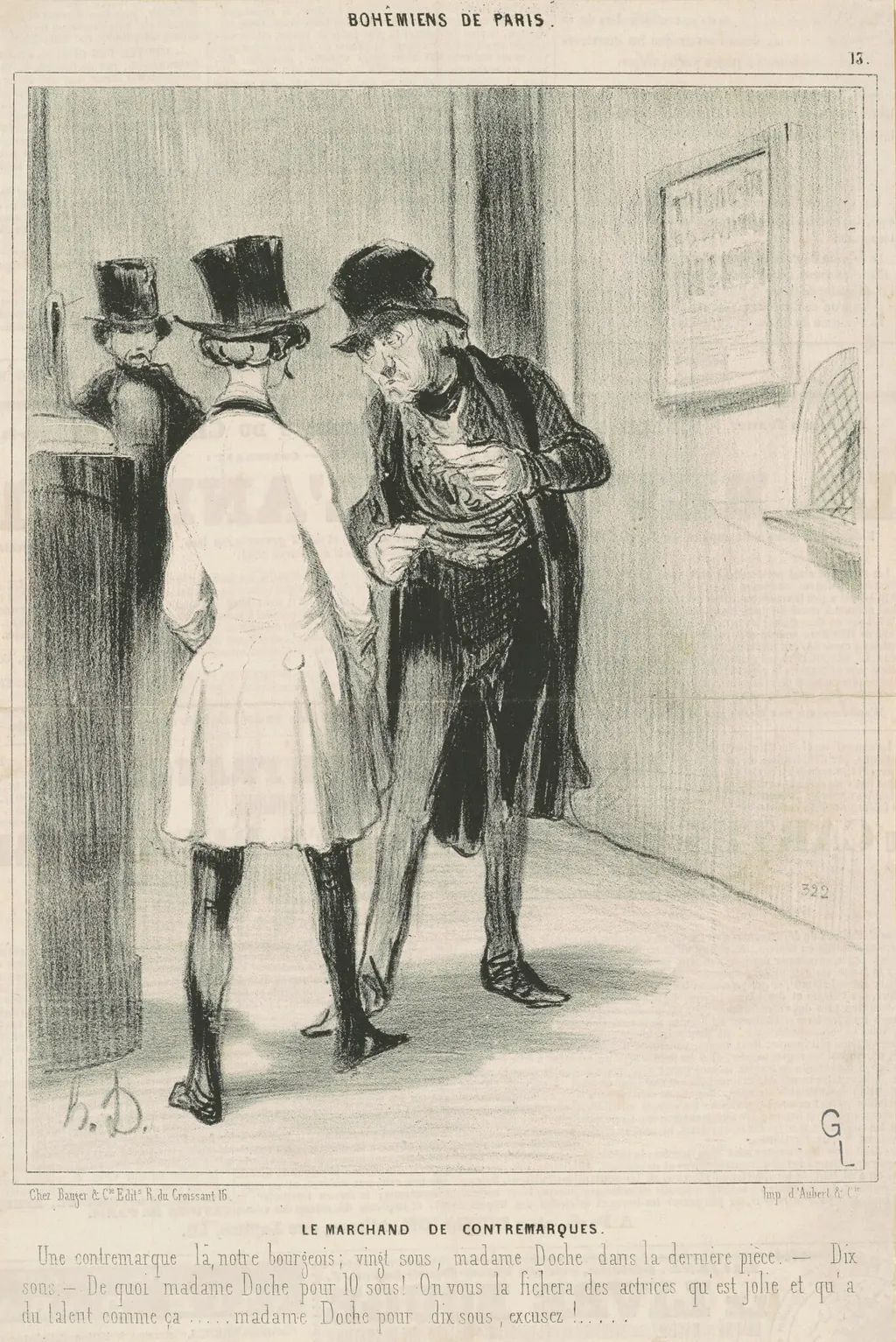
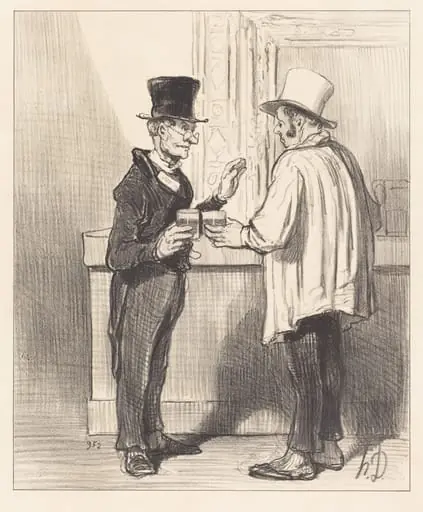
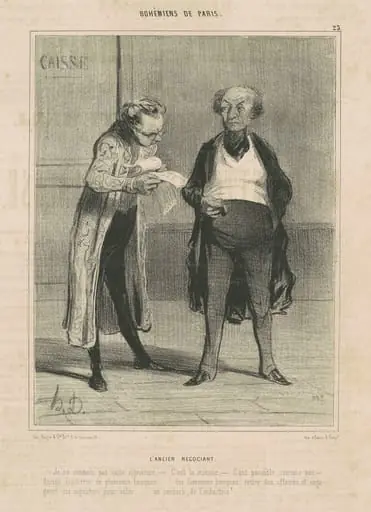
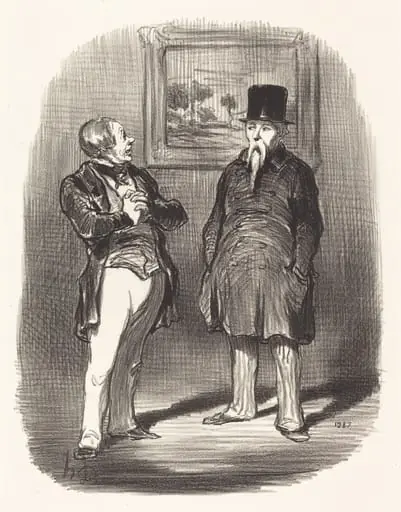
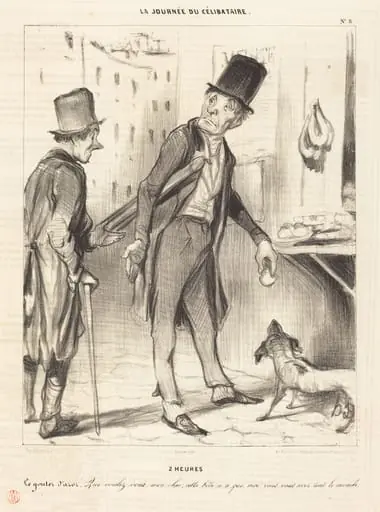
Le marchand de contremarques is an ink print by the Romanticist artist Honoré Daumier. It dates from 1842 and is held in the collection of the National Gallery of Art.
About this work
Overview
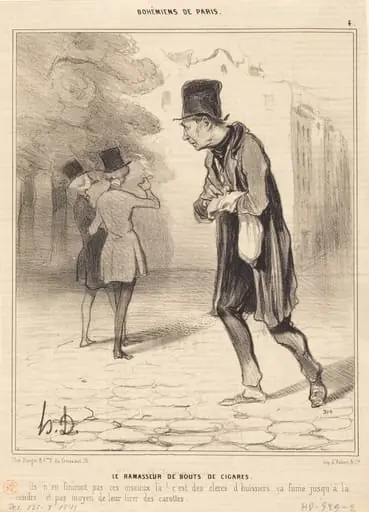
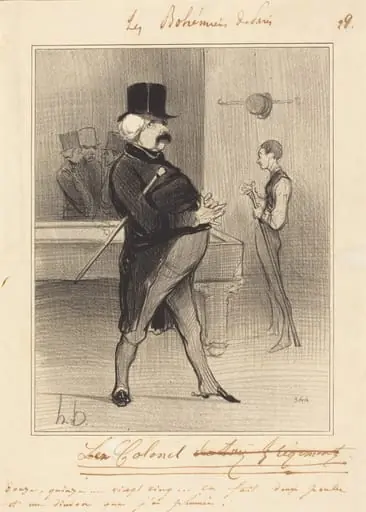
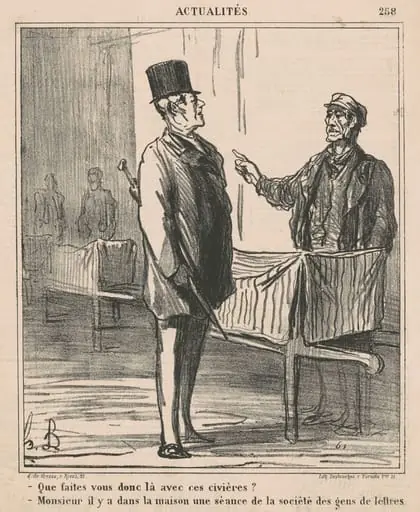
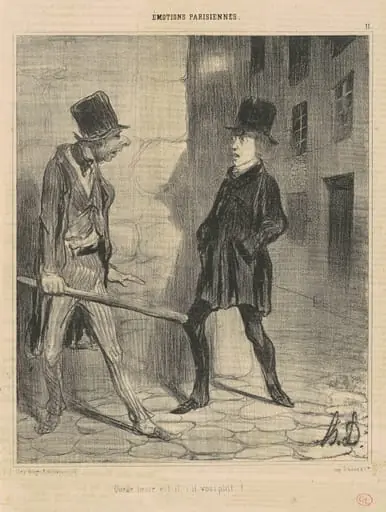
Honoré Daumier’s lithograph Le marchand de contremarques, executed in 1842, presents a brief encounter at a Parisian theatre box office. The image concentrates on two elegantly attired individuals engaged in conversation while a ticket clerk attends to the queue, encapsulating a fleeting moment of public life in the early nineteenth‑century capital.
Subject & Meaning
The work foregrounds the ritual of theatre attendance, a popular leisure activity that also signaled social standing. By portraying well‑dressed patrons at the ticket window, Daumier hints at the performative aspects of class identity and the subtle negotiations that occur in public spaces where status is both displayed and affirmed.
Technique & Style
Created through lithography, the print relies on clean, economical lines that define forms without elaborate shading. This method, favored by Daumier for its speed and reproducibility, allows the artist to capture the immediacy of a bustling scene while maintaining a crisp, graphic quality characteristic of his satirical oeuvre.
Context
In the 1840s, Paris was undergoing rapid urbanization, and public entertainment venues like theatres became hubs of social interaction. Daumier, known for his keen observations of everyday life, used such settings to document the stratified nature of French society, reflecting broader cultural preoccupations with class distinction and modernity.
Artist & collection

Artist
Honoré-Victorin Daumier was a French painter, sculptor, and printmaker, whose many works offer commentary on the social and political life in France, from the Revolution of 1830 to the fall of the Second French Empire in 1870.