Artwork
Aspect de salon le jour de l'ouverture ...
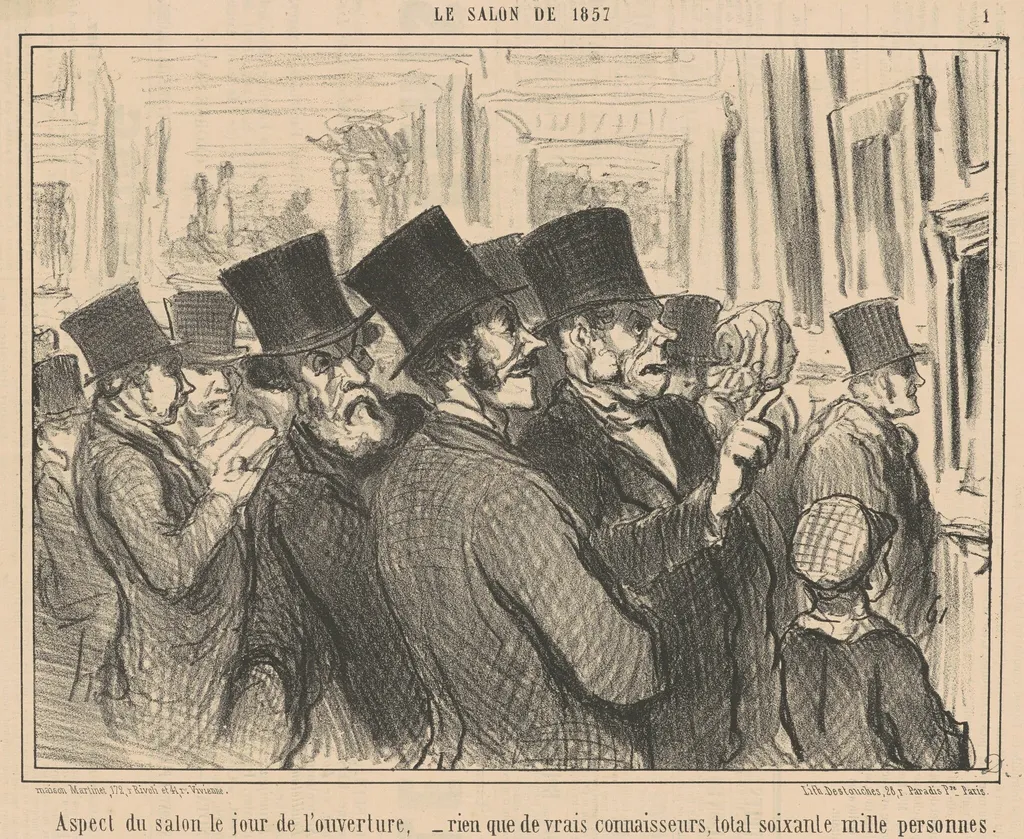
Aspect de salon le jour de l'ouverture ... is an ink print by the Impressionist artist Honoré Daumier. It dates from 1857 and is held in the collection of the National Gallery of Art.
About this work
Overview
This lithograph by Honoré Daumier depicts the opening day of a Parisian art exhibition, capturing a crowded gallery filled with spectators.
This lithograph by Honoré Daumier depicts the opening day of a Parisian art exhibition, capturing a crowded gallery filled with spectators. Rendered in fine, expressive lines, the scene conveys the social ritual of art viewing in mid-19th-century France. Daumier focuses not on the artworks themselves but on the audience, revealing the dynamics of public engagement with culture during a time of expanding artistic access.
Subject & Meaning
The print portrays a cross-section of bourgeois society gathered to observe art, each figure absorbed in their own reaction—some leaning in closely, others conversing in small clusters or standing at a distance. Daumier subtly critiques the performative nature of cultural attendance, highlighting how social presence often outweighs deep contemplation. The absence of labeled paintings shifts focus to human behavior as the true subject.
Technique & Style
Daumier employed lithography to achieve rapid, fluid lines that suggest movement and spontaneity. Facial features are rendered with minimal strokes, conveying expression through suggestion rather than detail. The dense composition, with overlapping figures and varied postures, creates a sense of bustling energy. The tonal contrasts and loose ink work reflect the medium’s capacity for immediacy, mirroring the transient nature of the event.
History & Provenance
Created in the 1860s, this work was likely produced for publication in a periodical, as was common for Daumier’s social commentaries. It belongs to a series of prints documenting Parisian public life, reflecting his long-standing interest in urban customs. The piece circulated among middle-class readers, reinforcing his reputation as an observer of everyday society rather than a celebrant of elite culture.
Context
During the Second Empire, public art exhibitions became increasingly accessible, drawing large crowds from diverse social classes. The Salon, though still governed by academic standards, had become a social event as much as an artistic one. Daumier’s lithograph reflects this shift, illustrating how art viewing had evolved into a ritual of public performance, shaped by etiquette, curiosity, and social display.
Legacy
Daumier’s depiction of gallery audiences influenced later artists interested in the sociology of art reception. His unidealized portrayal of viewers as active, sometimes absurd participants challenged romanticized notions of artistic contemplation. The work remains a valuable record of 19th-century cultural habits, offering insight into how public engagement with art was shaped by social norms and collective behavior.
Artist & collection

Artist
Honoré-Victorin Daumier was a French painter, sculptor, and printmaker, whose many works offer commentary on the social and political life in France, from the Revolution of 1830 to the fall of the Second French Empire in 1870.









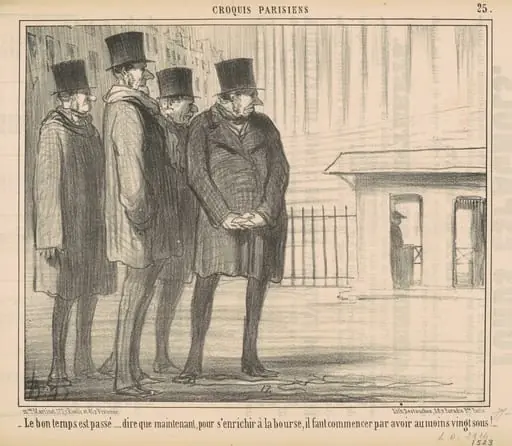 Le bon temps est passé ...
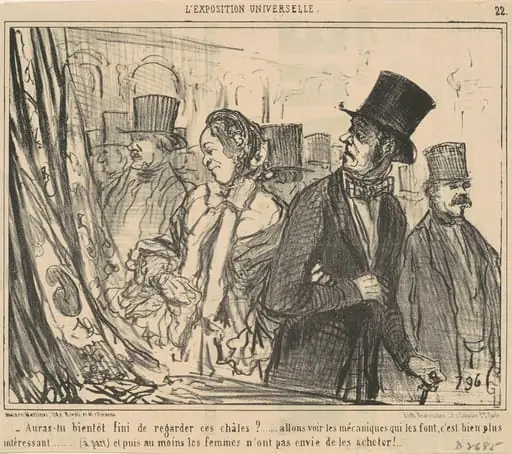 Auras-tu bientot fini de regarder ces chales?
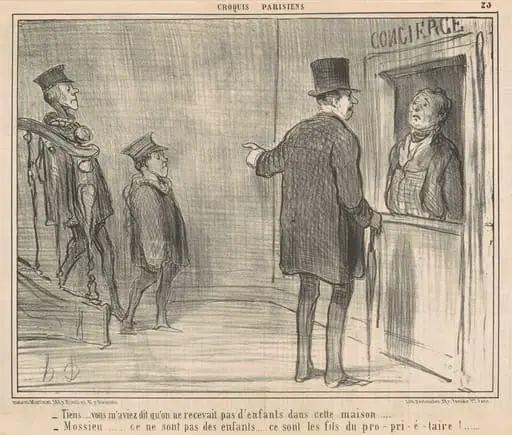 Tiens ... vous m'aviez dit ...
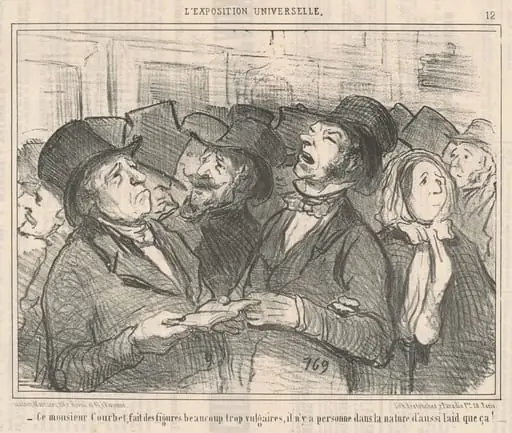 Ce monsieur Courbet...
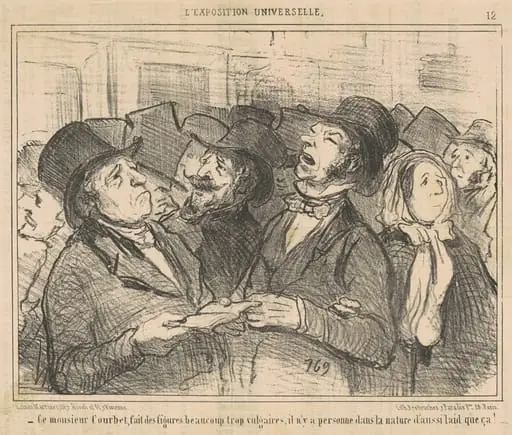 Ce Monsieur Courbet, fait des figures ... vulgaires ...
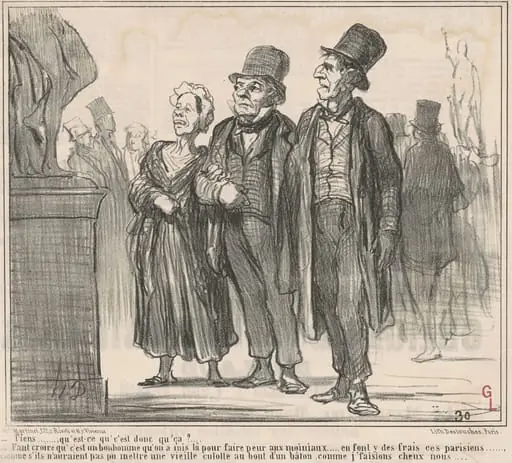 Tiens ... qu'est-ce qu'c'est donc qu'ça? ...
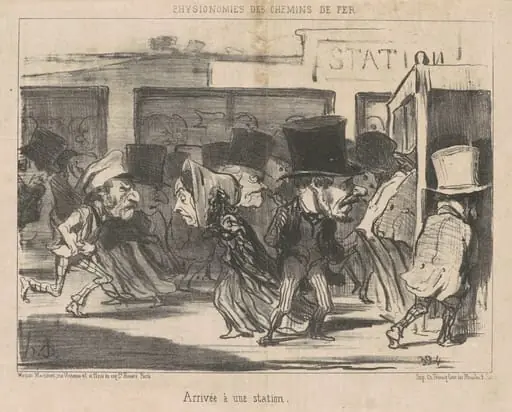 Arrivée a une station
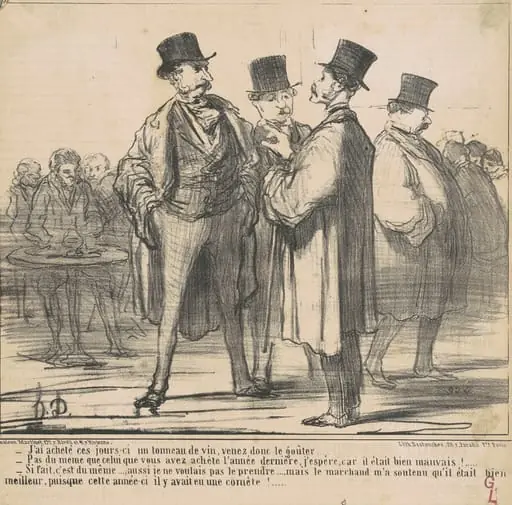 J'ai acheté ... un tonneau de vin ...
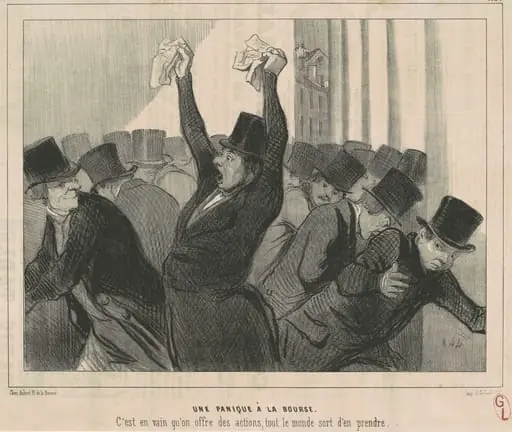 Une Panique a la bourse
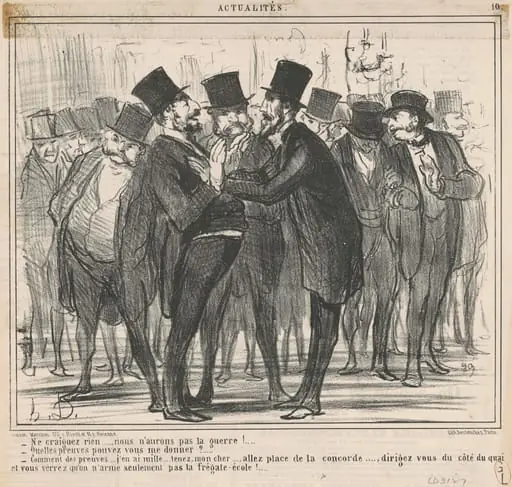 Ne craignez rien ...