Artwork
Ayant eu ... l'idée d'aller ...
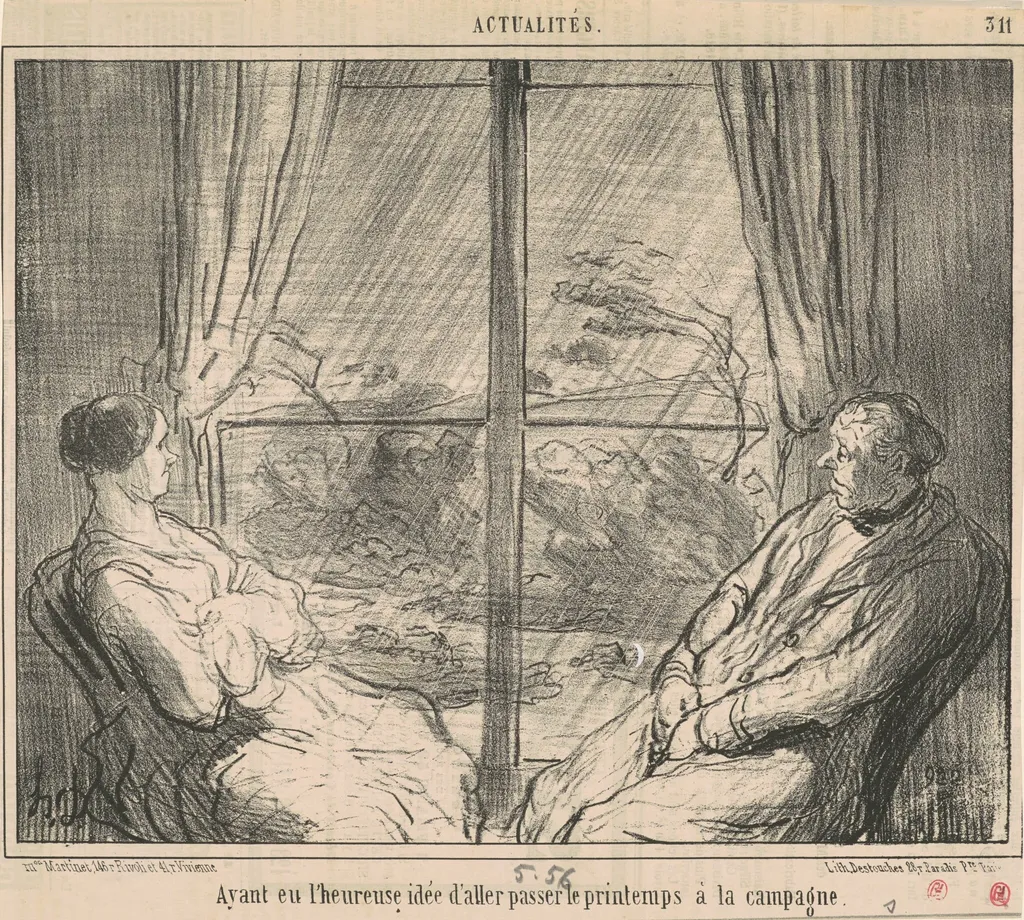
Ayant eu ... l'idée d'aller ... is an ink print by the Impressionist artist Honoré Daumier. It dates from 1856 and is held in the collection of the National Gallery of Art.
About this work
Overview
The work belongs to Daumier’s series of intimate, psychologically attuned prints that capture everyday human moments with subtle gravity.
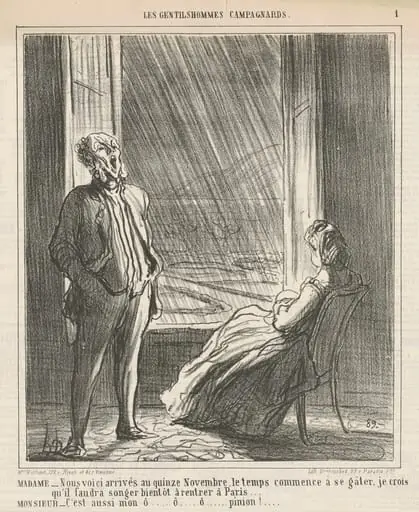
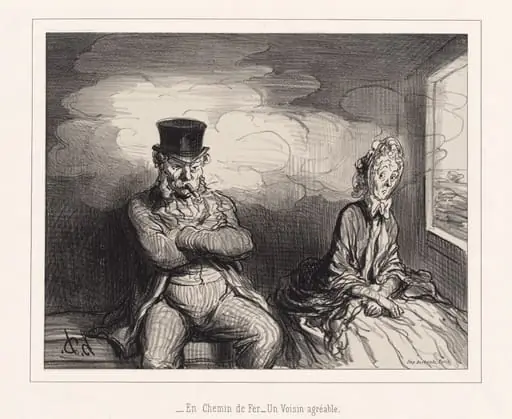
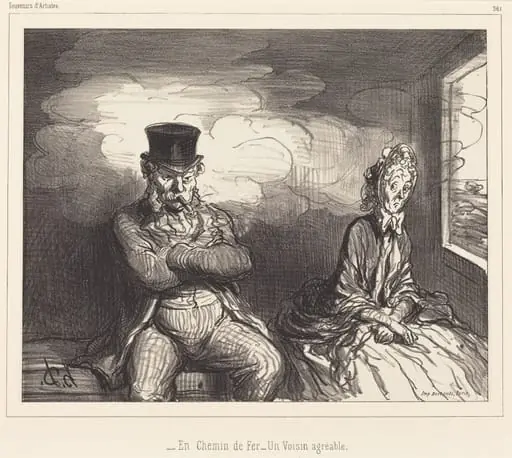
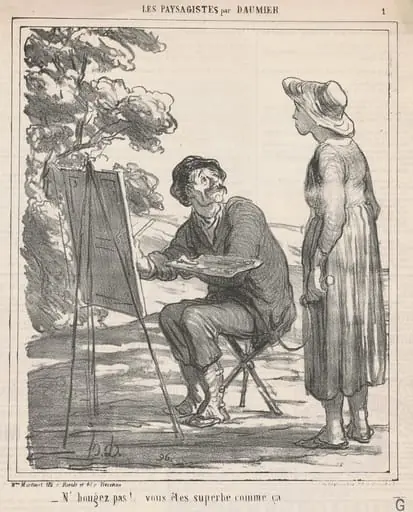
This lithograph by Honoré Daumier presents a quiet interior scene with two figures in conversation. Rendered in soft, tonal shading, the composition emphasizes mood over detail. The figures are seated, their postures suggesting contemplation, while a window behind them reveals a turbulent sky and landscape. The work belongs to Daumier’s series of intimate, psychologically attuned prints that capture everyday human moments with subtle gravity.
Subject & Meaning
The two figures, unnamed and unadorned, engage in a private exchange that feels weighty but unstated. Their stillness and the dim lighting imply emotional tension, while the storm visible through the window acts as a visual metaphor—external chaos mirroring internal unease. Daumier avoids narrative clarity, instead inviting viewers to infer the nature of the dialogue from atmosphere and gesture alone.
Technique & Style
Executed in lithography, the print relies on tonal gradations rather than line to define form. Daumier used a sketch-like approach, with loose, smudged shading to suggest texture and depth. The absence of sharp contours and the muted palette enhance the sense of intimacy and transience. The technique allows for a fluid, almost spontaneous quality, aligning with the immediacy of the moment depicted.
History & Provenance
Created during the mid-19th century, this work emerged from Daumier’s prolific output of social and domestic scenes published in periodicals. It was likely produced for a broader audience through print circulation, not as a standalone art object. Its survival in institutional collections reflects its recognition as a representative example of Daumier’s observational printmaking, though its exact early provenance remains undocumented.
Context
Daumier worked amid France’s shifting political and social landscape, where the middle class increasingly became subject of artistic scrutiny. His lithographs often depicted private moments that revealed underlying tensions—domestic, emotional, or societal. This piece fits within a broader tradition of French printmaking that valued psychological nuance over grand narrative, reflecting a growing interest in the inner lives of ordinary people.
Legacy
Though not widely exhibited during his lifetime, this lithograph contributes to Daumier’s enduring reputation as a keen observer of human behavior. Its restrained aesthetic influenced later generations of printmakers and realist artists who sought to convey emotion through subtlety rather than drama. The work remains a quiet testament to the power of understated observation in visual art.
Artist & collection
Artist
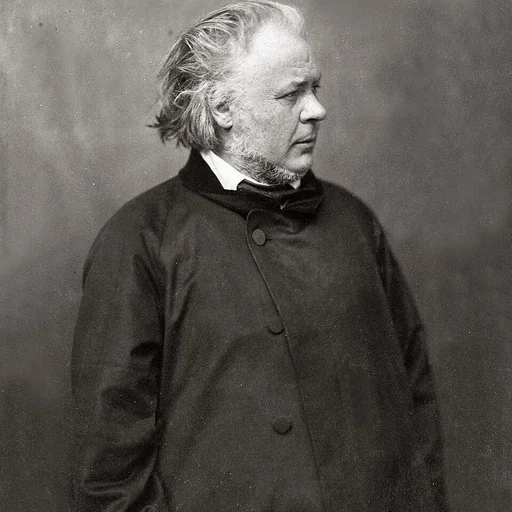
Honoré-Victorin Daumier was a French painter, sculptor, and printmaker, whose many works offer commentary on the social and political life in France, from the Revolution of 1830 to the fall of the Second French Empire in 1870.