Artwork
En Chemin de fer... un voisin agréable (On the Railroad... an agreeable neighbor)
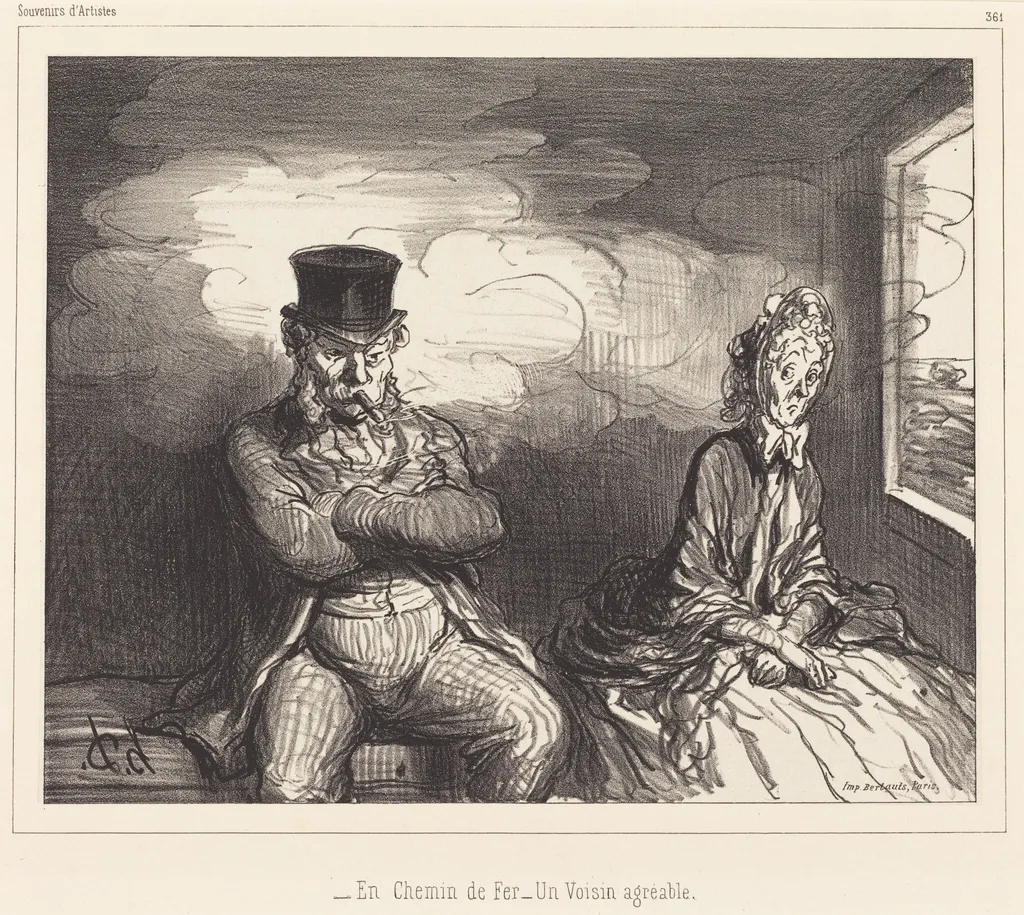
En Chemin de fer... un voisin agréable (On the Railroad... an agreeable neighbor) is an ink print by the Impressionist artist Honoré Daumier. It dates from 1862 and is held in the collection of the National Gallery of Art.
About this work
Overview
Created in 1862, this lithograph by Honoré Daumier captures a quiet moment aboard a French train, using minimal lines to convey social tension.
Created in 1862, this lithograph by Honoré Daumier captures a quiet moment aboard a French train, using minimal lines to convey social tension. As part of his broader engagement with print media, Daumier employed lithography to observe everyday life with irony. The work belongs to a series of scenes documenting urban and transit culture, reflecting his interest in the subtle dynamics of class and manners during France’s industrial expansion.
Subject & Meaning
The image portrays two strangers seated side by side: a well-dressed man in a top hat and long coat, cane in hand, glancing downward, and a woman rigidly upright, eyes forward. Their physical proximity contrasts with emotional distance. The ironic title—'an agreeable neighbor'—undercuts the awkward silence between them, suggesting the artificiality of polite society. Daumier critiques the performative civility enforced in public spaces, especially among the bourgeoisie.
Technique & Style
Daumier rendered the scene with rapid, expressive lithographic lines, emphasizing gesture over detail. The figures are simplified, their forms defined by sparse contours and tonal contrasts. The blurred landscape beyond the window is suggested with loose washes, enhancing the sense of motion. The technique mirrors the fleeting nature of the encounter, aligning with the spontaneity of sketching from life while preserving the satirical edge characteristic of his published work.
History & Provenance
This print was produced during Daumier’s most active period as a social commentator for Parisian periodicals like *Le Charivari*. Though originally published in a newspaper or journal, the lithograph was later collected as a standalone work. Its survival reflects its resonance within 19th-century artistic circles, where printmaking was valued for its accessibility and critical potential. No specific early ownership records are widely documented.
Context
Rail travel in 1860s France was rapidly expanding, bringing together diverse social classes in confined spaces. Daumier’s scene reflects growing public anxiety over the erosion of personal boundaries and the rise of impersonal urban interactions. His work responded to both technological change and the persistence of rigid social hierarchies, even in supposedly egalitarian settings like train compartments.
Legacy
Daumier’s lithographs, including this one, helped redefine printmaking as a vehicle for social observation rather than mere illustration. His unembellished style influenced later realist and modernist artists, particularly those interested in urban life and psychological nuance. Though not widely exhibited in his lifetime, his prints gained recognition in the 20th century as foundational documents of modern visual culture.
Artist & collection
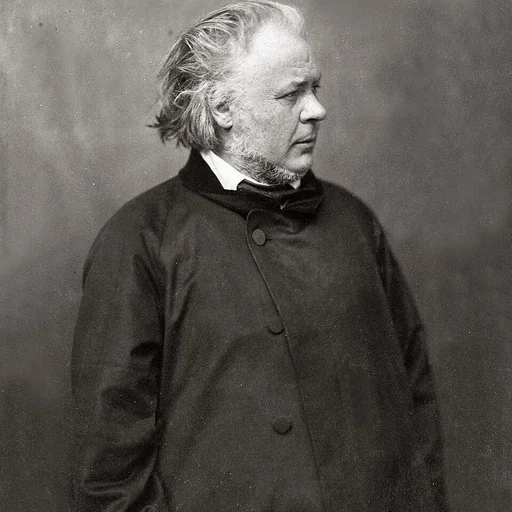
Artist
Honoré-Victorin Daumier was a French painter, sculptor, and printmaker, whose many works offer commentary on the social and political life in France, from the Revolution of 1830 to the fall of the Second French Empire in 1870.









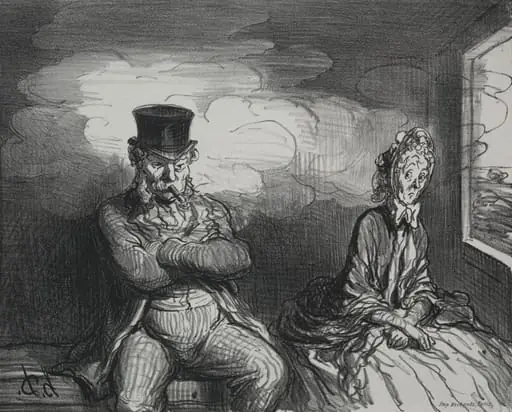 On the Train: A Pleasant Companion
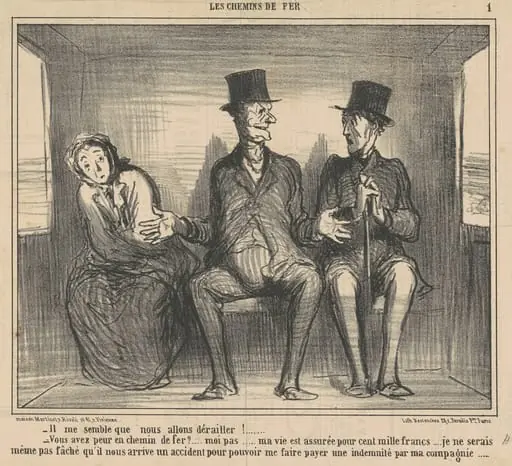 Il me semble que nous allons dèrailler ...
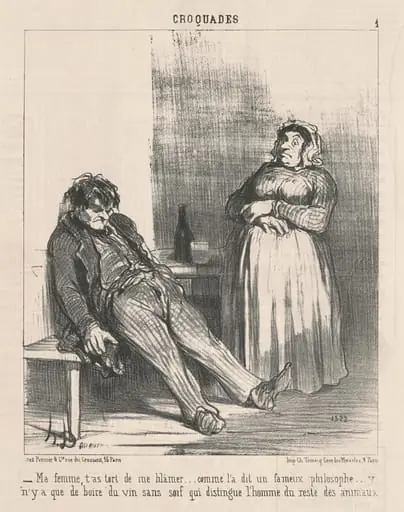 Ma femme, t'as tort de me blamer ...
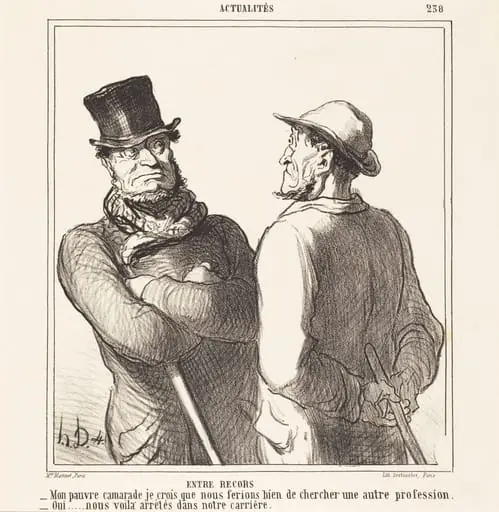 Entre recors
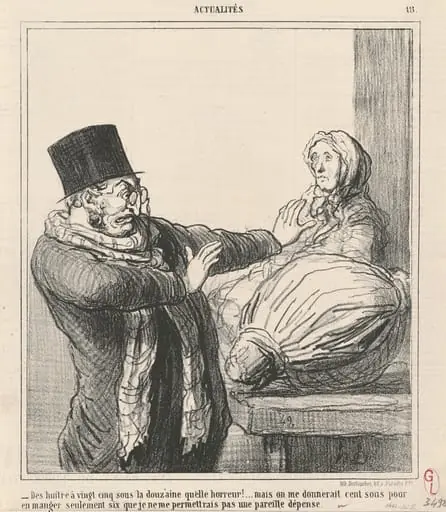 Des huitres a vingt-cinq sous la douzaine ... !
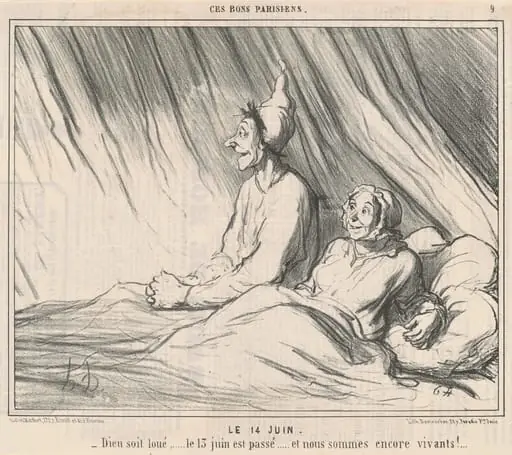 Le 14 Juin
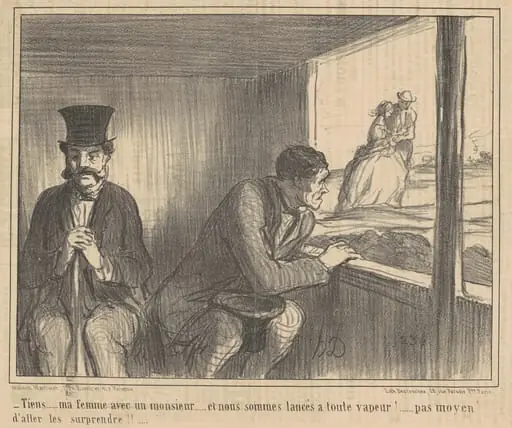 Tiens ... ma femme avec un monsieur ...
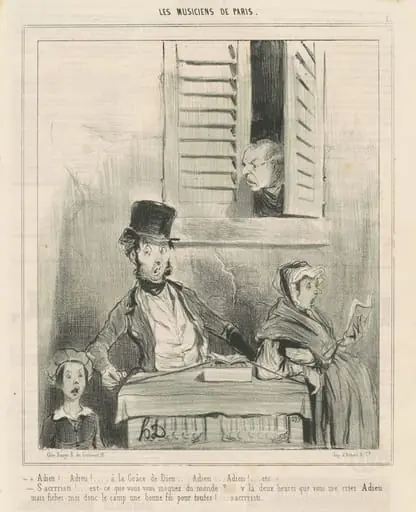 Adieu! ... A la grâce de dieu ...
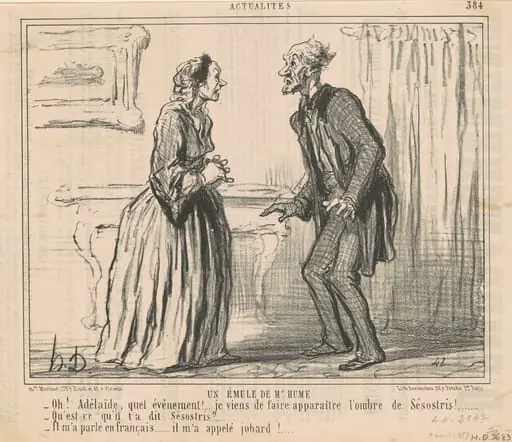 Un émule de Mr Hume
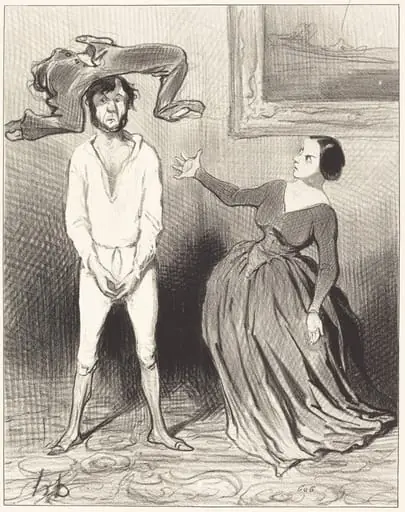 Une Femme comme moi... remettre un bouton?...