Artwork
Bertrand, voila des gaillards ...
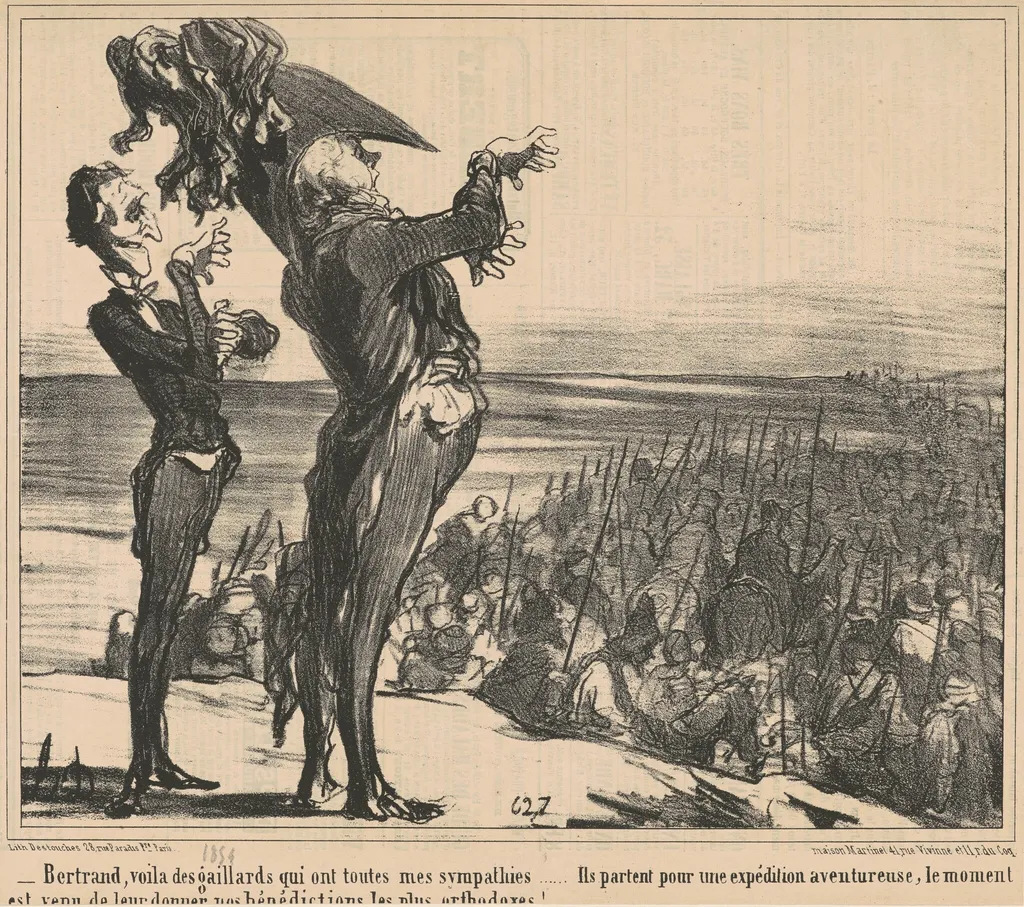
Bertrand, voila des gaillards ... is an ink print by the Impressionist artist Honoré Daumier. It dates from 1854 and is held in the collection of the National Gallery of Art.
About this work
Overview
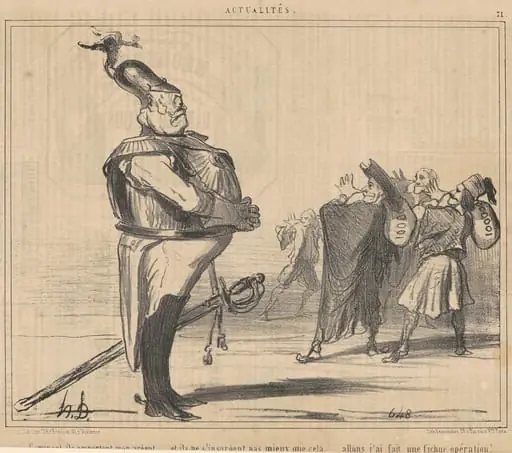
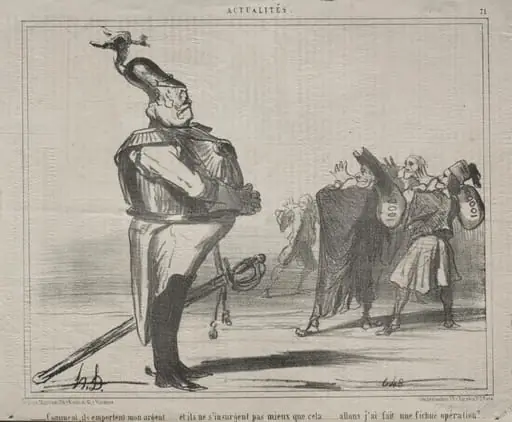
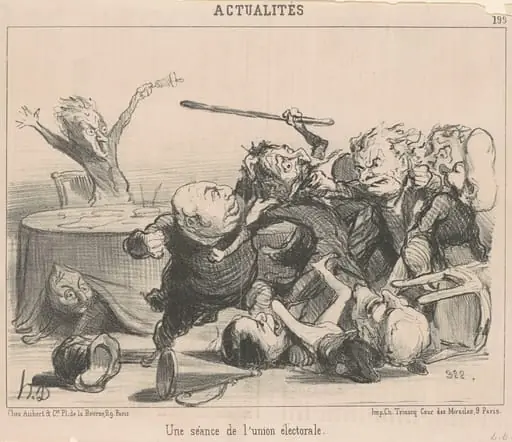
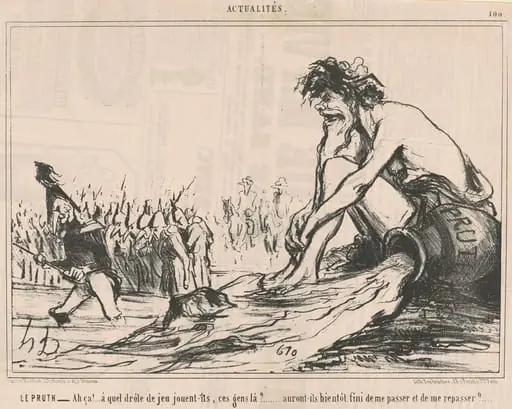
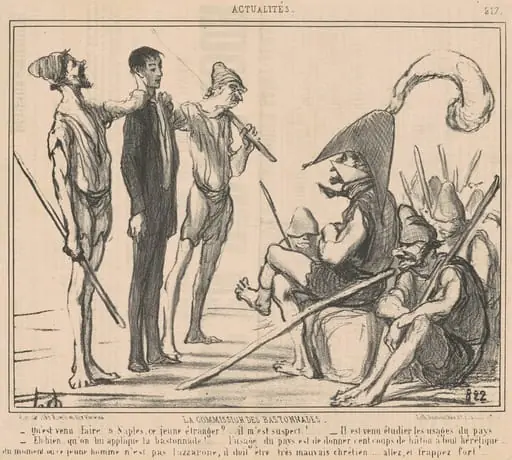
This lithograph by Honoré Daumier presents two figures in period dress, standing side by side as they observe a distant crowd.
This lithograph by Honoré Daumier presents two figures in period dress, standing side by side as they observe a distant crowd. Rendered with bold, expressive lines, the image captures a fleeting moment of social observation. Daumier used lithographic stone to produce the print, a technique allowing rapid, fluid drawing that suited his satirical eye. The work belongs to a series of prints commenting on public behavior in 19th-century France.
Subject & Meaning
The two men, distinguished by exaggerated facial features and stiff postures, serve as observers rather than participants in the scene beyond. Their wide grins and pointed gestures suggest amusement or irony, inviting viewers to reflect on the absurdities of social gatherings. Daumier often used such figures to critique public spectacle and the performative nature of urban life, turning passive viewers into active commentators.
Technique & Style
Daumier drew directly onto a lithographic stone with greasy crayon, then transferred the image to paper through press. His lines are swift and economical, emphasizing contours and expression over detail. The contrast between the sharply defined figures and the indistinct background enhances the focus on their reactions. This method allowed him to produce images quickly, aligning with his role as a political and social commentator in periodicals.
History & Provenance
Created during Daumier’s prolific period of lithographic output in the 1830s–1860s, this print likely appeared in a French satirical journal. It was part of a broader effort to circulate visual criticism among the middle class, often targeting political and social pretensions. While the exact publication and date are uncertain, its style and subject align with his well-documented work for publications like La Caricature and Le Charivari.
Context
In mid-19th-century Paris, public spaces became stages for social performance, and the press thrived on satire. Daumier’s prints responded to this culture, using caricature to expose hypocrisy and folly. His figures often mirrored the anxieties of a society undergoing rapid change—urbanization, political instability, and the rise of mass media. This lithograph reflects a moment when visual humor became a tool for civic reflection.
Legacy
Daumier’s approach to lithography influenced later generations of illustrators and cartoonists, particularly in the use of expressive line and social observation. His ability to distill complex social dynamics into a single image set a precedent for visual journalism. Though produced for ephemeral publications, these works endure as documents of everyday life and the quiet absurdities of human behavior.
Artist & collection
Artist
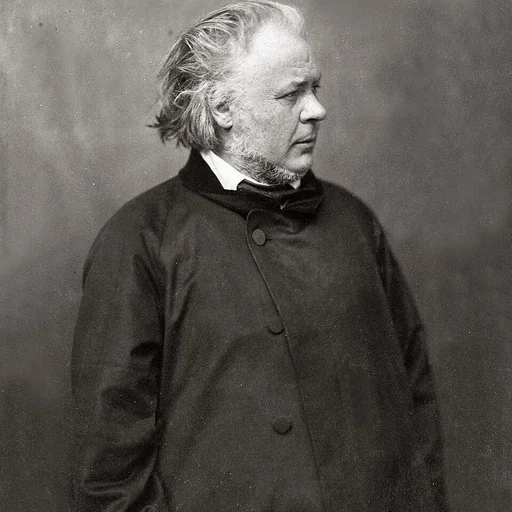
Honoré-Victorin Daumier was a French painter, sculptor, and printmaker, whose many works offer commentary on the social and political life in France, from the Revolution of 1830 to the fall of the Second French Empire in 1870.