Artwork
C'est pourtant pas pour ca ...
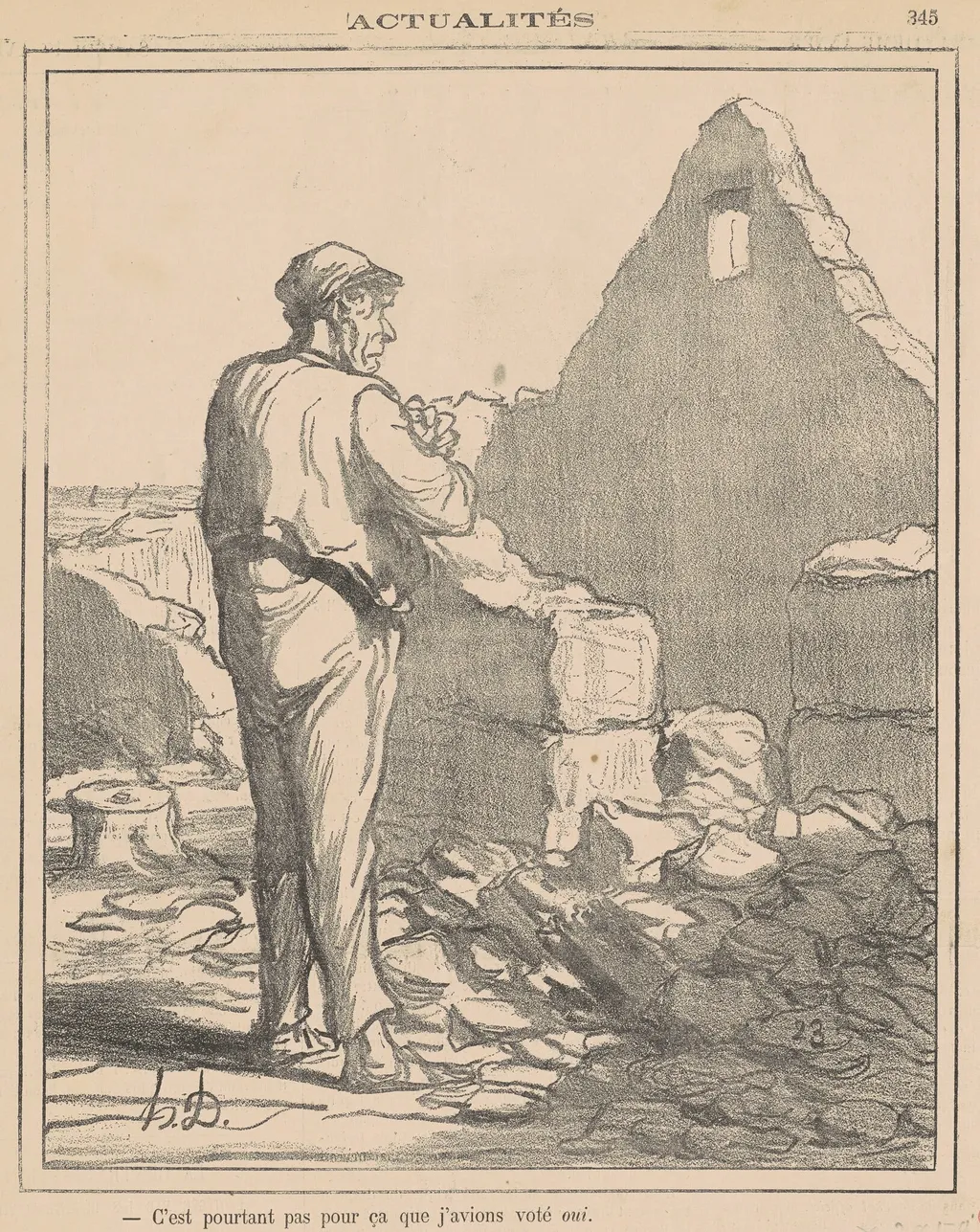
C'est pourtant pas pour ca ... is an ink print by the Impressionist artist Honoré Daumier. It dates from 1871 and is held in the collection of the National Gallery of Art.
About this work
Overview
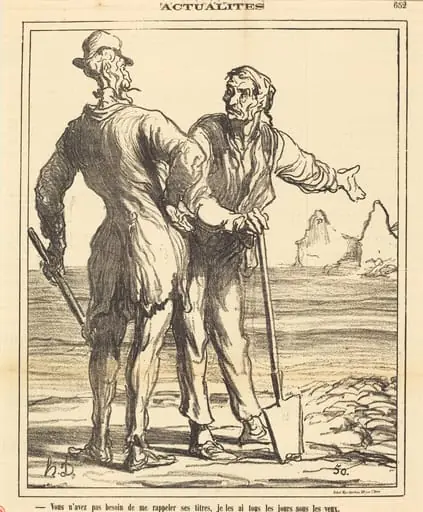
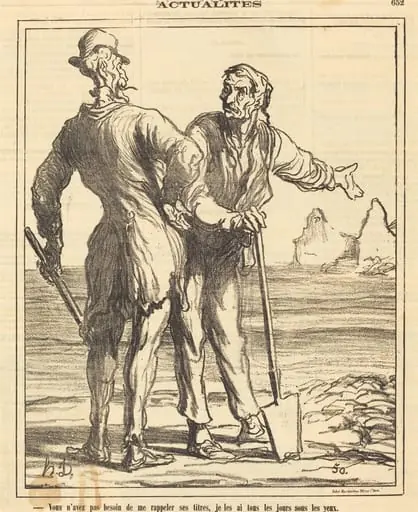
Created in 1871, this lithograph by Honoré Daumier presents a single figure positioned in an open, uneven terrain. The man, dressed in a plain cap and coat, stands with his arms crossed, his face obscured by shadow, conveying a mood of contemplation or resistance amid a stark landscape.
Subject & Meaning
The solitary figure, set against a backdrop of cracked stone and ragged ground, suggests a commentary on the hardships faced by ordinary people. By isolating the individual in a desolate setting, Daumier underscores themes of social struggle and the quiet dignity of the common man.
Technique & Style
Daumier employed lithography, a printmaking process that uses a greasy drawing on stone to attract ink. This method allowed for rapid, inexpensive reproduction, giving the work a raw, direct quality characteristic of his socially engaged imagery.
History & Provenance
The print emerged during a period of political unrest in France, aligning with Daumier’s prolific output of satirical and socially aware prints. Its production in the early 1870s facilitated wide distribution, contributing to the artist’s reputation as a chronicler of contemporary life.
Artist & collection

Artist
Honoré-Victorin Daumier was a French painter, sculptor, and printmaker, whose many works offer commentary on the social and political life in France, from the Revolution of 1830 to the fall of the Second French Empire in 1870.